In short
- Older than Cetinje. Tradition dates the first church here to about 1450, a generation before Ivan Crnojević moved his court to the field in 1482.
- Four churches on one spot: wattle and mud, then dry stone, then mortared stone, and finally the building of 1864 that stands today.
- The fence is the famous part. Put up in 1897, its uprights are the barrels of more than 1,500 rifles captured from the Ottoman army, most of them at Grahovac in 1858.
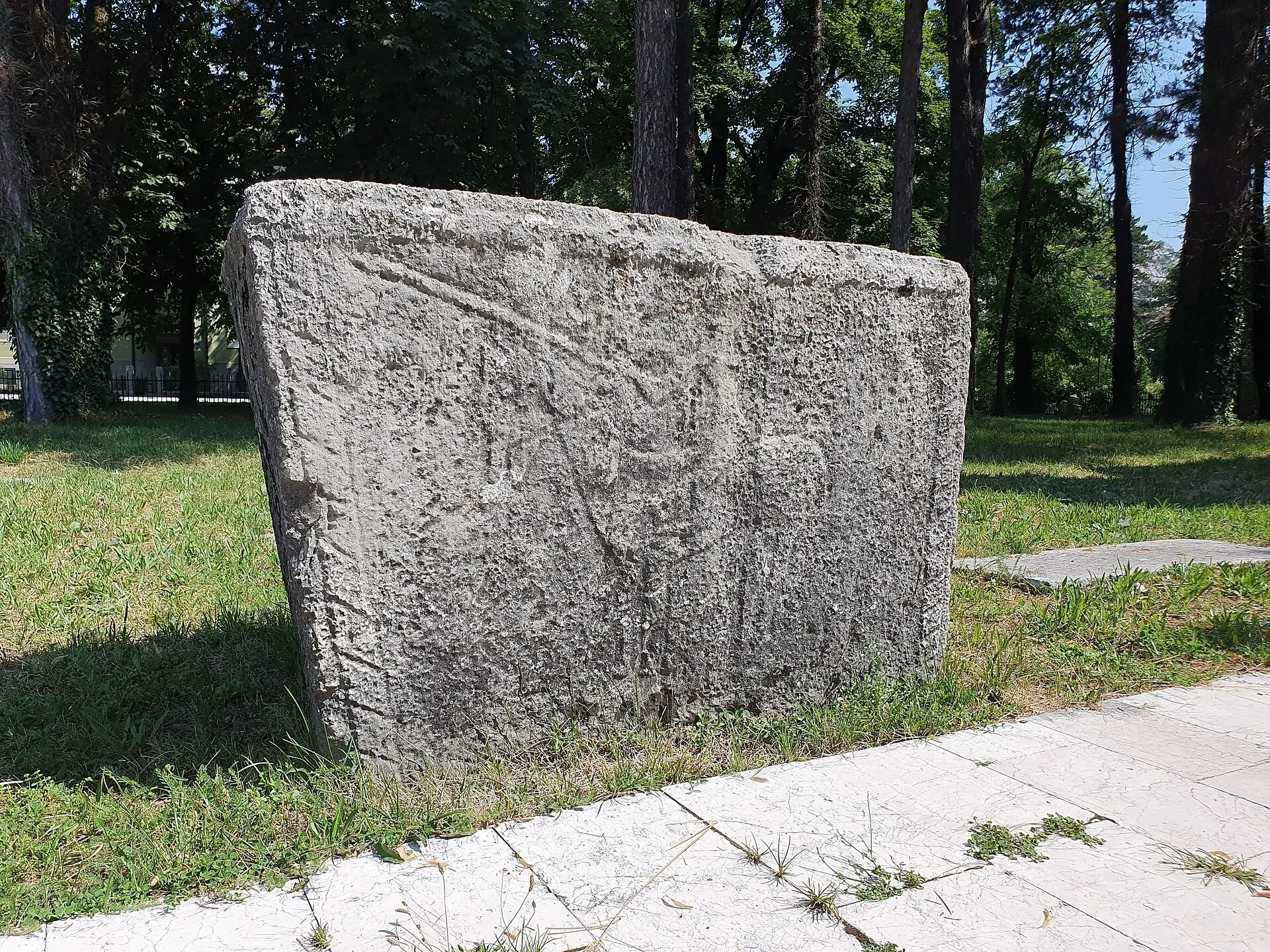
- Two medieval tombstones (stećci) in the churchyard are all that survives of a necropolis said to have numbered about 150.
- Free, and five minutes are enough if the church is locked, as it often is outside services. The Lovćenska vila memorial stands in front.
A church in a field
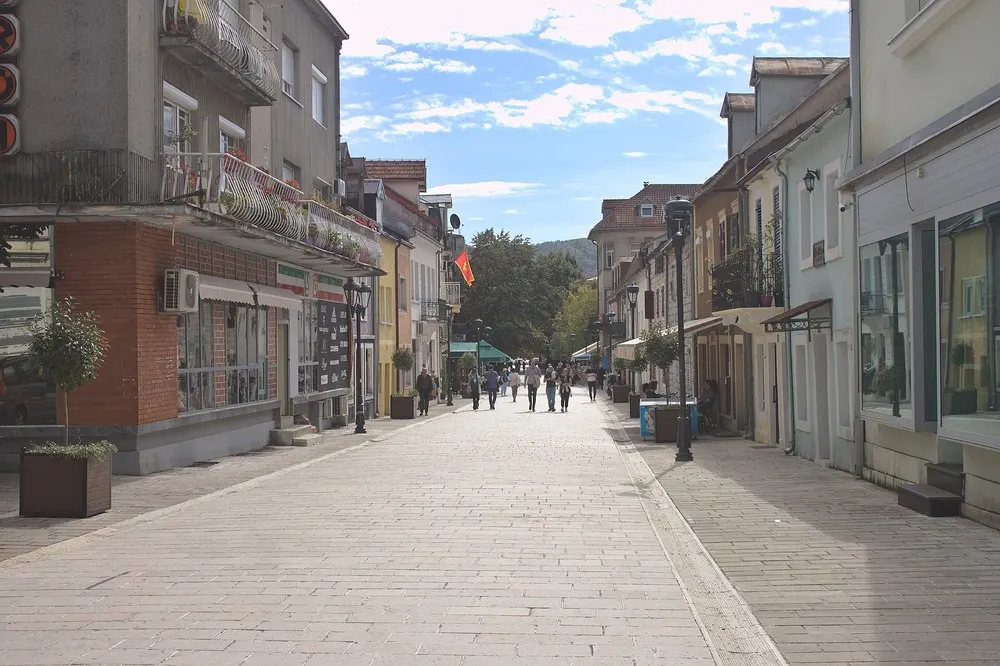
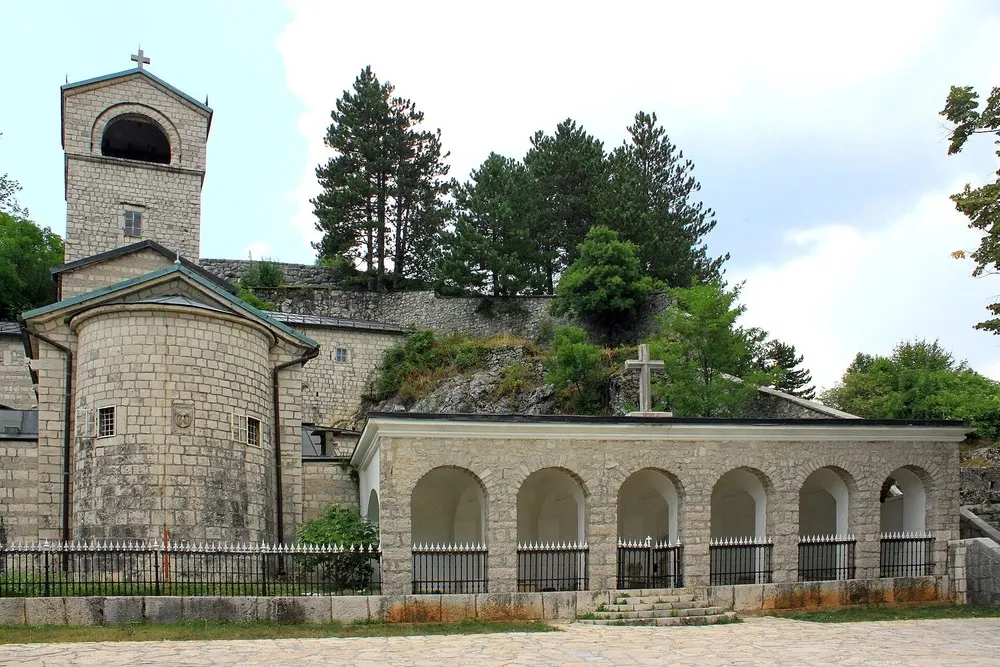
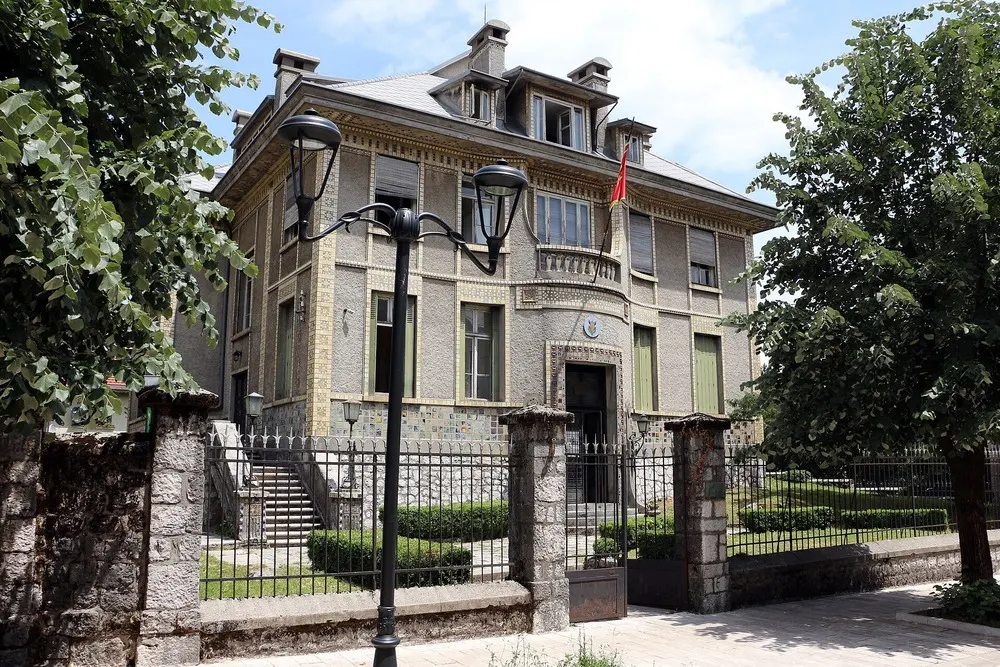
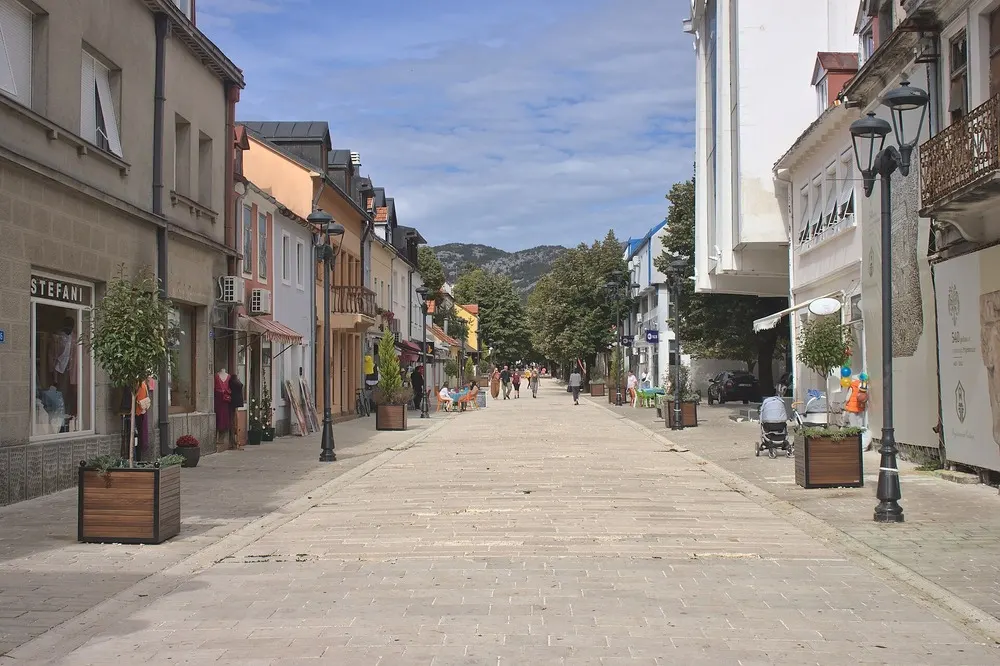
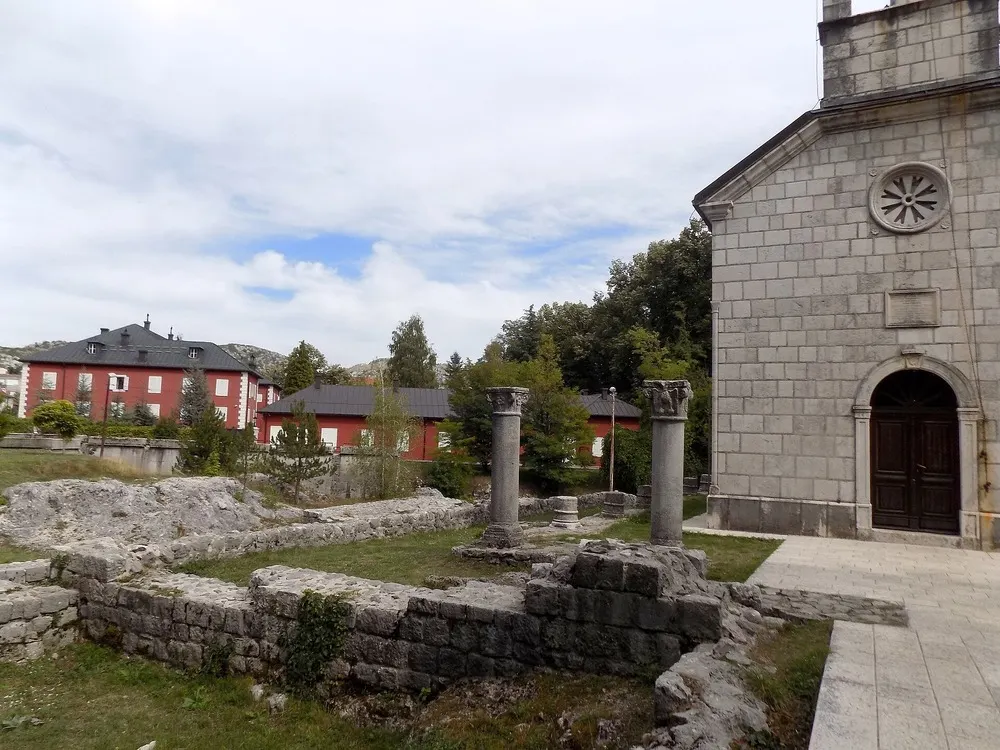
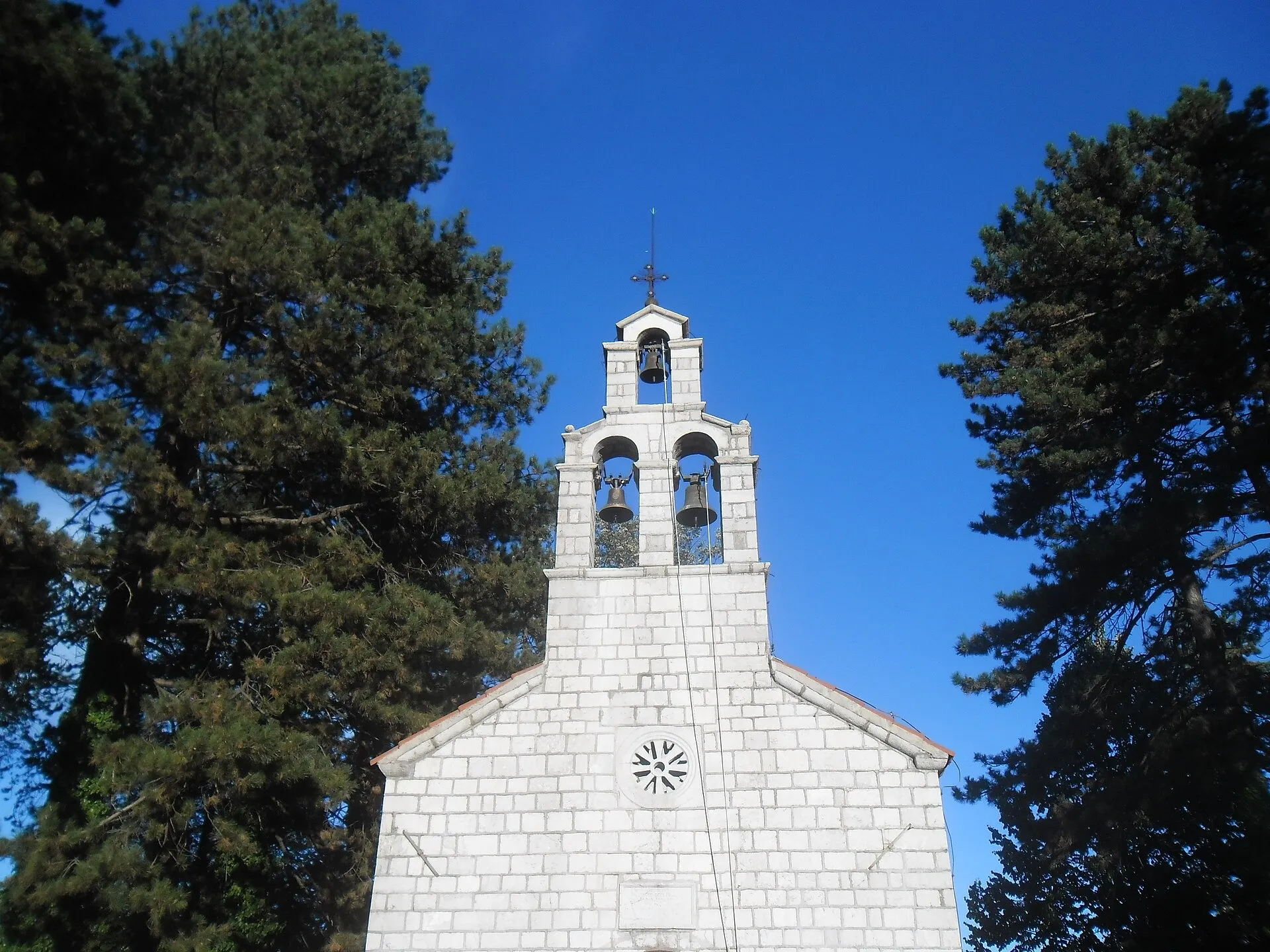
At the upper end of Njegoševa Street, a minute from the tiled French legation, a small square opens under old pines. In it, behind a low wall and a black iron fence, stands a plain church of pale ashlar with a red-tiled roof, a round window over the door and a bell-gable above the front. It looks like a hundred other village churches in Montenegro and the Bay of Kotor, and that is the point. The Vlach Church is what Cetinje was before it was a capital.
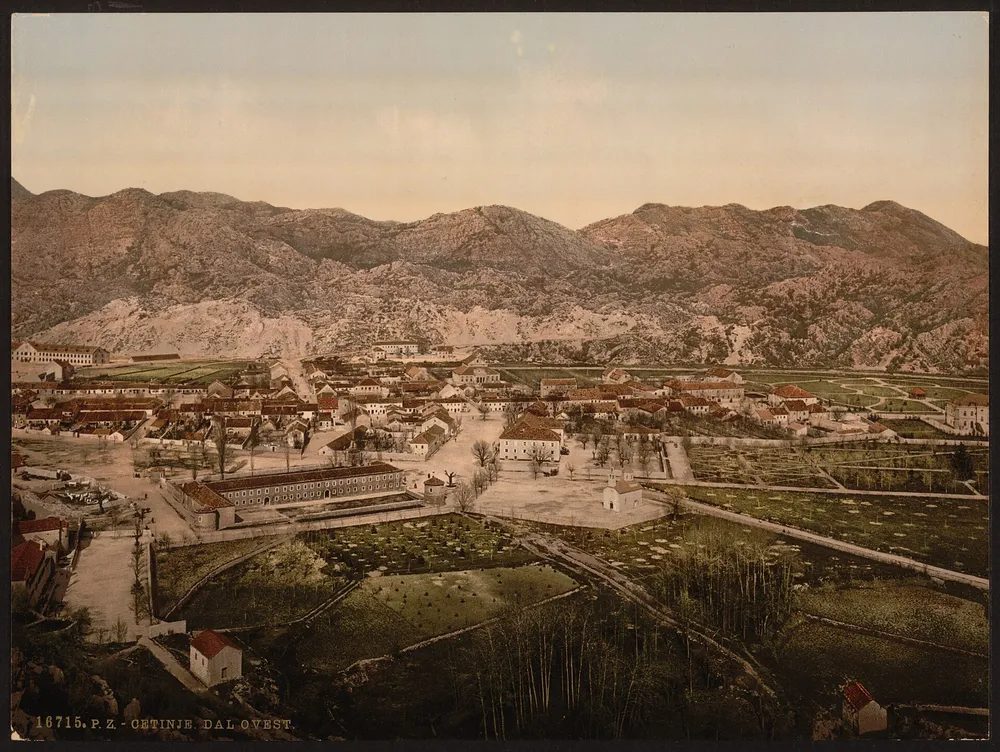
The field of Cetinje was summer pasture long before it was a town, and the church belonged to the settlement of herdsmen at Donji Kraj, the ‘lower end’ of the field. When Ivan Crnojević arrived in 1482 to build his court, and then his monastery, at the other end under Orlov krš, the church was already there. For three hundred years it and the monastery were the two fixed points of the place, with a scatter of houses between, and the later town grew up in the space that separated them.
It is dedicated to the Nativity of the Mother of God, the same dedication as the monastery, and is an Orthodox parish church in the care of the Metropolitanate of Montenegro and the Littoral.
- Local name
- Vlaška crkva
- First church
- About 1450, by tradition
- Present building
- 1864
- Fence
- 1897, from captured rifle barrels (sources give 1,544 or 1,550)
- Iconostasis
- 1878
- Entry
- Free; interior open around services
- From Dvorski trg
- About 400 m along Njegoševa Street
Why ‘Vlach’?
No one knows for certain, and the competing explanations are a small lesson in how a single word changed meaning in the Balkans. Vlah originally meant a speaker of a Romance language, a descendant of the Romanised population of the peninsula. Because many such communities lived by transhumant herding, by the late Middle Ages the word was widely used for a herdsman of any speech. In Catholic and Muslim mouths, it could also simply mean an Orthodox Christian.
- The herdsmen. The commonest account is that the church was built around 1450 by the Vlachs who kept the flocks on the Cetinje field, in some versions the herds of the Crnojević lords themselves.
- The founders. A tradition supported, according to some writers, by documents names the builders as Ivan Borojević, who came from the region of Stari Vlah in what is now south-western Serbia, and his wife Jelica. On this reading the ‘Vlach’ of the name is where the founder came from.
- The outsiders’ name. Other scholars treat it as an exonym, a label given by others, or as one of the cases where ‘Vlach church’ and ‘Vlach rite’ just meant Orthodox.
The explanations are not exclusive. A herdsman from Stari Vlah who founded an Orthodox church would satisfy all three.
The necropolis and the two stećci
The church was raised on a medieval burial ground. Local tradition counts about 150 tombstones there, of the kind called stećci: massive limestone slabs and blocks, sometimes carved, that were set over graves across Herzegovina, Bosnia, western Serbia and Montenegro between roughly the twelfth and the sixteenth centuries. Most were broken up or built into walls over the centuries. Two survive in the churchyard, weathered limestone slabs; they formerly stood facing each other and have been reset side by side.
Naturally they have acquired owners. One story, first written down by the Serbian traveller Ljubomir Nenadović in the nineteenth century, says they mark the graves of Bajo Pivljanin, the hajduk leader who fell fighting the Ottomans at Vrtijeljka above Cetinje in 1685, and his wife. Another gives them to the church’s founders, Ivan Borojević and Jelica. Neither can be proved.
You will sometimes read that the necropolis was ‘Bogomil’. That reflects a nineteenth-century theory which linked stećci to a heretical Bosnian church; modern scholarship regards them as the common funerary custom of the region’s Orthodox, Catholic and Bosnian-church communities alike. In 2016 UNESCO inscribed a selection of stećak graveyards in four countries, including sites in Montenegro near Žabljak and Plužine, on the World Heritage List. If the pair here interest you, there are eleven more in the Lapidarium in the courtyard of Biljarda.
Four churches, and the one you see
The first church is remembered as a hut of wattle daubed with mud. It was replaced by a building of dry stone, without mortar, and that in turn by one of stone laid in lime. The present church dates from 1864, early in the reign of Prince Nikola, when the settlement around it was beginning to turn into a town.
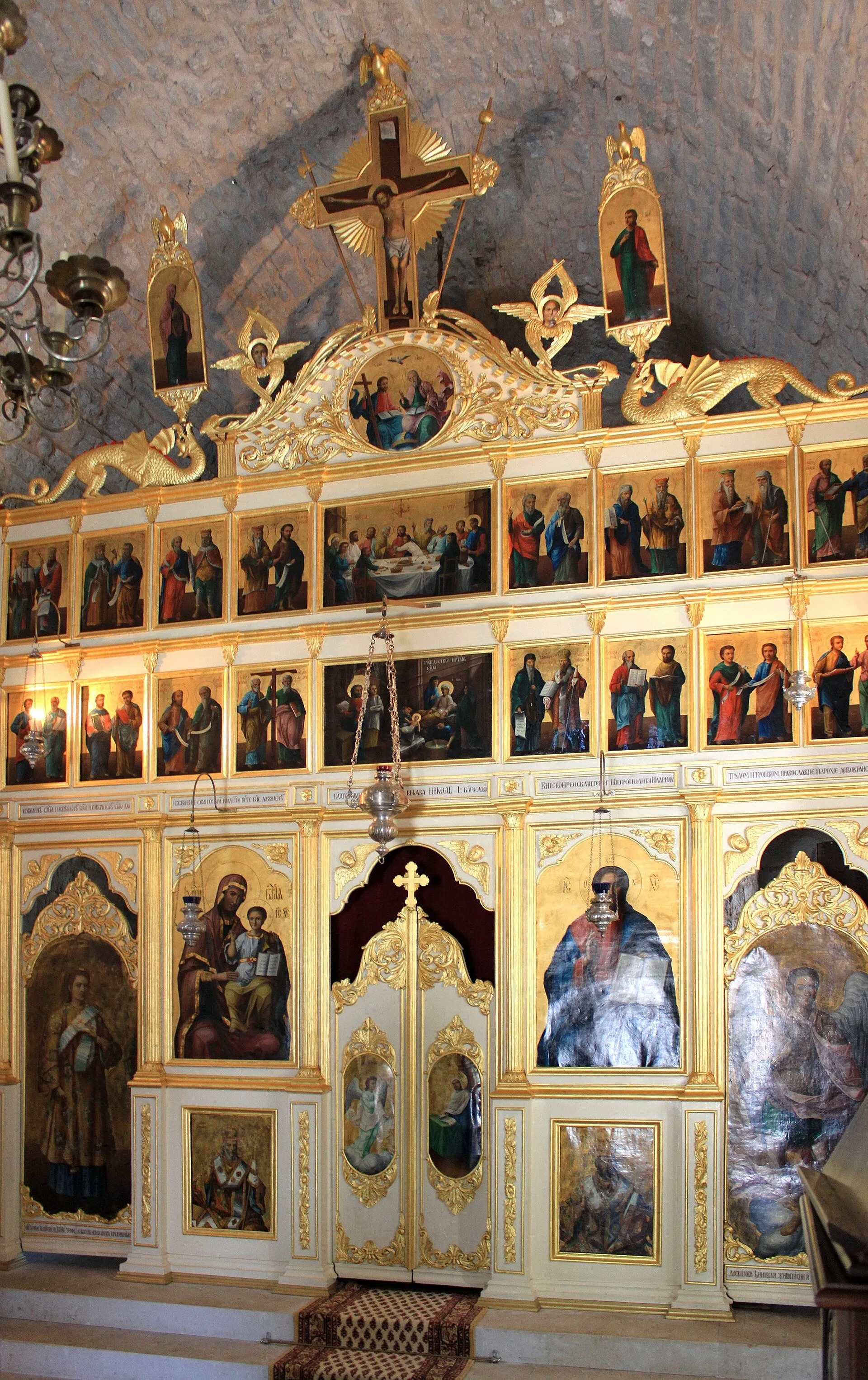
It is a single-nave building of carefully cut white limestone, with a simple round-arched doorway, a rose window and a bell-gable for three bells over the front. Inside, the eye goes to the iconostasis of 1878, a tall gilded screen in several tiers, with the large icons beside the royal doors below and rows of smaller panels above. The date places it in the year of the Congress of Berlin and of Montenegro’s recognition, when the town was beginning to spend money on itself.
The churchyard is also a small cemetery, with nineteenth-century graves and memorial busts among the trees.
The fence of rifle barrels
In 1897 the churchyard was enclosed with a new railing. The design is ordinary: stone posts, horizontal iron bars, slim uprights. The uprights are not ordinary. Each is the barrel of a rifle taken from the Ottoman army. Published counts differ slightly, 1,544 in some guides and 1,550 in others; ‘more than fifteen hundred’ is safe.
The guns are usually said to have been captured at Grahovac, the battle of May 1858 in which the Montenegrins under Grand Duke Mirko, Prince Nikola’s father, destroyed an Ottoman column and forced the first international demarcation of Montenegro’s frontier. Some accounts add trophies from the war of 1876–1878. Either way, by the 1890s these were obsolete weapons, and somebody had the idea of beating them, if not into ploughshares, then into a churchyard fence.
It is the most quoted object in Cetinje, and it deserves to be, because it says in iron what the town’s museums say at greater length: that this was a state built by war, proud of it, and by 1897 confident enough to treat its enemy’s weapons as scrap.
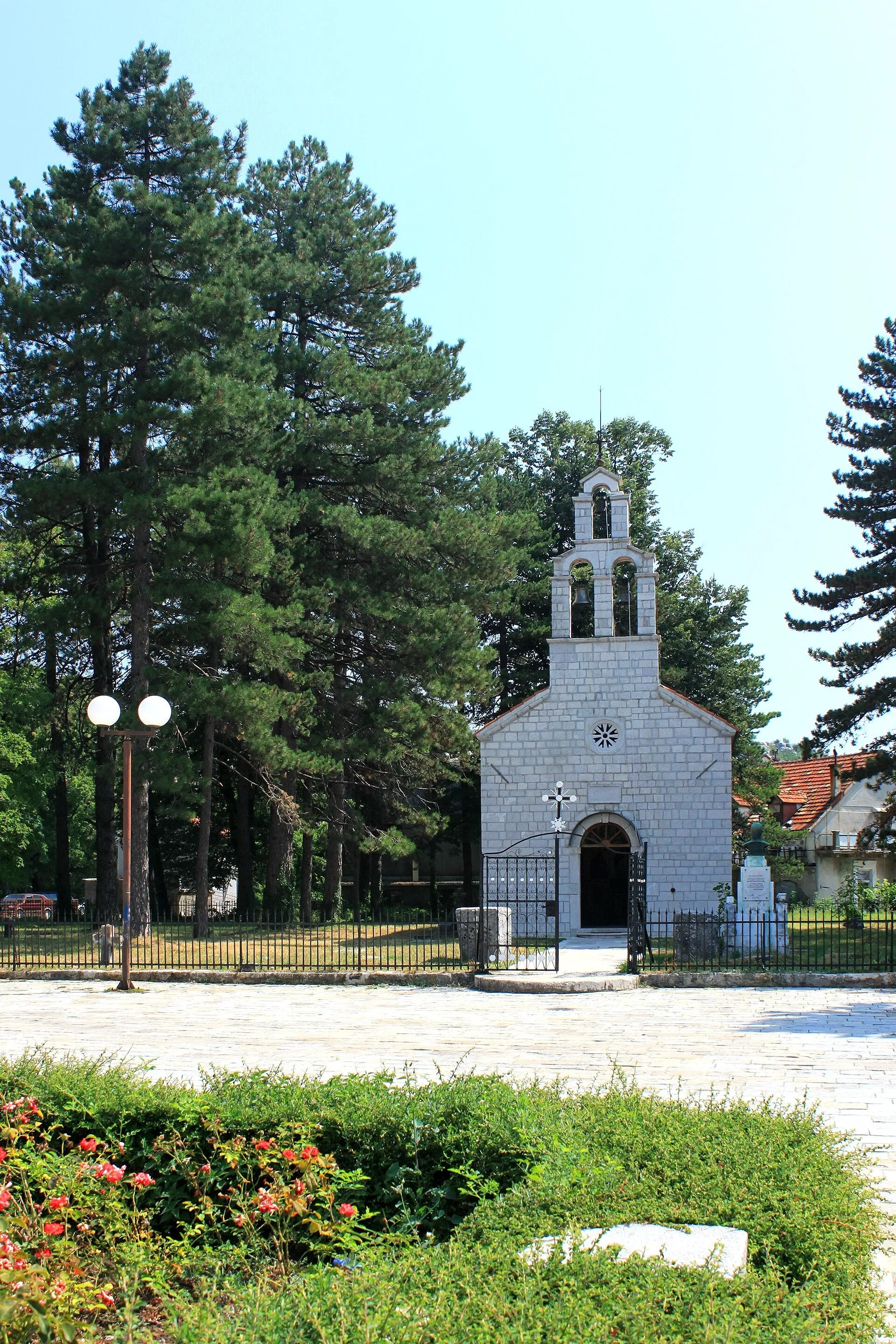
The church in its yard. The uprights of the railing put up in 1897 are captured rifle barrels.
The Lovćenska vila
On the open ground in front of the church stands the figure of a young woman on a tall stone pedestal, a laurel wreath in her left hand and a sword in her right, facing Mount Lovćen and the sea beyond. This is the Lovćenska vila, the ‘fairy of Lovćen’, the work of the sculptor Risto Stijović, unveiled in 1939.
It commemorates Montenegrin emigrants who volunteered in the United States to come home and fight in the First World War. On 6 January 1916 their ship was sunk off the Albanian port of San Giovanni di Medua, today’s Shëngjin, within sight of the coast, and many of them drowned. The monument was paid for by subscription; reliefs on the pedestal show the voyage, the wreck and the rescue of survivors. It is one of the few interwar monuments in the town, and one of the most affecting.
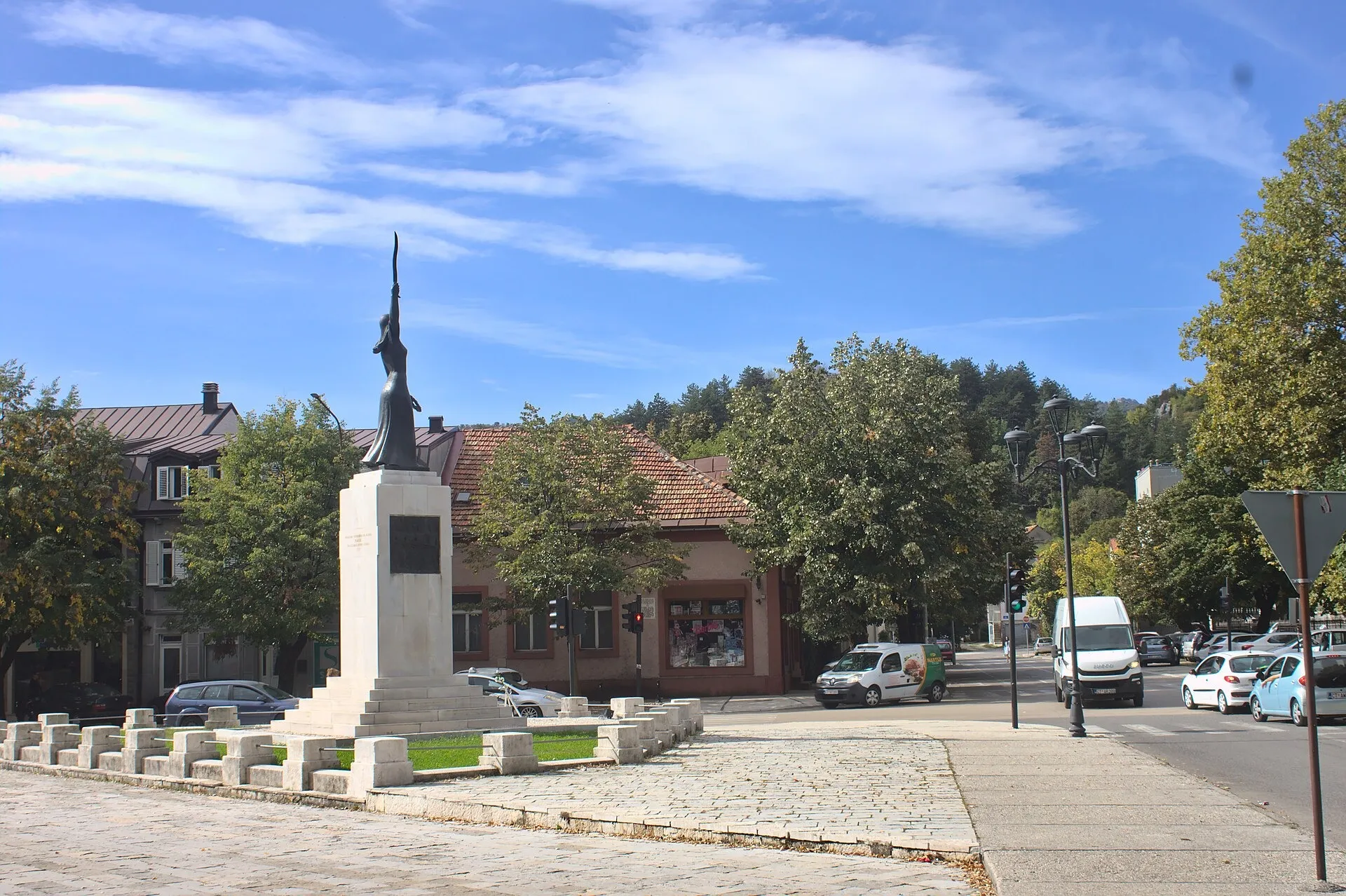
Risto Stijović’s Lovćenska vila (1939), the memorial to the volunteers lost at sea in January 1916.
Visiting
- Where: at the top of Njegoševa Street, about 400 m from Dvorski trg and 120 m from the former French legation. Balšića pazar, the old market square, is two minutes away.
- When: the churchyard, fence, tombstones and monument can be seen at any hour. The church itself is generally open for services and often closed otherwise; there is no published timetable.
- Cost: free.
- Inside: dress as for any Orthodox church, with shoulders and knees covered, and do not photograph during a service.
- Time: five to fifteen minutes.
The church is the natural turning point of a walk up Njegoševa Street: see it, then cross to the French legation and either return down the street or continue east to Zetski dom. The full circuit is on our walking tour page, and guided versions are available through the Cetinje guided walking tour with museum entry.
Frequently asked questions
How old is the Vlach Church?
Tradition dates the first church on the site to about 1450, which makes it older than the town of Cetinje. The building you see was put up in 1864.
What is the fence of the Vlach Church made of?
The uprights are barrels of rifles captured from the Ottoman army, most of them, by tradition, at the battle of Grahovac in 1858. The fence was built in 1897; sources count 1,544 or 1,550 barrels.
Why is it called the Vlach Church?
The origin is uncertain. The usual explanations are that it was built by Vlach herdsmen who grazed flocks on the Cetinje field, that its founder came from the Stari Vlah region, or that ‘Vlach church’ was simply a name others gave to an Orthodox church.
What are the stones in the churchyard?
Two stećci, medieval tombstones of a type found across Bosnia, Herzegovina, western Serbia and Montenegro. They are the survivors of a necropolis said to have had about 150.
Is the Vlach Church open?
The churchyard is always accessible. The interior is usually open around services and often locked at other times; there is no entrance fee.
What is the statue in front of the church?
The Lovćenska vila by Risto Stijović (1939), a memorial to Montenegrin volunteers from America who drowned when their ship was sunk off Shëngjin, Albania, on 6 January 1916.
Sources and official information
Facts were checked against these official and scholarly sources in November 2026. Opening hours, ticket prices, park fees and timetables change, so confirm before you go.
Cetinje.com is an independent guide, not the official site of the Old Royal Capital Cetinje, the National Museum of Montenegro, any tour operator, hotel or the government of Montenegro. Some links are affiliate links: tours go to GetYourGuide and accommodation goes to Booking.com, and we may earn a commission at no extra cost to you.