In short
- Cetinje was founded when Ivan Crnojević, lord of Zeta, retreated from Lake Skadar into the mountains: he built a court here in 1482 and a monastery in 1484.
- For some 350 years the town was little more than a monastery, the seat of the bishops (vladikas) who led the Montenegrin clans; it was burned or blown up in 1692, 1714 and 1785 and rebuilt each time.
- The Petrović-Njegoš family held the bishop's throne from 1697, passing it from uncle to nephew, until Danilo made Montenegro a secular principality in 1852.
- After the Congress of Berlin recognised Montenegro in 1878, Cetinje became Europe's smallest capital, with a ring of foreign legations, a theatre, a palace and, from 1910, a king.
- Occupied in 1916, absorbed into the Yugoslav kingdom after the disputed Podgorica Assembly of 1918 and replaced as capital by Titograd (Podgorica) in 1946, it remains the constitutional Old Royal Capital of Montenegro.
A field under Lovćen
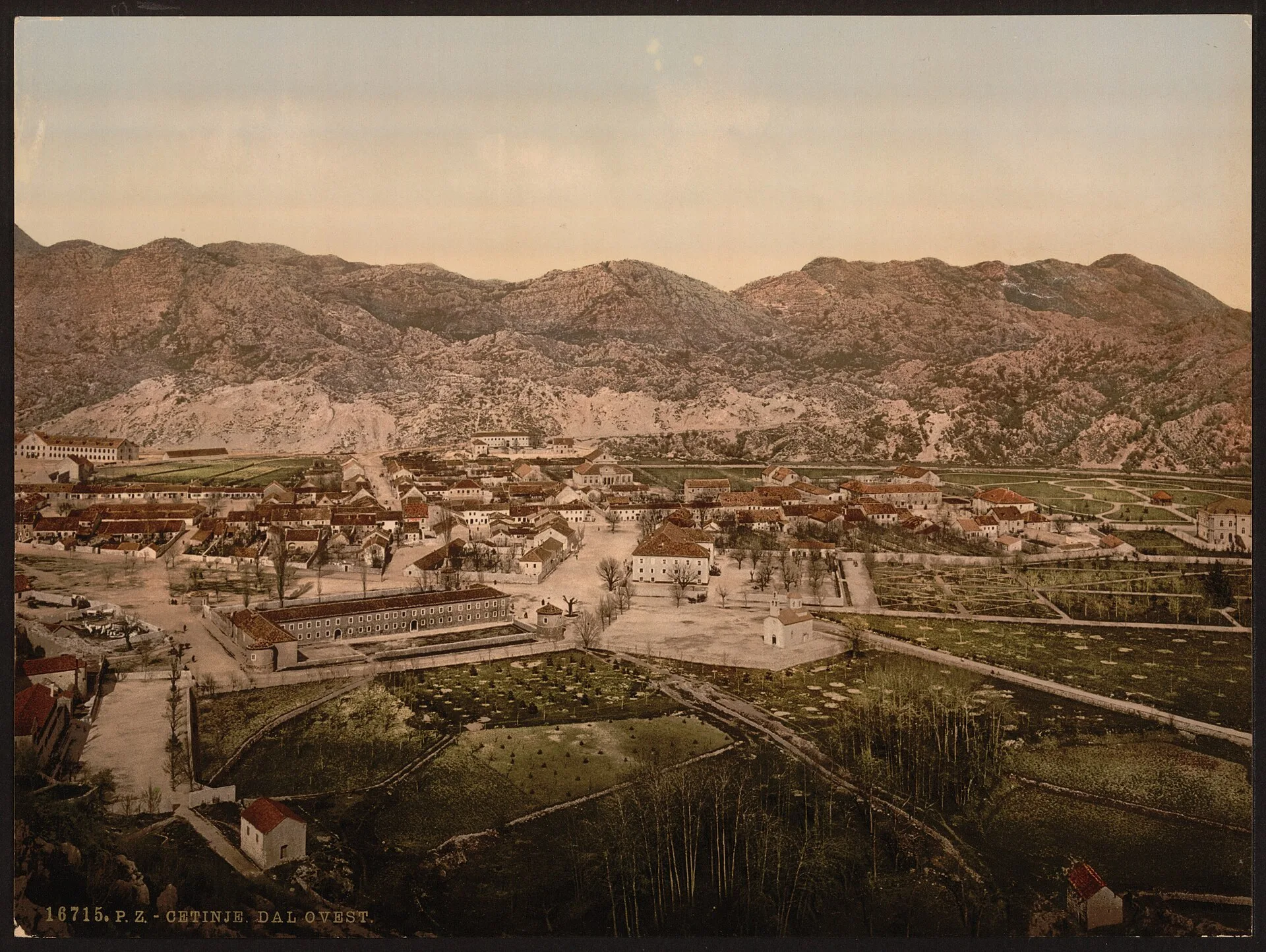
Cetinje sits in a closed karst field roughly 670 metres above the sea, a flat floor of about seven square kilometres with grey limestone on every side and the bulk of Lovćen to the west. No river crosses it. Rain, and Cetinje gets a great deal of it, drains straight into the rock. That geography explains almost everything that follows. The field was hard to reach from the coast, a day's climb above Kotor, and harder still from the Ottoman lowlands around Lake Skadar. It could feed very few people, so no army could stay long. It was a place to hold out in, not a place to grow rich in.
The name is first recorded in 1440, when the field belonged to the medieval lordship of Zeta, and it is usually explained by a stream called the Cetina that once ran here and has long since vanished into the karst. Before the 1480s there was no town: only summer pastures, a few hamlets and, according to local tradition, a small church put up around 1450 by herdsmen, on the spot where the Vlach Church stands today. If the tradition is right, it is the one building site in Cetinje older than Cetinje itself.
What you walk through now is, for the most part, a town of the years 1870 to 1914, laid out on a grid and planted with lime trees. Underneath it lies a much older and much smaller Cetinje: a monastery, a few stone houses and a threshing floor where the clans met. This guide follows that story in order. The buildings themselves are described one by one in the architecture guide, and the people who shaped the town have their own pages: the Petrović-Njegoš dynasty, Njegoš and King Nikola.
1482–1496: Ivan Crnojević builds a court, a monastery and a capital
The founder was Ivan Crnojević, lord of Zeta from 1465 to 1490, a ruler caught between Venice on the coast and the Ottoman advance from the east. His seat was the fortress of Žabljak, on what is now the edge of Lake Skadar. When the Ottomans took Žabljak in 1478 he fell back to Obod, the hill above the river port known today as Rijeka Crnojevića, and when Venice made peace with the sultan in 1479 without him he had to leave for Italy altogether.
He came back in 1481, after the death of Mehmed II, recovered his lands with the acceptance of the new sultan, whose vassal he became, and then made the decision that created Cetinje. Rather than rebuild on the exposed lake shore he moved his seat deeper into the mountains. In 1482 he had a court built in the field below Lovćen. In 1484 he founded beside it a monastery dedicated to the Nativity of the Virgin, endowed it by a charter usually dated 4 January 1485, and transferred to it the seat of the Metropolitanate of Zeta, whose bishop had until then moved between monasteries around the lake. From that moment Cetinje was both the political and the religious centre of what remained of the free territory.
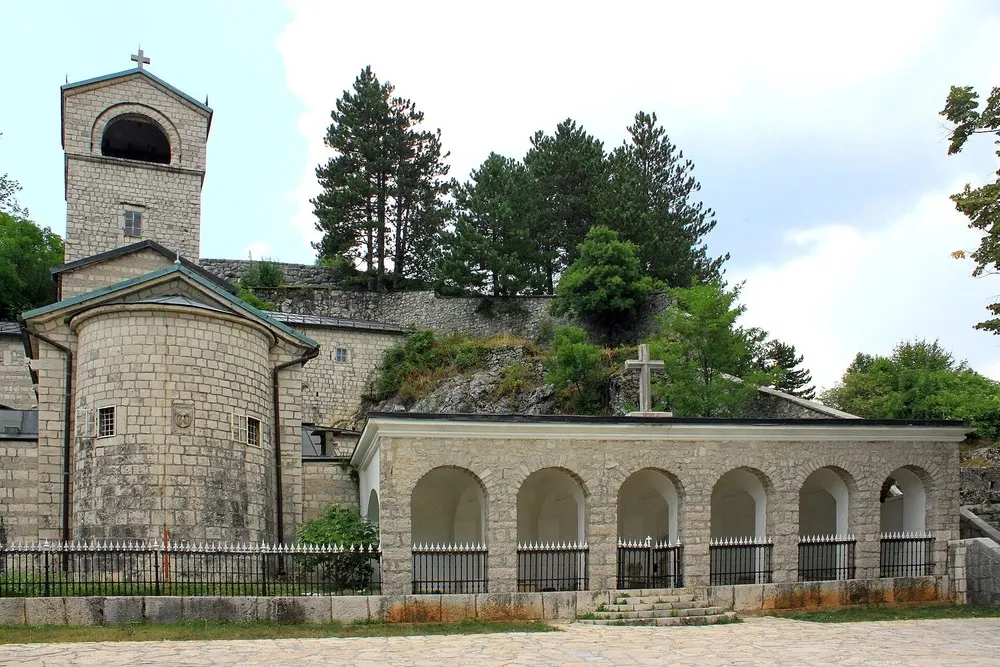
Neither building survives above ground. The court stood where the present Cetinje Monastery stands; the first monastery stood a few hundred metres away on the low rise called Ćipur, where its foundations are laid out in the grass around the little Court Church. The name Ćipur is generally derived from the Greek word for a garden. Descriptions and the excavated plan show a walled complex with a single-nave church surrounded by a colonnade, and carved capitals that have led historians to call it the first building of Renaissance character in Montenegro. A few of those capitals were later built into the present monastery, where you can still pick them out.
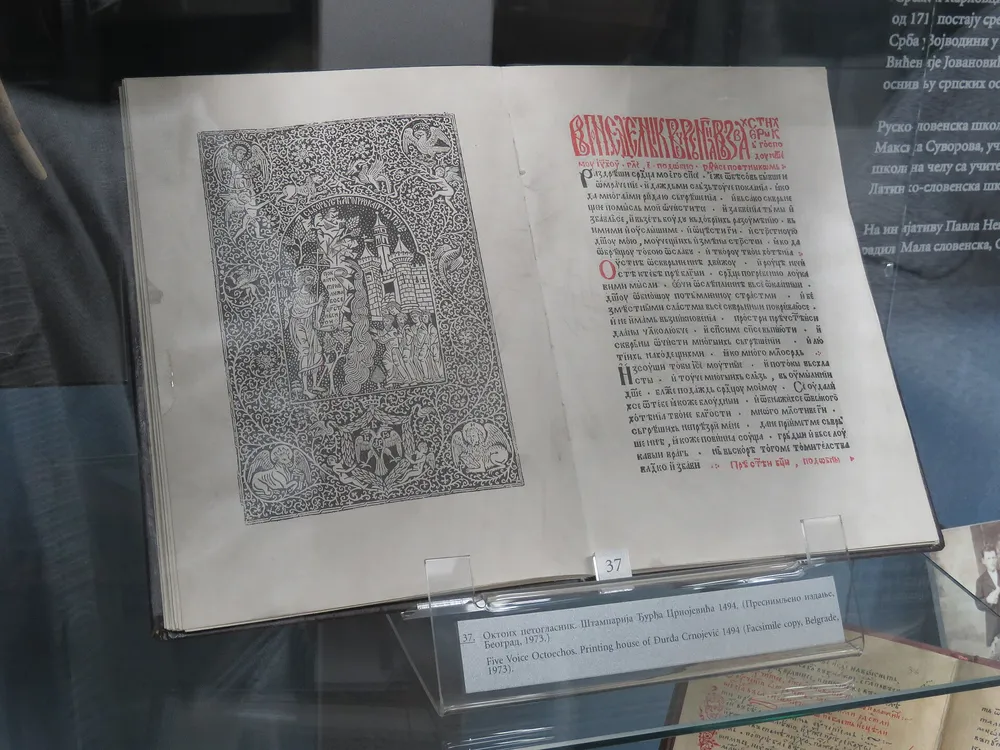
Ivan died in 1490 and was buried in his monastery. His son Đurađ, an educated man with a Venetian wife, ruled for only six years, but he left the achievement for which the Crnojevići are best remembered: a printing press. Set up in 1493 and worked by monks under the hieromonk Makarije, it finished its first book, the Oktoih prvoglasnik, on 4 January 1494. It was the first state-owned press in South-Eastern Europe and it printed in Cyrillic barely forty years after Gutenberg. The full story, including the old argument over whether the press stood at Obod or in Cetinje, is told in the guide to the Crnojević printing house.
In 1496 Đurađ was forced out and went to Venice. A younger brother, Stefan, held on for a time as an Ottoman vassal, and the lands of the Crnojevići were then attached to the sanjak of Shkodër (Scutari). Between 1514 and 1528 they formed a separate sanjak of Montenegro governed by another of Ivan's sons, Staniša, who had been sent to Constantinople as a hostage in his youth, converted to Islam and is known to history as Skender-beg Crnojević. With him the dynasty that founded Cetinje ends. The lake-shore world they came from, Žabljak, Obod and the island monasteries, is covered in the Lake Skadar guide on ExploreMontenegro.
The Ottoman centuries: bishops chosen by the clans
On Ottoman tax registers the highlands above the lake were now part of the empire. In practice the sultan's officials rarely came this far, and the clans of the four districts (nahije) of what came to be called Old Montenegro, Katunska, Riječka, Crmnička and Lješanska, largely governed themselves. They owed a poll tax, paid it irregularly and sometimes not at all, and settled their own quarrels by custom and by blood feud.
The one institution that stood above the clans was the monastery at Cetinje. Its bishop, the vladika, was the only figure whose authority every clan could accept, because he belonged to none of their feuds. Over the sixteenth and seventeenth centuries the vladikas, chosen by an assembly of clan chiefs and consecrated under the Serbian Patriarchate of Peć, became mediators, then spokesmen, and finally political leaders. The general assembly, the zbor, met on the open ground in front of the monastery. It is from this arrangement that historians date the theocratic state usually called the Prince-Bishopric of Montenegro, though the title prince-bishop is a later, Western way of describing it.
Cetinje itself did not grow. Through these two centuries it remained the monastery, its outbuildings, the ruined court and a scatter of houses. Venetian reports and travellers describe a place of a few dozen hearths. The printing press was gone, though the monastery kept and copied books, and the town's importance was entirely out of proportion to its size: this was where the clans were reconciled, where letters to Venice and later to Russia were written, and where every punitive expedition from Shkodër was aimed.
1692: the monastery is blown up
The long war between the Ottoman Empire and the Holy League (1683–1699) pulled the Montenegrins openly onto the Venetian side. In 1685 Süleyman Pasha Bushati of Shkodër defeated a force of Venetian irregulars and highlanders at Vrtijeljka, on the eastern approach to the field, and entered Cetinje. In 1688 the clans placed themselves under Venetian protection and a small Venetian garrison was installed in the monastery.
In September 1692 Süleyman Pasha came back with a larger army. The garrison negotiated its withdrawal, but before leaving it mined the building. The explosion, set off as the pasha's troops moved in, destroyed Ivan Crnojević's monastery and is said to have killed many of the attackers. The court had already been wrecked. Two centuries after its foundation Cetinje was a heap of cut stone on Ćipur.
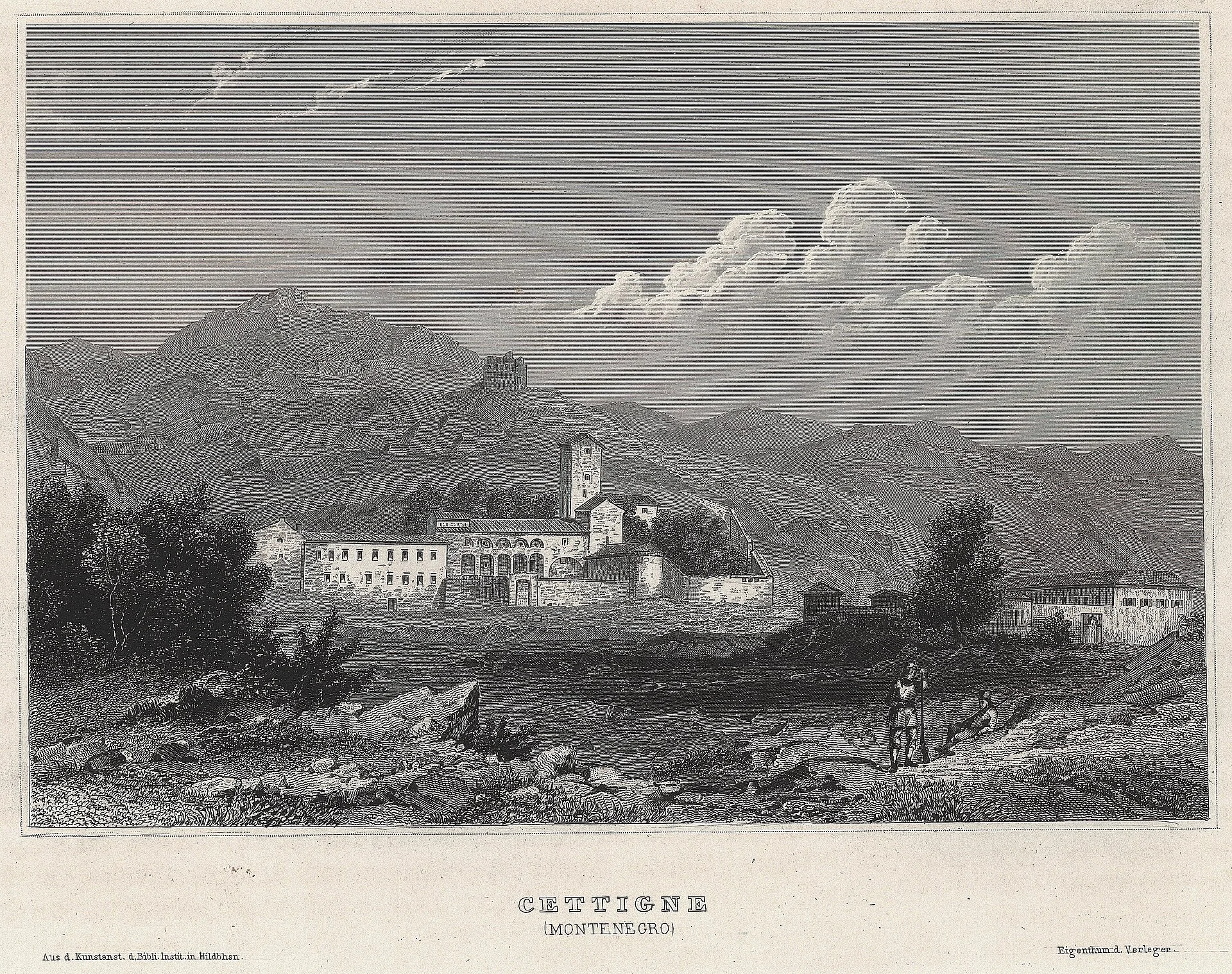
Cetinje Monastery in an engraving published in Meyer's Universum in 1857, six years after Njegoš's death. The tower on the rock above is the Tablja; the town barely exists yet.
1697–1735: Danilo and the Petrović-Njegoš succession
In 1697 the assembly of chiefs chose a young monk from Njeguši, Danilo Šćepčević Petrović, as vladika. He was consecrated in 1700, not at Peć, which was under Ottoman control, but in southern Hungary by the exiled Serbian patriarch Arsenije III. Danilo did two things that fixed the shape of Montenegrin history. He rebuilt Cetinje, and he kept the bishop's throne in his own family.
The new monastery went up between 1701 and 1704, not on Ćipur but on the site of the old Crnojević court at the foot of the rock called Orlov krš, using stone from the ruins. Danilo had a plaque with the double-headed eagle of the Crnojevići and a dedication recalling Ivan set into the wall, a deliberate statement that the bishops were the heirs of the medieval lords. This is the core of the monastery you visit today.
Because an Orthodox bishop cannot marry, Danilo named a nephew as his successor, and the assembly accepted him. The office passed from uncle to nephew within the Petrović family of Njeguši for the next century and a half. It was never a written rule, and it was contested more than once, but it gave the clans something they had lacked since 1496: a continuous line of rulers.
Danilo's reign is also the setting of the most disputed episode in Montenegrin tradition, the so-called extermination of the converts to Islam (istraga poturica), which Njegoš made the subject of The Mountain Wreath. Folk tradition places it on a Christmas Eve in the first decade of the eighteenth century. No contemporary document describes such an event, and most historians now think that a slower process of expulsion and assimilation was later compressed into a single night by oral poetry.
What is well documented is the turn to Russia. In 1711 an envoy of Peter the Great, Mihailo Miloradović, arrived in Cetinje with the tsar's appeal to the Balkan Christians to rise, and the clans did. The Ottoman response came in two waves. An army under Ahmed Pasha invaded in 1712; tradition records a Montenegrin victory at Carev Laz, though the scale of the battle is debated. In 1714 Numan Pasha Köprülü, with far larger forces, broke into Old Montenegro, burned the villages and destroyed Danilo's new monastery. Danilo escaped to the coast, travelled to St Petersburg in 1715 and came back with money, church books and the promise of a regular Russian subsidy. The monastery was rebuilt again in the following years.
Danilo died in January 1735 and was buried at the monastery of Podmaine above Budva. His remains were later brought to Cetinje, and in 1896, for the two-hundredth anniversary of the dynasty, Prince Nikola had the open, domed mausoleum built on Orlov krš that still looks down on the town. Contemporary reports credit the idea to a sketch by Princess Jelena, the future queen of Italy.
1735–1784: Sava, Vasilije and the false tsar
Danilo's successor Sava was a quiet, monastic figure who ruled, at least in name, for almost half a century (1735–1781) and preferred accommodation with Venice. From about 1750 real initiative lay with his cousin and co-ruler Vasilije, who went three times to Russia to plead for support, wrote the first printed history of Montenegro (Moscow, 1754) and died in St Petersburg in 1766.
The year after his death one of the strangest figures in Balkan history appeared. A stranger who called himself Šćepan Mali, Stephen the Little, let it be believed that he was the Russian tsar Peter III, who had in fact been murdered in 1762. The clans accepted him as their ruler in 1767 and Sava was pushed aside. Whoever he was, Šćepan governed with unexpected skill for six years: he suppressed blood feuds, set up a court to judge disputes and survived both an Ottoman invasion in 1768 and a Russian mission sent to unmask him. He was killed in 1773 by a servant who is generally believed to have been bribed by the pasha of Shkodër. Njegoš later wrote a play about him.
Sava returned to the throne for a last few years, and a brief, unpopular interlude under his nephew Arsenije Plamenac ended with Arsenije's death in 1784. That year the chiefs sent the archimandrite Petar Petrović to be consecrated at Sremski Karlovci, in the Habsburg lands.
1784–1830: Petar I, the saint who gave the clans a law
Petar I Petrović-Njegoš is, for Montenegrins, the figure against whom all later rulers are measured. His reign began with a disaster. In 1785, while he was abroad seeking Russian help, Mahmud Pasha Bushati, the nearly independent ruler of Shkodër, marched into Old Montenegro, sacked Cetinje and burned the monastery, the third destruction in under a century. It was patched up yet again the following year.
Eleven years later the same pasha came back and the outcome was reversed. In July 1796 the Montenegrins and the highland clans of the Brda defeated him at Martinići; in the autumn, at Krusi, his army was routed and Mahmud Pasha himself was killed. His head was carried to Cetinje. The two victories doubled the territory under the vladika's authority by binding the Brda clans to Old Montenegro, and they are the reason Ottoman armies did not enter Cetinje again.
Petar used the prestige to do what no vladika had managed: impose a common law. An oath of unity known as the Stega was sworn before the battles of 1796. In 1798 the assembly adopted the first sixteen articles of a general code for Montenegro and the Brda, extended to thirty-three in 1803, and set up a court of clan leaders to apply it. The code was short and often ignored, and blood feuds went on, but the principle that a murderer answered to the country and not only to the victim's kin had been stated.
His later years were taken up by the Napoleonic wars on the coast. With Russian naval support the Montenegrins fought the French around the Bay of Kotor and Dubrovnik in 1806–07, and in 1813 they briefly held Kotor and proclaimed a union with the Bay before the Congress of Vienna gave the coast to Austria. For the next century the Habsburg frontier ran along the ridge above Kotor, an hour's ride from Cetinje.
Petar I died in the monastery on 18 October 1830 by the old calendar, 30 October by the new. Four years later his successor proclaimed him a saint. His relics lie in an open reliquary in the monastery church, and Saint Peter of Cetinje is the reason pilgrims come here; his feast, now kept on 31 October, is the town's great church day.
1830–1851: Njegoš turns a monastery into a seat of government
The saint's chosen heir was a seventeen-year-old nephew, Rade Tomov, who took the monastic name Petar and is known everywhere simply as Njegoš. Tall, largely self-taught and one of the great poets of the South Slav languages, he also had a clear idea of what a state required, and he began to supply it.
In 1831, with Russian advisers, he created a Senate of leading chiefs as a supreme court and council, a mobile police force called the Gvardija and a bodyguard, the perjanici. In 1833, the year he was consecrated bishop in St Petersburg, he began to collect the first regular tax. In 1834 he opened the first elementary school in Cetinje and installed a printing press bought in Russia, which issued the almanac Grlica from 1835. All of this still fitted inside the monastery walls, which is why he built the first secular public building in the town: a long fortified residence with corner towers, finished in 1838 and soon nicknamed Biljarda after the billiard table carried up from Kotor on men's shoulders. On the rock behind the monastery he also put up a round tower, the Tablja, intended as a battery; it ended up being used to fire salutes and to display the heads of enemies killed on the frontier, a practice that horrified foreign visitors such as the English traveller John Gardner Wilkinson in 1844 and that was ended under Njegoš's successors.
By the time of his death Cetinje consisted of the monastery, the Biljarda and a few dozen houses strung along the track that is now Njegoševa Street. But it had a government. Njegoš died of tuberculosis in the Biljarda on 31 October 1851 (19 October old style), aged thirty-seven, having asked to be buried in the chapel he had built on the summit of Lovćen. His life, his poetry and the long quarrel over his tomb are the subject of a separate guide: Njegoš.
1852–1878: a principality and its wars
Njegoš's nephew Danilo had no wish to be a monk. With Russian consent he was proclaimed hereditary Prince of Montenegro in March 1852, ending three and a half centuries of rule by bishops. The Ottoman Empire, which still regarded Montenegro as its own territory, replied with an invasion under Omer Pasha in the winter of 1852–53 that was halted by Austrian and Russian diplomatic pressure. Danilo issued a new legal code in 1855, broke the resistance of clans that refused to pay tax, and in May 1858 his elder brother Mirko won the battle of Grahovac, after which a commission of the great powers drew Montenegro's border on the ground for the first time. Danilo was shot at the quay in Kotor in August 1860 by a Montenegrin exile and died there; he is buried in Cetinje Monastery.
His successor was Mirko's nineteen-year-old son Nikola, fresh from school in Paris, who would reign for fifty-eight years. The beginning was hard. A second war in 1862 brought Omer Pasha's columns to within reach of Cetinje before the Convention of Scutari ended it on humiliating terms. Nikola spent the next decade reorganising the army with Russian money and Serbian instructors, and quietly building. The first inn, the Lokanda, opened in 1864. A modest new residence, begun for Danilo's widow Darinka, was finished in 1867 and became the princely court when she left the country; it is the building now visited as King Nikola's Palace. A seminary and a girls' boarding school, the Institute of the Empress Maria, were founded in 1869 with Russian funds (the Institute's own building followed in 1871), a hospital named after Prince Danilo in 1873, and the first newspaper, Crnogorac, appeared in 1871.
The war that made Montenegro came in 1876. Nikola joined Serbia against the Ottomans, won a striking victory at Vučji Do in July of that year, and in 1877–78, with Russia now at war as well, took Nikšić, Bar and Ulcinj. The Congress of Berlin, in July 1878, formally recognised Montenegro as an independent state, more than doubled its territory and gave it a short coastline at Bar, to which Ulcinj was added in 1880. For the first time since Ivan Crnojević, the ruler in Cetinje also ruled Podgorica and the lake.
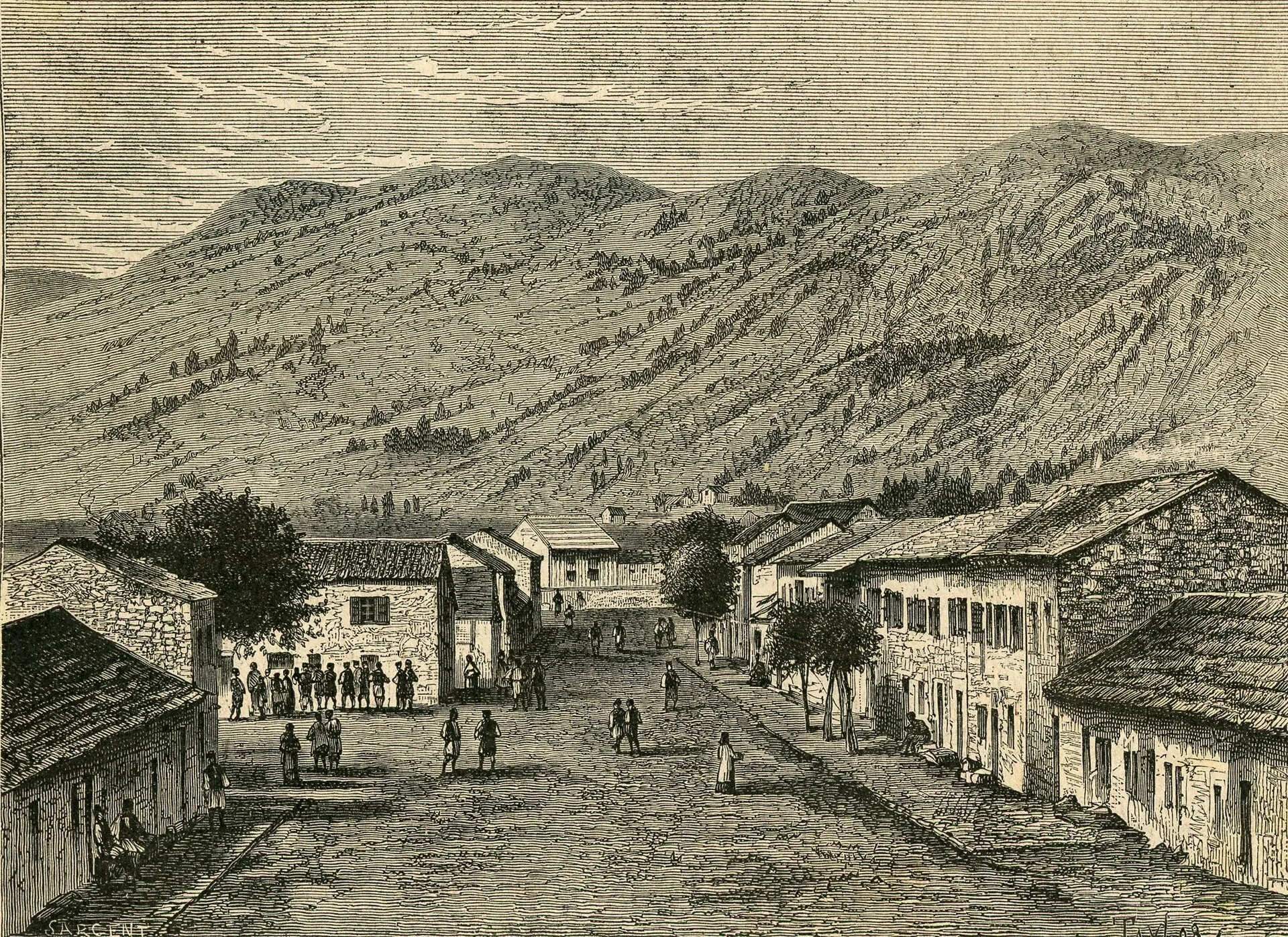
The main street of Cetinje in an Italian engraving of 1884: single-storey stone houses, a wide unpaved road and Lovćen behind. Six years after the Congress of Berlin, the capital still had the scale of a village.
1878–1914: the smallest capital in Europe
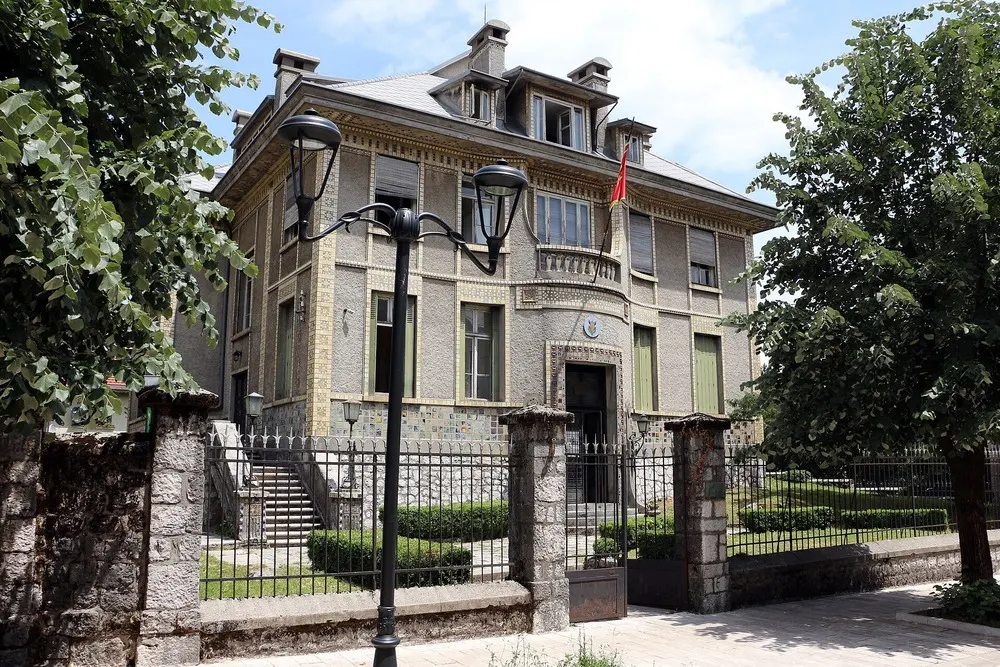
Recognition changed Cetinje more in thirty-five years than the previous four hundred had. An independent state needed ministries, a court and, above all, somewhere for foreign diplomats to live. The great powers and Montenegro's neighbours each opened a legation, and since nothing suitable existed, most of them built. Austria-Hungary, Russia, Italy, France, Britain and the Ottoman Empire put up houses in the styles of home, from a Russian neo-baroque palace to a French legation faced in coloured ceramic tiles. They stand almost unchanged, within fifteen minutes' walk of one another, and are described in order in the guide to the historic embassies.
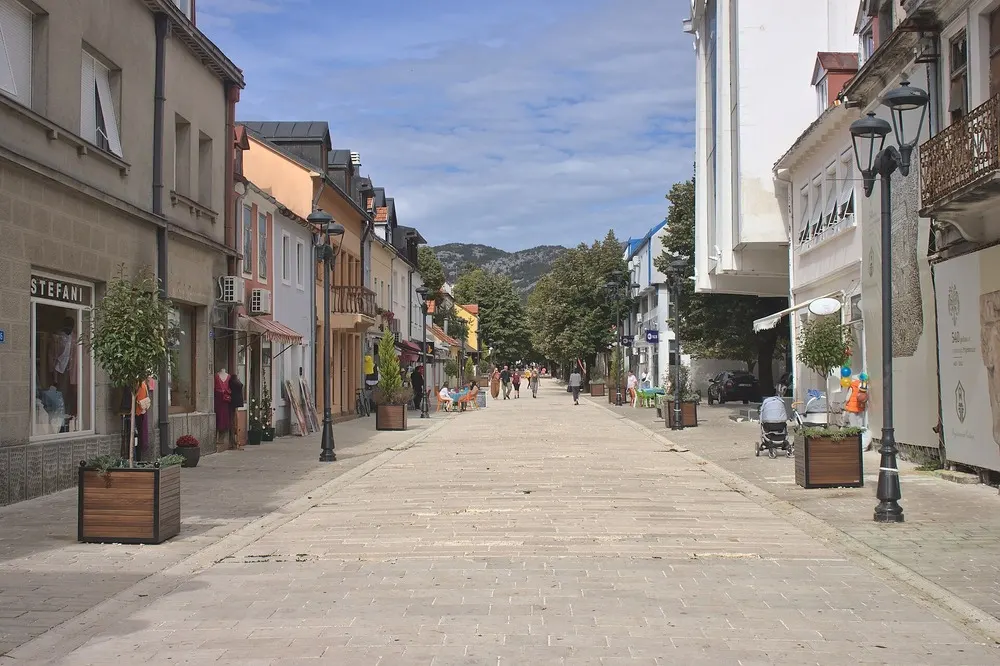
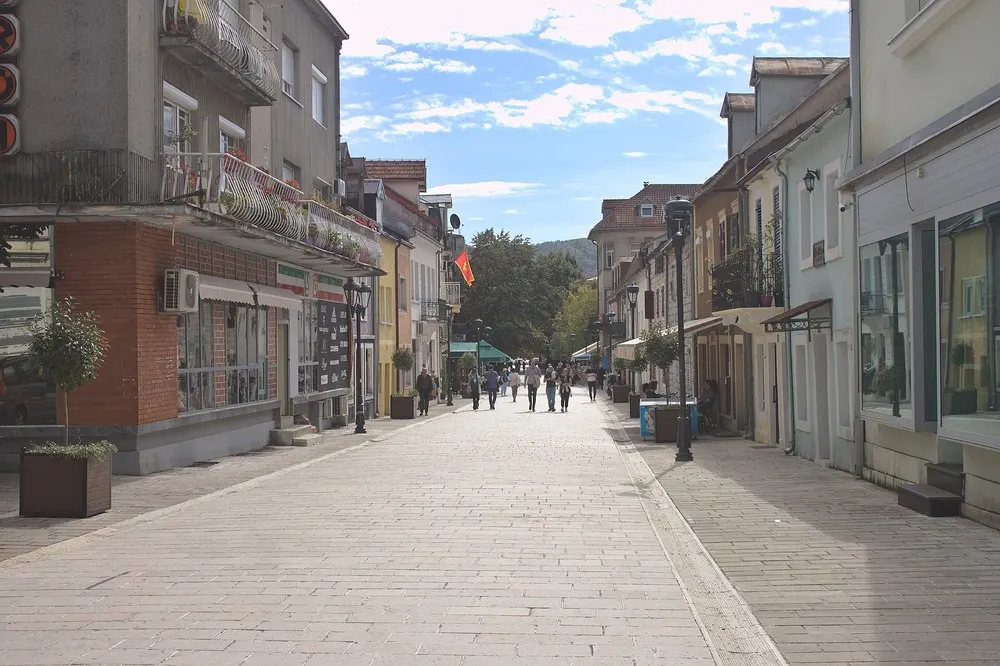
The town was replanned to match. Straight streets were laid out parallel to Njegoševa and planted with limes and acacias; two parks were made; stone houses of one and two storeys with gardens behind filled the blocks. A theatre and reading room, the Zetski dom, was begun in 1884 and staged its first play, the prince's own Balkan Empress, in 1888. The heir to the throne was given the villa now called the Blue Palace in the mid-1890s. A state museum and library were founded in the same decade, when the town celebrated the four-hundredth anniversary of the Crnojević press (1893) and the bicentenary of the dynasty (1896). Around the Vlach Church a fence was made from the barrels of rifles captured from the Ottomans.
Politics followed more slowly. Nikola governed as an autocrat until 1905, when, under pressure from a generation educated abroad, he granted a constitution on St Nicholas's Day, 19 December (6 December old style). An elected assembly met the following year and Montenegro issued its own currency, the perper. The largest building the state ever put up, the Government House (Vladin dom), was completed in 1910 to hold the assembly and the ministries under one roof.
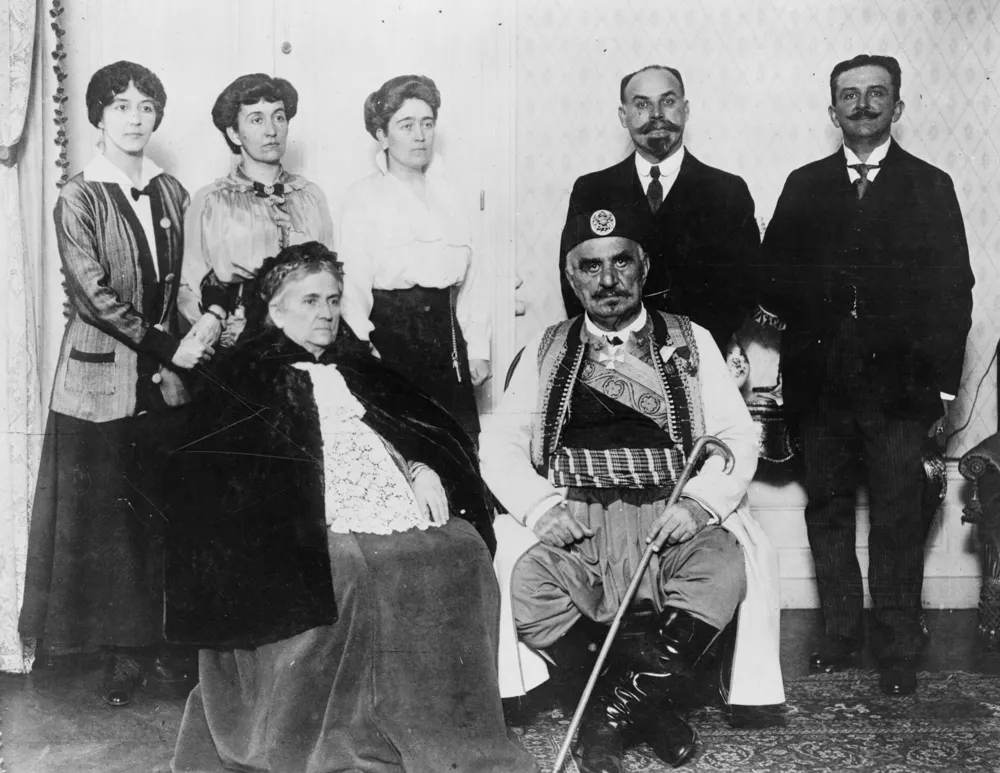
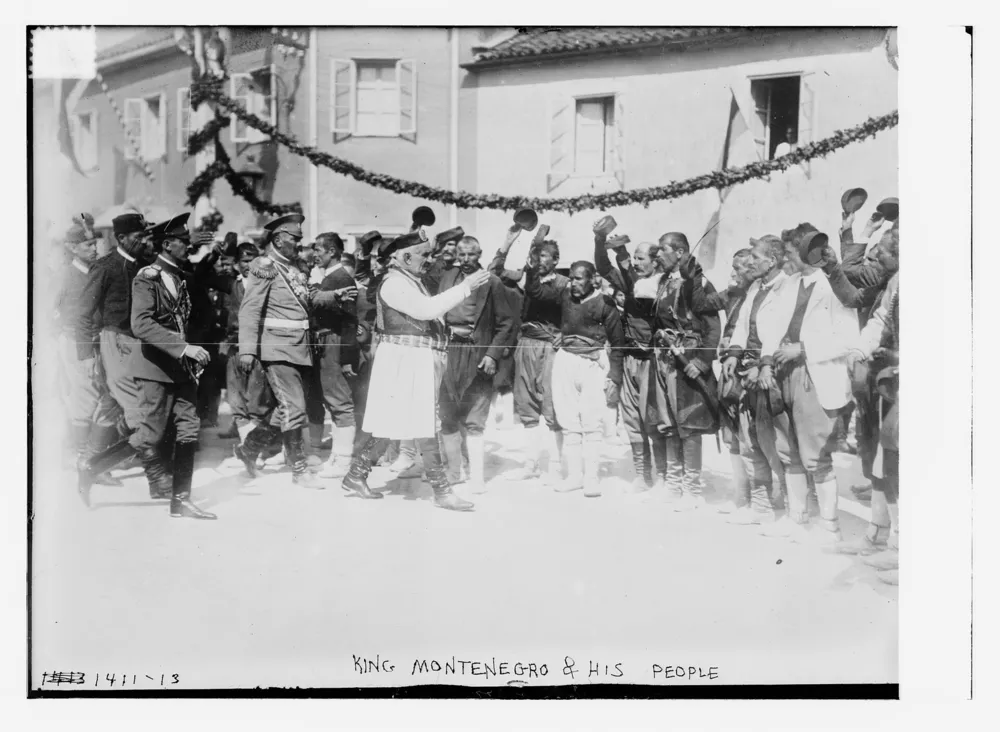
It was finished in time for the jubilee. On 28 August 1910 (15 August old style), fifty years after his accession, Nikola was proclaimed King of Montenegro in front of envoys and royal guests from across Europe, several of them his own sons-in-law. A census taken that year is usually cited as counting just under 6,000 inhabitants in the capital. Visitors found it charming and faintly absurd: a royal capital where the king sat under a tree to hear petitions and the diplomatic corps played tennis and bridge with one another because there was no one else to play with.
1912–1916: two Balkan wars and an occupation
Montenegro opened the First Balkan War, declaring war on the Ottoman Empire on 8 October 1912, ahead of its allies. Its main effort went into the siege of Shkodër, which cost thousands of lives before the city surrendered in April 1913. Within weeks the great powers, who had assigned Shkodër to the new Albanian state, forced Nikola to hand it over. The wars nonetheless enlarged the kingdom once more, to the east, and gave it a common border with Serbia.
In August 1914 Montenegro entered the world war on Serbia's side. For a year and a half its small army held the Austro-Hungarian frontier, with guns on Lovćen looking straight down on the naval base in the Bay of Kotor. When Serbia was overrun in the autumn of 1915 the Montenegrins covered the Serbian retreat, winning a last victory at Mojkovac at Orthodox Christmas, 6–7 January 1916. It made no difference at home. Lovćen, bombarded from land and sea, fell on 11 January, and Austro-Hungarian troops entered Cetinje on 13 January 1916. The king left the country a few days later for Italy and then France; the ministers who stayed behind signed the army's capitulation on 25 January.
For almost three years Cetinje was the seat of an Austro-Hungarian military government. The occupiers interned officers and suspected opponents, requisitioned food in a country already short of it and, in 1916, removed Njegoš's remains from the summit of Lovćen to the monastery below, intending to raise a monument of their own on the mountain. They also left one unexpected legacy. In 1916–17 army cartographers modelled the whole of Montenegro in concrete at a scale of 1:10,000 in the garden of the Biljarda. The Relief Map of Montenegro is still there, under a glass pavilion.
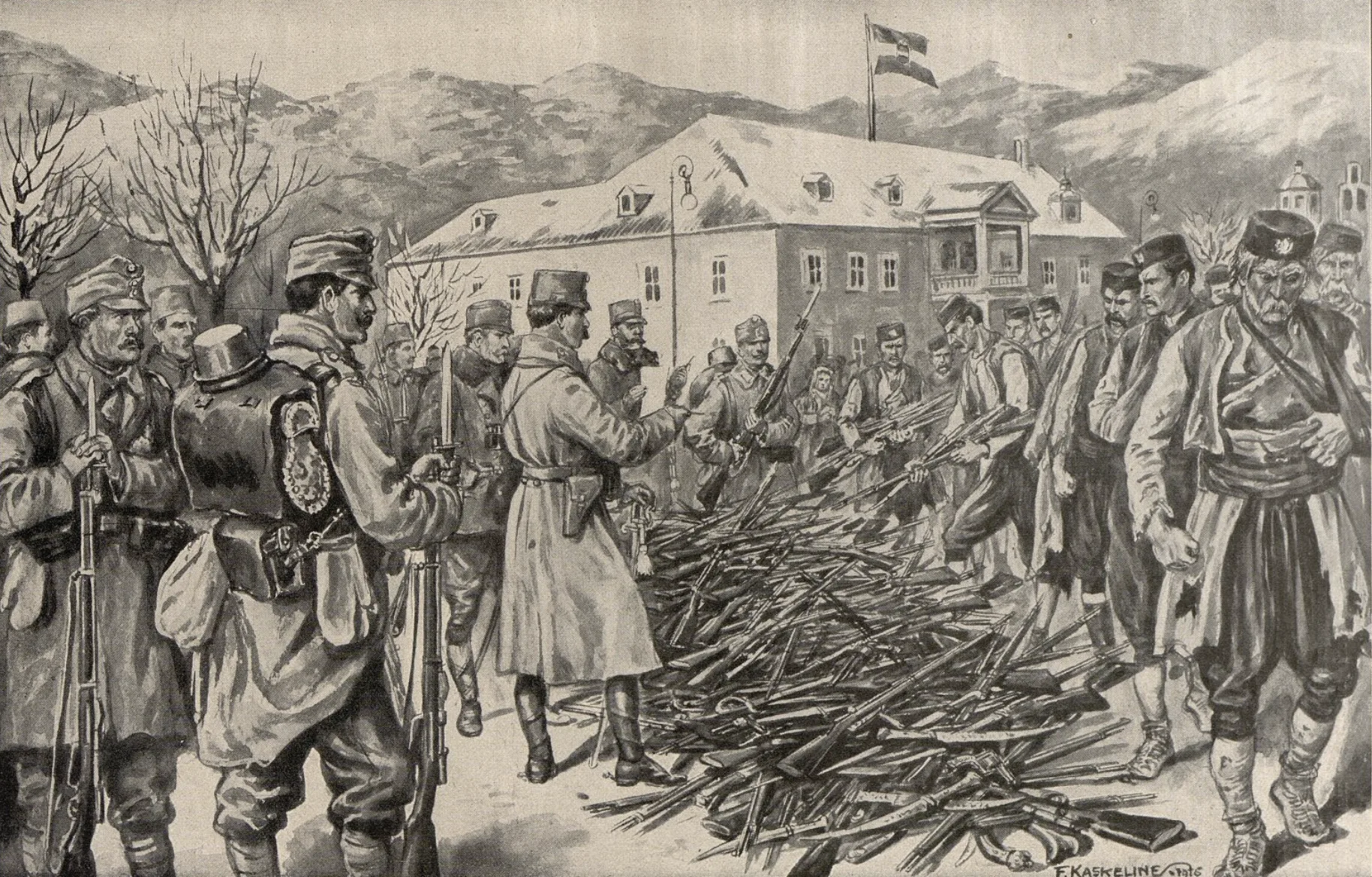
Montenegrin soldiers surrender their rifles to Austro-Hungarian troops in front of the royal palace, January 1916, in a drawing by the war artist Friedrich Kaskeline published the same year.
1918: the Podgorica Assembly and the Christmas Uprising
The end of the war decided Cetinje's fate, and it remains the most contested chapter of Montenegrin history. Allied forces, chiefly Serbian troops, entered Montenegro in the autumn of 1918 as Austria-Hungary collapsed. The king and his government were still in France and were not allowed to return. In November a Great National Assembly was elected under rules drawn up by a committee working with the Serbian government and met in Podgorica, not in the capital. On 26 November 1918 (13 November old style) it voted to depose King Nikola and the Petrović-Njegoš dynasty and to unite Montenegro with Serbia under the Karađorđević dynasty. A few days later Serbia and the South Slav lands of the former Habsburg monarchy formed the Kingdom of Serbs, Croats and Slovenes, later called Yugoslavia, and Montenegro entered it not as a unit of its own but as part of Serbia.
Supporters of the decision printed their candidate lists on white paper, opponents on green, and the names stuck: Whites (bjelaši) and Greens (zelenaši). The Whites saw union as the natural completion of a shared national struggle. The Greens were not all of one mind. Some wanted the king and full independence back, while many accepted a Yugoslav state but insisted that Montenegro join it as an equal, with its own name and institutions, and regarded an assembly held under the bayonets of another army as illegitimate. Historians still argue over how opinion was really divided; that it was deeply divided is not in doubt.
On Orthodox Christmas Eve, 6 January 1919, armed Greens under Krsto Popović surrounded Cetinje and other towns, demanding that the Podgorica decisions be annulled. Fighting around the capital on 6 and 7 January left dead on both sides before the rising was put down by Serbian troops and local Whites. It is remembered as the Christmas Uprising (Božićna pobuna or Božićni ustanak, depending on one's sympathies). Guerrilla resistance in the hills, and reprisals against the families of rebels, went on for several years. King Nikola died in exile at Cap d'Antibes on 1 March 1921 without seeing Montenegro again.
The two readings of 1918 have never been reconciled, and you will hear both in Cetinje, where sympathy for the Greens has always been strongest. In 2018, a century later, the Parliament of independent Montenegro adopted a resolution declaring the decisions of the Podgorica Assembly null; Serbian and pro-Serbian parties rejected the resolution as a rewriting of history. For a visitor the point is simply that the events are not remote here. They are why a town of this size has such a strong sense of having been a capital and of having been deprived of it.
1919–1941: seat of the Zeta Banovina
Cetinje was now a provincial town with the buildings of a capital. The legations closed, the diplomats left and the court stood empty; in 1926 the royal palace was opened as a museum, which it has been ever since. The administration that remained was regional: Cetinje was the centre of the Zeta district in the 1920s and, after King Alexander reorganised Yugoslavia in 1929, of the Zeta Banovina, a large province that stretched from Dubrovnik to Kosovo and had little to do with historic Montenegro.
That role brought the only major public building of the period, the monumental Banovina headquarters of the early 1930s, which today houses the municipal government of the Old Royal Capital. It also brought the first modern apartment blocks, schools and a new hospital, and the population passed that of the royal years: the census of 1931 counted 8,982 people in the town. In September 1925 King Alexander, himself born in Cetinje as a grandson of King Nikola, attended the ceremonial reburial of Njegoš in a rebuilt chapel on Lovćen.
1941–1945: occupation, uprising and civil war
When the Axis powers dismembered Yugoslavia in April 1941, Montenegro fell to Italy, whose queen, Elena, was King Nikola's daughter and had been born in Cetinje. The Italians hoped to revive a client Montenegrin kingdom. On 12 July 1941, St Peter's Day, an assembly of hand-picked delegates met in Cetinje and proclaimed the restoration of an independent Montenegro under Italian protection. No member of the Petrović-Njegoš family would accept the crown; Prince Michael, the king's grandson, refused it outright.
The following day, 13 July, a general uprising organised by the Communist Party and joined by many former officers broke out across the country. Within days the Italian garrison in Cetinje was cut off and most of Montenegro outside the towns was in rebel hands, one of the first mass uprisings in occupied Europe. Italy sent reinforcements and crushed it by August. What followed was a three-sided war between the occupiers, the Communist-led Partisans, and their opponents, the royalist Chetniks and the Green militia of Krsto Popović, both of whom came to arrangements with the Italians. Cetinje, as the seat of the Italian governor and after September 1943 of a German administration, stayed in the occupiers' hands throughout.
Partisan units entered the town on 13 November 1944. Much of the population that had reason to fear them had already left with the retreating Chetnik columns. Among those who stayed, a number of townspeople, 28 according to later research, were shot without trial in the first days, an episode that was not discussed publicly until the end of the Communist period. The date of the Partisans' entry is still marked as the town's liberation day; 13 July is Montenegro's Statehood Day, recalling both the uprising of 1941 and the recognition at Berlin in 1878.
1946 to the 1980s: a capital without a government
Montenegro emerged from the war as one of the six republics of federal Yugoslavia, with its name and borders restored, and for a few months the new republican government sat in Cetinje. But the town was cramped, hard to supply and awkwardly placed for a state that now reached the Tara and the Lim. On 13 July 1946 Podgorica, renamed Titograd in honour of Tito, was made the capital, and the republic's government followed it down to the plain. Titograd kept that name until 1992.
Cetinje was compensated in two ways. It was given factories, notably the Obod works, which made refrigerators and other household appliances for the whole of Yugoslavia, and the Košuta shoe factory; and it was confirmed as the home of the republic's cultural institutions. The State Museum became the nucleus of today's National Museum of Montenegro, the Biljarda was restored and opened as the Njegoš Museum in 1951, and the central library and the state archives stayed in the former legations. The arrangement kept the historic core intact, because nothing much was built in it, but it left the town dependent on industries that did not survive the end of Yugoslavia.
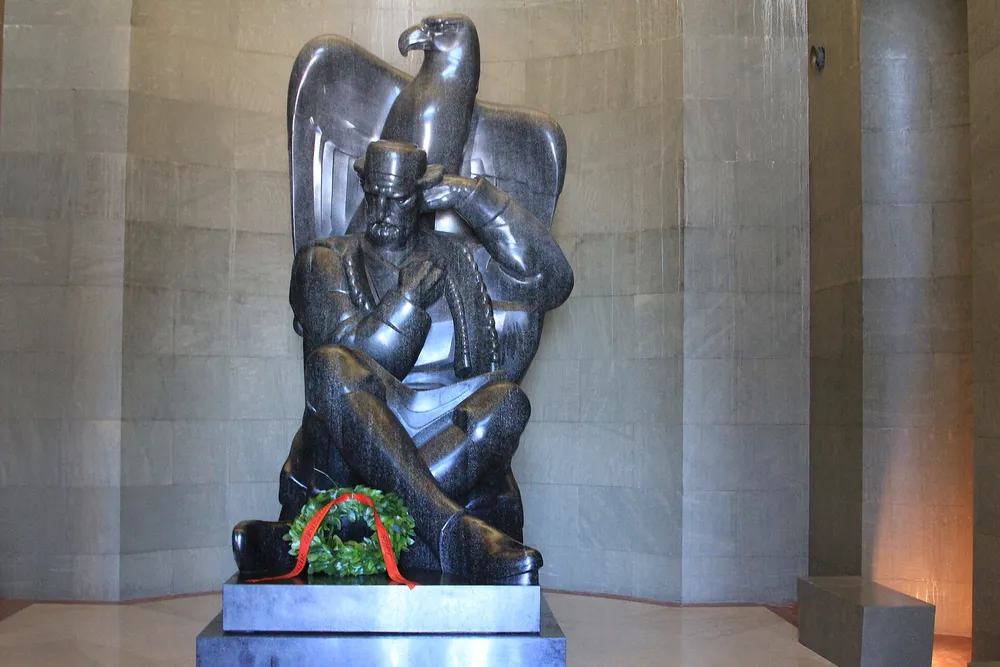
Two events of the 1970s touched the town's sense of itself. In the early 1970s the chapel on Lovćen was dismantled, against the protests of the Orthodox Church and of many writers and artists, and replaced by the monumental mausoleum designed by Ivan Meštrović, which opened on 28 July 1974 (see the Njegoš Mausoleum guide). And on 15 April 1979 a powerful earthquake centred off the coast devastated Kotor and Budva. Cetinje was hit less severely, but many of its nineteenth-century buildings were cracked, and the restoration programme of the 1980s, carried out with Yugoslav and international help, is the reason so many of them are in sound condition today.
1989 to today: the Old Royal Capital
The return began with a funeral. On 1 October 1989 the remains of King Nikola, Queen Milena and two of their daughters were brought from Sanremo in Italy and reburied in the Court Church on Ćipur, in front of a very large crowd. In the years that followed, as Yugoslavia broke apart and Montenegro remained in a federation with Serbia, Cetinje became the centre of the movement for Montenegrin independence. The Liberal Alliance held its rallies here, and in 1993 a group of believers and intellectuals proclaimed in the town the restoration of a separate Montenegrin Orthodox Church. The canonical Orthodox churches do not recognise it, and the Serbian Orthodox Metropolitanate continues to hold Cetinje Monastery; the question is explained, with both positions, in the guide to language and identity.
The constitution of 1992 gave the town a formal title: Podgorica is the capital (glavni grad), Cetinje the prijestonica, literally the seat of the throne and usually translated as Old Royal Capital. When Montenegro voted on independence on 21 May 2006, 55.5 per cent of voters nationally chose to leave the union with Serbia; in Cetinje the figure was about 86 per cent, one of the highest of any municipality. Independence was declared on 3 June 2006, and the constitution of 2007 repeated the two-capitals formula.
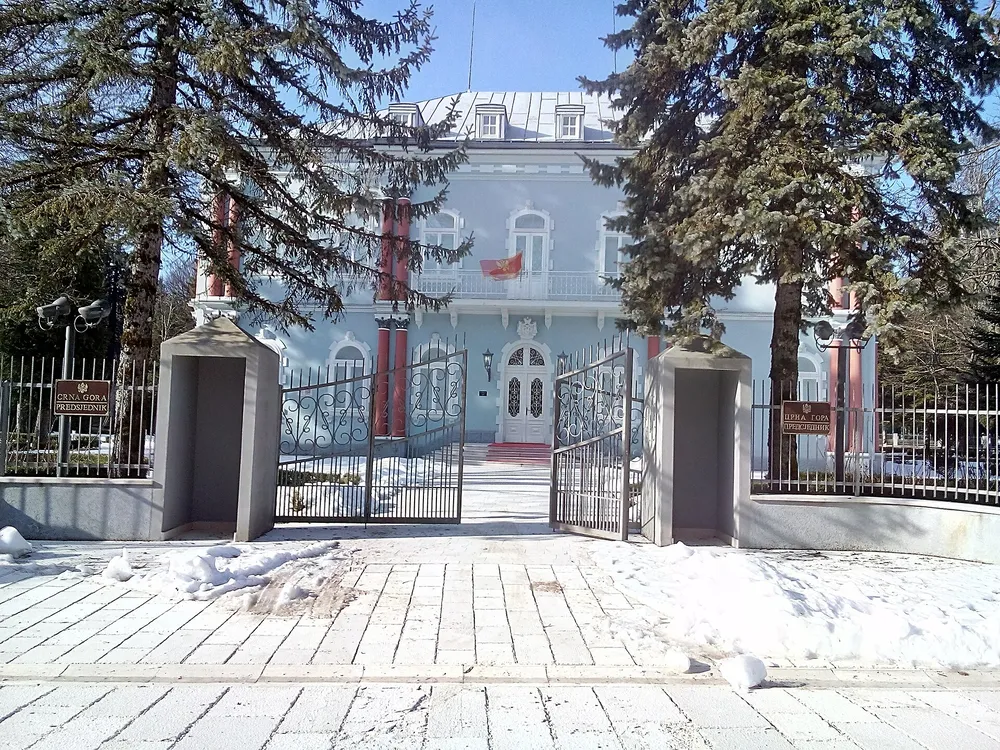
A special law followed in 2008. Under it the President of Montenegro has his official residence in Cetinje, in the Blue Palace since 2010, and the Ministry of Culture has its seat in the town; the National Museum, the National Library, the State Archives and the university's faculties of fine arts, music and drama are here as well. What that status means in practice is set out in the guide to the Old Royal Capital. In 2010 Montenegro placed the Historic Core of Cetinje on its Tentative List for UNESCO World Heritage, and in 2023 UNESCO named Cetinje a Creative City of Design.
The last few years have not been easy ones. In September 2021 the enthronement of the new Serbian Orthodox Metropolitan, Joanikije, in Cetinje Monastery was met by barricades and tear gas, and the bishop arrived by helicopter. The town was also struck by two mass shootings, on 12 August 2022 and 1 January 2025, the worst in Montenegro's history, which a community of its size has felt very deeply. And the population keeps falling, as it has since the factories closed: the 2023 census counted about 12,500 people in the town and about 14,500 in the whole municipality.
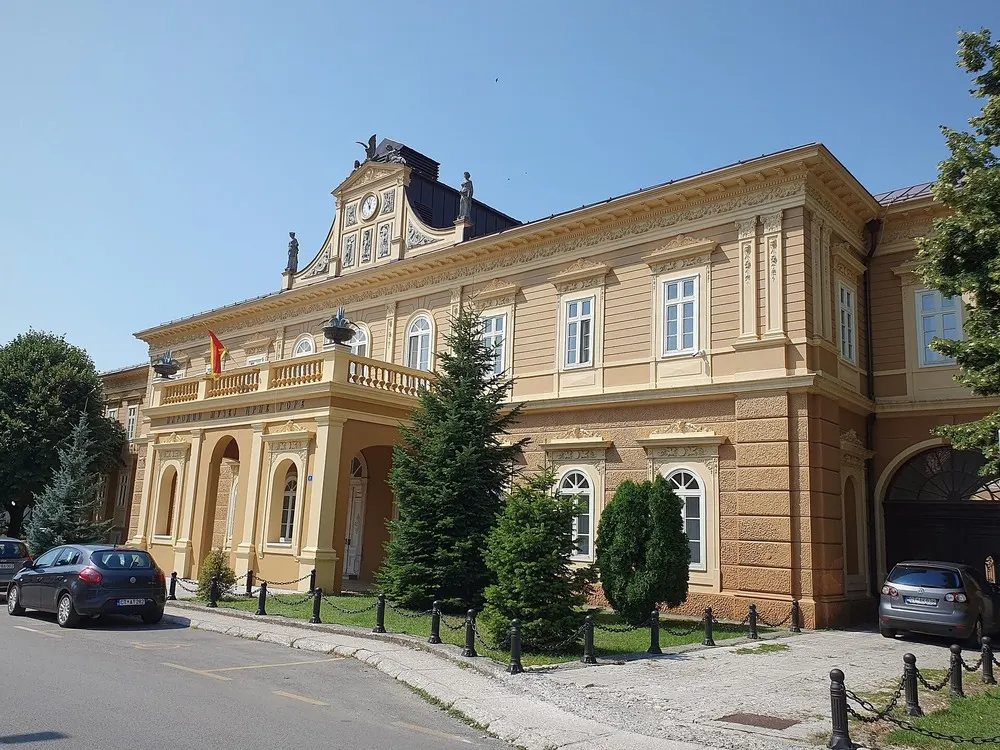
What has not changed is the fabric. Because the capital moved away in 1946, Cetinje was never rebuilt for a modern government, and the town of 1878–1914 is still almost complete: the monastery under its rock, the Biljarda, the little palace, the legations among the lime trees. Few European capitals can be read so easily from one end to the other on foot.
Timeline: Cetinje year by year
- 1440
First record of the name
Cetinje appears in a written source for the first time, as a field in the lordship of Zeta.
- c. 1450
A herdsmen's church
By tradition, the first church on the site of today's Vlach Church is built.
- 1478–1481
The retreat from the lake
The Ottomans take Žabljak; Ivan Crnojević withdraws to Obod, goes into exile in Italy in 1479 and returns in 1481.
- 1482
The court
Ivan Crnojević builds his court in the field of Cetinje. The town counts its years from this date.
- 1484–1485
The monastery
Ivan founds the monastery of the Nativity of the Virgin on Ćipur and moves the seat of the Metropolitanate of Zeta to it.
- 1493–1496
The printing press
Đurađ Crnojević's press works under the hieromonk Makarije; the first book is completed on 4 January 1494.
- 1496–1499
End of the Crnojević state
Đurađ leaves for Venice; his lands pass under direct Ottoman rule.
- 1514–1528
Sanjak of Montenegro
Ivan's son Staniša, as Skender-beg Crnojević, governs a separate Ottoman sanjak.
- 1685
Vrtijeljka
Süleyman Pasha of Shkodër defeats Venetian irregulars and highlanders near Cetinje and enters the town.
- 1692
First destruction
A Venetian garrison mines the Crnojević monastery as Süleyman Pasha's army takes Cetinje.
- 1697
Danilo elected
Danilo Petrović of Njeguši becomes vladika; the office stays in his family until 1851.
- 1701–1704
The new monastery
Danilo rebuilds the monastery on the site of the Crnojević court, where it stands today.
- 1714
Second destruction
Numan Pasha Köprülü devastates Old Montenegro and burns the monastery.
- 1767–1773
Šćepan Mali
An impostor claiming to be Tsar Peter III rules Montenegro from Cetinje until he is murdered.
- 1785
Third destruction
Mahmud Pasha Bushati sacks Cetinje and burns the monastery while Petar I is abroad.
- 1796
Martinići and Krusi
Petar I defeats Mahmud Pasha twice; the pasha is killed and the Brda clans unite with Old Montenegro.
- 1798
The first code
The assembly adopts a general law for Montenegro and the Brda and sets up a court to apply it.
- 1830
Death of Petar I
The vladika dies in the monastery; he is proclaimed Saint Peter of Cetinje in 1834.
- 1831–1834
Njegoš's institutions
A Senate, a police force, a bodyguard, the first tax, the first school and a new printing press.
- 1838
Biljarda
Njegoš's residence, the first secular public building in Cetinje, is completed.
- 1851
Death of Njegoš
Petar II dies in the Biljarda on 31 October; in 1855 his remains are carried to his chapel on Lovćen.
- 1852
A principality
Danilo is proclaimed Prince; rule by bishops ends.
- 1860
Nikola succeeds
Prince Danilo is assassinated in Kotor; his nephew Nikola begins a reign of fifty-eight years.
- 1864–1873
First civic buildings
The Lokanda inn (1864), the princely palace (1867), the seminary and Girls' Institute (founded 1869), the first newspaper (1871) and the Danilo I Hospital (1873).
- 1878
Congress of Berlin
Montenegro's independence is recognised on 13 July; foreign legations begin to open in Cetinje.
- 1884–1888
Zetski dom
The theatre is begun in 1884 and gives its first performance in 1888.
- 1905–1906
Constitution and parliament
Nikola grants a constitution on 19 December 1905; the first elected assembly and the perper currency follow in 1906.
- 1910
Kingdom
Government House is completed and Nikola is proclaimed king on 28 August, in his jubilee year.
- 1912–1913
Balkan Wars
Montenegro is first to declare war on the Ottoman Empire; Shkodër is taken and given up.
- 1916
Occupation
Lovćen falls on 11 January and Austro-Hungarian troops enter Cetinje on 13 January; the king goes into exile.
- 1916–1917
The relief map
Austro-Hungarian army cartographers build the relief model of Montenegro beside the Biljarda.
- 1918
Podgorica Assembly
On 26 November the assembly deposes the dynasty and votes for union with Serbia.
- 1919
Christmas Uprising
On 6–7 January the Greens besiege Cetinje; the rising is suppressed.
- 1926
The palace becomes a museum
King Nikola's Palace opens to the public.
- 1929–1941
Zeta Banovina
Cetinje is the seat of a Yugoslav province; the Banovina building is erected in the early 1930s.
- 1941
Italian occupation
A client kingdom is proclaimed in Cetinje on 12 July; the national uprising begins on 13 July.
- 1944
End of the occupation
Partisan forces enter the town on 13 November.
- 1946
The capital moves
Titograd (Podgorica) replaces Cetinje as capital of Montenegro on 13 July.
- 1951
Njegoš Museum
The restored Biljarda opens as a museum on the centenary of the poet's death.
- 1974
The mausoleum
Meštrović's mausoleum of Njegoš opens on Lovćen on 28 July, replacing the chapel.
- 1979
Earthquake
The earthquake of 15 April damages the historic core; restoration continues through the 1980s.
- 1989
The king returns
King Nikola, Queen Milena and two daughters are reburied in the Court Church on 1 October.
- 1992
Prijestonica
The constitution names Podgorica as capital and Cetinje as Old Royal Capital.
- 2006
Independence
Montenegro votes for independence on 21 May; about 86 per cent of Cetinje's voters are in favour.
- 2008–2010
A capital's functions
The Law on the Old Royal Capital is passed; the President's residence moves into the Blue Palace.
- 2010
UNESCO Tentative List
The Historic Core of Cetinje is submitted on 6 July.
- 2023
City of Design
Cetinje joins the UNESCO Creative Cities Network.
Who ruled from Cetinje
The table lists the rulers who had their seat in Cetinje. Between the fall of the Crnojevići and 1697 the vladikas came from different clans and are not listed individually. Reign dates for the eighteenth century overlap because Sava, Vasilije and Šćepan Mali shared or disputed authority.
| Ruler | Title | In power | Remembered for |
|---|---|---|---|
| Ivan Crnojević | Lord of Zeta | 1465–1490 | Founded the court (1482) and monastery (1484) |
| Đurađ Crnojević | Lord of Zeta | 1490–1496 | The printing press and the Oktoih of 1494 |
| Vladikas from various clans | Metropolitans of Cetinje | 16th–17th centuries | Leadership of the clans under nominal Ottoman rule |
| Danilo I | Vladika | 1697–1735 | Founded the dynasty; rebuilt the monastery 1701–04 |
| Sava | Vladika | 1735–1781 | A long, cautious reign; ties with Venice |
| Vasilije | Vladika, co-ruler | c. 1750–1766 | Missions to Russia; first history of Montenegro |
| Šćepan Mali | Self-styled tsar | 1767–1773 | The impostor who governed well |
| Petar I (St Peter of Cetinje) | Vladika | 1784–1830 | Martinići and Krusi 1796; the code of 1798 |
| Petar II Njegoš | Vladika | 1830–1851 | Senate, Biljarda, The Mountain Wreath |
| Danilo I | Vladika 1851–52, then Prince | 1851–1860 | Secular principality; Grahovac 1858 |
| Nikola I | Prince, King from 1910 | 1860–1918 | Recognition 1878, constitution 1905, kingdom 1910 |
Key dates at a glance
| Date | What happened | Where to see it |
|---|---|---|
| 1482 / 1484 | Court and monastery founded | Foundations on Ćipur, beside the Court Church |
| 4 January 1494 | First book printed | Copies in the monastery treasury and King Nikola's Palace |
| 1692, 1714, 1785 | The three destructions | Reused Crnojević capitals in Cetinje Monastery |
| 1701–1704 | Danilo's monastery | The monastery itself |
| 1838 | Njegoš's residence | Biljarda |
| 13 July 1878 | Independence recognised | The legations: see embassies |
| 28 August 1910 | Kingdom proclaimed | Government House and the palace |
| 13 January 1916 | Austro-Hungarian occupation | The Relief Map |
| 26 November 1918 | Dynasty deposed | History Museum in Government House (listed as closed to visitors, November 2026) |
| 13 July 1946 | Capital moved to Titograd | The town plan that stopped growing |
| 1 October 1989 | King Nikola reburied | Court Church on Ćipur |
| 21 May 2006 | Independence referendum | The President's residence at the Blue Palace |
Seeing the history on the ground
Cetinje's past is unusually easy to follow because each period left one or two buildings and little was built over them. Begin where the town began, on Ćipur, with the outline of the Crnojević monastery and the royal tombs in the Court Church; cross to the monastery of 1701 for the relics of Petar I; walk round the Biljarda and the relief map; then go through King Nikola's Palace, whose rooms hold the banners, weapons and decorations of the principality. Government House, five minutes away, contains the History Museum, which covers the story from the Middle Ages to the twentieth century in order, although in November 2026 the National Museum's timetable listed it as closed to visitors, with no reopening date. All of these are units of the National Museum of Montenegro and can be visited on one combined ticket; current hours and prices are in the museums guide.
From there the embassy quarter and Njegoševa Street show the capital of 1878–1914. The self-guided walking tour links everything in a sensible order and takes two to three hours without museum visits. For the two places outside town that belong to the same story, the dynasty's home village of Njeguši and Njegoš's tomb on Lovćen, allow another half day.
If you would rather have the context explained as you go, a guided walking tour of Cetinje with museum entry puts a local guide beside you, and several day tours from the coast combine Cetinje with Lovćen and Njeguši.
Frequently asked questions
When was Cetinje founded, and by whom?
By Ivan Crnojević, lord of Zeta, who built his court in the field of Cetinje in 1482 after Ottoman advances forced him to abandon Žabljak on Lake Skadar. He founded a monastery beside it in 1484 and moved the seat of the Metropolitanate of Zeta there. The name of the field is recorded earlier, in 1440.
Why did such a small town become a capital?
Because it was defensible and central to the clans of Old Montenegro, and because the monastery made it the seat of the bishops who led them. When the bishops' successors became princes in 1852 and Montenegro was recognised as independent in 1878, the seat of government simply stayed where it had always been.
How many times was Cetinje destroyed?
Three destructions are usually counted: in 1692, when a Venetian garrison blew up the Crnojević monastery as an Ottoman army entered; in 1714, when Numan Pasha Köprülü burned the rebuilt monastery; and in 1785, when Mahmud Pasha Bushati sacked the town. Ottoman forces had also entered Cetinje in 1685.
When did Cetinje stop being the capital of Montenegro?
In two stages. The Kingdom of Montenegro ceased to exist after the Podgorica Assembly of November 1918, and Cetinje became a provincial centre in Yugoslavia. When Montenegro was restored as a Yugoslav republic in 1945 its government first sat in Cetinje, but on 13 July 1946 the capital was moved to Podgorica, then renamed Titograd.
What does Old Royal Capital (prijestonica) mean?
It is Cetinje's constitutional title. Article 5 of the 2007 constitution says that the capital of Montenegro is Podgorica and the Old Royal Capital is Cetinje. A separate law gives the town certain state functions, including the official residence of the President.
What were the Greens and the Whites?
The two camps of 1918. The Whites supported the unconditional union of Montenegro with Serbia voted by the Podgorica Assembly; the Greens opposed the way it was done and wanted Montenegro restored either as an independent kingdom or as an equal partner in a Yugoslav federation. The names come from the colour of the paper on which each side's candidate lists were printed.
Is Cetinje a UNESCO World Heritage Site?
Not at present. The Historic Core of Cetinje has been on Montenegro's Tentative List since 6 July 2010, which is the first step towards nomination, and since 2023 the town has been a member of the UNESCO Creative Cities Network as a City of Design. Montenegro's inscribed cultural sites include the Natural and Culturo-Historical Region of Kotor.
Where is the best place to learn the history in Cetinje itself?
The History Museum in Government House gives the full chronological story, although it was listed as closed to visitors in November 2026; King Nikola's Palace and the Biljarda cover the dynasty and Njegoš; and the monastery and Ćipur show where the town began. A guided walking tour links them in two to three hours.
Sources and official information
Facts were checked against these official and scholarly sources in November 2026. Opening hours, ticket prices, park fees and timetables change, so confirm before you go.
- cetinje.me
- whc.unesco.org
- narodnimuzej.me
- narodnimuzej.me
- narodnimuzej.me
- britannica.com
- en.wikipedia.org
- en.wikipedia.org
- en.wikipedia.org
- en.wikipedia.org
- en.wikipedia.org
- en.wikipedia.org
- en.wikipedia.org
- encyclopedia.1914-1918-online.net
- constituteproject.org
- monstat.org
- stari.maticacrnogorska.me
- slobodnaevropa.org
Cetinje.com is an independent guide, not the official site of the Old Royal Capital Cetinje, the National Museum of Montenegro, any tour operator, hotel or the government of Montenegro. Some links are affiliate links: tours go to GetYourGuide and accommodation goes to Booking.com, and we may earn a commission at no extra cost to you.