In short
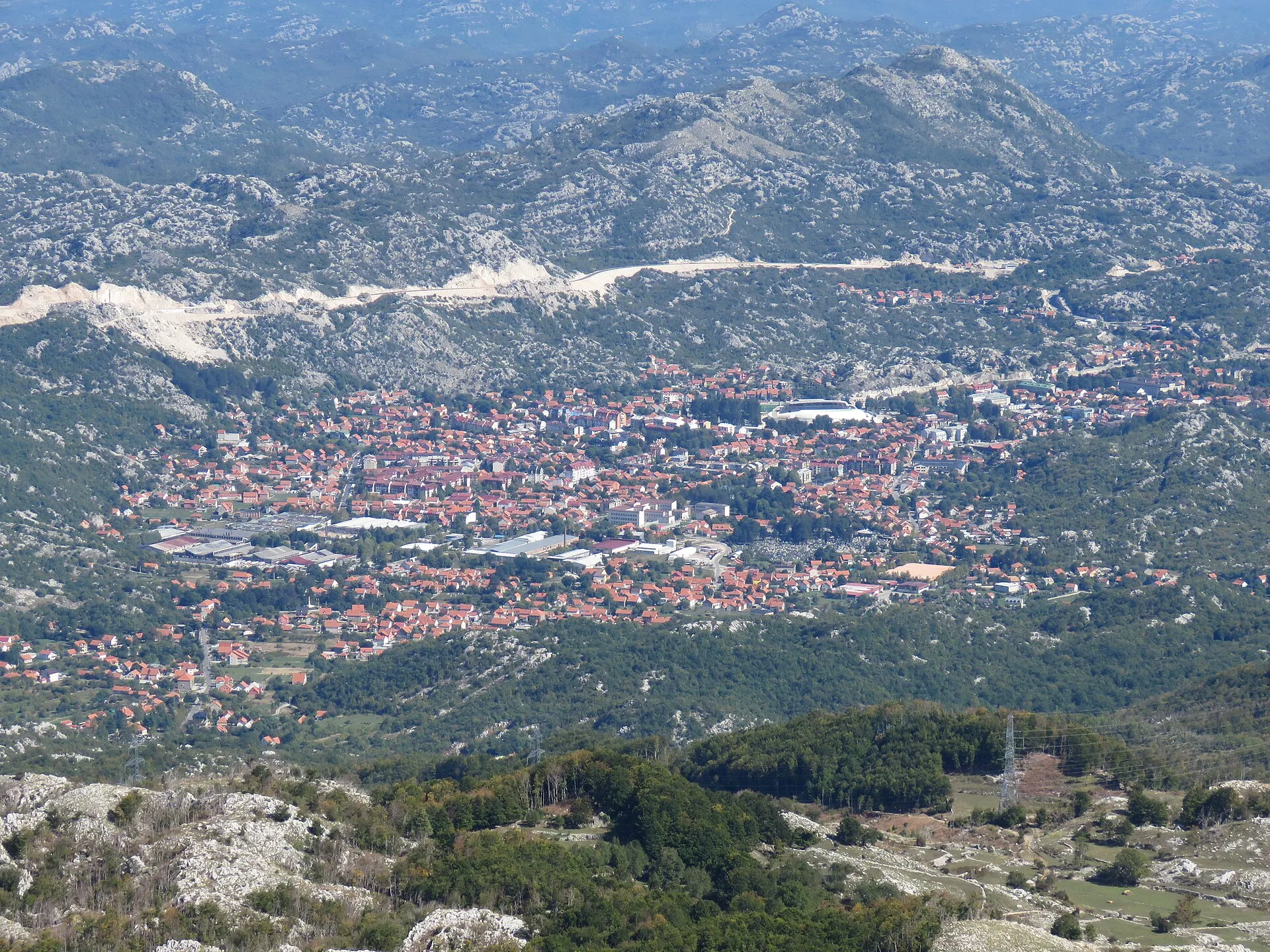
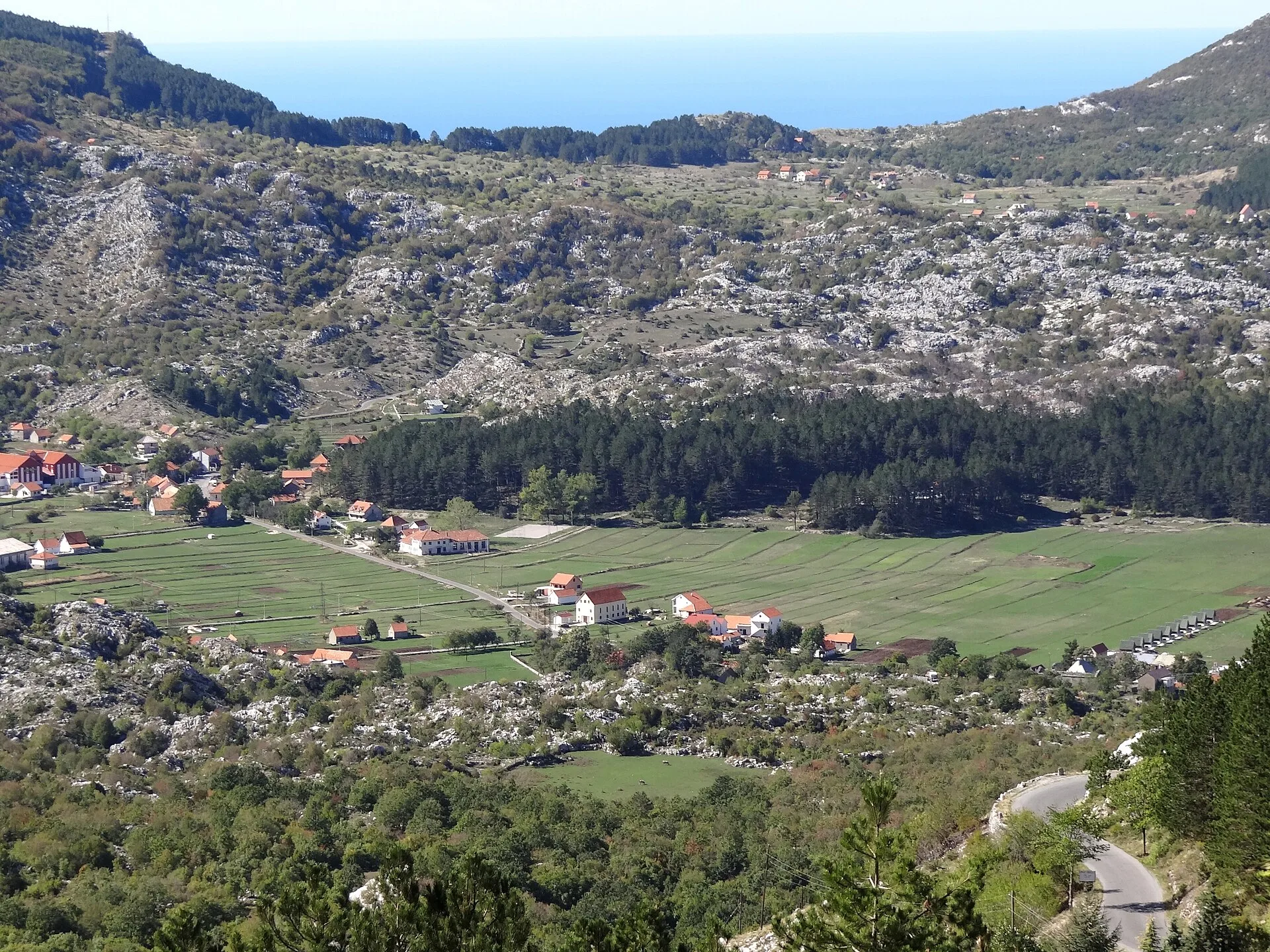
- Where: a green karst basin at about 900 m on the northern side of Lovćen, about 20 km from Cetinje and 21 km from Kotor by road, on the old route between the two.
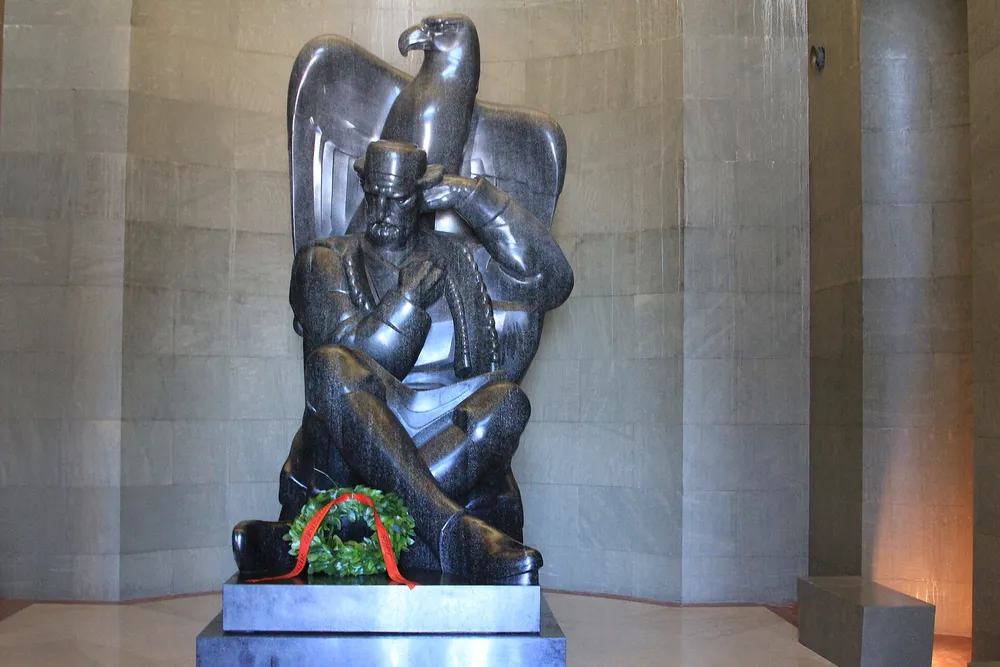
- Why it matters: the home village of the Petrović-Njegoš family, which gave Montenegro its prince-bishops, princes and its only king. Njegoš was born here in 1813, King Nikola in 1841.
- See: Njegoš’s birth house in the hamlet of Erakovići, a National Museum unit open in summer (as checked November 2026, 3 euro on its own or included in the 8 euro mausoleum ticket).
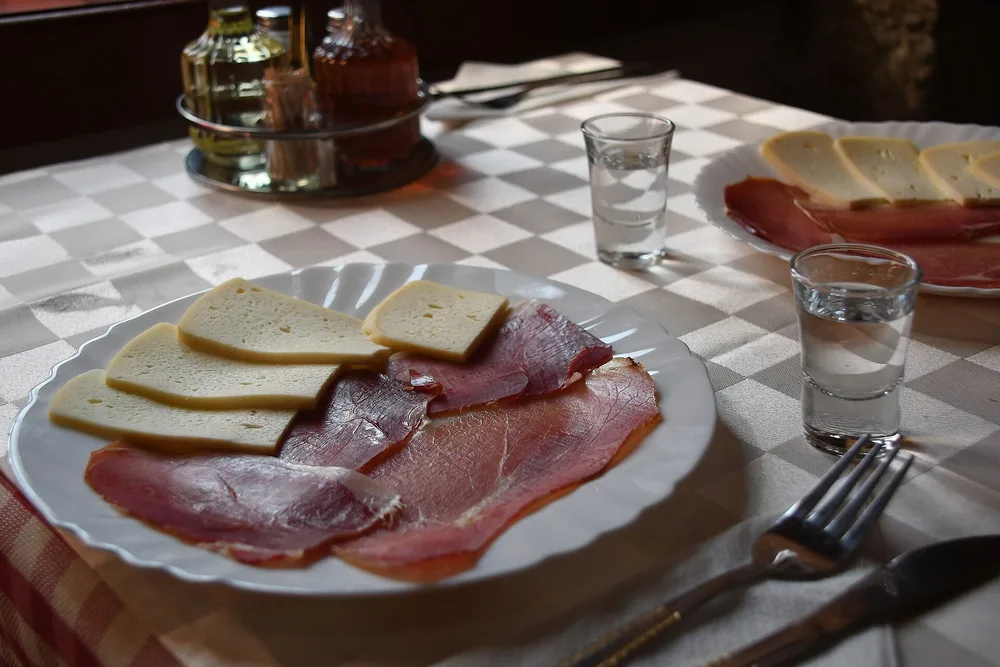
- Taste: Njeguški pršut, the smoked, air-dried ham that was Montenegro’s first food product with a protected designation (2016), with the village’s firm cheese.
- Combine: Njeguši is the natural middle stop of the Cetinje–Lovćen–Kotor circuit. Take the serpentine road down to the bay or the mausoleum road up the mountain.
A village on the frontier
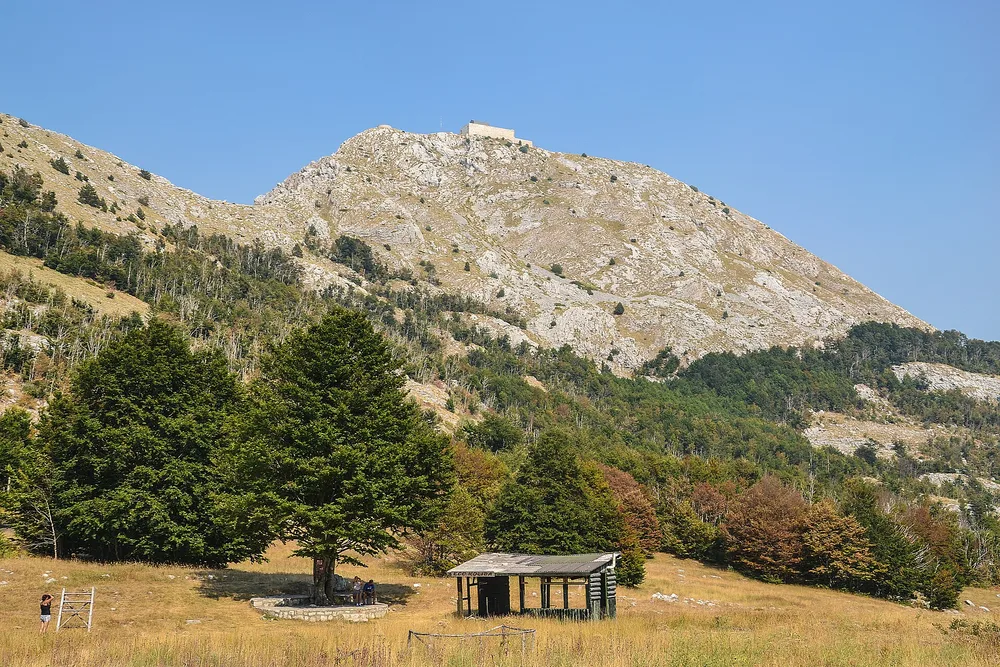
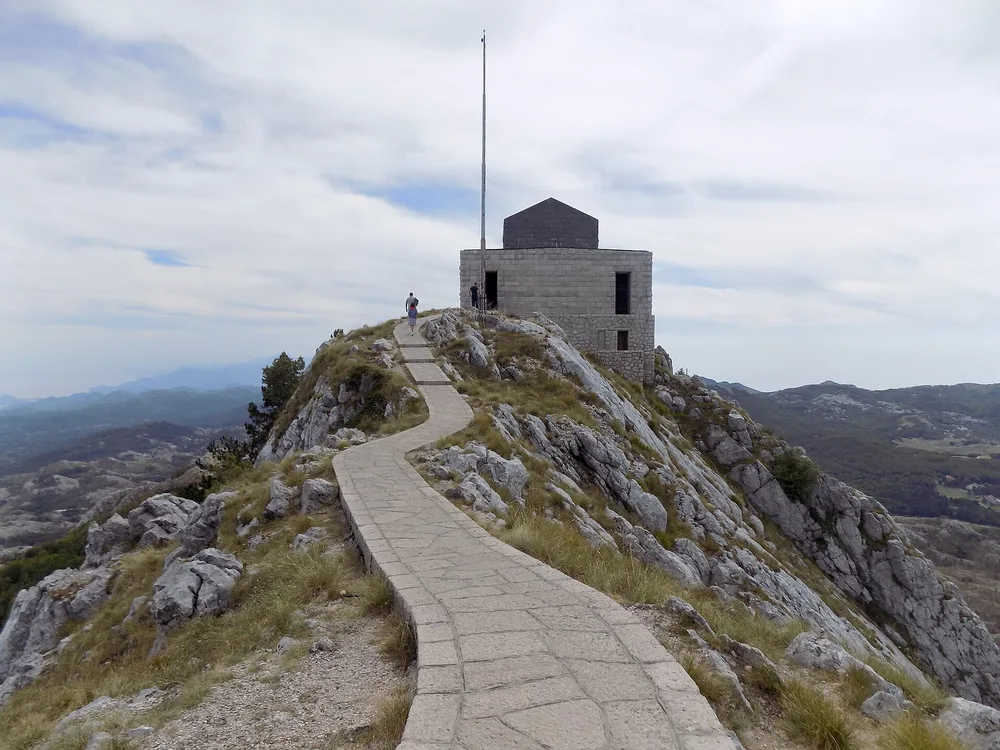
Come over the pass from Cetinje and the road drops into a surprise: a long, flat, green floor of fields, walled with grey stone, enclosed on every side by bare limestone hills, with houses gathered in hamlets at the edges where the rock begins. This is Njeguši, one of the few patches of cultivable land in the karst between the Bay of Kotor and the Cetinje field. It sits at about 900 m on the northern flank of Lovćen, with the summit of Jezerski vrh an hour or two’s walk above it, and the national park boundary running close by.
For centuries the village lived off its position. The mule track from Kotor, the Venetian and later Austrian port, climbed the mountain wall in a ladder of zigzags and came over the rim at Krstac into the Njeguši basin; from here it was a day’s walk on to Cetinje. Everything the highlanders sold, wood, ice, cheese, smoked meat, went down that path to the Kotor market, and everything they bought came up it. The Njeguši men who controlled the route were among the most worldly people in Old Montenegro, and it is no accident that the country’s ruling family came from here.
Njeguši is not one village but a cluster of hamlets around the field, Erakovići among them, that together formed the territory of the Njeguši tribe (pleme), one of the clans of the old Katunska nahija. Like most of Old Montenegro it has lost most of its people since the mid-twentieth century; recent censuses record only a few dozen permanent residents in the core settlement, though many families come back for the summer and for the smoking season.
- Municipality
- Old Royal Capital Cetinje
- Altitude
- About 900 m
- From Cetinje
- About 20 km by road, 25–30 minutes
- From Kotor
- About 21 km by the serpentine road, 40–50 minutes
- To the mausoleum
- About 13 km by road
- Known for
- The Petrović-Njegoš dynasty; Njeguški pršut and cheese
- Museum
- Njegoš’s birth house (summer season only)
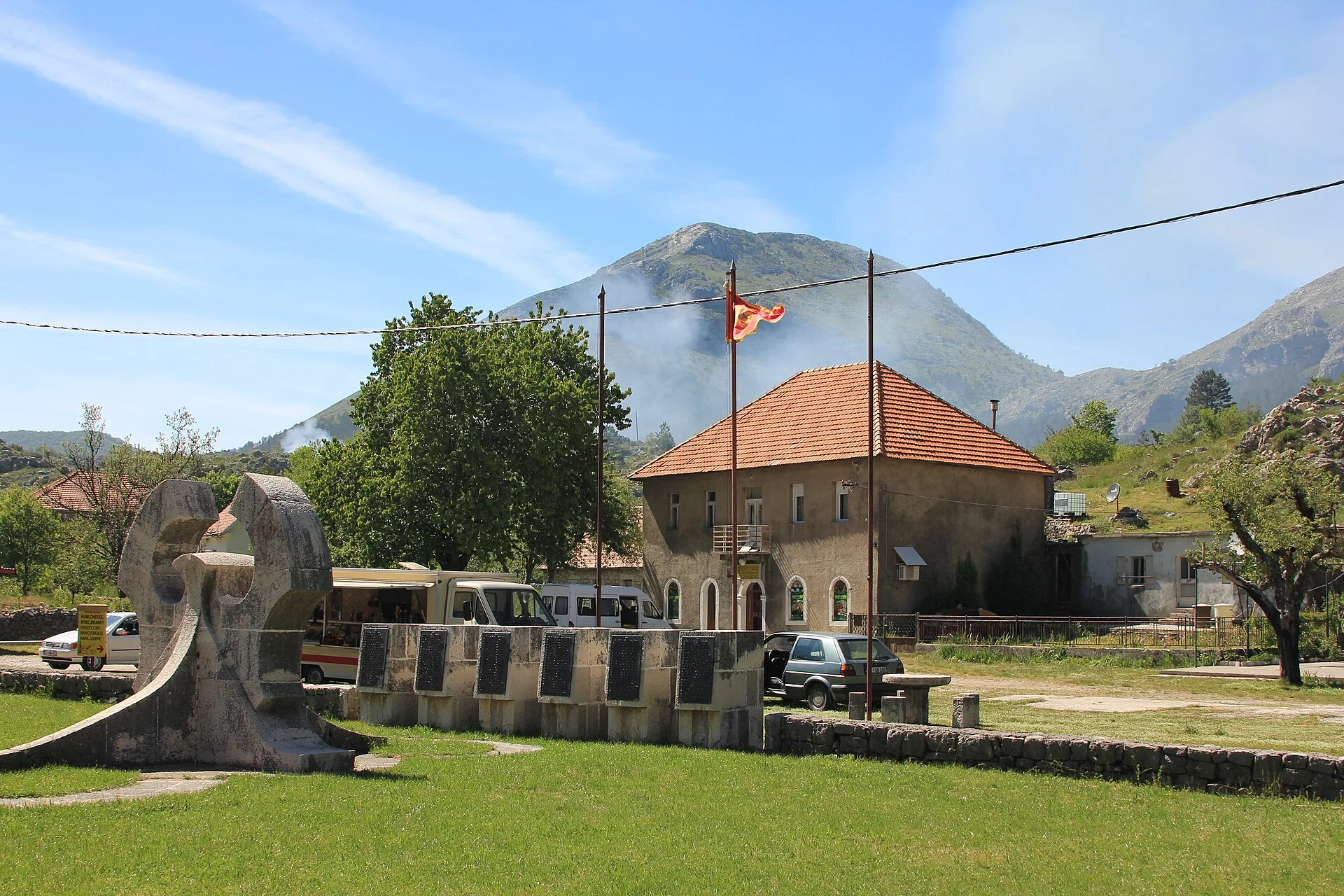
The village of the Petrović-Njegoš dynasty
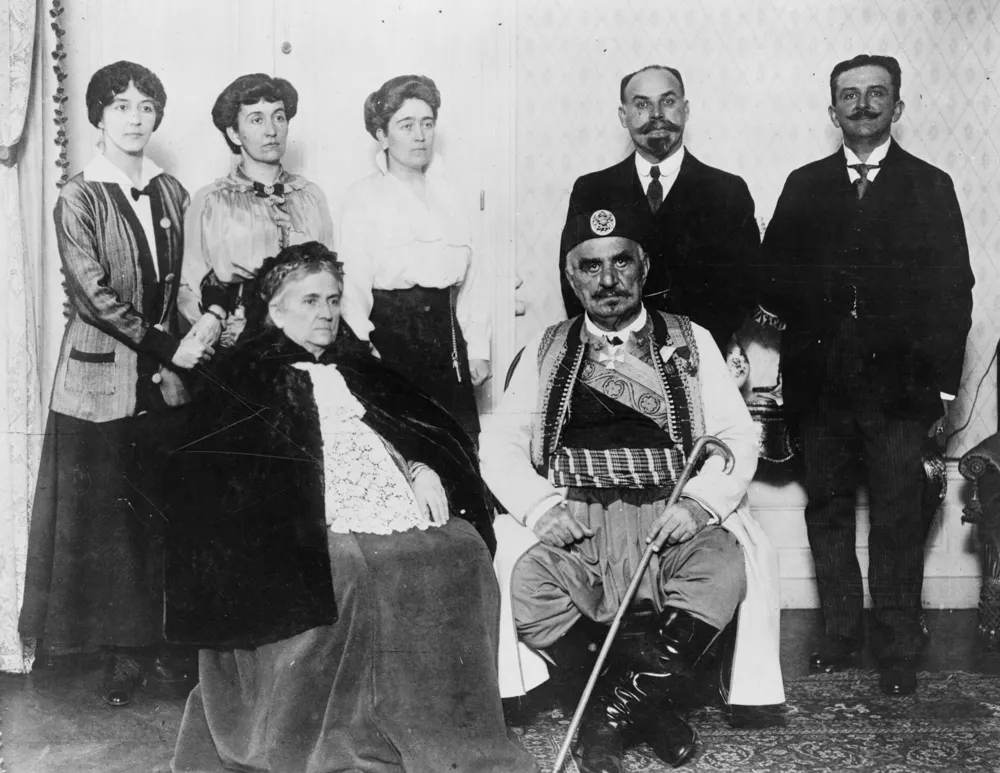
The Petrović family belonged to the Heraković brotherhood of Njeguši, and family tradition brings its ancestors here from Herzegovina in the late Middle Ages. Their rise began in 1697, when the chiefs of Montenegro chose a young monk from Njeguši, Danilo Šćepčević Petrović, as vladika, the prince-bishop who was both head of the Church and, in practice, ruler of the country. As bishops could not marry, the office passed from uncle to nephew within the family for a century and a half, and the name of the village was added to the family’s: Petrović-Njegoš, ‘Petrović of Njeguši’.
Every ruler of the dynasty’s first century and a half was born here, as was the secular line that followed: Vladika Danilo around 1670, Petar I in 1748, Njegoš in 1813, Prince Danilo in 1826, and King Nikola on 7 October 1841. Their story, with the family tree, is told in the Petrović-Njegoš dynasty. The village also produced the dynasty’s rivals: the Radonjić family of Njeguši held the civil office of guvernadur in the eighteenth century, until Njegoš abolished it in 1832.
A curiosity: the English writer Mary Edith Durham, who travelled in Montenegro before the First World War, toyed with the idea that the Ethiopian royal title negus came from Njeguši. It is a fanciful theory with no support among historians, but you may hear it repeated on tours.
Njegoš’s birth house
In the hamlet of Erakovići stands the stone house where Radivoje Petrović, the future Njegoš, was born on 13 November 1813 (1 November old style). According to the National Museum of Montenegro, which runs it, the house was built in 1779 by his uncle, the future Petar I, and is a typical dwelling of a well-off Montenegrin family of the early nineteenth century: two storeys of rough-dressed stone under a roof of stone slabs, a ground floor for stores and animals and living quarters above, around an open hearth. It became a memorial museum in 1973.
Inside there is not much to see in quantity, ethnographic objects, household furniture, some finely decorated weapons, but the house is eloquent about where Njegoš came from. The boy who would become one of the great poets of the South Slavs herded his father’s flock on these slopes and could not read until he was about twelve, when his uncle summoned him to the monastery at Cetinje. Our Njegoš biography follows him from here.
Nearby is the house associated with King Nikola, born in the village in 1841. Under the 2011 law on the status of the Petrović-Njegoš descendants, the family was given the use of King Nikola’s house in Njeguši; it is a private family property rather than a museum, so admire it from outside.
| Njegoš’s birth house | |
|---|---|
| Address | Njeguši bb (hamlet of Erakovići), Cetinje |
| Season | 11 April – 15 November, daily 9:00–16:00 local time (English timetable; the museum’s Montenegrin pages give a mid-April start and longer hours) |
| Winter | Closed to visitors, 16 November to April |
| Ticket on its own | 3 euro adults, 1.50 euro pupils and students |
| Combined with the Njegoš Mausoleum | 8 euro adults, 4 euro pupils and students |
| Museum collective ticket | 20 euro, all units including the mausoleum |
Njeguški pršut and Njeguši cheese
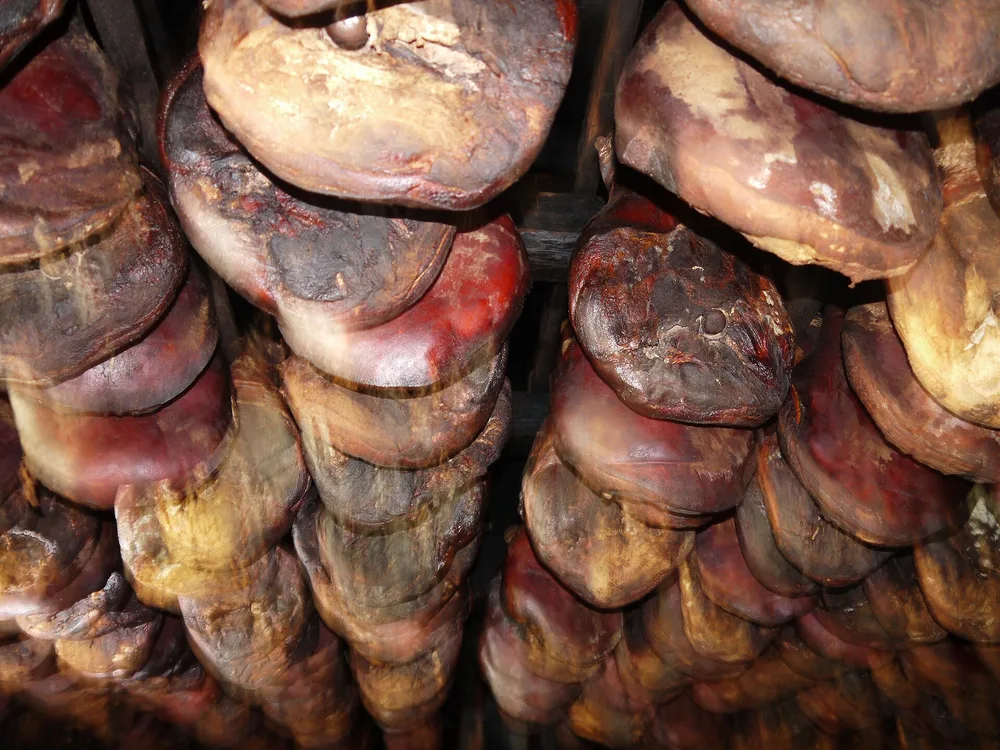
Most visitors who stop in Njeguši today come to eat. Njeguški pršut is a whole leg of pork, salted by hand in winter, pressed, then cold-smoked over beech wood and left to dry for many months in the mountain air, where, villagers will tell you, the meeting of the sea breeze from Kotor and the cold air of the plateau does what no machine can. The result is darker, drier and smokier than Italian prosciutto, sliced thin and served with bread, olives and a glass of grape rakija. In 2016 it became the first Montenegrin food product protected by a designation of origin.
Its constant partner is Njeguški sir, a firm, slightly salty cheese made mainly from sheep’s milk, sometimes from cow’s or mixed milk, often kept in oil. Many households along the main road smoke their own hams and sell them from the door, and several family restaurants and guest houses serve a tasting plate of pršut, cheese, kajmak and home-made bread at wooden tables under the trees. If you see hams hanging in a smokehouse, ask before you photograph; most owners are glad to show you.
For the whole Montenegrin table, from kačamak to the wines of Crmnica, see food and drink around Cetinje and ExploreMontenegro’s food and wine guide. GetYourGuide lists a Njeguši village tour with a prosciutto tasting in a local household, which describes exactly that: a visit to a family that smokes its own hams.
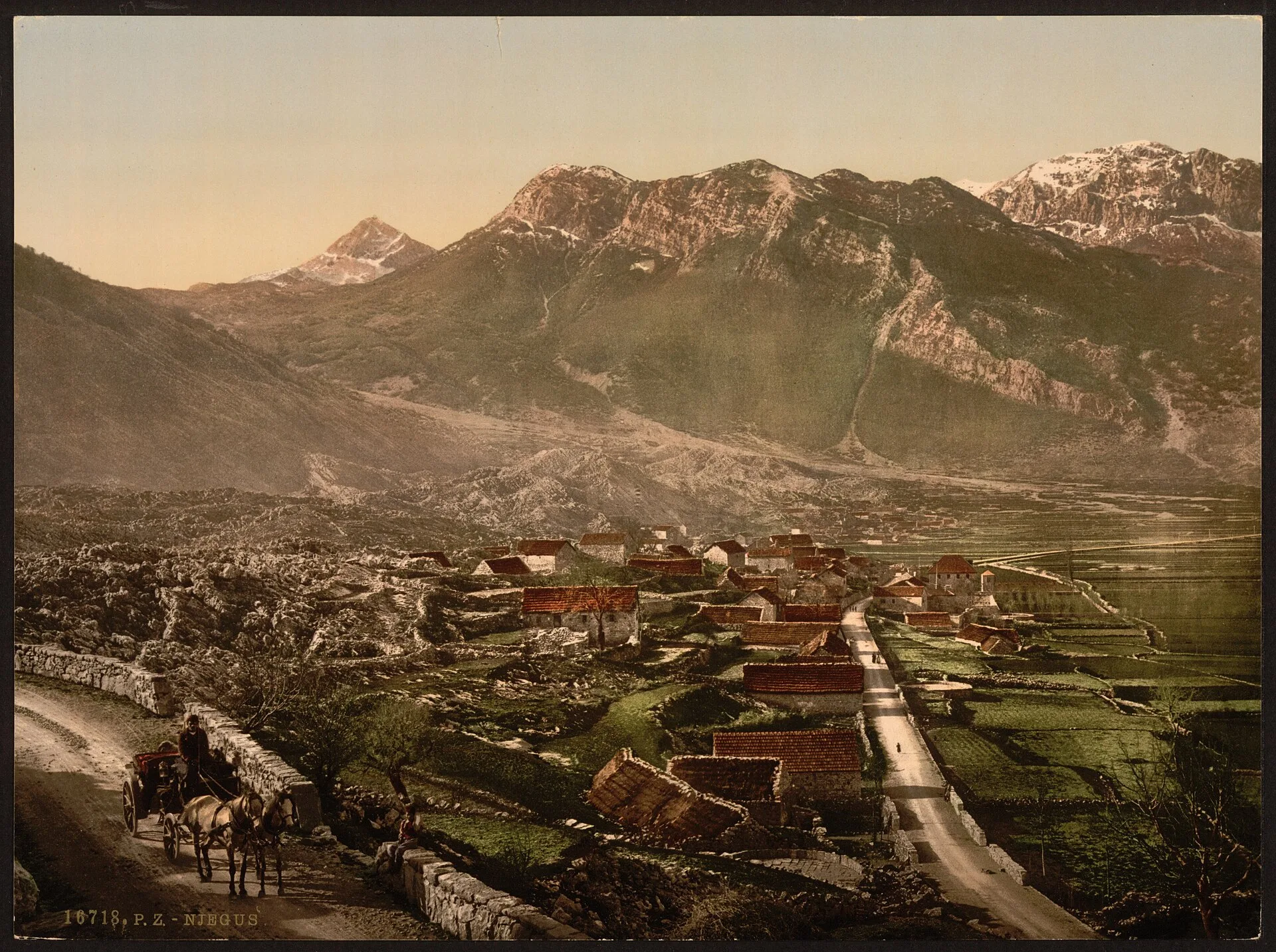
Njeguši in a photochrom of the 1890s: stone houses, walled fields and the road to Cetinje crossing the basin (Library of Congress, public domain).
The old road: Kotor, Krstac and Cetinje
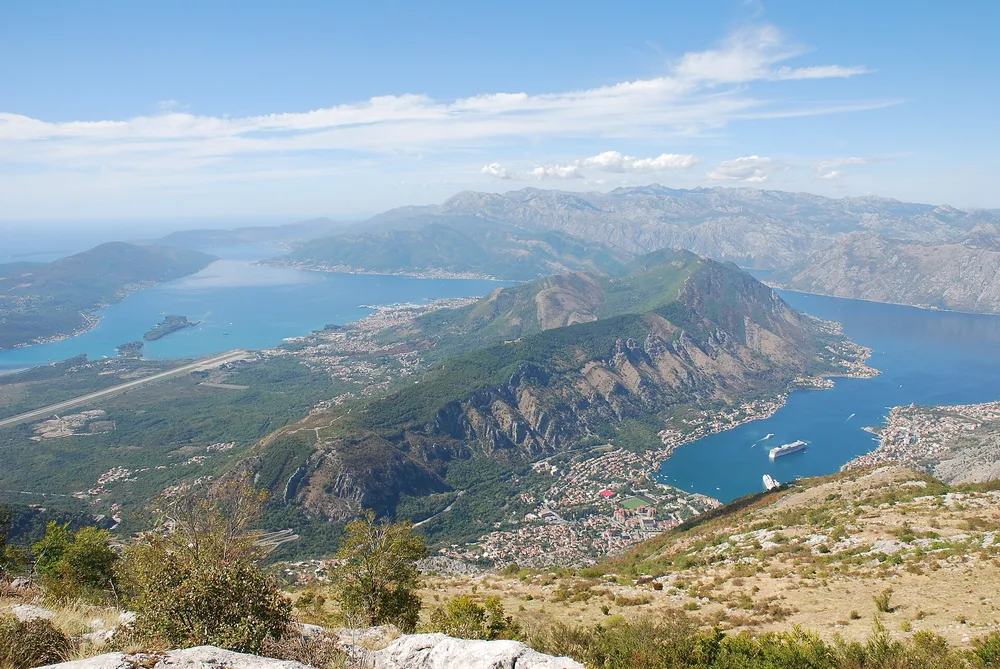
Until the 1880s there was no carriage road into Montenegro at all. Travellers landed at Kotor and climbed the Ladder of Kotor, a stepped mule path of dozens of zigzags up the mountain behind the town, to the frontier at Krstac and down into Njeguši. Nineteenth-century visitors, from British diplomats to Russian scholars, all describe the same arrival: the brutal climb, the sudden rim, the view back over the bay, and then the green basin of Njeguši and the inn at Krstac, which was photographed for the photochrom series of the 1890s.
After the Congress of Berlin in 1878 the road was rebuilt for wheels. The section from Cetinje to Krstac, through Njeguši, was built from 1879 and is usually described as the oldest carriage road in Montenegro; the descent from Krstac to Kotor, with its famous 25 hairpin bends, was completed in 1884. Both are still in use. In 2017–2018 the Cetinje–Krstac section was widened, and a 490-metre tunnel near Čekanje now bypasses some of the old hairpins on the Cetinje side. The whole story of the road, and of the cable car that now climbs the same mountain from Kotor, is in the Kotor serpentine and cable car guide; for Kotor itself see the Kotor guide on ExploreMontenegro.
How to visit
By car Njeguši is easy: about 20 km from Cetinje, about 21 km from Kotor by the serpentine road and about 13 km from the mausoleum car park, so it fits naturally into a loop. Parking is informal, by the roadside restaurants and smokehouses; please do not block field gates. There is no regular public bus through the village; buses between Cetinje and Kotor normally run by the faster coastal road through Budva.
By tour, Njeguši is a standard stop on day trips from Kotor and Budva that combine Lovćen and Cetinje: the Lovćen, cable car, Njeguši and Cetinje day tour, the Majestic Montenegro trip to Lovćen, Njeguši and Cetinje and the private Kotor–Lovćen–Njeguši tour. Walkers can join a guided hike to Pestingrad peak above Njeguši.
How long? Half an hour is enough for a ham-and-cheese plate; an hour and a half lets you add the birth house and a walk across the field. A night in one of the village guest houses gives you the mountain at dusk and the mausoleum early next morning.
Njeguši: village tour with prosciutto tasting in a local household
A visit to a Njeguši family that smokes its own hams, with a tasting of pršut, according to the title. The simplest way to see how the village’s famous ham is made.
Check availabilityBook via GetYourGuide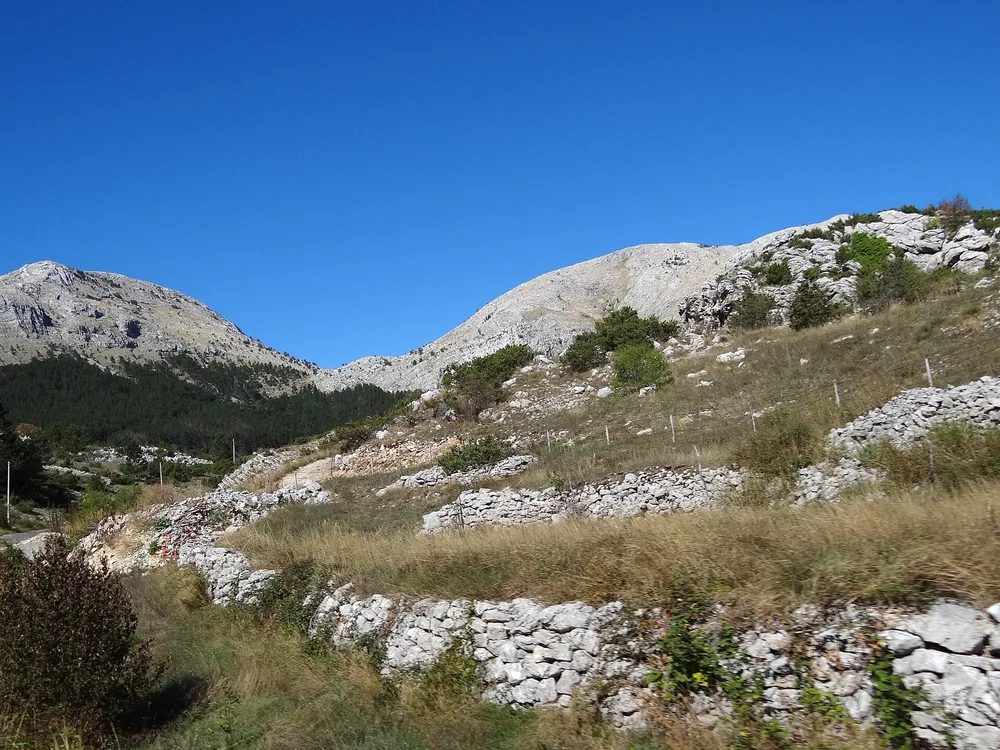
Kotor: Lovćen mountain and Njeguši private tour
A private trip from Kotor up the mountain to Lovćen and the village of Njeguši. Ask whether the route uses the serpentine road and whether Cetinje can be added.
Check availabilityBook via GetYourGuide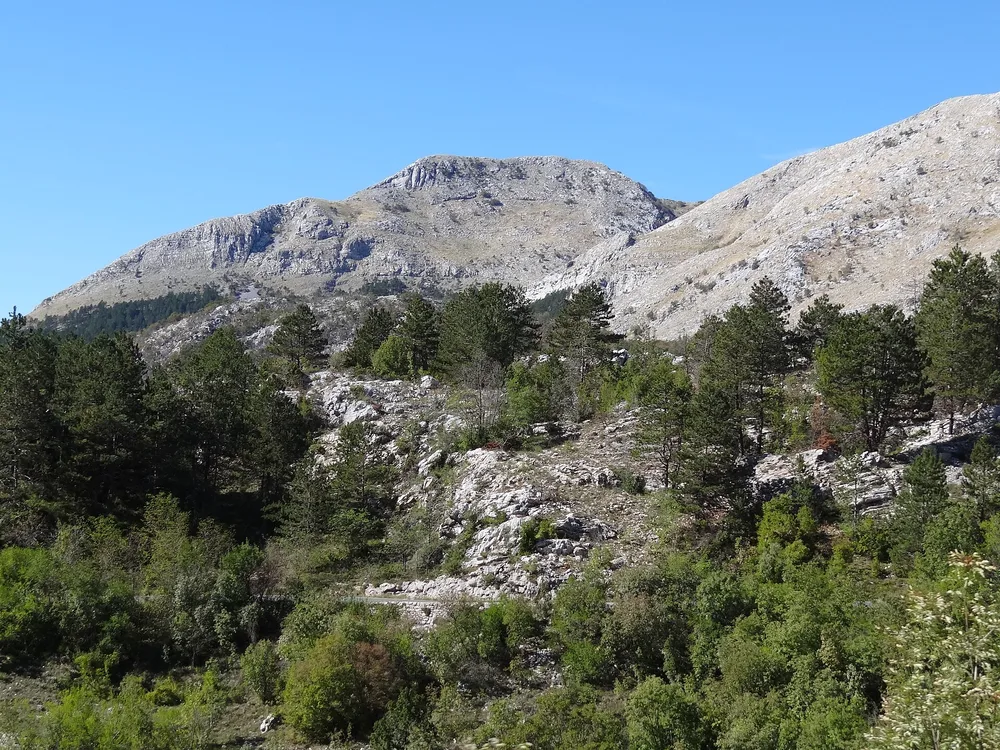
Njeguši: Pestingrad peak hiking tour
A guided hike from Njeguši to the Pestingrad summit above the village, according to the listing title. Good boots and water are essential.
Check availabilityBook via GetYourGuideTour listings are on GetYourGuide. Prices, dates and cancellation terms are shown live on each listing and can change; Cetinje.com may earn a commission at no extra cost to you.
Staying in Njeguši
There are a few guest houses, rooms and holiday homes in and around the village, most of them family-run and some with their own restaurant. Read the address on each listing: a Booking.com search for Njeguši also returns properties in Kotor and on other parts of Lovćen. For the full picture, see where to stay.
BNB Njeguška sijela
Lovćen & NjegušiBed and breakfast in Njeguši with a restaurant and bar serving local food.
9.3Booking.com guest score · as checked in November 2026
See on Booking.comEthno Village St George
Lovćen & NjegušiEthno-village of holiday houses in Njeguši with a restaurant, a seasonal pool and a children’s playground.
8.7Booking.com guest score · as checked in November 2026
See on Booking.comSee all stays in Lovćen & Njeguši on Booking.com
Accommodation links go to Booking.com, where you see live prices and availability. We do not list prices because they change daily; Cetinje.com may earn a commission.
Frequently asked questions
Is Njegoš’s birth house open all year?
No. The National Museum opens it in the summer season only, daily from April to 15 November, and closes it from 16 November until spring (as checked November 2026).
How much is the ticket for Njegoš’s birth house?
3 euro for adults on its own, or included in the 8 euro Njegoš Mausoleum ticket, as checked November 2026.
What is Njeguški pršut?
A dry-cured, beech-smoked ham from Njeguši, air-dried for many months. In 2016 it became the first Montenegrin food product with a protected designation of origin.
How do I get to Njeguši without a car?
There is no regular bus through the village. Take a taxi from Cetinje or Kotor, or a day tour that combines Lovćen, Njeguši and Cetinje.
Was King Nikola born in Njeguši?
Yes, on 7 October 1841 (25 September old style). Njegoš was born there in 1813, and the earlier prince-bishops of the dynasty also came from the village.
Sources and official information
Facts were checked against these official and scholarly sources in November 2026. Opening hours, ticket prices, park fees and timetables change, so confirm before you go.
- en.narodnimuzej.me
- en.narodnimuzej.me
- en.narodnimuzej.me
- en.narodnimuzej.me
- parksdinarides.org
- cdm.me
- en.wikipedia.org
- en.wikipedia.org
- loc.gov
- openstreetmap.org
Cetinje.com is an independent guide, not the official site of the Old Royal Capital Cetinje, the National Museum of Montenegro, any tour operator, hotel or the government of Montenegro. Some links are affiliate links: tours go to GetYourGuide and accommodation goes to Booking.com, and we may earn a commission at no extra cost to you.