In short
- Nearest airports: Podgorica (TGD), about 38 km and 50 minutes, open all year; Tivat (TIV), about 47 km and an hour, busiest in summer; Dubrovnik (DBV) in Croatia, about 100 km plus a border crossing.
- By bus: Cetinje lies on the main Budva–Podgorica road, so buses from both are frequent; Kotor is served via Budva. The bus station is about 500 m from the museums.
- By car: about 35 km from Podgorica, 31 km from Budva and 41–50 km from Kotor (two routes, one over the mountain).
- No railway: the nearest stations on the Belgrade–Bar line are Podgorica and Virpazar.
- Parking: a car and coach park about 100 m from King Nikola’s Palace, with the tourist information point; the National Museum gives 2 euro a day for cars.
Where Cetinje is
Cetinje lies on a karst plateau at about 670 m in the south-west of Montenegro, behind the coastal mountains: about 12 km as the crow flies from the Adriatic, but separated from it by the massif of Lovćen. It is the centre of the municipality of the Old Royal Capital, which reaches down to Lake Skadar. Modern roads link it to Budva on the coast and to Podgorica, the capital, both about half an hour to 45 minutes away; the old road over Lovćen links it to Kotor. Everything else in Montenegro is reached through one of those three.
Distances on this page are road distances from the centre of Cetinje by OpenStreetMap routing, rounded. The National Museum of Montenegro’s own directions page gives slightly different round figures (Podgorica 30 km, Budva 28 km, Kotor 52 km, Podgorica Airport 37 km, Tivat 50 km, Dubrovnik 102 km); they depend on the route and on where you start and finish.
| From | Road distance | Typical time by car | Public transport |
|---|---|---|---|
| Podgorica Airport (TGD) | About 38 km | About 50 min | Taxi or transfer; or bus from Podgorica city |
| Tivat Airport (TIV) | About 47 km | About 1 h | Taxi or transfer; or bus via Budva |
| Dubrovnik Airport (DBV), Croatia | About 100 km or more | 2–2 h 30 min plus the border | Transfer, or bus to Kotor or Budva and change |
| Podgorica centre | About 35 km | About 45 min | Frequent buses |
| Budva | About 31 km | About 45 min | Frequent buses |
| Kotor, via Budva | About 48–50 km | About 1 h | Buses, direct or via Budva |
| Kotor, via the serpentine and Njeguši | About 41 km | About 1 h 15 min | No bus |
| Bar (ferry port) | About 57 km | About 1 h 15 min | Bus via Podgorica or Budva |
By air
Montenegro has two international airports, both run by the state company Airports of Montenegro, and both within an hour of Cetinje.
- Podgorica Airport (TGD) lies on the Zeta plain south of the capital, near Golubovci; its code recalls Titograd, Podgorica’s name from 1946 to 1992. It operates all year and is the nearer airport to Cetinje: about 38 km, 50 minutes, by a route that skirts Podgorica and climbs to the plateau. Air Montenegro, the national carrier, is based here.
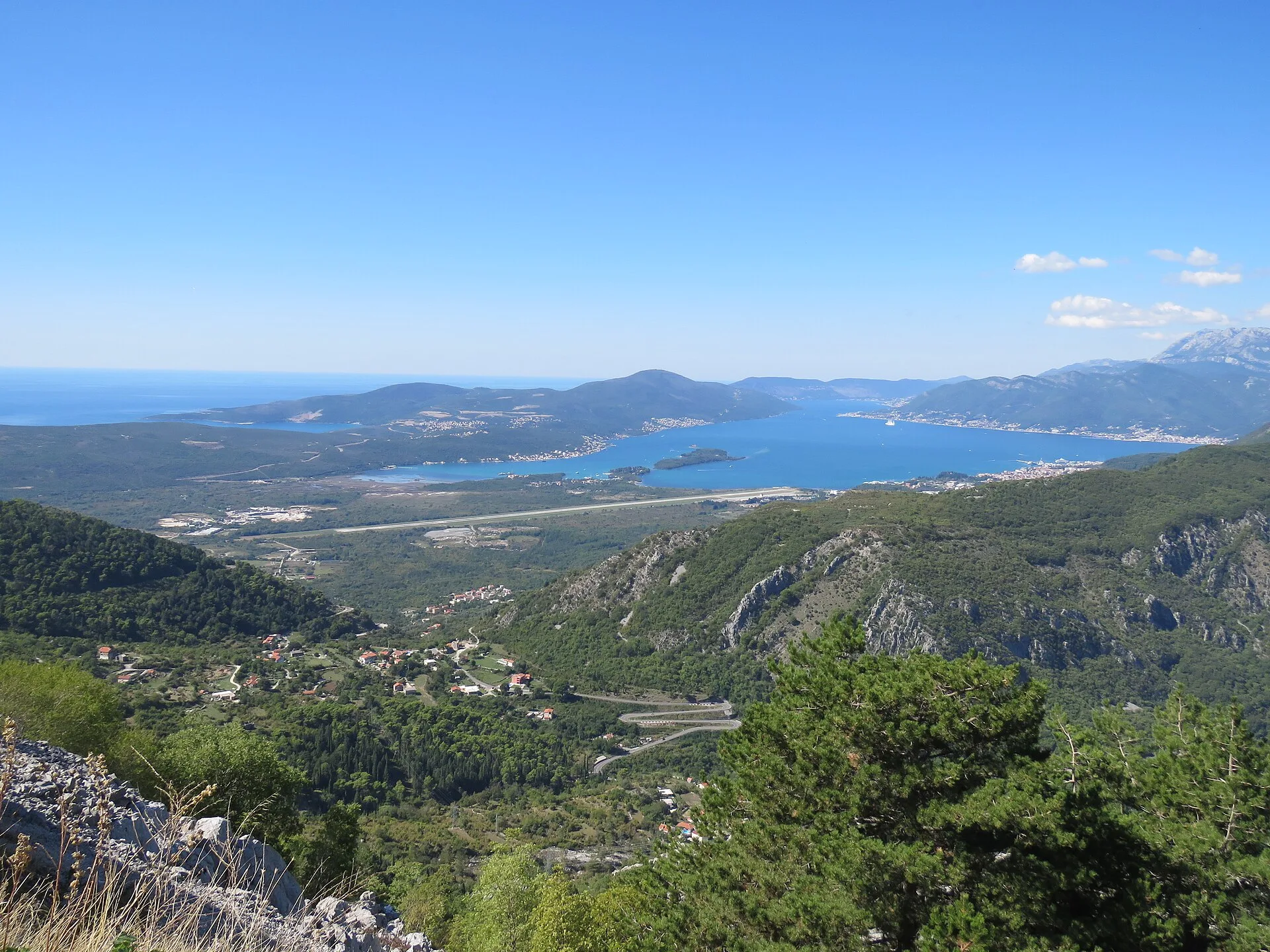
- Tivat Airport (TIV) sits on the Tivat plain on the Bay of Kotor, about 7 km from Kotor and 20 km from Budva. Traffic is strongly seasonal, with the great majority of passengers between May and September. From Tivat to Cetinje is about 47 km, an hour, either via Budva or via Kotor and the mountain road.
- Dubrovnik Airport (DBV), in Croatia, is about 100 km or more from Cetinje and has a much wider choice of flights. Allow two to two and a half hours plus the border crossing between Croatia and Montenegro, which can take a long time on summer weekends. Car-hire companies need to authorise cross-border travel.
There is no airport bus to Cetinje. From either Montenegrin airport, take a taxi or a pre-booked transfer straight to Cetinje, or go into Podgorica (from TGD) or Budva (from TIV) and take a bus from there. For flight routes and seasonal airlines, see ExploreMontenegro’s guide to getting to Montenegro.
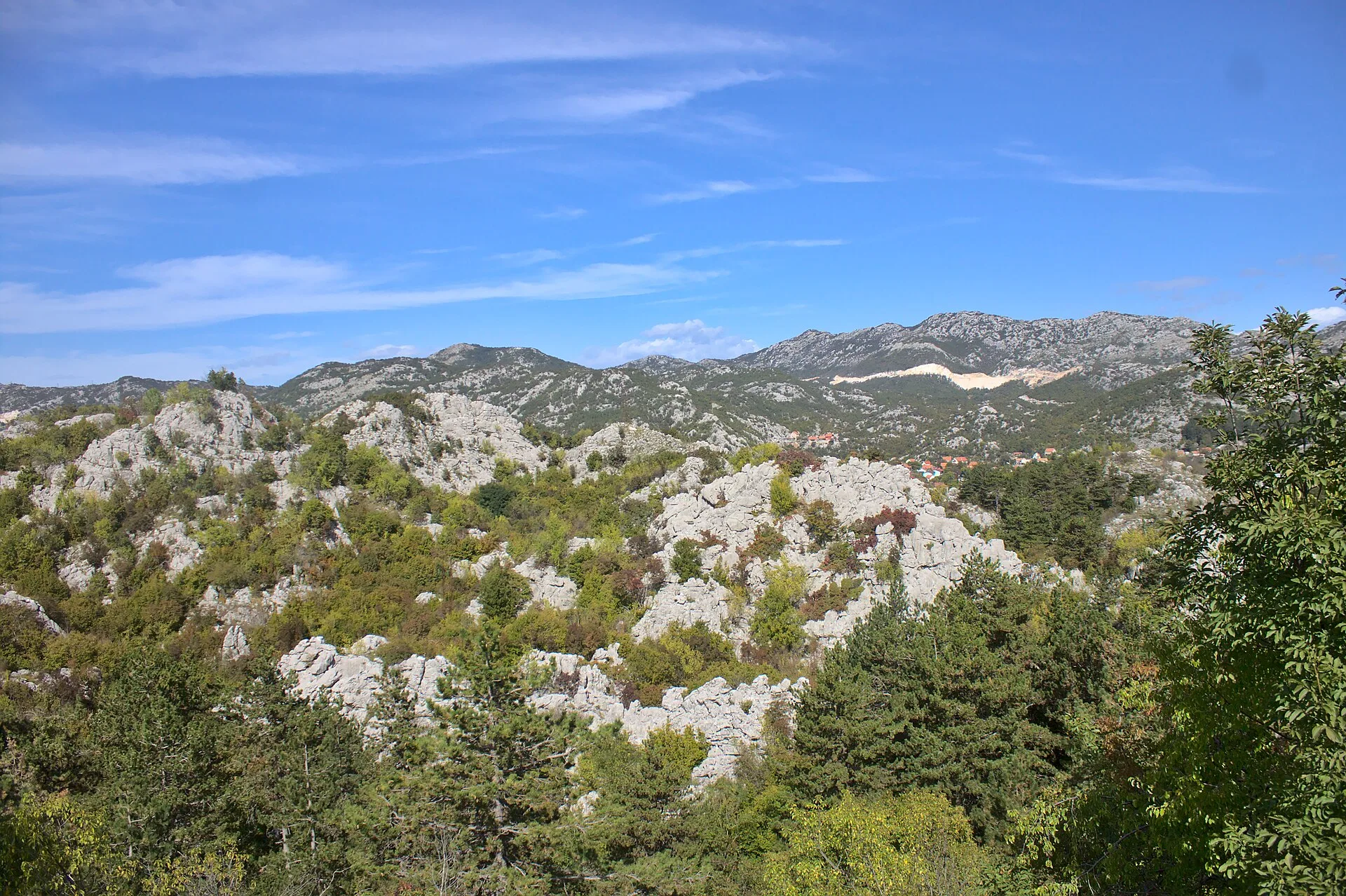
The karst country around Cetinje: the plateau lies behind the coastal mountains, half an hour from the sea.
By bus
Buses are the backbone of public transport in Montenegro, and Cetinje is well placed on the main road between Budva and Podgorica: many services between the two stop at Cetinje bus station, so there are departures in both directions through the day. Several private companies run the routes. Journey times are roughly 45 minutes to an hour from either city.
- From Podgorica: frequent departures from Podgorica bus station, next to the railway station. Also the way to Cetinje from Podgorica Airport if you take a taxi into the city first. See Cetinje from Podgorica.
- From Budva: frequent departures from Budva bus station; the best connection from the coast. See Cetinje from Budva.
- From Kotor and Tivat: buses run via Budva, some direct, others with a change; there is no bus over the mountain. See Cetinje from Kotor.
- International: coaches from Belgrade, Sarajevo, Dubrovnik and other cities arrive in Podgorica, Budva or Kotor; change there.
Timetables change with the season and are best checked at the departure bus station the day before; online listings are not always complete. Buy tickets at the station counter or, on many services, from the driver. Cetinje bus station is on the edge of the centre: the National Museum gives the distance to its museums as about 500 m, a walk of five to ten minutes, and taxis wait outside.
By car
Montenegrin main roads are generally good but often narrow and winding in the mountains, with slow lorries on the climbs and impatient overtaking. Drive defensively and keep to the limits: the UK government’s travel advice warns that police can fine drivers for exceeding a limit by 10 km/h, and that the drink-driving limit is far lower than in Britain. Road closures and roadside assistance information, in English, are available from the Auto-Moto Association of Montenegro on 19807. The three approaches to Cetinje are all spectacular in their own way.
- From Budva: the road climbs in long bends from the coast to the plateau with fine views back over the sea; about 31 km.
- From Podgorica: a wide modern road across the karst, about 35 km; or the slower old road past Rijeka Crnojevića and the Pavlova Strana viewpoint.
- From Kotor: either the main road via Budva, or the old road over Lovćen by the serpentine and Njeguši, narrow and slow but one of the great drives of the Adriatic.
In winter, snow and ice are common on the plateau and on Lovćen; carry chains or use winter tyres from November to March and check conditions before setting out. Fuel stations are found on the main roads into town and in the neighbouring cities, but not on Lovćen.
By train or by sea
There is no railway to Cetinje. The Belgrade–Bar line, Montenegro’s only passenger line of importance, passes through Podgorica and Virpazar on Lake Skadar on its way to the port of Bar. From Podgorica station, next to the bus station, it is about 45 minutes to Cetinje by bus.
By sea, ferries link the port of Bar with Bari in Italy, and cruise ships call at Kotor, from where most passengers reach Cetinje on organised shore excursions; see Cetinje from Kotor. Bar is about 57 km from Cetinje by road.
Arriving in Cetinje: parking and the first steps
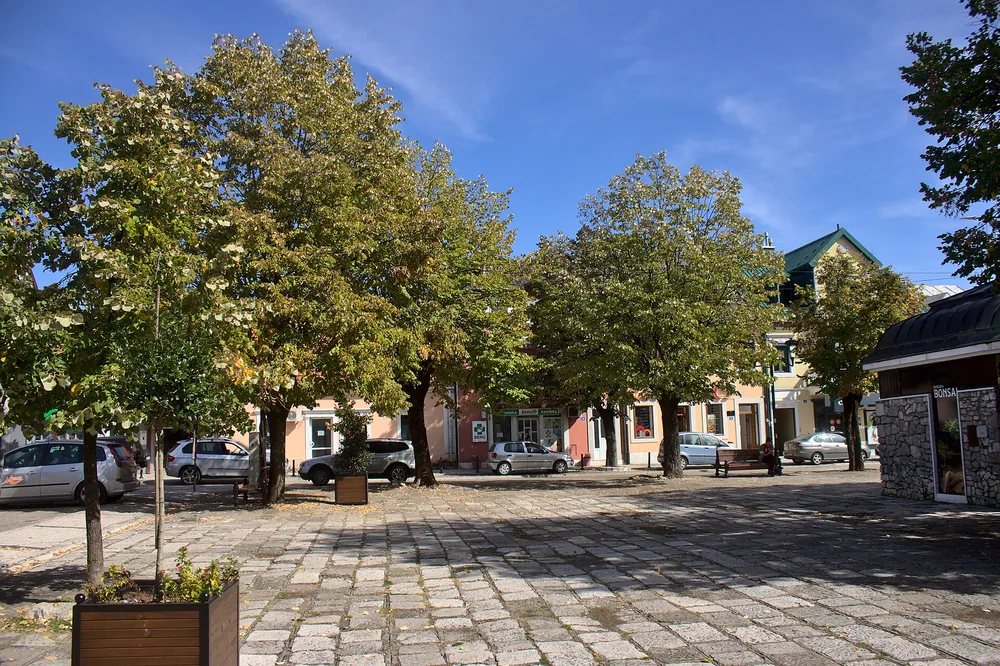
Cetinje is compact, flat and best seen on foot. If you arrive by car, the obvious place to leave it is the car and coach park in the historic centre, about 100 m from King Nikola’s Palace and Biljarda, 150 m from the Ethnographic Museum and 250 m from the Government House; the National Museum gives the charge as 2 euro a day for cars and 10 euro for coaches (as checked November 2026). The local tourist information point is in the car park itself, a good first stop for a town map and the current opening times. Street parking elsewhere in the centre is limited; follow the signs and do not park in the pedestrian streets.
From there, start at Ćipur and the monastery, both a few minutes’ walk away, and follow our self-guided walking tour. How to move around town and onward without a car is covered in getting around; for the bigger picture of travelling in Montenegro see ExploreMontenegro’s travel guide.
Transfers and tours instead of driving
If you do not want to drive, a transfer from the airport straight to your hotel in Cetinje is the most comfortable arrival. For a day visit from the coast, a guided tour removes every transport question: the classic Lovćen, Njeguši and Cetinje tour from Kotor and the Mini Montenegro tour both bring you to Cetinje and back. In Cetinje itself, the guided walking tour with museum entry starts in town.
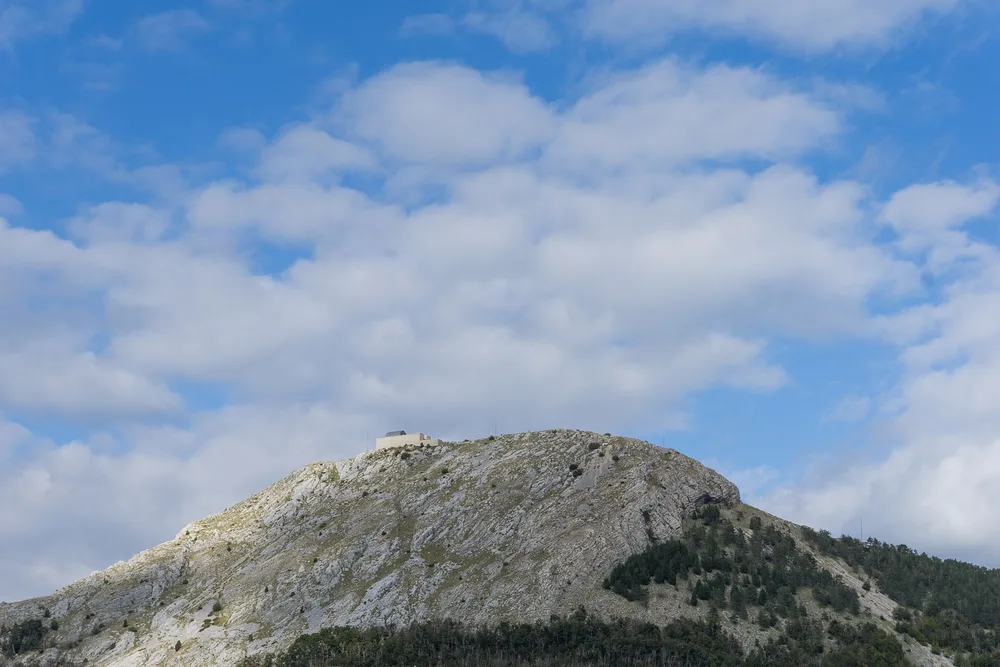
Lovćen, cable car, Njeguši and Cetinje day tour
A day from Kotor that rides the cable car up Lovćen and continues to Njeguši and Cetinje, as the title describes. Read the listing for the stops, whether the mausoleum ticket is included and what happens while the cable car is closed.
Check availabilityBook via GetYourGuide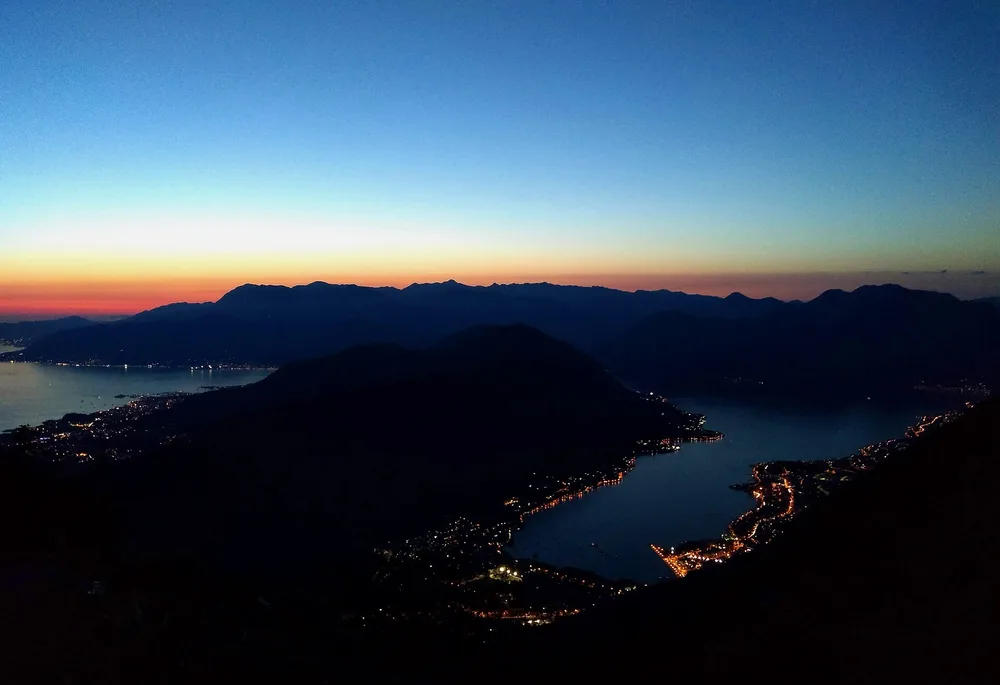
Mini Montenegro: Njeguši, Cetinje, Budva and Kotor
A one-day circuit that strings together Njeguši, the Old Royal Capital, Budva and Kotor. Expect a short stop in each rather than depth in any one.
Check availabilityBook via GetYourGuide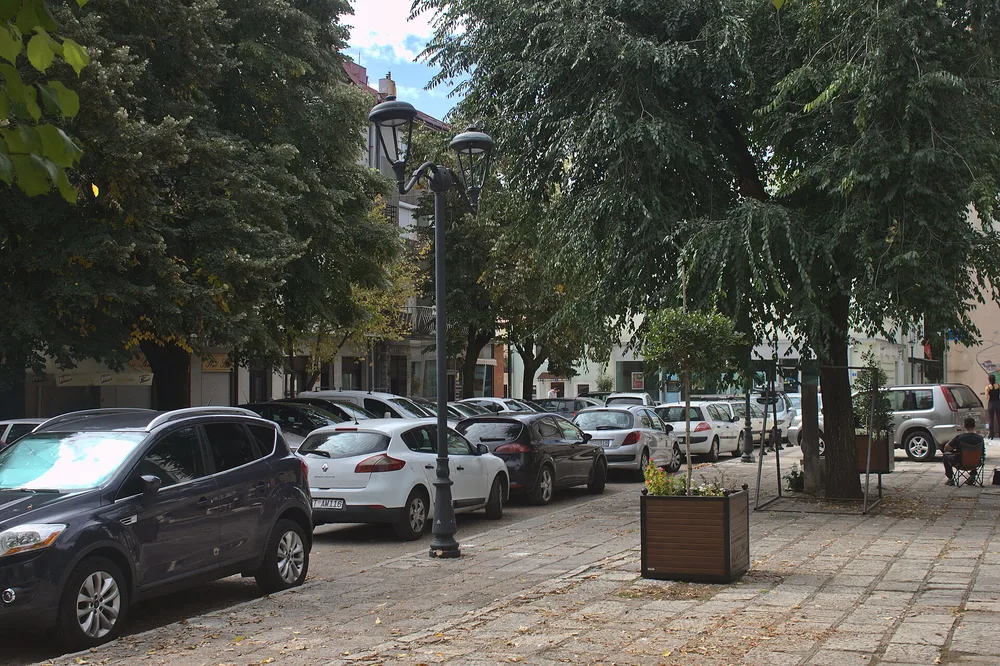
Cetinje: guided walking tour with museum entry
A walk through the historic core of the Old Royal Capital with a local guide, with museum entry included according to the listing title. Check the listing for which museum, the meeting point and the languages offered.
Check availabilityBook via GetYourGuideTour listings are on GetYourGuide. Prices, dates and cancellation terms are shown live on each listing and can change; Cetinje.com may earn a commission at no extra cost to you.
Frequently asked questions
Which airport is closest to Cetinje?
Podgorica (TGD), about 38 km and 50 minutes by road. Tivat (TIV) is about 47 km and an hour away.
Is there a bus from the airport to Cetinje?
No direct airport bus. Take a taxi or transfer, or go into Podgorica (from TGD) or Budva (from TIV) and take a bus to Cetinje.
Can I get to Cetinje by train?
No. The nearest stations are Podgorica and Virpazar on the Belgrade–Bar line; continue by bus or car.
Where do I park in Cetinje?
In the car park in the historic centre, about 100 m from King Nikola’s Palace, with the tourist information point. The National Museum gives 2 euro a day for cars, as checked November 2026.
How far is the bus station from the centre?
About 500 m from the museums according to the National Museum, a 5–10 minute walk.
Can I fly into Dubrovnik and go to Cetinje?
Yes, but allow two to two and a half hours by road plus the Croatia–Montenegro border, which can be slow in summer.
Sources and official information
Facts were checked against these official and scholarly sources in November 2026. Opening hours, ticket prices, park fees and timetables change, so confirm before you go.
Cetinje.com is an independent guide, not the official site of the Old Royal Capital Cetinje, the National Museum of Montenegro, any tour operator, hotel or the government of Montenegro. Some links are affiliate links: tours go to GetYourGuide and accommodation goes to Booking.com, and we may earn a commission at no extra cost to you.