In short
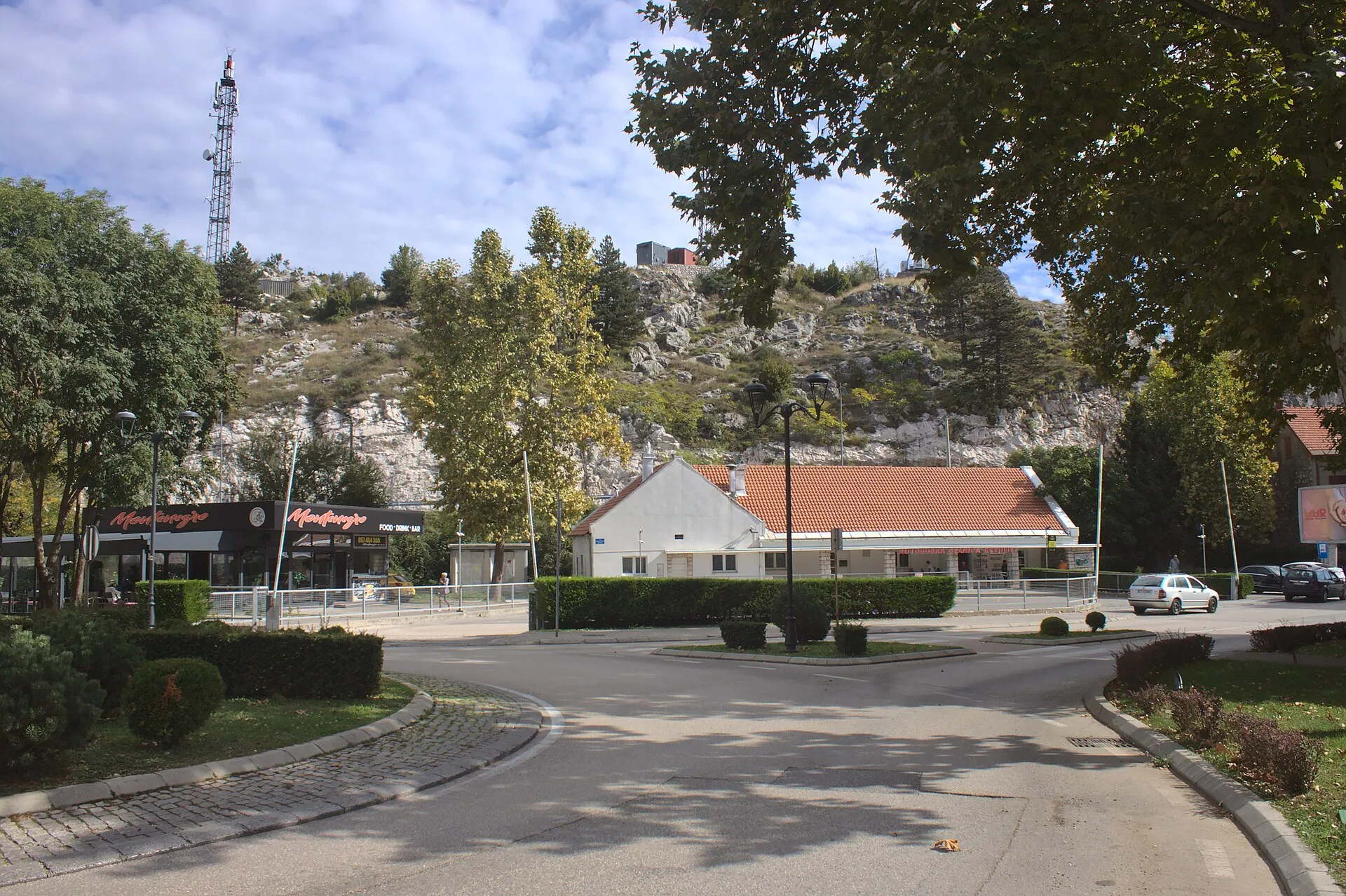
- On foot: the historic core is flat and compact. A loop of the main monuments is about 3 km; the bus station and the central car park are a few minutes from the museums.
- Taxis wait at the bus station and can be called by phone; agree the fare or ask for the meter before you set off, and agree waiting time for trips to Lovćen.
- Car: park once in the central car park (2 euro a day according to the National Museum) and walk. A car is the easiest way to reach Lovćen, Njeguši, Lipa Cave and Rijeka Crnojevića.
- Buses connect Cetinje with Podgorica, Budva and Kotor, not with the mountain or the villages.
- No car? Use taxis for the short trips and a tour for Lovćen and Njeguši.
On foot: the best way to see the town
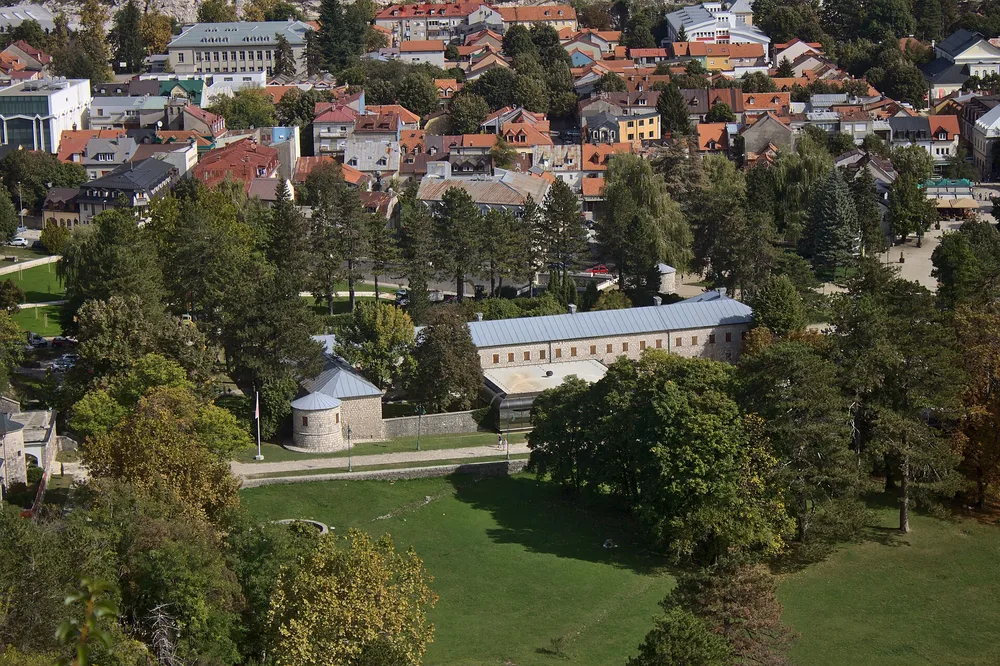
Cetinje was built on the floor of a karst field, and its historic centre is almost perfectly flat. The monastery, Ćipur, King Nikola’s Palace, Biljarda, the Government House, Njegoševa Street, the theatre and most of the legations lie within a rectangle you can cross in fifteen minutes. Our self-guided walking tour links them in a loop of about 3 km, two to three hours with stops, or about 5.5 km with the outer legations and the climb to Orlov krš above the monastery, the one real gradient in town.
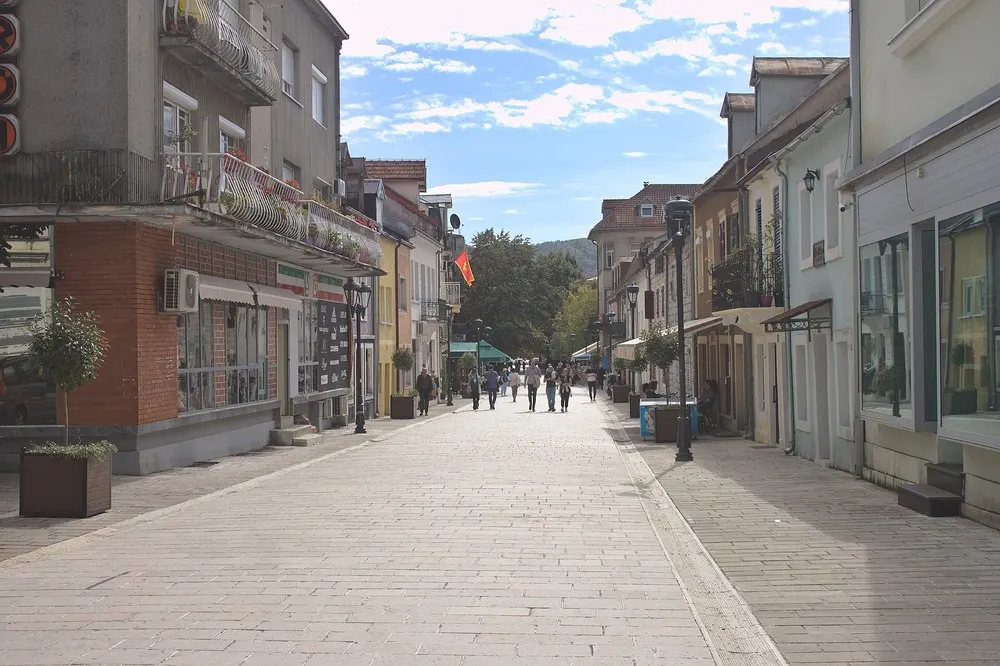
The main street, Njegoševa, is pedestrianised through the centre, and the parks around the palace and the monastery are pleasant to cross. Pavements are generally good; some side streets have none. In winter, snow and ice can make the town slippery for days, and in the frequent heavy rain an umbrella is essential: this is one of the wettest towns in Europe. The best time to visit has the details.
- Walking loop of the core
- About 3 km, 2–3 hours with stops
- Bus station to the museums
- About 500 m (National Museum)
- Central car park to King Nikola’s Palace
- About 100 m
- Monastery to Orlov krš
- A short, steep climb
- Terrain
- Flat, paved; slippery in snow and rain
Finding your way: the layout of the town
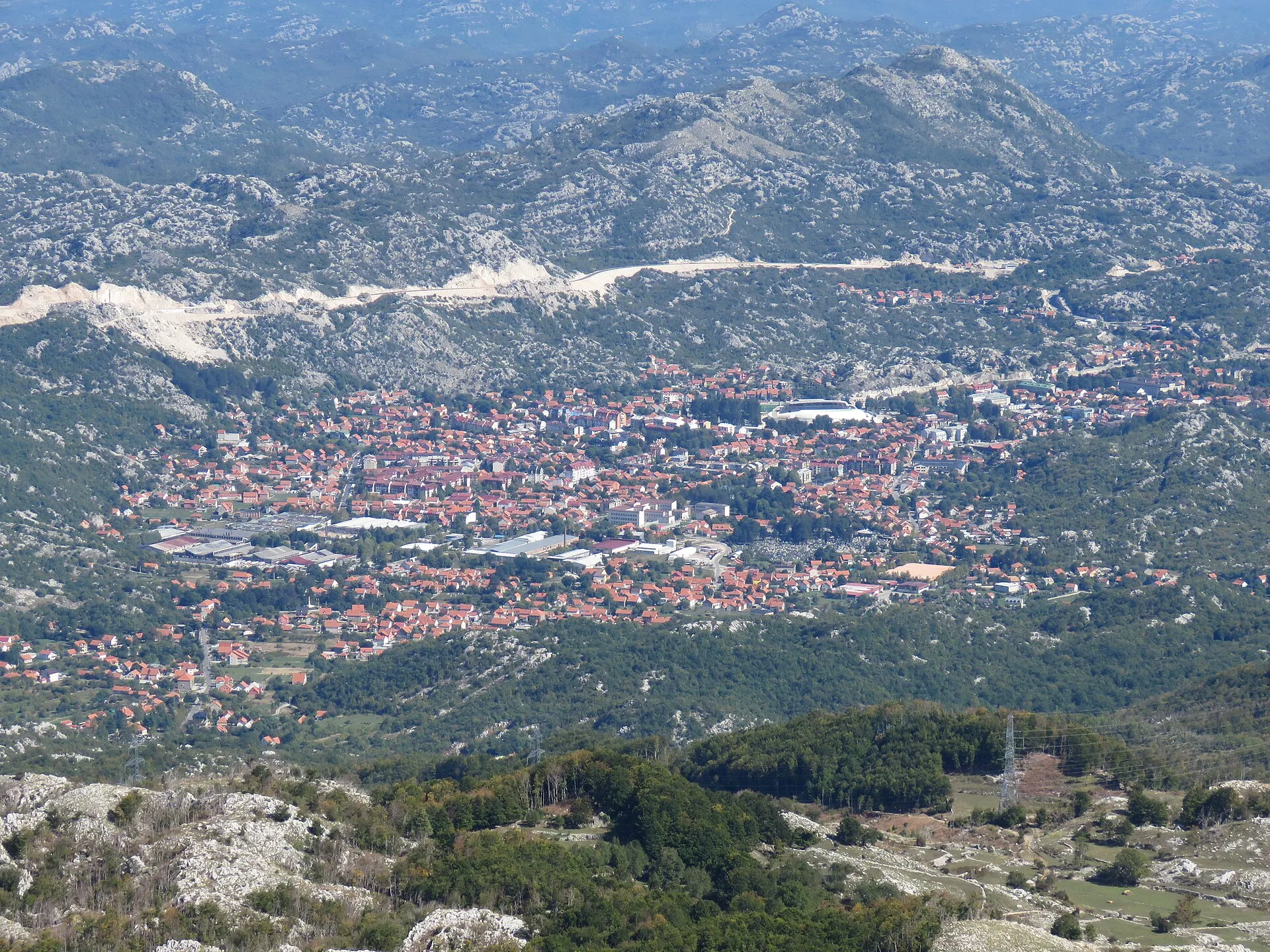
Cetinje is easy to read. The town lies on the flat floor of the field with its long axis running roughly north-west to south-east. The historic core is at the north-western end, under the rocky hill of Orlov krš: here are Ćipur and the Court Church, the monastery, Biljarda and the Relief Map pavilion, Dvorski trg with King Nikola’s Palace, and the big parks. From there Njegoševa Street runs south-east through the middle of town, past the Government House, Balšića pazar, the Zetski dom and most of the legations, to the Vlach Church at its upper end. The bus station and the main road to Budva and Podgorica lie on the eastern side of the centre.
If you lose your bearings, look for Orlov krš and the mountains: Lovćen rises to the west, and the monastery stands at the foot of the rock. The tourist information point in the central car park has free maps, and our walking tour gives distances between every stop.
Taxis
Taxis wait at the bus station and at a few points in the centre, and local companies take bookings by phone; your hotel or guest house will call one for you. Use licensed taxis, with a roof sign and the company’s name and number on the side, and agree the fare or ask for the meter before you set off, a precaution the UK government’s travel advice also recommends throughout Montenegro.
Taxis are the practical way to reach the sights just outside town without a car: Lipa Cave (about 5–6 km), Rijeka Crnojevića (about 15 km) and, with an agreed waiting time, the Njegoš Mausoleum on Lovćen (about 20 km). For Lovćen it is worth agreeing a round trip with an hour and a half at the top. We do not quote fares: they change, and they are best agreed on the spot.
By car
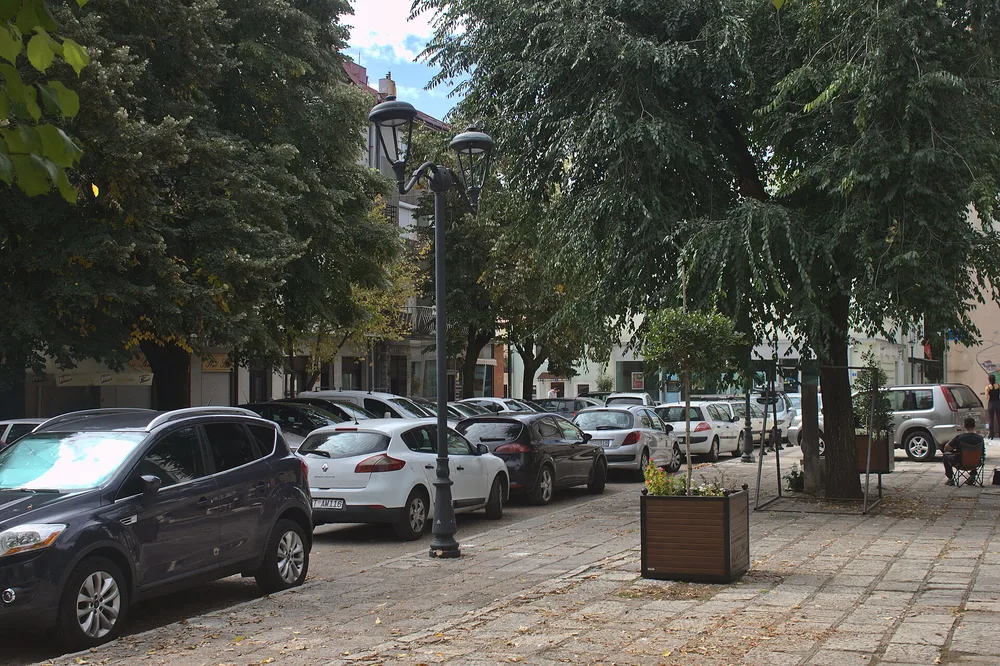
If you have a car, use it to arrive, park it once and walk. The central car and coach park is in the historic centre, about 100 m from King Nikola’s Palace, with the local tourist information point inside it; the National Museum gives the charge as 2 euro a day for cars (as checked November 2026). Many hotels and apartments offer free parking; check when you book.
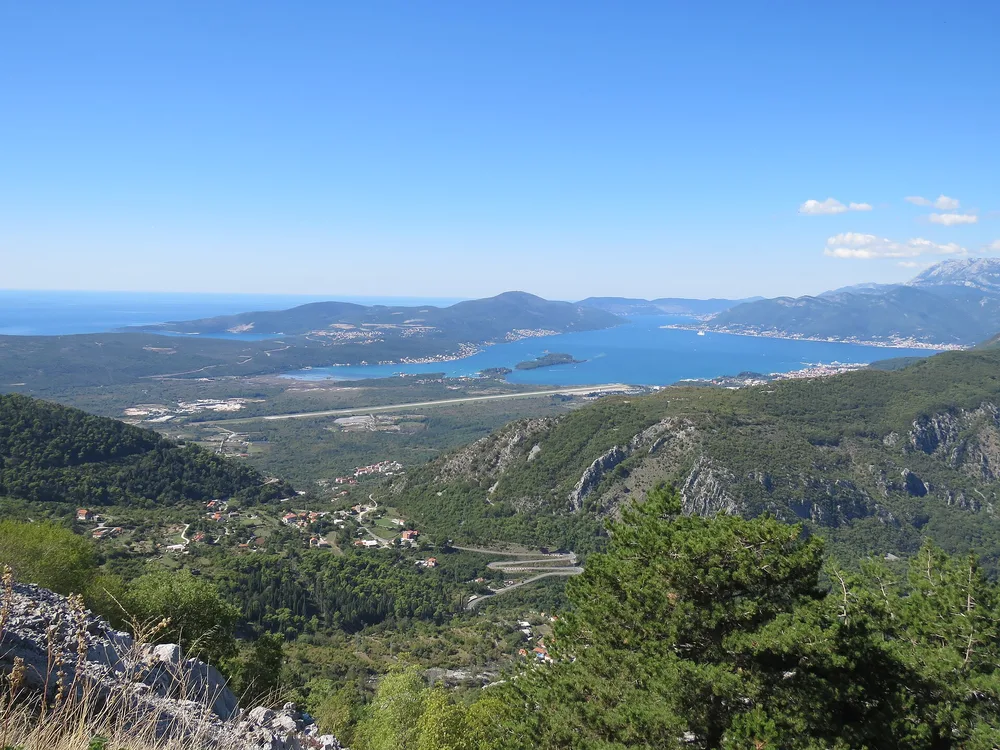
Outside the town a car is by far the easiest way to travel. Every sight on our day trips page is within an hour or so, and the circuit of Lovćen, Njeguši and the serpentine road is one of the best drives in the Balkans. Mountain roads are narrow, and in winter you will need chains or winter tyres on the plateau and on Lovćen. Fuel up in town; there is no petrol station on the mountain.
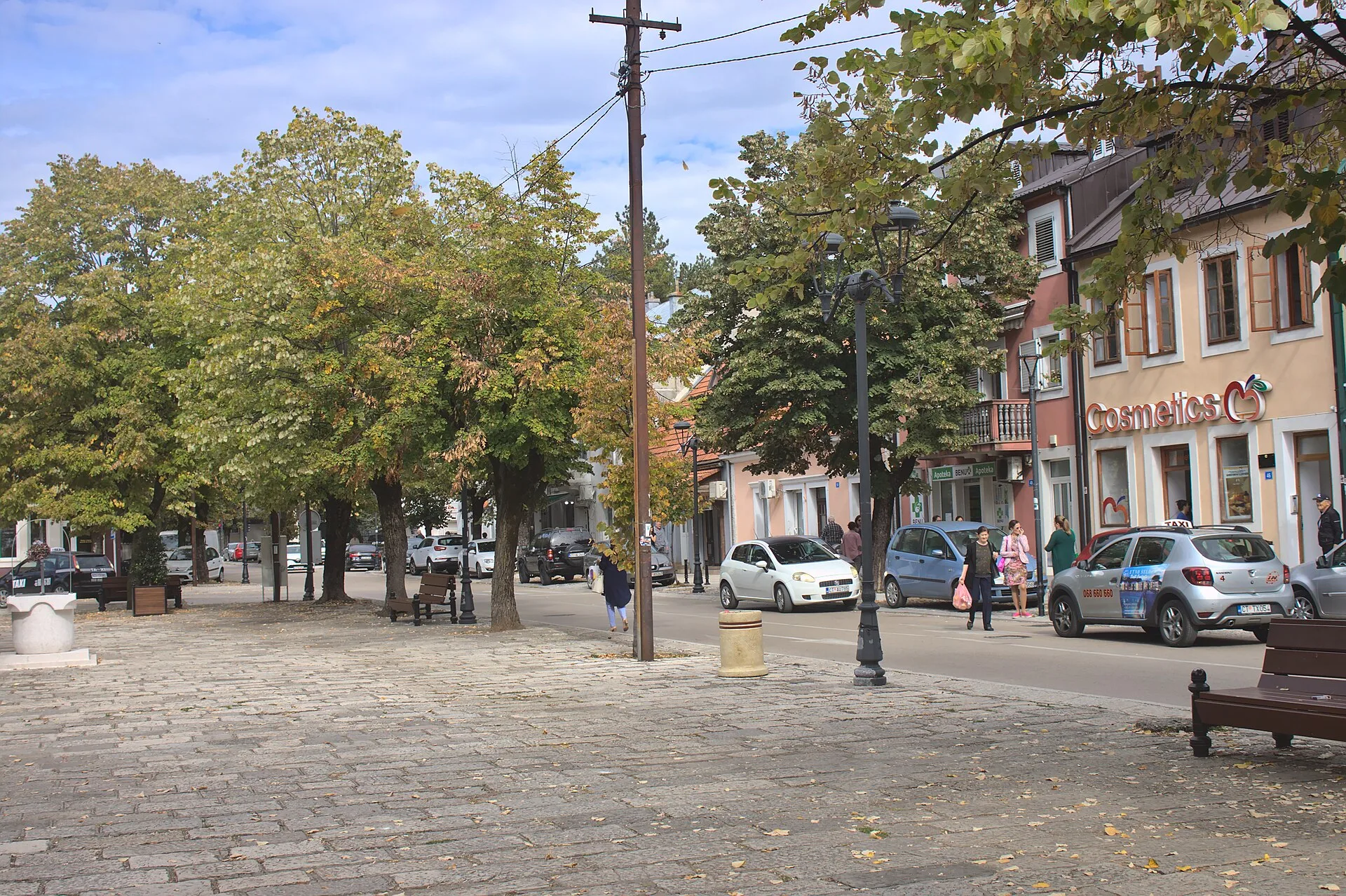
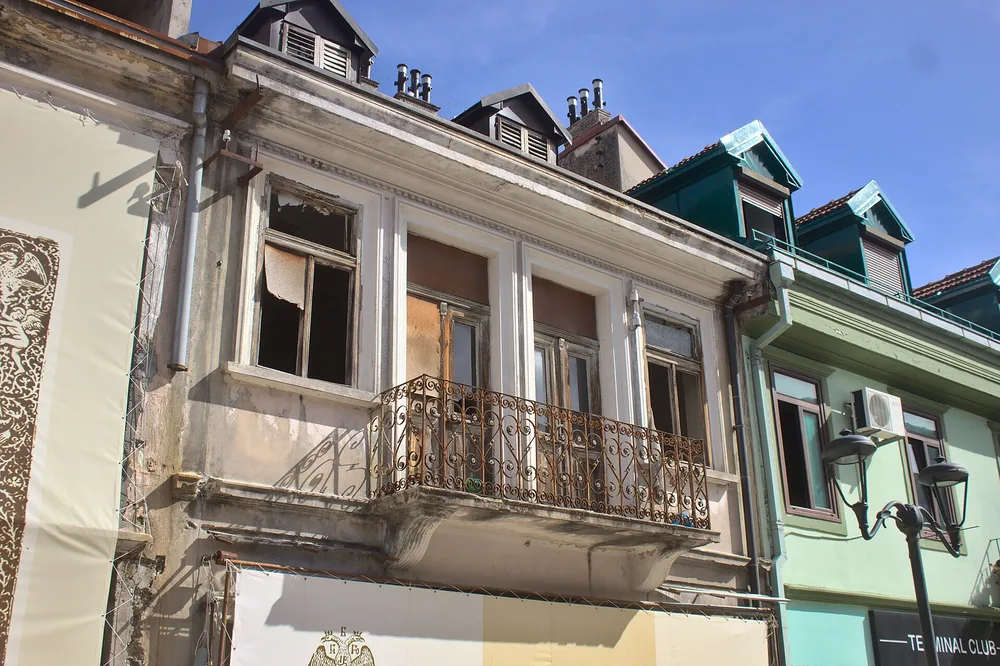
Balšića pazar in the centre of Cetinje: the historic core is flat and best seen on foot.
Buses
Intercity buses from Cetinje bus station run to Podgorica and Budva throughout the day, and to Kotor directly or via Budva. They are cheap, reliable and the obvious way to make the day trips to the coast and the capital. They do not, however, serve Lovćen, the mausoleum, Njeguši or Lipa Cave, and buses on the Podgorica road pass high above Rijeka Crnojevića, so for those you need a car, a taxi or a tour.
Timetables change with the season and are best checked at the bus station counter. Buy tickets there or from the driver. Note the last departure back to your base, which can be early in the evening in winter. For the national picture, see ExploreMontenegro’s guide to getting around Montenegro.
By bike
Cetinje itself is flat and easy on a bicycle, and the roads out of town are tempting: the climb to Ivanova korita on Lovćen, the descent to Rijeka Crnojevića, the serpentine to Kotor. They are also steep, narrow and shared with motor traffic, so they suit fit, experienced riders with good brakes and lights. On the mountain, Lovćen National Park hires out bicycles according to its price list (3 euro an hour or 8 euro a day for the two types listed, as checked November 2026).
Without a car: what works
The trips outside Cetinje fall into three groups.
| Trip | Distance from Cetinje | Without a car |
|---|---|---|
| Budva, Podgorica | About 31–35 km | Bus, frequent |
| Kotor | About 48–50 km via Budva | Bus, direct or via Budva |
| Lipa Cave | About 5–6 km | Taxi |
| Rijeka Crnojevića and Pavlova Strana | About 15–16 km | Taxi, or tour from Podgorica |
| Njeguši | About 20 km | Tour or taxi |
| Njegoš Mausoleum, Lovćen | About 20 km | Tour, or taxi with waiting time |
| Virpazar, Lake Skadar | About 37 km | Tour |
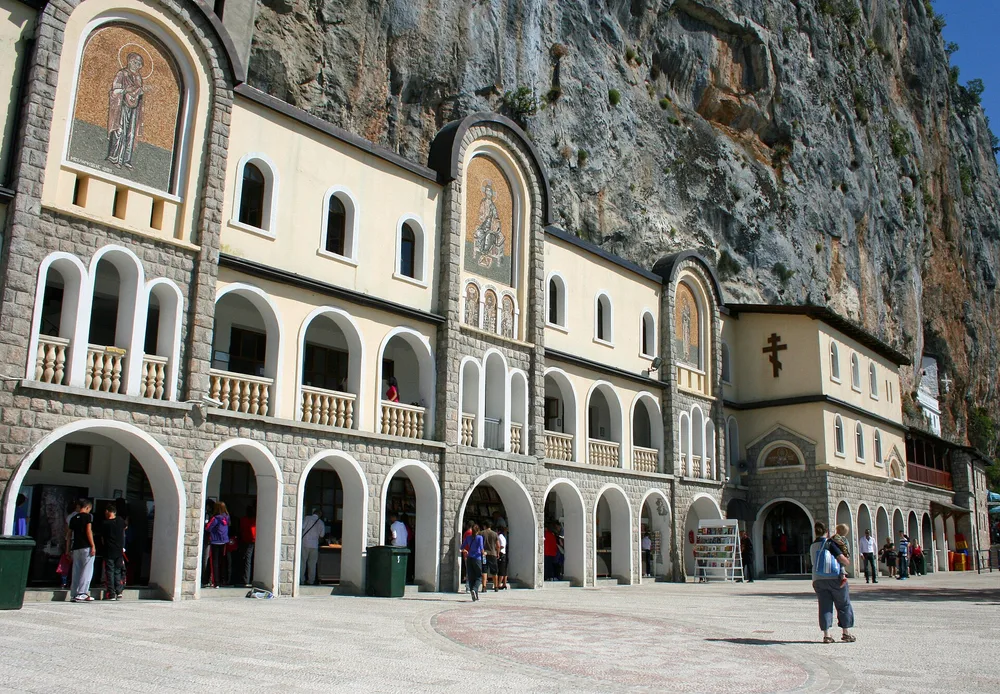
| Ostrog Monastery | About 70 km | Tour from Podgorica |
Tours that solve the transport
In Cetinje, the guided walking tour with museum entry or a private city tour gets you round the town with a guide. For the mountain, a private Lovćen tour starts from Cetinje; most other day tours to Lovćen and Njeguši start on the coast, so check the pick-up point. All the options are compared on the tours page.
Cetinje: guided walking tour with museum entry
A walk through the historic core of the Old Royal Capital with a local guide, with museum entry included according to the listing title. Check the listing for which museum, the meeting point and the languages offered.
Check availabilityBook via GetYourGuide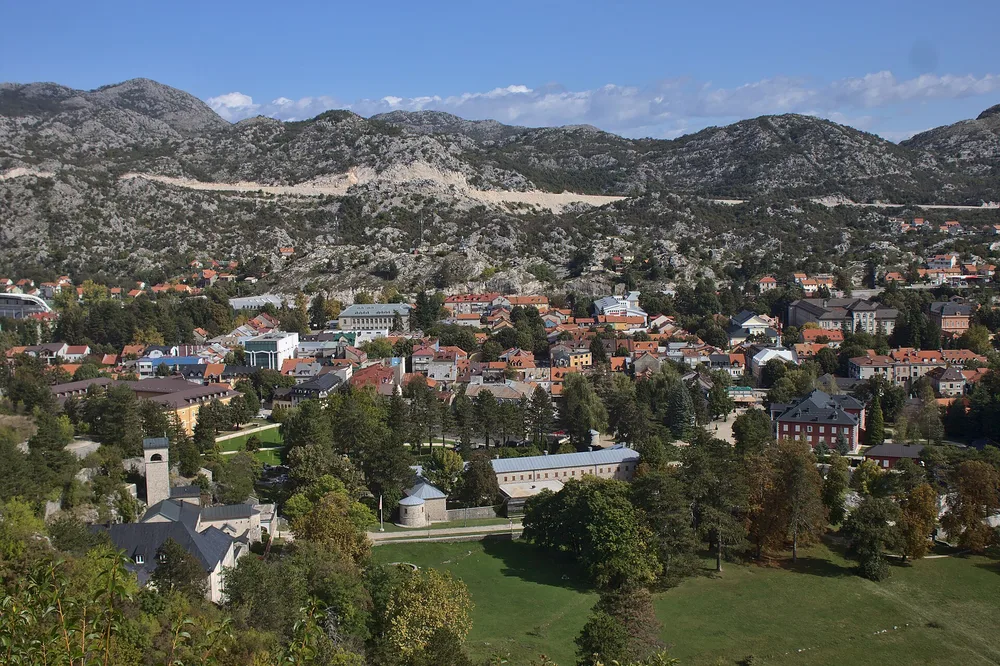
Cetinje city private tour
A private guided tour of Cetinje for your own party. Tell the guide in advance if you want the old legations, the monastery or a particular museum included.
Check availabilityBook via GetYourGuide
Lovćen private tour
A private tour of Lovćen listed under Cetinje. Read the listing for the meeting point and whether the mausoleum and Ivanova korita are on the route.
Check availabilityBook via GetYourGuideTour listings are on GetYourGuide. Prices, dates and cancellation terms are shown live on each listing and can change; Cetinje.com may earn a commission at no extra cost to you.
Getting around in winter
Between November and March the plateau is often cold and wet, and snow can lie in the town for days. Main streets are usually cleared quickly, side streets less so; wear boots with a good grip. Taxis keep running, buses to Podgorica and Budva run on reduced winter timetables, and the road up Lovćen beyond Ivanova korita may be closed by snow. If you drive, winter tyres or chains are essential on the plateau and on the mountain, and you should check road conditions before setting out; the Auto-Moto Association of Montenegro gives road information in English on 19807.
Accessibility
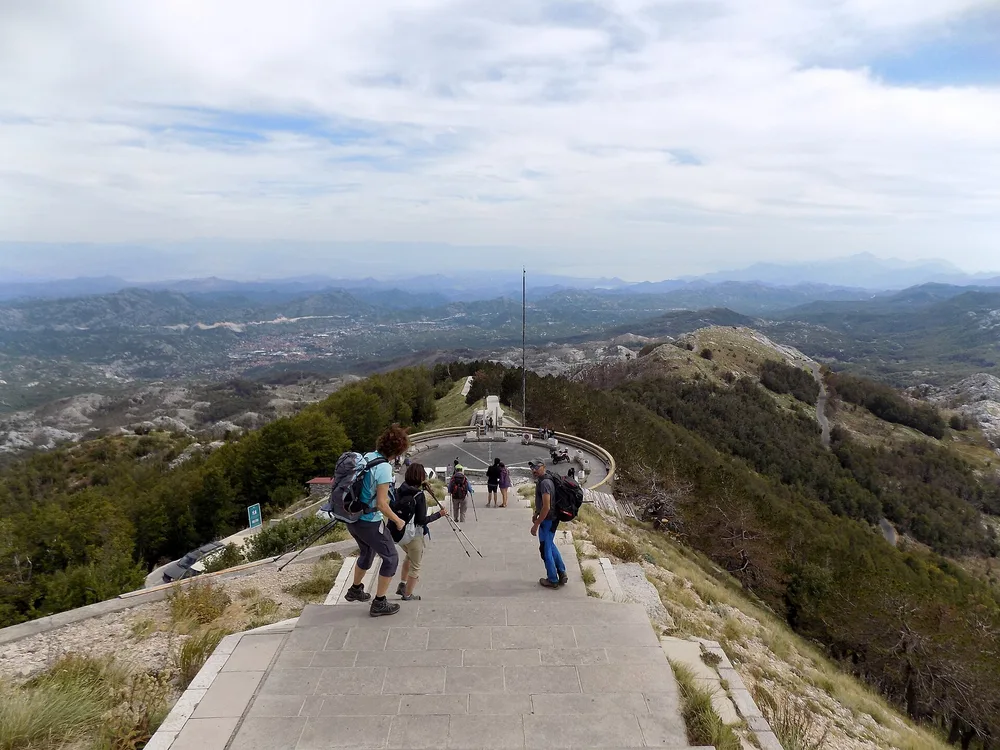
The flat centre makes Cetinje one of the easier historic towns in Montenegro for visitors with limited mobility, though pavements are uneven in places and kerbs are not always dropped. Many of the museums occupy nineteenth-century buildings with steps and upper floors, and the National Museum does not publish detailed access information on its website; ask at the ticket desk or contact the museum before visiting. The Njegoš Mausoleum is reached only by 461 steps, and Lipa Cave is not wheelchair accessible according to its operator.
Frequently asked questions
Is Cetinje walkable?
Yes. The historic centre is flat and compact: a loop of the main monuments is about 3 km and takes two to three hours with stops.
How do I get to Lovćen from Cetinje without a car?
There is no bus. Take a taxi with an agreed waiting time, or a tour; a private Lovćen tour starts from Cetinje.
Are there taxis in Cetinje?
Yes, at the bus station and by phone. Use licensed taxis and agree the fare or use the meter before setting off.
Where can I park?
In the central car park about 100 m from King Nikola’s Palace; the National Museum gives 2 euro a day for cars, as checked November 2026.
Sources and official information
Facts were checked against these official and scholarly sources in November 2026. Opening hours, ticket prices, park fees and timetables change, so confirm before you go.
Cetinje.com is an independent guide, not the official site of the Old Royal Capital Cetinje, the National Museum of Montenegro, any tour operator, hotel or the government of Montenegro. Some links are affiliate links: tours go to GetYourGuide and accommodation goes to Booking.com, and we may earn a commission at no extra cost to you.