In short
- Best months: May–June and September–October: mild, green, all museums and the mausoleum open daily, fewer coaches than in high summer.
- Summer (July–August) is warm but rarely as hot as the coast; it is also the peak of day-trip traffic from Kotor and Budva.
- Rain: Cetinje is among the wettest towns in Europe, with the heaviest falls from October to February; summers are comparatively dry.
- Winter (mid-November to mid-April): the Njegoš Mausoleum, Njegoš’s birth house and Lipa Cave are closed, the town museums open on weekdays only, and snow is common. Atmospheric, quiet and cheap.
- Dates to note: Orthodox Christmas Eve bonfires (6 January), Independence Day (21 May), Statehood Day (13 July), St Peter of Cetinje (31 October) and Njegoš Day (13 November).
A mountain town with a wet reputation
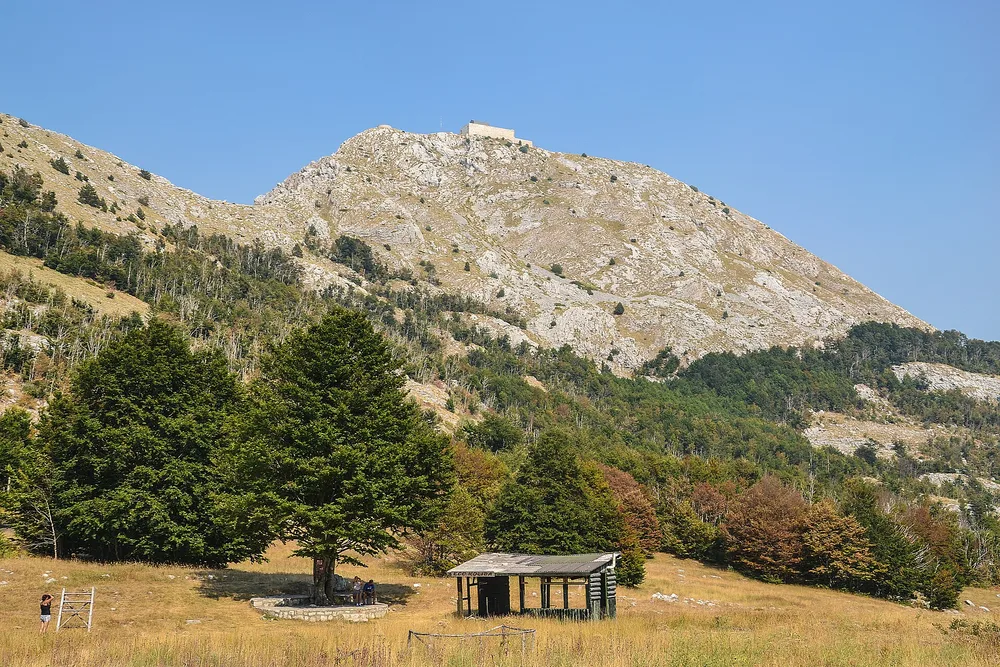
Cetinje stands at about 670 m on a karst plateau a few kilometres behind the Adriatic, and its climate is shaped by both facts. The height makes it several degrees cooler than Budva or Kotor all year: pleasant in summer, cold in winter, with regular snow. The sea makes it wet. Moist air coming off the Adriatic is forced up over Lovćen and the coastal ranges and drops its water on the first high ground it meets, so the mountains above the Bay of Kotor and the Cetinje plateau receive some of the heaviest rainfall in Europe.
How much is a matter of definition and of station. Figures of about 3,000 to 3,300 mm a year are widely quoted for Cetinje, which would put it among the very wettest towns in Europe; we could not obtain the official long-term station record from the Institute of Hydrometeorology and Seismology of Montenegro to confirm a precise figure. A modelled average for the town’s grid point (ERA5 reanalysis, 1991–2020) gives about 2,400 mm, still more than three times the annual rainfall of London. Either way the pattern is clear: very wet from October to February, much drier in July and August. The water vanishes almost at once into the limestone, which is why the town has no river and why the field around it looks dry in summer.
Month by month
The table gives modelled monthly averages for the period 1991–2020 at a grid point near Cetinje at 652 m. Reanalysis smooths out local extremes, so read it as a guide to the shape of the year rather than as station data: real winter nights in the field can be much colder, and real downpours much heavier.
| Month | Average high | Average low | Precipitation | Days with 1 mm or more |
|---|---|---|---|---|
| January | 6.6 °C | 0.0 °C | About 210 mm | 12 |
| February | 7.3 °C | −0.1 °C | About 225 mm | 12 |
| March | 10.3 °C | 2.3 °C | About 215 mm | 13 |
| April | 13.9 °C | 5.9 °C | About 195 mm | 15 |
| May | 18.6 °C | 10.4 °C | About 165 mm | 15 |
| June | 22.7 °C | 14.6 °C | About 110 mm | 13 |
| July | 25.5 °C | 17.2 °C | About 75 mm | 10 |
| August | 26.0 °C | 17.7 °C | About 85 mm | 10 |
| September | 20.9 °C | 13.7 °C | About 220 mm | 11 |
| October | 16.8 °C | 9.9 °C | About 275 mm | 12 |
| November | 11.9 °C | 5.7 °C | About 350 mm | 14 |
| December | 7.6 °C | 1.5 °C | About 295 mm | 14 |
| Year | About 2,400 mm | About 150 |
The seasons
- Spring (April–June). The museums switch to their daily summer timetable in mid-April, the mausoleum and Njegoš’s birth house reopen, Lipa Cave starts its season on 1 April, and the beech woods on Lovćen come into leaf in May. Snow can linger on the mountain into May, and April is still wet. Late May and June are perhaps the loveliest weeks of the year, with long days, green karst and wild flowers.
- Summer (July–August). The warmest and driest months, with average highs in the mid-20s; Cetinje is a welcome escape from 35-degree days on the coast. It is also when the coaches come up from Kotor and Budva: the monastery and King Nikola’s Palace are busiest from late morning to mid-afternoon, and the mausoleum car park can fill. Go early or late, and stay the night if you can. Afternoon haze often softens the views from Lovćen; thunderstorms build over the mountains.
- Autumn (September–October). Settled, clear weather in September, the beech woods turning gold and copper in October, the light at its best for photographs from Lovćen and Orlov krš. The autumn rains usually arrive in October and can be torrential. Museums keep summer hours until 15 November.
- Winter (November–March). The wettest and quietest season. From 16 November the mausoleum and the birth house close, the town museums open on weekdays only (9:00–15:00 local time according to the National Museum, as checked November 2026), Lipa Cave is closed and the Kotor cable car stops. Snow is common in the field and on Lovćen, and the road to the mausoleum is often snowbound. In return: no crowds, low prices, snow on the palace gardens and the Christmas season in town.
What is open when
| Sight | Season | Winter |
|---|---|---|
| King Nikola’s Museum, Biljarda, Art and Ethnographic Museums | Daily from mid-April to 15 November | Weekdays only |
| History Museum (Government House) | Closed to visitors | Closed to visitors |
| Njegoš Mausoleum, Lovćen | Daily from April to 15 November | Closed 16 November to April |
| Njegoš’s birth house, Njeguši | Daily from April to 15 November | Closed 16 November to April |
| Lipa Cave | Daily, April to November | Closed; reopens 1 April 2027 |
| Kotor–Lovćen cable car | Seasonal | Closed until spring 2027 |
| Lovćen National Park | All year | All year; upper road often snowbound |
| Boat trips on Lake Skadar | Daily from about May to October | Few departures |
Festivals and dates worth planning around
Cetinje is the ceremonial heart of Montenegro, and the big dates of the national and Orthodox calendar are felt here more than anywhere. The Orthodox Church follows the Julian calendar, thirteen days behind the civil one.
- 6–7 January, Orthodox Christmas Eve and Christmas. In the evening of 6 January the badnjak, the oak branch of Christmas Eve, is burnt in large public bonfires, in front of the monastery and on the square by King Nikola’s Palace, organised separately by the two Orthodox churches.
- December–January, the New Year’s programme. In 2025–26 the Old Royal Capital ran a ‘New Year’s Story’ from 19 December to 7 January, with concerts, a winter market and a free ice rink on Dvorski trg.
- 21 May, Independence Day, the anniversary of the 2006 referendum.
- 13 July, Statehood Day, recalling the recognition of Montenegro at the Congress of Berlin in 1878 and the uprising of 13 July 1941.
- 31 October, St Peter of Cetinje, the feast of the town’s own saint, Vladika Petar I, whose relics are in the monastery.
- 13 November, Njegoš Day, the poet’s birthday, marked with cultural events; the National Museum has opened its Cetinje units free of charge on the day in recent years.
Other events, from the Njeguši hill-climb car race in July to folklore and music festivals, change their dates from year to year; see our events calendar for what is confirmed.
What to pack
- An umbrella and a waterproof, in any month except perhaps July and August.
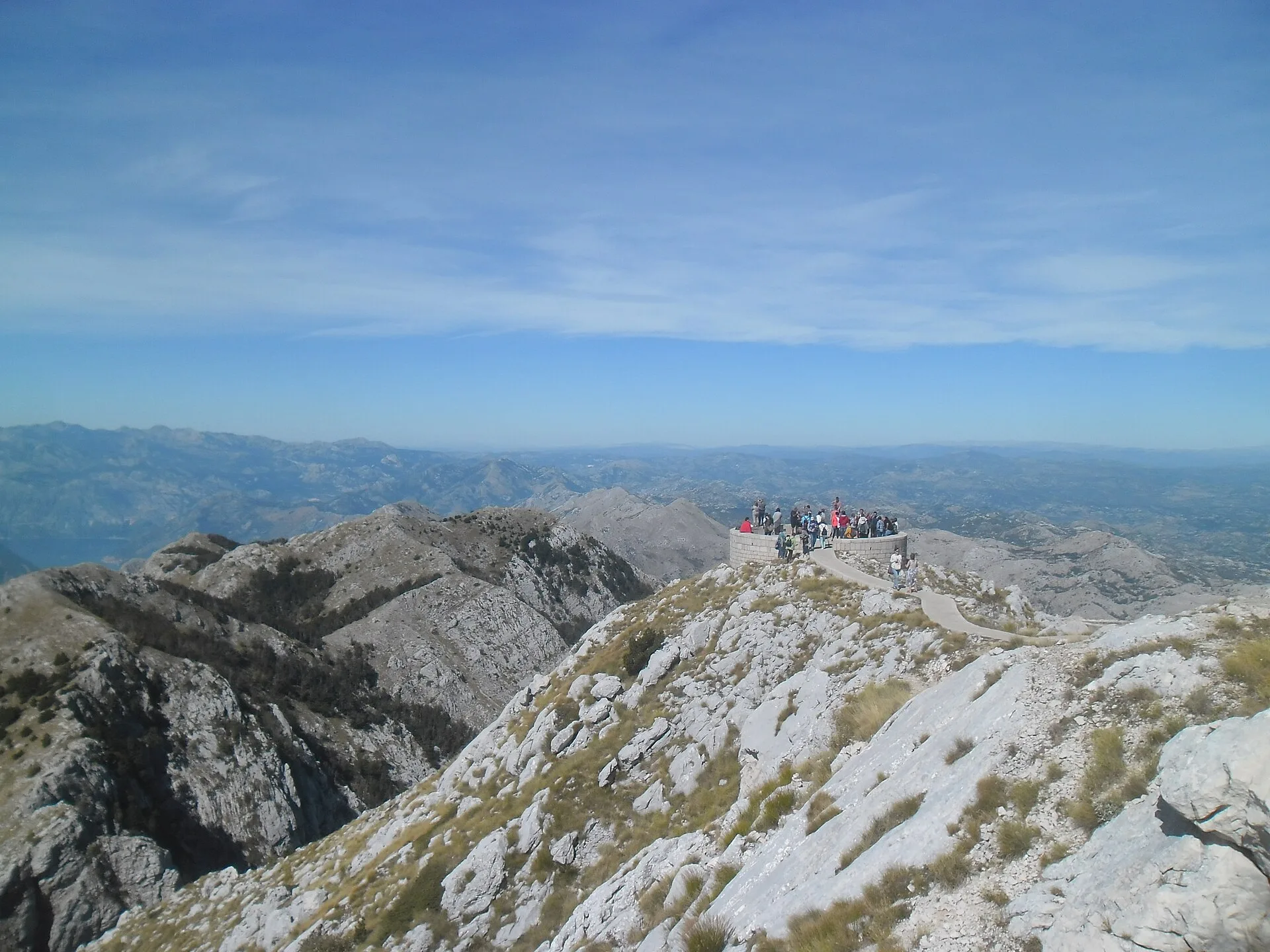
- A warm layer: evenings are cool even in summer, the summit of Lovćen is often ten degrees colder than the coast, and Lipa Cave is 8–12 °C inside.
- Comfortable shoes for the flat but long walking loop in town and for the 461 steps to the mausoleum.
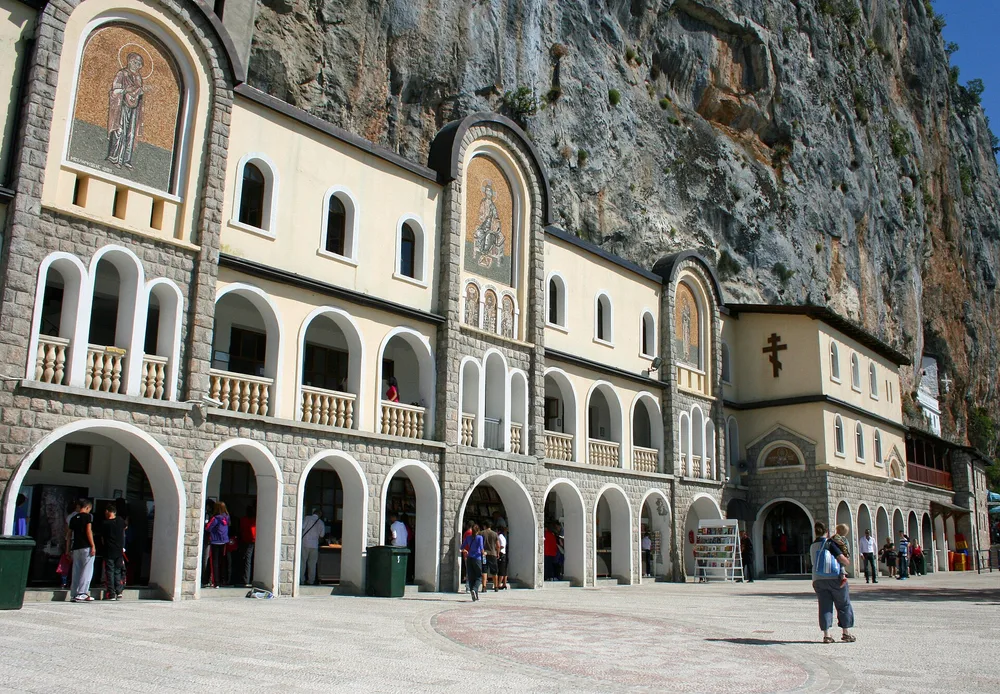
- Clothes for church visits: shoulders and knees covered for Cetinje Monastery.
- In winter: proper boots, gloves and, if you drive, chains or winter tyres.
Combining Cetinje with the coast
Many visitors pair Cetinje with a beach holiday, and the seasons suit each other: in July and August the town is the cool, cultured day out from a hot coast; in May, June and September both are at their best. For the coast and the whole country month by month, see ExploreMontenegro’s guide to the best time to visit Montenegro and its beaches guide. Plans that fit the seasons are on our itineraries page.
Frequently asked questions
What is the best month to visit Cetinje?
June and September are hard to beat: mild, mostly dry, everything open daily, and fewer day-trippers than in July and August. May and October are close behind.
Does it really rain a lot in Cetinje?
Yes. Figures of about 3,000–3,300 mm a year are widely quoted; a modelled average gives about 2,400 mm. Most of it falls between October and February; July and August are comparatively dry.
Is Cetinje worth visiting in winter?
Yes, if you plan around the opening times: the town museums open on weekdays only, and the Njegoš Mausoleum, Njegoš’s birth house and Lipa Cave are closed. Snow is common.
Does it snow in Cetinje?
Regularly in winter, both in the town and on Lovćen, where the road to the mausoleum is often snowbound.
How hot is Cetinje in summer?
Average highs are in the mid-20s °C in July and August, several degrees cooler than the coast, with cool evenings.
Sources and official information
Facts were checked against these official and scholarly sources in November 2026. Opening hours, ticket prices, park fees and timetables change, so confirm before you go.
- open-meteo.com
- cds.climate.copernicus.eu
- en.wikipedia.org
- en.narodnimuzej.me
- narodnimuzej.me
- lipa-cave.me
- kotorcablecar.me
- montenegro.travel
Cetinje.com is an independent guide, not the official site of the Old Royal Capital Cetinje, the National Museum of Montenegro, any tour operator, hotel or the government of Montenegro. Some links are affiliate links: tours go to GetYourGuide and accommodation goes to Booking.com, and we may earn a commission at no extra cost to you.