In short
- Entry: citizens of the EU, the UK, the US and many other countries visit Montenegro without a visa for up to 90 days in 180; Montenegro is aligning its visa policy with the EU’s, so check the current rules for your nationality before you travel.
- Register within 24 hours of arrival: hotels do it for you; in private accommodation check that your host does, or do it yourself at the tourist office.
- Money: Montenegro uses the euro. Cards are widely accepted in Cetinje; carry cash for villages and small family places.
- Emergency number 112; police 122, fire 123, ambulance 124. Plugs are the European two-pin type, 230 V.
- Museum days: daily in summer; weekdays only in winter. Cover shoulders and knees in churches and the monastery.
Entry requirements
Montenegro is not a member of the European Union or the Schengen area; it has its own border controls and visa regime. Citizens of the EU, the United Kingdom, the United States, Canada, Australia and many other countries can enter without a visa for stays of up to 90 days within any 180-day period. The UK government’s travel advice adds that a British passport must have been issued less than ten years before the day you enter and must be valid for at least three months after the day you plan to leave; other nationalities should check the equivalent rules.
Visa policy is changing. As part of its preparation for EU membership, Montenegro has been bringing its visa list into line with the EU’s, and in 2025–2026 it introduced visa requirements for several nationalities that had previously entered freely. Rules for your passport should therefore be checked with the Ministry of Foreign Affairs of Montenegro or your nearest Montenegrin embassy shortly before you travel, not taken from older guidebooks or from this page.
Make sure your passport is stamped when you enter and leave, as the UK government’s travel advice recommends. If you arrive from Croatia, Bosnia and Herzegovina, Albania, Kosovo or Serbia by road, expect a full border check on both sides, with long queues on summer weekends.
Registration and tourist tax
Every foreign visitor must be registered with the local tourist organisation or the police within 24 hours of arrival, wherever they stay. In hotels, and with many holiday-let owners, the staff do this automatically when they take your passport details. If you stay in private accommodation and the host does not register you, you must do it yourself, at the tourist office in the municipality where you are staying; the UK government warns that failure to register can bring a fine. Moving to another municipality means registering again.
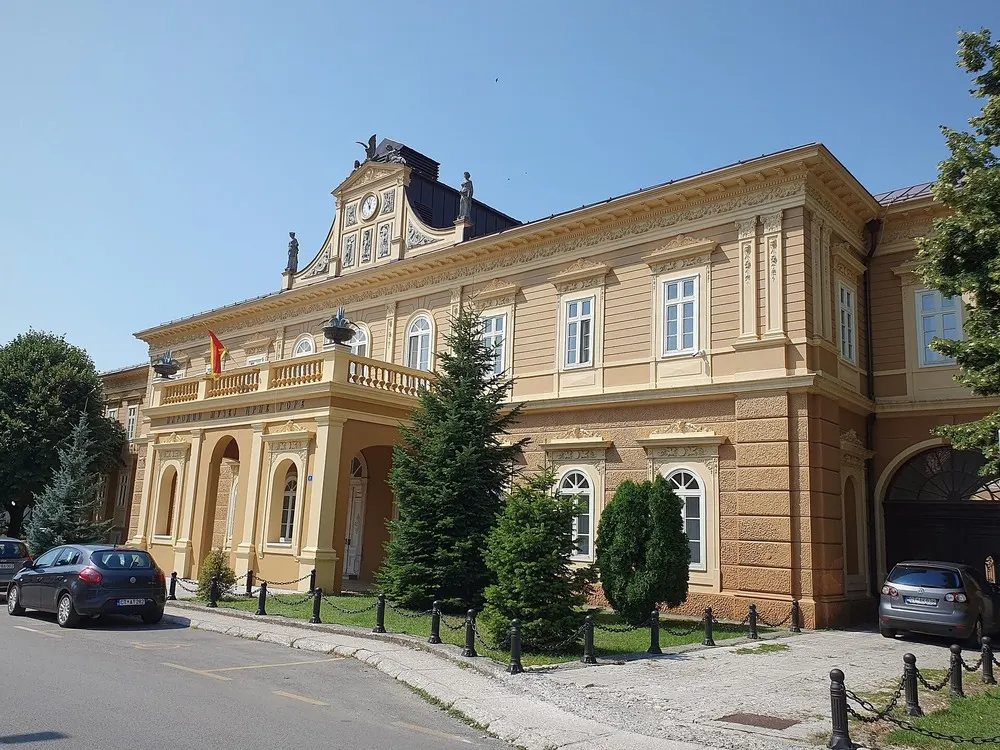
A small municipal tourist tax is charged per person per night. Hotels and many hosts include it in the price; others collect it on arrival. In Cetinje the tourist information point of the local tourist organisation is in the central car park near King Nikola’s Palace.
Money and costs
Montenegro uses the euro, although it is not part of the eurozone: it adopted the German mark in 1999 and moved to the euro with it in 2002. Prices are generally lower in Cetinje than on the coast.
- Cards are accepted in hotels, most restaurants, and supermarkets in town; smaller guest houses, village smokehouses, market stalls and some taxis prefer cash.
- ATMs are found in the centre of Cetinje. Use machines attached to banks where you can, and check them for signs of tampering, as the UK government’s travel advice recommends.
- Tipping is appreciated but not obligatory: round up, or leave about ten per cent for good service in restaurants.
- Museum tickets in Cetinje cost 3–8 euro per unit, with a combined ticket for all units of the National Museum and the Njegoš Mausoleum at 20 euro for adults (as checked November 2026); see museums.
Phones, internet and plugs
- Mobile networks: three operators cover the country: One, Crnogorski Telekom (T-Mobile) and m:tel. Prepaid SIM cards and tourist packages are sold in their shops and at many kiosks; you will need your passport.
- Roaming: Montenegro is not in the EU, so the EU’s ‘roam like at home’ rules do not automatically apply to EU SIM cards. Check your provider’s tariff before you travel, or buy a local SIM or eSIM.
- Wi-Fi is standard in hotels, apartments and most cafés.
- Electricity: 230 V, 50 Hz, with European round two-pin sockets (types C and F). Visitors from the UK, Ireland and North America need an adapter.
Language
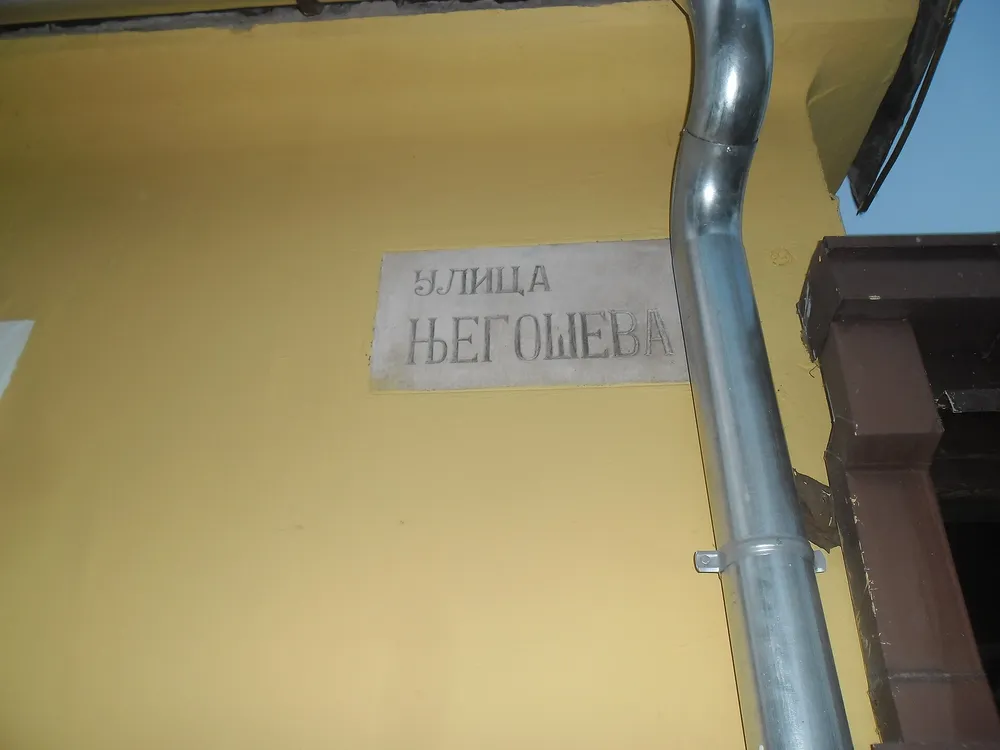
The official language is Montenegrin (crnogorski), written in both the Latin and Cyrillic alphabets, with two extra Latin letters, ś and ź, in its standard. In practice it is mutually intelligible with Serbian, Croatian and Bosnian, and you will see both alphabets on signs in Cetinje. English is widely spoken by younger people and in tourism; German, Italian and Russian are also understood in places. A few words go a long way: dobar dan (good day), hvala (thank you), molim (please, you’re welcome), izvinite (excuse me), račun, molim (the bill, please). The language, its alphabets and the identity debates around them are explained in Montenegrin language and identity.
Opening days and hours
Cetinje runs on the National Museum’s calendar. As checked in November 2026:
| What | Summer (mid-April to 15 November) | Winter (16 November to mid-April) |
|---|---|---|
| Museums in town (King Nikola’s Museum, Biljarda, Art Museum, Ethnographic Museum) | Daily | Monday to Friday, 9:00–15:00 |
| History Museum (Government House) | Closed to visitors | Closed to visitors |
| Montenegrin Art Gallery ‘Miodrag Dado Đurić’ | Tuesday to Saturday | Tuesday to Saturday until 31 December; closed 1 January to early April |
| Njegoš Mausoleum and Njegoš’s birth house | Daily | Closed |
| Cetinje Monastery | Open daily to visitors outside services; hours not published | As in summer |
| Lipa Cave | Daily, April to November | Closed |
Public holidays
Under Montenegro’s Law on State and Other Holidays, the state holidays are non-working days: New Year (1–2 January), Labour Day (1–2 May), Independence Day (21–22 May) and Statehood Day (13–14 July). Religious holidays are non-working days for members of the communities concerned, so Orthodox Christmas (7 January) and Easter close many businesses. Banks and offices shut on these days; museums usually open in season but check. The ceremonial dates, including Njegoš Day on 13 November, are described on the events page.
In churches and at the monastery
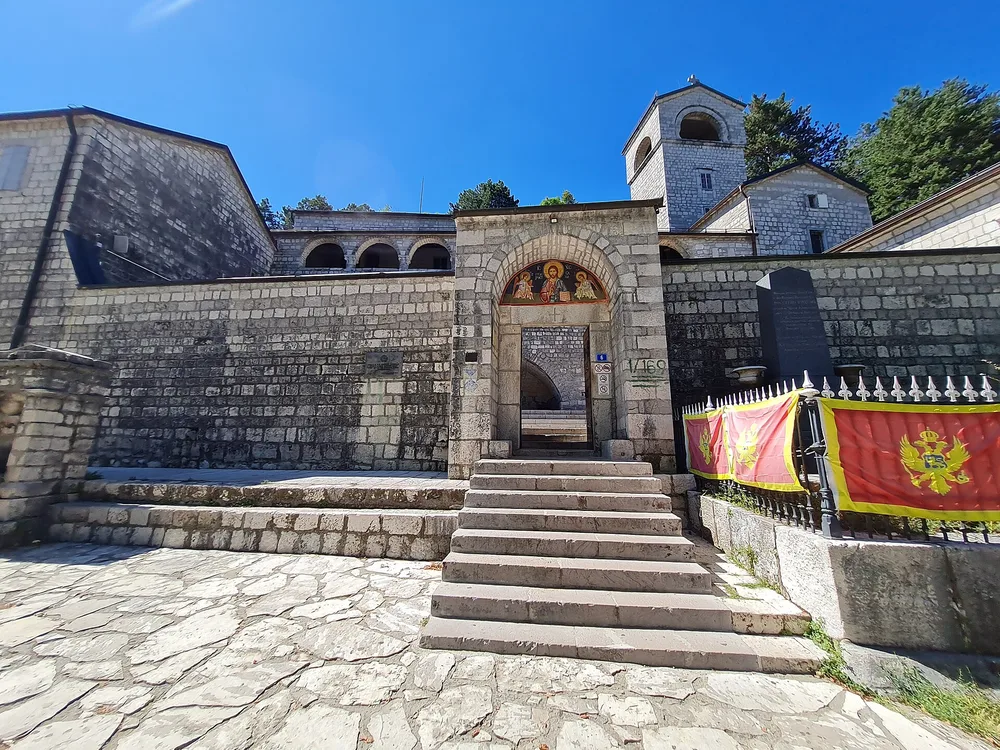
- Dress: shoulders and knees covered, for men and women; women may be asked to cover their hair at some churches. Carry a scarf.
- Behaviour: speak quietly, do not walk in front of people praying or venerating relics, and do not touch icons unless you are venerating them yourself.
- Photography: ask before photographing inside, and never during a service.
- Ownership: Cetinje Monastery is run by the Metropolitanate of Montenegro and the Littoral of the Serbian Orthodox Church; ownership of church property is a contested question in Montenegro, explained neutrally on the monastery page.
Safety and health
Cetinje is a quiet, safe town. The usual precautions apply: watch for pickpockets in crowded places, use licensed taxis and agree the fare, and do not leave valuables in a parked car. Carry identification, as the police can ask for it. Photographing police or military installations is not allowed.
- Emergency: 112 (all services, including mountain rescue); police 122, fire 123, ambulance 124.
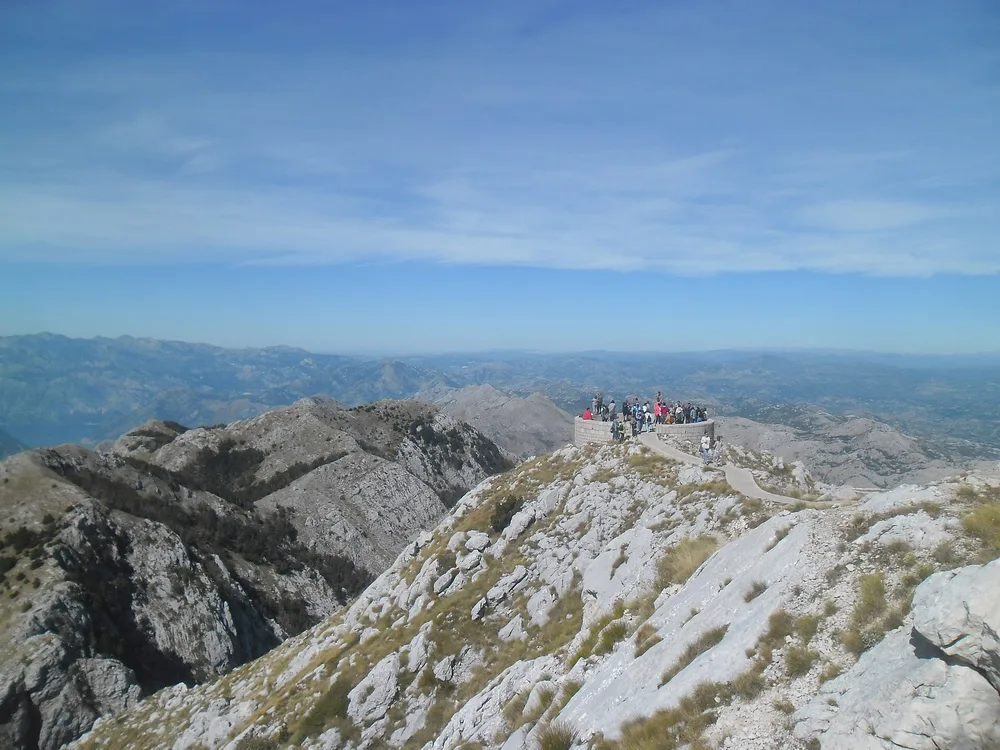
- On the mountain: stay on marked paths on Lovćen, carry water and a warm layer, and turn back in cloud; tell someone your route.
- Wildfires are a risk in the dry months: do not light fires outside designated places.
- Winter driving: snow and ice are common on the plateau and on Lovćen; use winter tyres or chains.
- Health insurance: take travel insurance that covers medical treatment; Montenegro is outside the EU’s health card scheme, although some countries have bilateral agreements. Cetinje has a general hospital and pharmacies in the centre.
Accessibility, families and other notes
- Families: Cetinje is relaxed and child-friendly, with parks around the palace and the monastery; children under 12 enter the National Museum’s units free.
- Accessibility: the centre is flat, but many museum buildings have steps; the Njegoš Mausoleum has 461 steps and Lipa Cave is not wheelchair accessible.
For a country-wide overview of practicalities, see ExploreMontenegro’s practical information page.
Frequently asked questions
Do I need a visa for Montenegro?
Citizens of the EU, UK, US and many other countries do not for stays of up to 90 days in 180. Rules have changed for several nationalities in 2025–2026, so check with Montenegro’s Ministry of Foreign Affairs before you travel.
What currency is used in Cetinje?
The euro. Cards are widely accepted in town; carry some cash for villages and small family businesses.
Do I have to register with the police?
Every foreign visitor must be registered within 24 hours. Hotels and many hosts do it for you; otherwise register at the local tourist office.
What is the emergency number?
112 for all emergencies; police 122, fire 123, ambulance 124.
Are Cetinje’s museums open on Mondays?
Yes in summer, when they open daily. In winter they open Monday to Friday only; the Dado Đurić gallery is closed on Sundays and Mondays.
What should I wear to visit Cetinje Monastery?
Cover shoulders and knees; women may be asked to cover their hair. Carry a scarf.
Sources and official information
Facts were checked against these official and scholarly sources in November 2026. Opening hours, ticket prices, park fees and timetables change, so confirm before you go.
- gov.uk
- gov.uk
- travel.state.gov
- gov.me
- en.narodnimuzej.me
- en.narodnimuzej.me
- en.narodnimuzej.me
- en.wikipedia.org
- en.wikipedia.org
- en.wikipedia.org
- constituteproject.org
Cetinje.com is an independent guide, not the official site of the Old Royal Capital Cetinje, the National Museum of Montenegro, any tour operator, hotel or the government of Montenegro. Some links are affiliate links: tours go to GetYourGuide and accommodation goes to Booking.com, and we may earn a commission at no extra cost to you.