In short
- Petar II Petrović-Njegoš (1813–1851) was the last but one of Montenegro's ruling bishops and the greatest poet of the South Slav highlands.
- Born Rade Tomov in Njeguši, he succeeded his uncle Petar I in 1830 and gave the clans their first central institutions: a Senate, a police force, a tax, a school and a printing press.
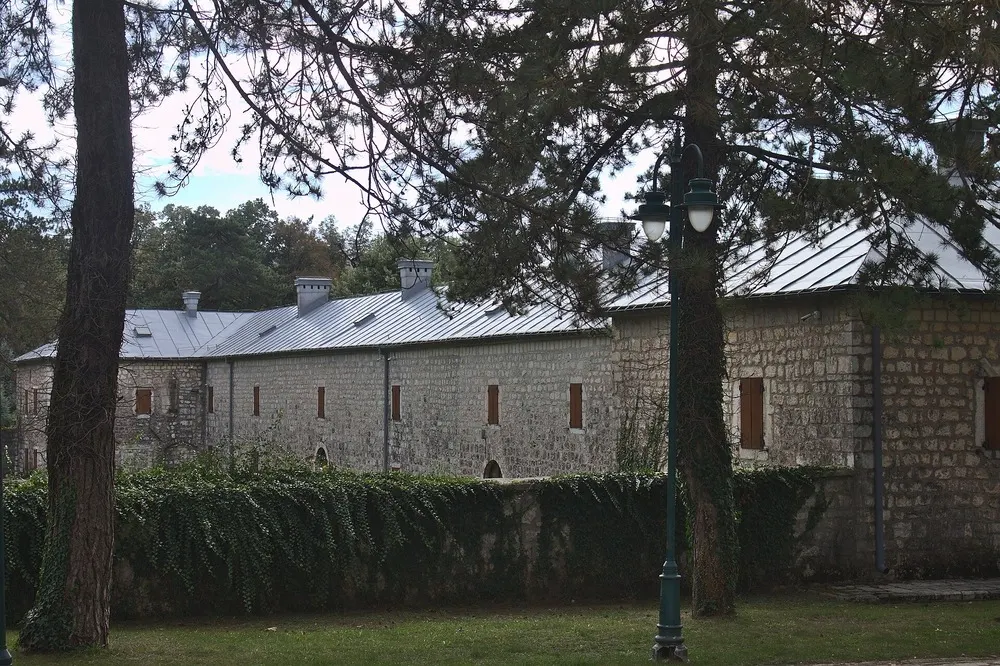
- He built the Biljarda in Cetinje in 1838; it is now the Njegoš Museum and shows his library, his belongings and the manuscript of his masterpiece.
- The Mountain Wreath (Gorski vijenac, 1847) is a verse drama about the clash between Montenegrins and converts to Islam. It is loved as a national epic and criticised for the violence it appears to sanction.
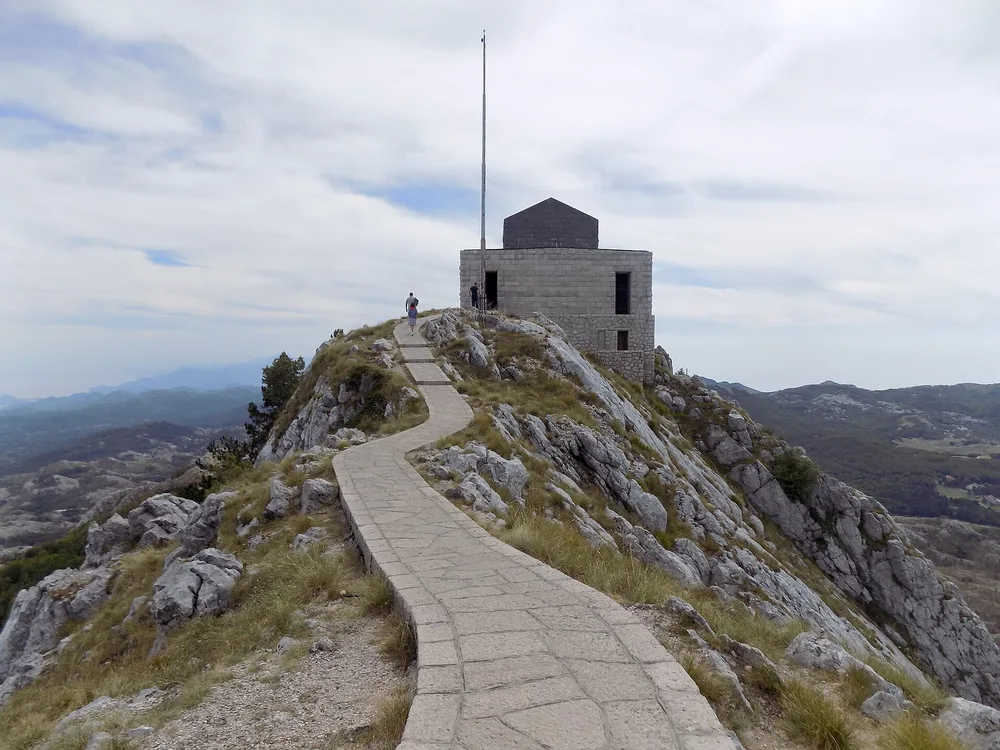
- He was buried in a chapel he built on Lovćen; since 1974 his tomb has been the mausoleum designed by Ivan Meštrović, whose construction is still argued over.
Why one man fills a whole town
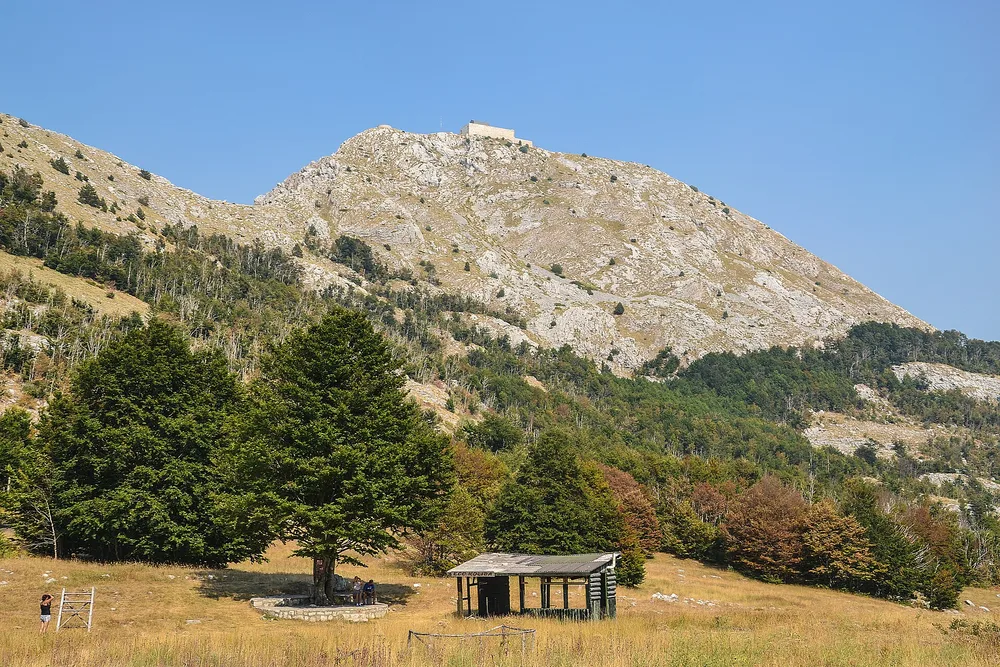
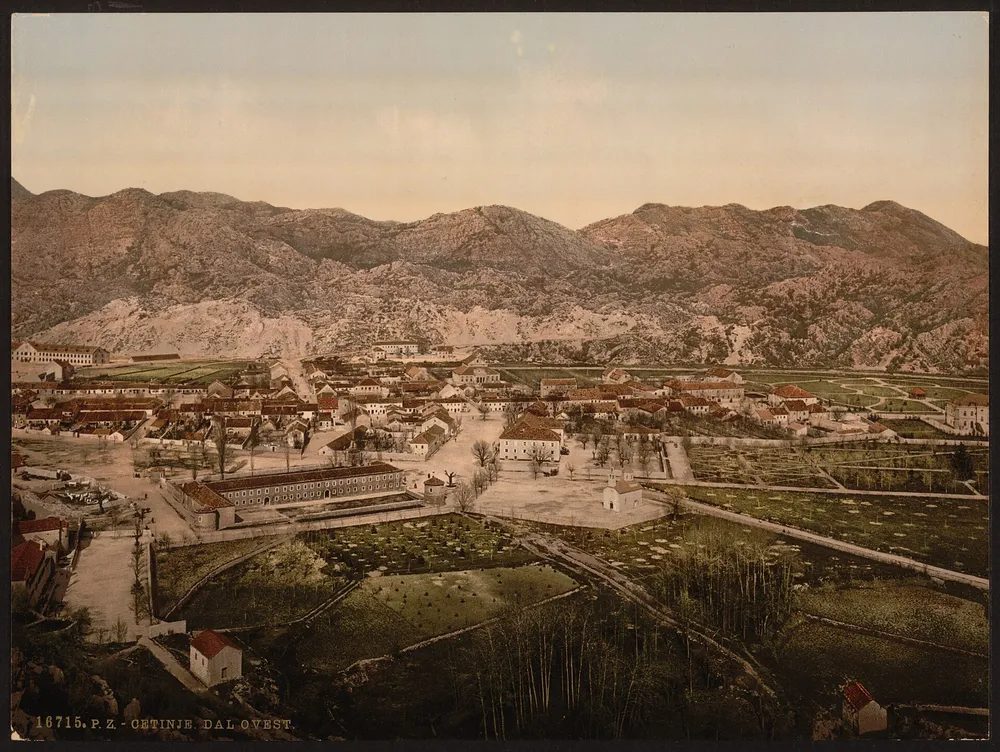
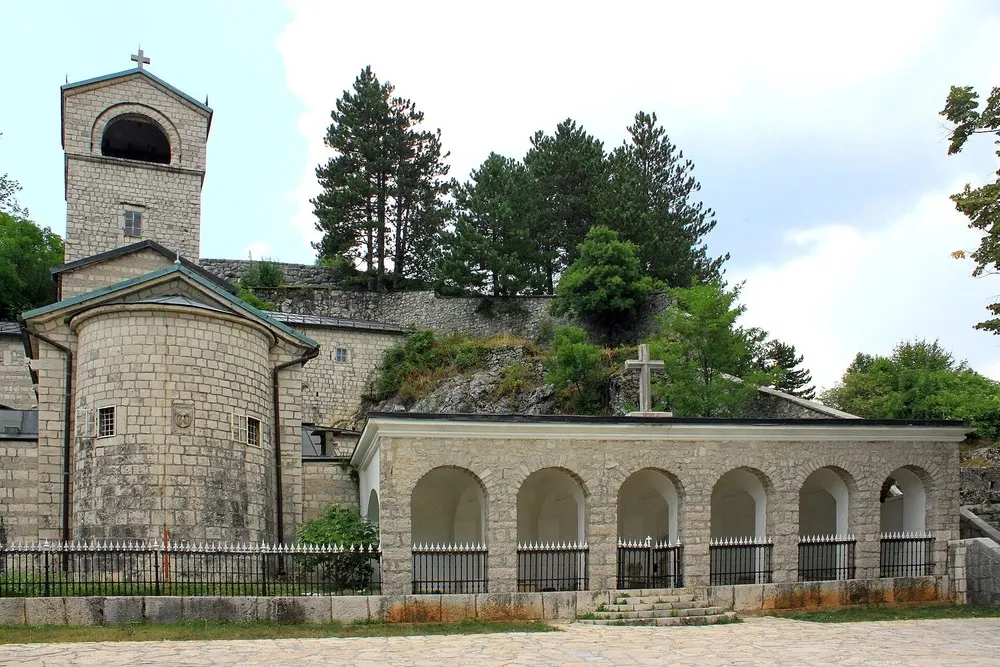
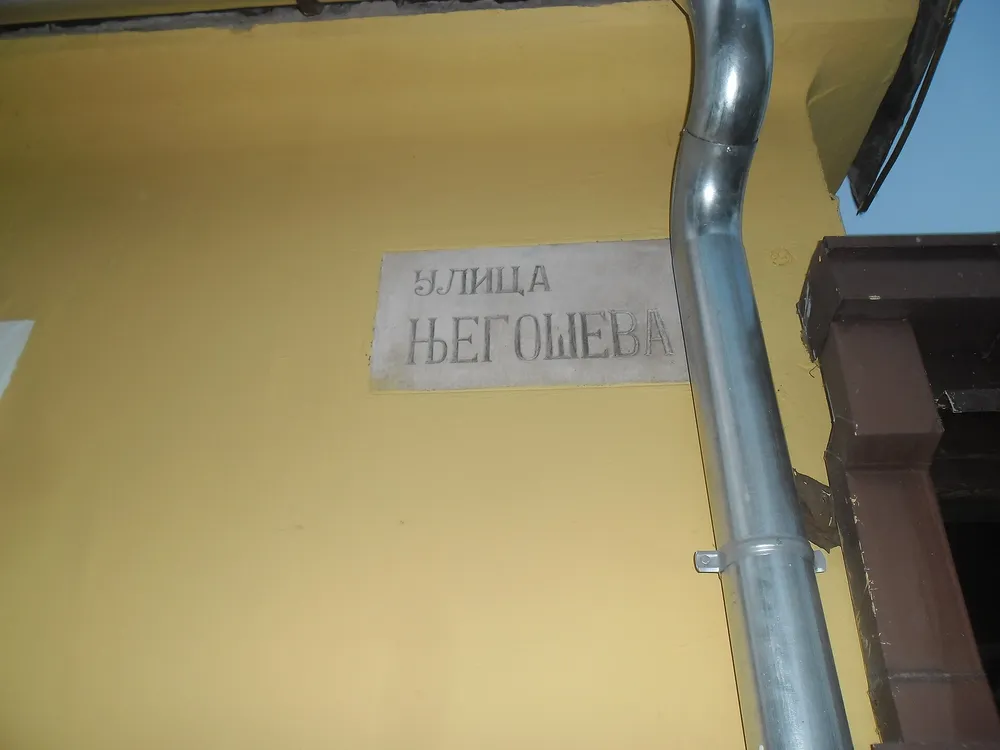
You cannot spend an hour in Cetinje without meeting him. The main street is Njegoševa. The long, low fortress beside the monastery was his house. The peak that closes the view to the west carries his tomb. His verses are quoted on monuments and in ordinary conversation, and his face, with the high forehead, the dark beard and the Montenegrin cap, looks out from schoolrooms and cafés.
Outside the region he is hardly known, partly because his best work is in a compressed, proverbial ten-syllable verse that resists translation. Inside it he holds roughly the place that Shakespeare holds in English and Pushkin in Russian, with one difference: he was also the head of state. From 1830 to 1851 the poet was the vladika, the bishop and ruler of a small, poor and almost permanently embattled country. His standing is also contested. Both Montenegrins and Serbs claim him as their national poet, and his most famous poem deals with a subject, the killing of neighbours who had changed their faith, that has been read very differently since the wars of the 1990s. This guide sets out what is known and, where there is an argument, both sides of it.
Rade Tomov of Njeguši
He was born on 13 November 1813 (1 November old style) in the village of Njeguši, in a stone house that still stands and is now a small museum, and was christened Radivoje, Rade for short. His father, Tomo Markov Petrović, was the youngest brother of the reigning vladika, Petar I. As a boy he herded his father's flock on the slopes of Lovćen, and until he was about twelve he could neither read nor write.
Petar I had already lost two intended heirs, one to an early death and one to a career in the Russian army, when he sent for the boy in 1825. Rade was taught his letters by the monks at Cetinje, spent some months at the monasteries of Savina and Topla on the Bay of Kotor learning Italian and a little Russian and French, and in 1827 came under the influence of the one real teacher he ever had: Sima Milutinović, nicknamed Sarajlija, an eccentric poet from Sarajevo who served as the old bishop's secretary. Milutinović gave him poetry, mythology and long walks; he did not give him system. Njegoš remained an autodidact all his life, reading his way through Russian, French and Italian literature in a library he assembled himself.
He grew very tall. Vuk Karadžić, the language reformer, who met him in Vienna in 1833, wrote that the young bishop was taller and more handsome than any grenadier in the city. Foreign visitors to Cetinje regularly remarked on his height, his marksmanship and the incongruity of a bishop who wore national dress with pistols in his sash.
The village is half an hour by road from Cetinje. The house, the family's other buildings and the route are described in the Njeguši guide.
A bishop at seventeen
Petar I died on 30 October 1830 (18 October old style), having dictated a will that named Rade as his successor. The boy was not yet seventeen and not even a monk. Within days he took vows under the name Petar, and the clan chiefs acclaimed him. Not everyone accepted the will; the civil governor, Vukolaj Radonjić, whose family had long rivalled the Petrovići, tried to assert his own authority with Austrian encouragement. Njegoš had him tried and banished and abolished the office of governor in 1832.
With two Montenegrin-born agents sent from Russia he then set about building institutions where there had been only custom. A Senate of sixteen chiefs, paid from the Russian subsidy, became the supreme court and council in 1831. A force of some 150 men, the Gvardija, was stationed around the country to carry out its judgements, and a mounted bodyguard, the perjanici, attended the bishop himself. In 1833 the first regular tax was collected, a hearth tax that several clans resisted by force.
The same year he travelled to St Petersburg, where he was consecrated bishop in the presence of Tsar Nicholas I. Earlier vladikas had been consecrated by Serbian patriarchs or metropolitans; the choice of Russia was political, and it brought an increased subsidy. He returned with church books and a printing press. In 1834 the press was set up in the monastery, the first elementary school in Cetinje opened, and on the fourth anniversary of his uncle's death Njegoš proclaimed him a saint, Saint Peter of Cetinje, which gave the young ruler a holy predecessor and gave the country its patron.
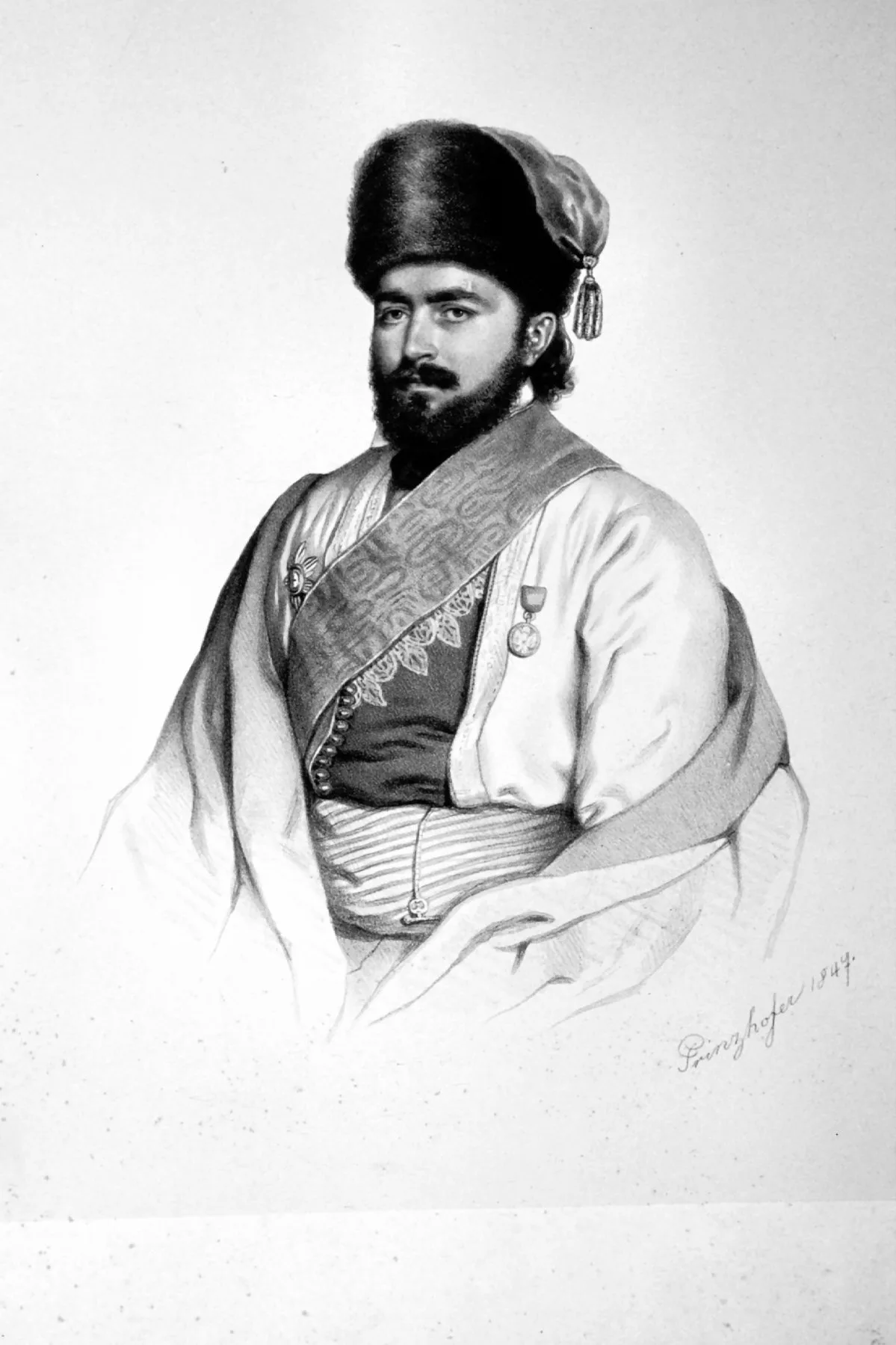
Njegoš in 1847, the year The Mountain Wreath was printed in Vienna, in a lithograph by August Prinzhofer. He is wearing Montenegrin dress, not a bishop's robes.
Ruling the clans
It is easy to forget, reading the poetry, how hard the reign was. Montenegro in the 1830s was a few thousand square kilometres of rock with well under a hundred thousand people, no towns, no roads and no recognised frontier. The Ottoman Empire regarded it as rebel territory. Raids across the border were a way of life on both sides, and each one could bring a pasha's army.
In 1836 a clash over the frontier district of Grahovo ended in a defeat in which Njegoš's younger brother Joko and several other Petrovići were killed. He never forgave the Herzegovinian commander he held responsible, Smail-aga Čengić, who was ambushed and killed by Montenegrin highlanders in 1840, an event that became the subject of a famous Croatian poem by Ivan Mažuranić. In 1843 Osman Pasha of Shkodër seized the islands of Lesendro and Vranjina on Lake Skadar, cutting Montenegro off from the lake trade, and Njegoš was never able to win them back. A drought in 1846 was followed by famine in 1847, during which he sold his own decorations and valuables to buy grain, and the pasha's gold bought a revolt in the districts of Piperi and Crmnica that he put down harshly.
Against this he could set real gains. The Senate functioned; blood feuds were reduced; the tax was, mostly, paid. He agreed a border with Austria along the ridge above the Bay of Kotor, selling to the Austrians two monasteries on the coastal side, and he was received in Vienna and St Petersburg as the head of a state in all but name. In 1848, when revolution shook the Habsburg lands, he offered armed help to the Croatian ban Josip Jelačić and wrote of the South Slavs as one people divided by faiths and empires, a line of thought that later generations of Yugoslavs made much of.
The Biljarda
Until 1838 the ruler of Montenegro lived in a few rooms of Cetinje Monastery, alongside the Senate, the school, the press and the monks. That year Njegoš moved into a new residence a hundred paces away, built to a design attributed to the Russian envoy Yakov Ozeretskovsky. It is a long rectangle of stone with a walled court and round towers at the corners, closer to a fortified manor than a palace. It contained his apartments, the Senate chamber, rooms for the bodyguard and for guests, and a library.
It also contained a billiard table, which he had ordered from abroad and which was carried up the mule track from Kotor on men's shoulders. The clans, who had never seen such a thing, called the whole house after it: Biljarda. The name stuck, and it is the official name of the museum today.
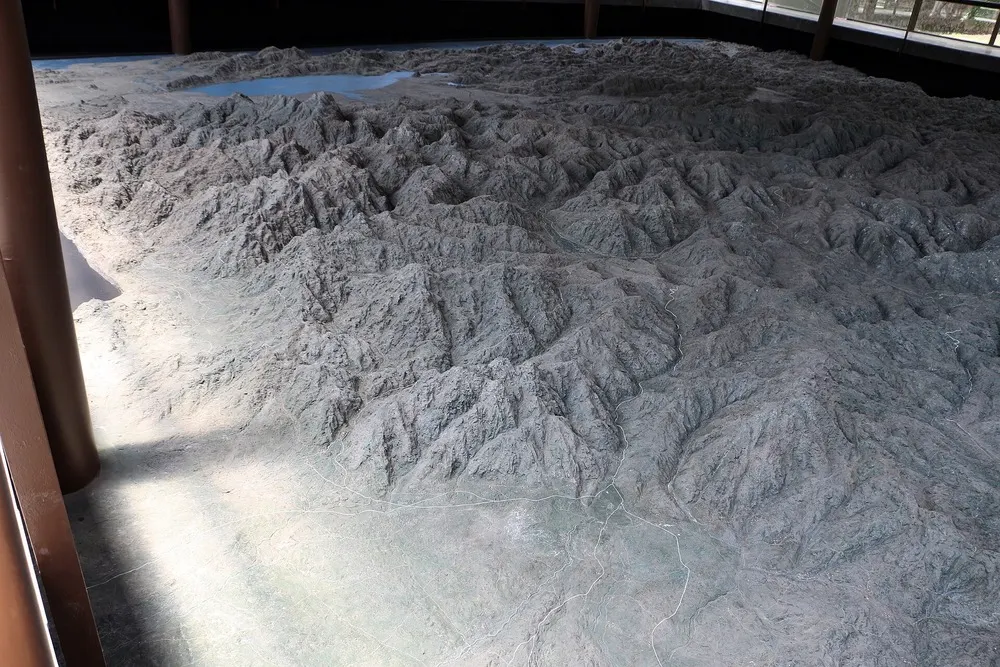
The National Museum opened the Njegoš Museum here in 1951, on the centenary of his death. The rooms hold his furniture, weapons, vestments, books and letters, a billiard table of the period and, according to the museum, the original manuscript of The Mountain Wreath. Next to the building stands the glass pavilion of the Relief Map of Montenegro. Hours, tickets and what to look for are in the Biljarda guide.
- Built
- 1838, as Njegoš's residence and seat of the Senate
- Museum since
- 1951 (Njegoš Museum, a unit of the National Museum of Montenegro)
- Where
- Dvorski trg, beside Cetinje Monastery
- Ticket
- Adults 5 euro including the Relief Map; combined ticket for all National Museum units 20 euro (museum price list, as checked November 2026)
- Hours
- Mid-April to 15 November daily from 9:00, closing at 17:00 (Montenegrin pages, season from 15 April) or 16:00 (English pages, from 11 April), so plan on 16:00; 16 November to 14 April Monday to Friday 9:00–15:00, local time (as checked November 2026)
The works
Njegoš began as an imitator of the folk singers, writing poems in the manner of the songs he had grown up with and printing the first of them on the monastery press in 1834. Three later works are the ones that matter.
Luča mikrokozma (The Ray of the Microcosm), printed in Belgrade in 1845, is a philosophical poem in six cantos about the origin of the human soul and its fall, with clear debts to Milton and Dante, whom he read in translation. Tradition has it that he wrote it in a single burst during the first weeks of Lent.
Gorski vijenac (The Mountain Wreath), printed at the Mechitarist press in Vienna in 1847 and dedicated to the memory of Karađorđe, leader of the first Serbian uprising, is the masterpiece, discussed below.
Lažni car Šćepan Mali (The False Tsar Stephen the Little), published in 1851, dramatises the reign of the impostor who ruled Montenegro from 1767 to 1773. It is less read, though some critics, among them Milovan Djilas, thought it contained his finest verse. A long narrative poem, Slobodijada, appeared after his death, and he also compiled an anthology of heroic songs, Ogledalo srpsko (The Serbian Mirror).
The Mountain Wreath and how it is read
The poem is a drama in verse, some 2,800 lines long, set in Montenegro at the beginning of the eighteenth century. Its central figure is Vladika Danilo, the founder of the dynasty, who is tormented by a decision. Some Montenegrins have converted to Islam and stand, as the Christian chiefs see it, with the empire that is destroying them. Danilo shrinks from bloodshed between kinsmen; the chiefs press him; negotiations with the converts fail; and on Christmas Eve those who will not return to Christianity are attacked and killed or driven out. The action is interrupted by scenes of village life, a wedding, a fortune-teller, a comic account of Venice, and by the kolo, a chorus that speaks for the people, and it is dominated by two voices: the brooding bishop and the blind abbot Stefan, who delivers some of the most quoted lines in the language on fate, struggle and endurance.
For Montenegrins and Serbs the poem became, within a generation, the national epic. People who could not read knew long passages by heart, and its proverbs passed into everyday speech. It has been printed well over a hundred times and translated into English twice, by James W. Wiles in 1930 and by Vasa D. Mihailovich in 1986.
Whose poet? Njegoš dedicated the poem to a Serbian hero, wrote of his people as Serbs and of Montenegro as the last free corner of the medieval Serbian realm, and is accordingly a foundation stone of Serbian literature. He was also the ruler of Montenegro, wrote in the speech of its highlands and is the central figure of Montenegrin culture and statehood. In the twentieth century he was presented in turn as a Yugoslav poet, and, in socialist Yugoslavia, as a specifically Montenegrin one. The question of whether he is a Serbian or a Montenegrin writer is really a question about what those words meant in 1847 and mean now, and it is discussed in the guide to language and identity. In Cetinje you will find him claimed, with equal conviction, by people on both sides of that argument.
The massacre. There is no contemporary evidence that the event at the heart of the poem took place as described. The history of Montenegro written by Danilo's successor Vasilije says nothing of it, and most historians think that the disappearance of Islam from Old Montenegro was a gradual process that oral tradition, and then Njegoš, turned into one terrible night. The poem is a work of imagination about a moral dilemma, not a chronicle.
The charge. After the wars of the 1990s several Western writers argued that the poem glorifies the killing of Muslims; the journalist Tim Judah called it a paean to ethnic cleansing, and it has been dropped from some school syllabuses in Bosnia and Herzegovina. Its defenders reply that this reads a nineteenth-century tragedy through twentieth-century crimes: that the poem gives the Muslim characters dignity and some of its best speeches, that its hero is a man appalled by what he feels compelled to do, and that its subject is the price of freedom for a people who believed they faced extinction. Both readings exist in serious scholarship. A visitor does not have to choose between them, but it helps to know, standing in front of the manuscript in the Biljarda, that the book in the case is not a neutral object.
Illness, Italy and death
By 1849 he was coughing blood, and a doctor in Kotor diagnosed tuberculosis. He spent the spring of 1850 in Kotor, where he wrote his will, and then tried the milder air of Venice and Padua. The winter of 1850–51 he passed in Italy, travelling as far as Naples and Rome in the company of the Serbian writer Ljubomir Nenadović, whose Letters from Italy preserve his conversation: his refusal, when shown the chains of St Peter in a Roman church, to kiss them, because Montenegrins do not kiss chains; his impatience at Pompeii; his homesickness.
On the way home in the summer of 1851 he sat in Vienna for the photographer Anastas Jovanović. The result is the only photograph of him. He reached Cetinje in August and died in the Biljarda on 31 October 1851 (19 October old style), two weeks before his thirty-eighth birthday. His will named as heir his young kinsman Danilo, who within months turned the bishopric into a principality and so made Njegoš, in effect, the last of the ruling bishops in the old sense.
The chapel on Lovćen
Lovćen was the mountain of his childhood, visible from Njeguši, from Cetinje and from the sea. In 1845 he had a small round stone chapel built on its second-highest summit, Jezerski vrh, and dedicated it to his uncle, Saint Peter of Cetinje. He asked to be buried in it.
When he died the request could not be carried out at once. The summit was exposed to weather and, it was feared, to Ottoman raiders who might desecrate the grave, so he was buried in Cetinje Monastery. In 1855 Prince Danilo had the coffin carried up the mountain. There it remained until the First World War. The chapel was damaged by Austro-Hungarian artillery during the fighting for Lovćen in January 1916, and that summer the occupation authorities, who planned a monument of their own on the peak, had the remains exhumed and taken down to the monastery.
After the war the question of the tomb became a matter of state. Proposals for a grander monument were discussed and dropped, and in the end King Alexander of Yugoslavia, a grandson of King Nikola, paid for the chapel to be rebuilt in a form close to the original. On 21 September 1925 the poet's remains were carried up from Cetinje in a ceremony attended by the king and queen and a vast crowd. The little chapel then became one of the best-known images of Yugoslavia; it appeared on the coat of arms of the Montenegrin republic after 1945.
The mausoleum, and the argument that has not ended
In 1951, the centenary of Njegoš's death, the government of the People's Republic of Montenegro decided to replace the chapel with a monumental mausoleum. The design was entrusted to Ivan Meštrović, the Croatian-born sculptor who was then the most celebrated artist the South Slavs had produced and who had first sketched a Njegoš monument in the 1920s. Meštrović, living in the United States, completed his design in the 1950s and died in 1962. Building did not begin until the end of the 1960s. The chapel was taken down, the top of the peak was levelled, and the mausoleum opened on 28 July 1974.
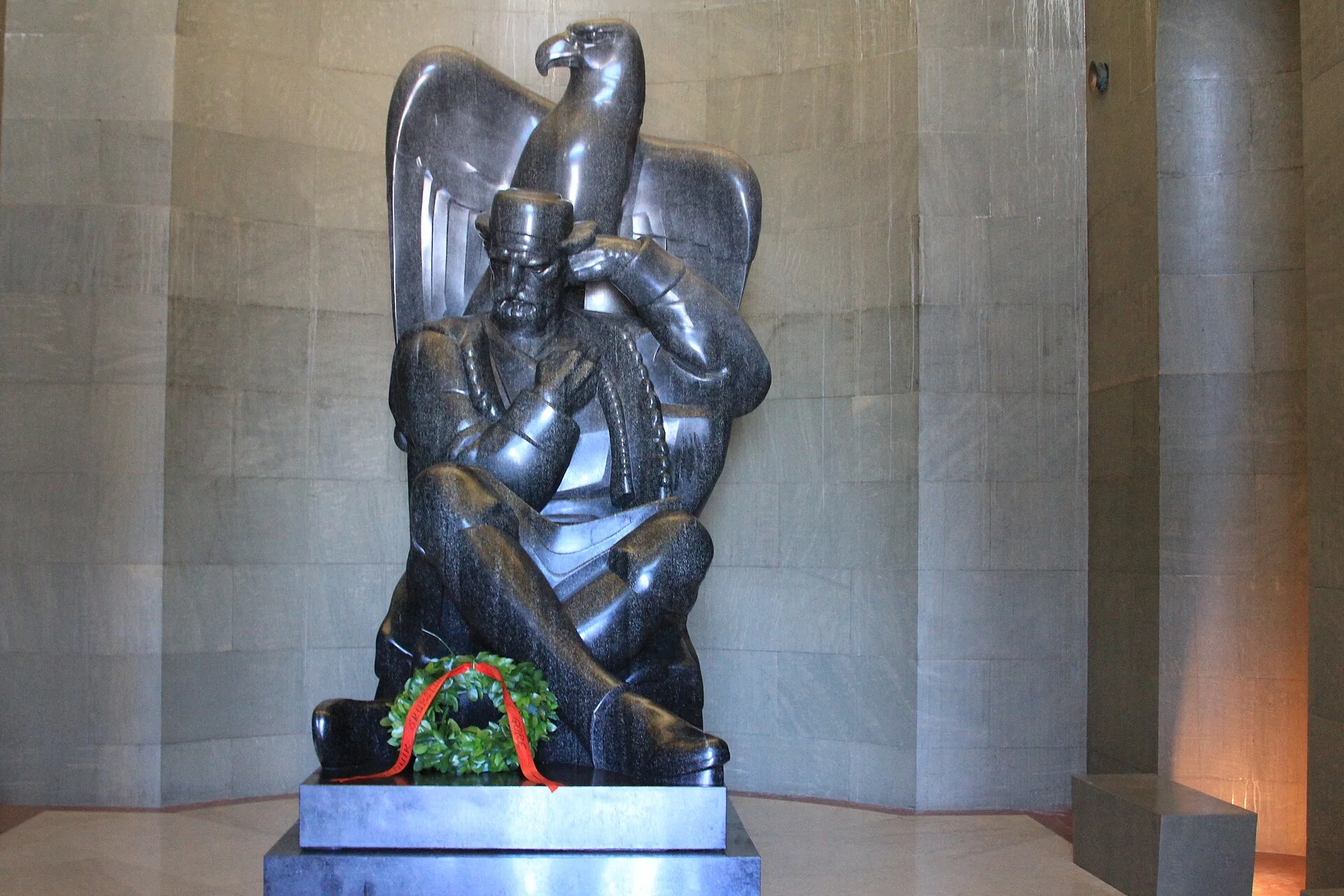
What stands there now is a sequence designed for effect. From the car park a tunnel of 461 steps climbs through the mountain to a forecourt; two colossal female figures in dark stone, dressed as Montenegrin women, flank the entrance; inside, under a vault of gilded mosaic, a seated figure of Njegoš carved from a single block of granite rests beneath the wings of an eagle; the tomb itself is in a crypt below; and behind the building a causeway leads along the ridge to a circular viewing platform from which, in clear weather, you can see much of Montenegro. The National Museum, which runs the site, gives its altitude as 1,660 metres.
The decision was opposed at the time and has been argued over ever since. The Serbian Orthodox Church, led in Montenegro by Metropolitan Danilo Dajković, protested against the demolition of a consecrated church built by the man it commemorated and against the removal of a bishop's grave from a place of worship to a secular monument, and went to court to try to stop it. A number of prominent writers and artists across Yugoslavia objected too, some on religious grounds, some because they thought Meštrović's design, with its echoes of pharaonic and imperial tombs, wrong for a poet who had asked for a shepherd's chapel. The Montenegrin authorities and many others, then and now, took the opposite view: that the chapel of 1925 was itself a reconstruction paid for by a king who had abolished Montenegro, that the country's greatest figure deserved a national monument by its greatest sculptor, and that the result is a work of art in its own right.
Behind the aesthetic quarrel lies the political one. Critics have seen the mausoleum as an attempt to turn an Orthodox bishop and Serbian poet into a secular Montenegrin icon; supporters see the campaign for the chapel as an attempt to claim him for the Church and for Serbia. The Metropolitanate still calls for the chapel to be rebuilt, and in 2013 it added Njegoš to its local calendar of saints as Saint Petar of Lovćen, a step that the Montenegrin state and many admirers of the poet received coolly. The mausoleum, meanwhile, is among the most visited monuments in the country.
Practical details, the road from Cetinje, the park fee and the seasonal opening, are in the guides to the Njegoš Mausoleum and Lovćen National Park; for the wider mountain, with its trails and viewpoints, see also ExploreMontenegro's guide to Lovćen.
Following Njegoš: a one-day route
With your own car the circuit takes a comfortable day. Without one, it is the standard itinerary of the day tours that leave from Kotor and Budva: the Lovćen, Njeguši and Cetinje day tour takes in the same three places, and smaller groups can book a private tour from Kotor to Lovćen and Njeguši. If you finish on the coast, the Kotor guide on ExploreMontenegro covers the old town at the bottom of the road.
Njegoš's birthday by the modern calendar, 13 November, is marked in Montenegro as Njegoš Day, a holiday of culture; in recent years the National Museum has opened its Cetinje units free of charge on the day.
- Start in Cetinje at the Biljarda (allow an hour), then walk to the monastery where he lived until 1838 and was first buried.
- Climb the ten-minute path to Orlov krš for the mausoleum of Vladika Danilo, the hero of The Mountain Wreath, and the view of the town Njegoš knew as a monastery and a few houses.
- Drive or take a tour up the Lovćen road (about 20 km) to Jezerski vrh and climb the 461 steps to the mausoleum.
- Descend the far side to Njeguši for his birth house and a plate of the village's smoked ham and cheese.
- Either return to Cetinje or continue down the old serpentine road to Kotor, the port through which his books, his billiard table and his doctors all came.
Frequently asked questions
Who was Njegoš, in one sentence?
Petar II Petrović-Njegoš (1813–1851) was the prince-bishop of Montenegro from 1830 until his death, the founder of its first state institutions and the author of The Mountain Wreath, the best-known poem in the Serbian and Montenegrin literary tradition.
Why are there two names, Petar II and Njegoš?
He was christened Radivoje (Rade) and took the name Petar when he became a monk in 1830, in honour of his uncle and predecessor Petar I. Njegoš is the name of his clan and village, which he used as a signature and which became the name by which everyone knows him.
Is The Mountain Wreath based on a real event?
It is set in the time of Vladika Danilo (ruled 1697–1735) and draws on a folk tradition about the killing or expulsion of converts to Islam, but no document from the period records a massacre of the kind the poem describes. Most historians regard it as a poetic condensation of a long process.
Where is Njegoš buried?
In the crypt of the mausoleum on Jezerski vrh, the second-highest peak of Lovćen, about 20 km by road from Cetinje. He was first buried in Cetinje Monastery (1851), moved to his chapel on the peak in 1855, brought back to the monastery in 1916, reburied in the rebuilt chapel in 1925 and placed in the mausoleum in 1974.
Why is the mausoleum controversial?
It replaced the chapel that Njegoš had built and asked to be buried in. The Serbian Orthodox Church and a number of writers opposed the demolition of the chapel; the Montenegrin authorities and Meštrović's admirers regard the mausoleum as a fitting national monument. The disagreement also reflects the wider dispute over whether Njegoš belongs to Serbian or Montenegrin culture, or both.
What can I see of him in Cetinje?
The Biljarda, his residence, now the Njegoš Museum; Cetinje Monastery, where he lived and worked until 1838; and the Tablja site and Orlov krš above it. His portrait and belongings also appear in King Nikola's Palace.
Was Njegoš a saint?
He proclaimed his uncle, Petar I, a saint in 1834. Njegoš himself was added to the local calendar of the Serbian Orthodox Metropolitanate of Montenegro and the Littoral in 2013 as Saint Petar of Lovćen; this local veneration is not shared by everyone in Montenegro.
Sources and official information
Facts were checked against these official and scholarly sources in November 2026. Opening hours, ticket prices, park fees and timetables change, so confirm before you go.
Cetinje.com is an independent guide, not the official site of the Old Royal Capital Cetinje, the National Museum of Montenegro, any tour operator, hotel or the government of Montenegro. Some links are affiliate links: tours go to GetYourGuide and accommodation goes to Booking.com, and we may earn a commission at no extra cost to you.