In short
- Two hours: Ćipur, the monastery, King Nikola’s Palace from outside, Njegoševa Street and the Vlach Church, the free essentials.
- Half day: add King Nikola’s Museum and Biljarda with the Relief Map, and the legation quarter.
- One day: museums in the morning, Lovćen and the Njegoš Mausoleum in the afternoon, or the full town with every museum.
- Two or three days: add Njeguši and the serpentine, Rijeka Crnojevića and Pavlova Strana, Lipa Cave and Lake Skadar.
- Check the calendar: in winter the museums open on weekdays only and the mausoleum, Njegoš’s birth house and Lipa Cave are closed.
How to use these plans
Cetinje is small, and most of its monuments stand within a twenty-minute walk of each other, so the limiting factor is rarely distance. It is time inside: King Nikola’s Museum deserves an hour, Biljarda and the Relief Map another, the Art Museum an hour more. Outside town, the mountain road and the 461 steps set the pace. The plans below are built around three fixed points: the museum hours (daily in summer, weekdays only in winter, according to the National Museum), the season of the mausoleum (closed from 16 November to April) and the light on Lovćen, best in the morning.
All times are local time. Each plan links to the detailed pages; the order of the walk in town follows our self-guided walking tour.
Two hours: the essential core
This plan is free except for your coffee, works in any season and suits a stop between the coast and Podgorica Airport. Details: the monastery, King Nikola’s Palace, Biljarda, the Vlach Church.
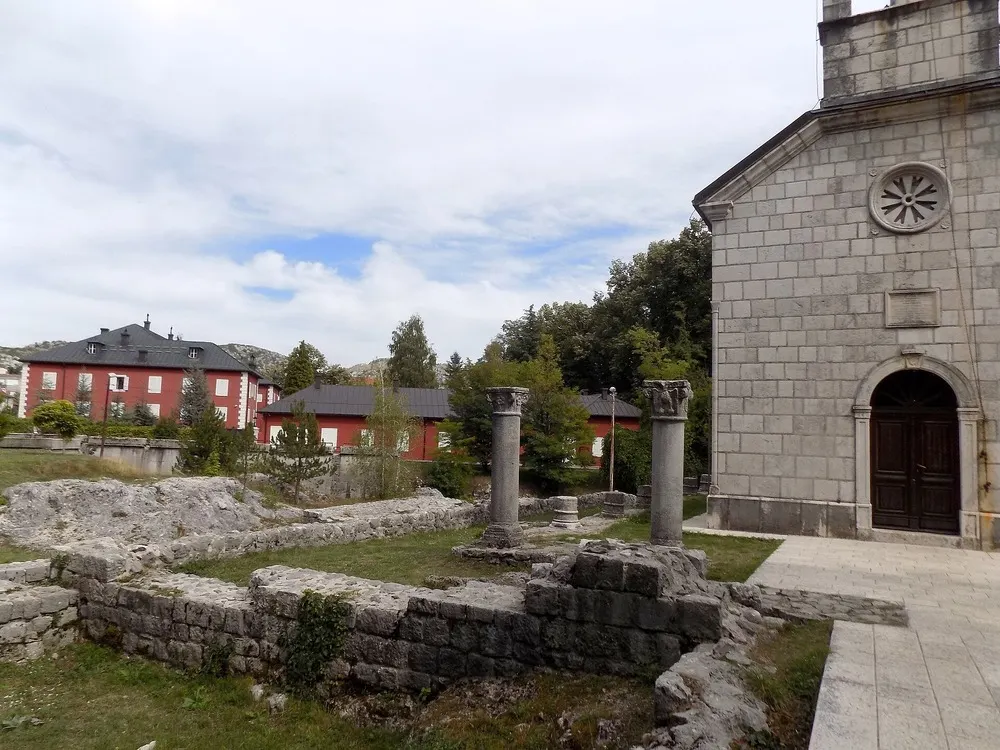
- Ćipur (10 min). The foundations of Ivan Crnojević’s monastery of 1484 and the Court Church with the tombs of King Nikola and Queen Milena.
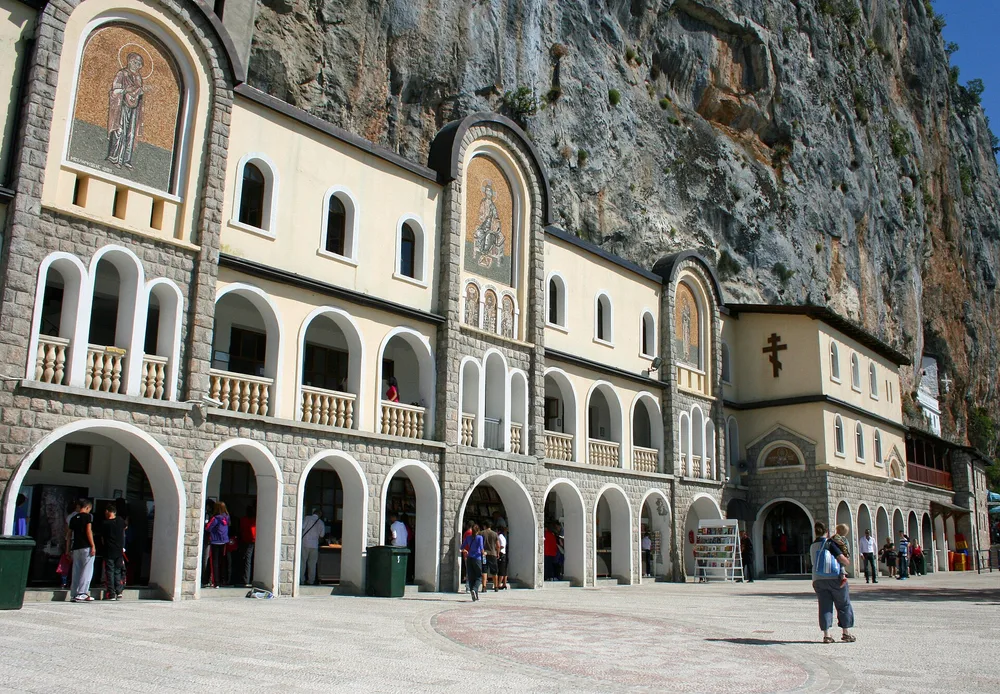
- Cetinje Monastery (25 min). The seat of the prince-bishops; see the church and, when shown, the relics. Dress modestly.
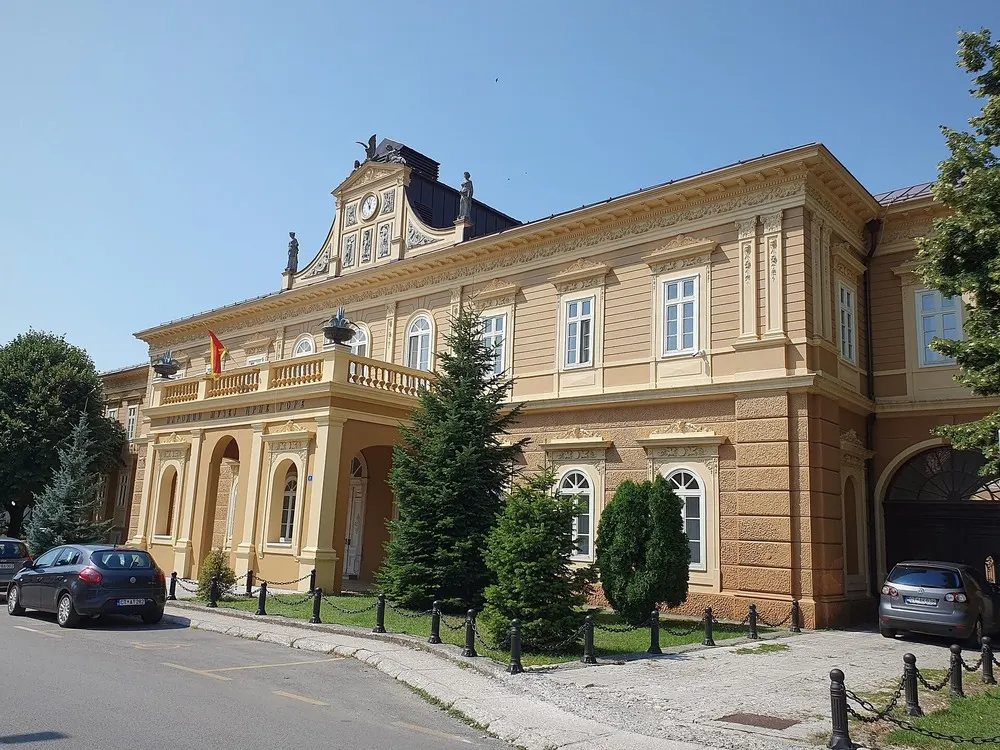
- Dvorski trg and King Nikola’s Palace (10 min). The red palace from outside, the former Bulgarian legation (now a hotel) and the park.
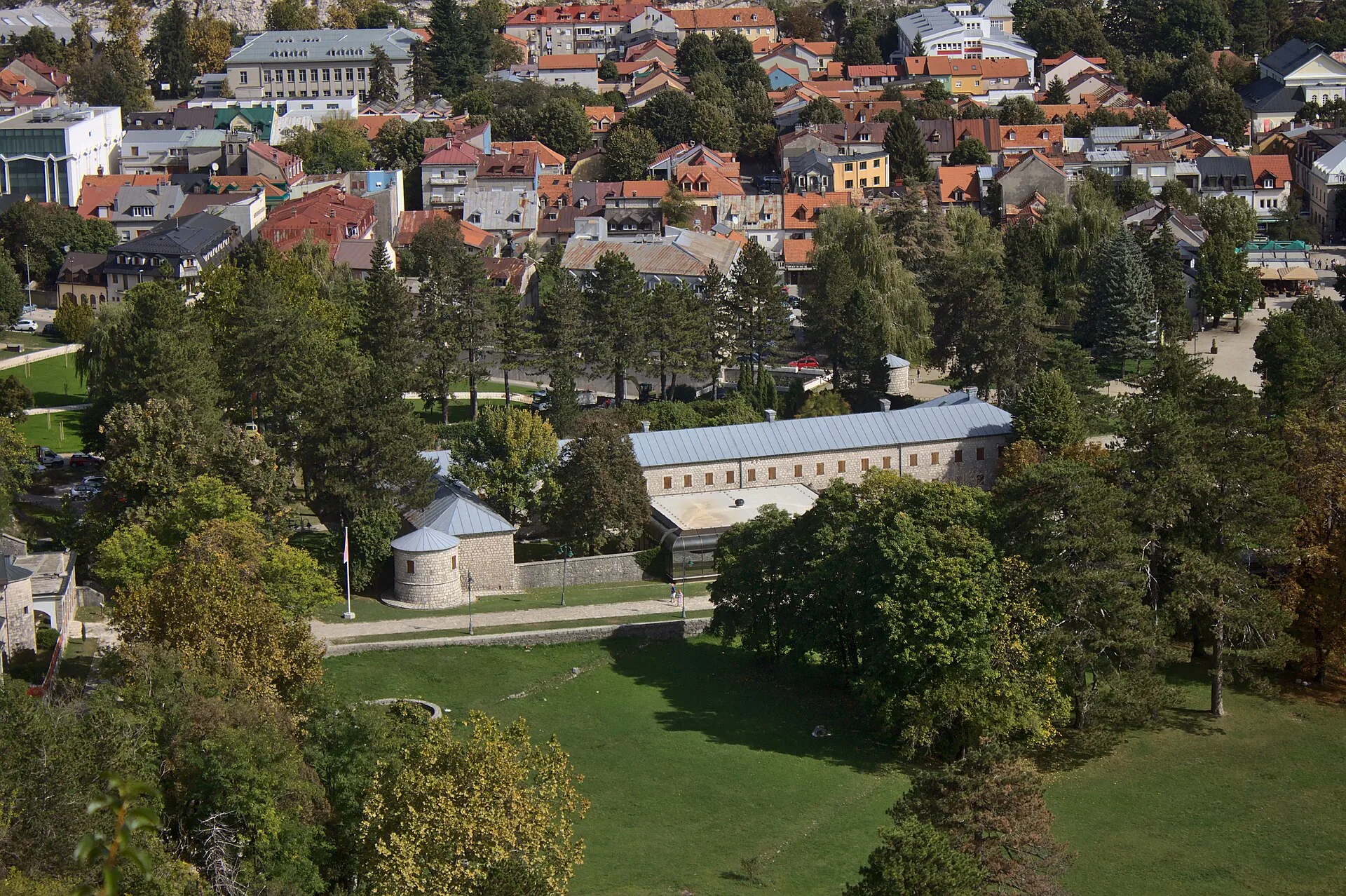
- Biljarda from outside and the Relief Map pavilion (15 min). Njegoš’s residence of 1838 behind its round-towered wall.
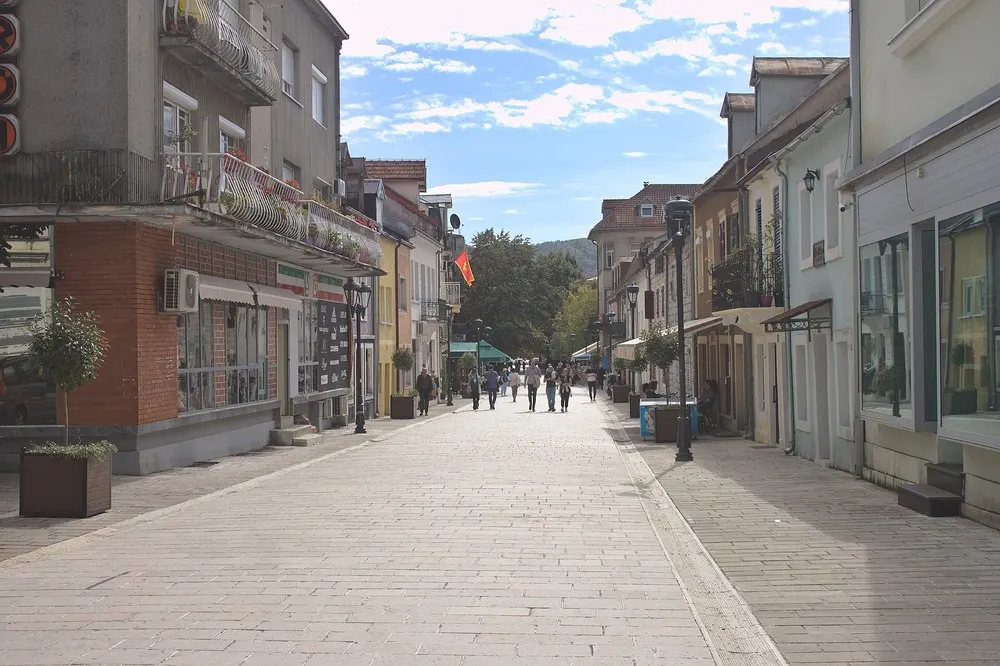
- Government House and Njegoševa Street (25 min). The ochre palace of 1910, then the pedestrian main street with its legations and houses.
- The Vlach Church (15 min). The town’s oldest foundation and its fence of captured rifle barrels.
- Coffee on Njegoševa (20 min) before you leave.
Half a day: monuments and museums
The National Museum’s combined ticket (20 euro for adults, as checked November 2026) covers every unit including the mausoleum and is worth it if you will also see the Art Museum and go up Lovćen; otherwise buy single tickets. Hours and prices are on the museums page.
If you would rather be guided, the guided walking tour with museum entry covers the same ground with a local guide.
- 9:00 Ćipur and Cetinje Monastery.
- 10:00 King Nikola’s Museum, the royal family’s home, with the court’s furniture, portraits, weapons and the king’s library (allow an hour).
- 11:15 Biljarda, Njegoš’s house and museum, and the Relief Map of Montenegro beside it (an hour).
- 12:30 Walk the legation quarter: the French, Russian, British, Italian and Ottoman legations and the Blue Palace. See the embassies.
- 13:30 Lunch, or the bus back to the coast.
One day: the capital and the mountain
Option A, town and Lovćen (April to mid-November). Do the half-day plan above in the morning. After lunch, drive about 20 km up Lovćen through Ivanova korita to Jezerski vrh; climb the 461 steps to the Njegoš Mausoleum and walk out to the viewing platform (allow an hour and a half at the top). Return to Cetinje for an evening walk on Njegoševa Street, when the day-trippers have gone. Without a car, take a taxi with an agreed waiting time, or join a Lovćen, Njeguši and Cetinje tour and see the town on another day.
Option B, the whole town (any season, weekdays in winter). Morning: the monastery, King Nikola’s Museum, Biljarda and the Relief Map. Lunch. Afternoon: the Government House with the Art Museum and the icon of Our Lady of Philermos, the Ethnographic Museum, the Zetski dom and the legations; at the end of the day, climb Orlov krš above the monastery for the view over the town and the mausoleum of Vladika Danilo. In the evening, see whether there is a performance at the Zetski dom.
Two days: Cetinje, Lovćen and Njeguši
This is our favourite plan, and it is also the best way to combine Cetinje with a stay in Kotor. Without a car, the Lovćen, cable car, Njeguši and Cetinje day tour from Kotor covers day 2, using the cable car when it is running.
- Day 1: the town. Option B above: every museum, the legations, Orlov krš at sunset. Sleep in Cetinje.
- Day 2, morning: Lovćen. Drive up early to the Njegoš Mausoleum, ahead of the coaches; walk in the beech woods at Ivanova korita on the way down. See Lovćen National Park.
- Day 2, midday: Njeguši. Drive on to Njeguši for a lunch of smoked ham, cheese and bread, and Njegoš’s birth house. See Njeguši.
- Day 2, afternoon: the serpentine. Either return to Cetinje, or descend the 25 hairpins to Kotor for the evening and continue your journey on the coast. See the serpentine road.
Three days: add the lake
- Days 1 and 2 as above, sleeping in Cetinje both nights.
- Day 3, morning: Lipa Cave (April to November), five kilometres from town; take the first tour of the day. See Lipa Cave.
- Day 3, late morning: Rijeka Crnojevića. Danilo’s bridge, the old river port and a boat down the river towards Lake Skadar. See Rijeka Crnojevića.
- Day 3, afternoon: Pavlova Strana for the view of the river meander, then on to Podgorica for a flight, or round to Virpazar and the Crmnica wine villages for the night. See Lake Skadar.
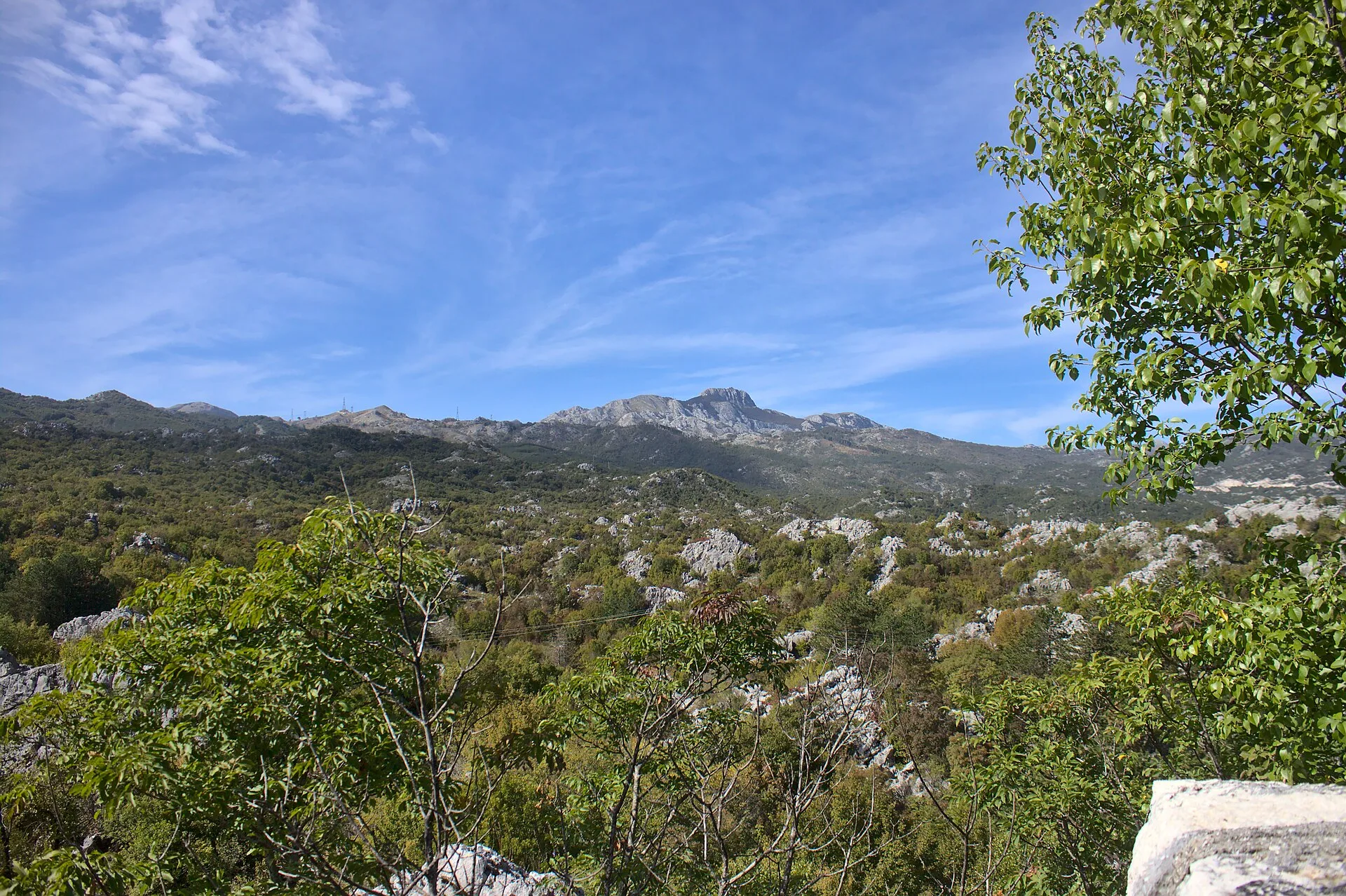
The wooded karst east of Cetinje, on the way down to Rijeka Crnojevića and the lake.
A rainy-day plan
It will rain at some point; Cetinje is one of the wettest towns in Europe. Happily, it is also a town of museums, and almost everything worth seeing in bad weather is under cover and close together.
- Start indoors early: King Nikola’s Museum, then Biljarda; the Relief Map is under a roof in its pavilion.
- Midday: the Art Museum in the Government House, the national collection of Montenegrin painting and icons, and the Ethnographic Museum.
- Lunch somewhere warm on Njegoševa Street.
- Afternoon: the Montenegrin Art Gallery ‘Miodrag Dado Đurić’ (Tuesday to Saturday), the monastery, and the Court Church at Ćipur.
- Out of town: Lipa Cave stays dry, and the same temperature, in any weather (April to November). Avoid Lovćen in cloud: you will see nothing from the top.
- Evening: a performance at the Zetski dom, if one is on.
A winter plan
From 16 November to April the National Museum opens its Cetinje units Monday to Friday, 9:00–15:00 (as checked November 2026), and closes the mausoleum and Njegoš’s birth house. Come on a weekday, do the museums in the morning, and spend the afternoon on the free sights: the monastery, Ćipur, the legations and the parks, ideally under fresh snow. If the road is open and clear, Ivanova korita in the snow is beautiful, but do not plan on reaching the summit. Around Christmas and New Year the town has a winter programme with a market and an ice rink on Dvorski trg; see events.
Cetinje in a longer Montenegro trip
Cetinje fits naturally between the coast and the interior. A classic week runs: two nights on the Bay of Kotor, one or two in Cetinje (with Lovćen and Njeguši), one at Lake Skadar, then north to Durmitor via Ostrog, or back to the coast at Budva. Our day trips page gives the distances; for complete country routes see ExploreMontenegro’s itineraries and its seven-day Montenegro itinerary. For the night in Cetinje, see where to stay.
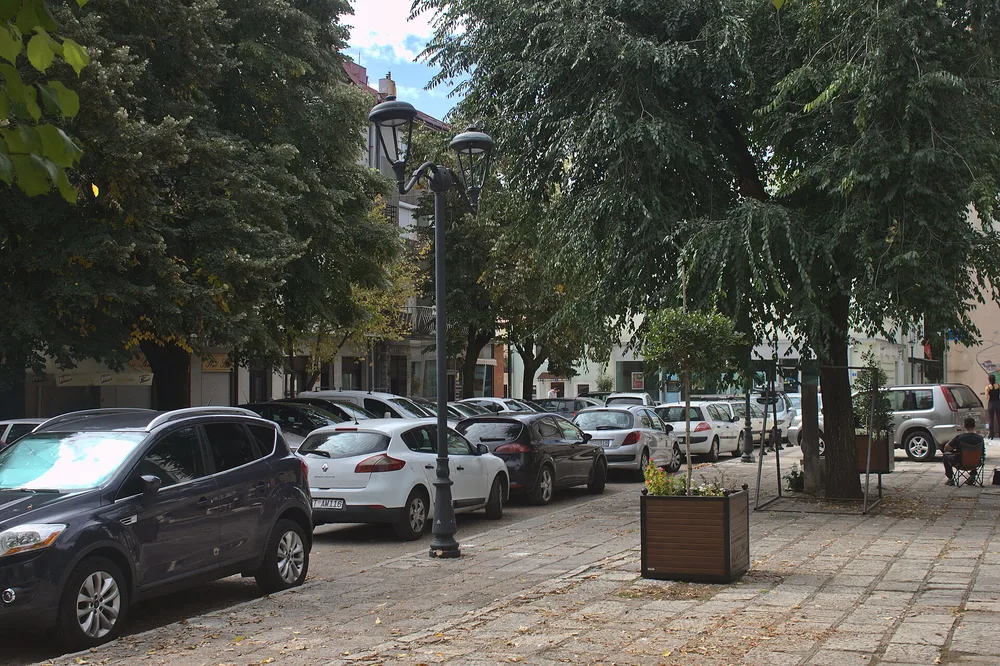
Cetinje: guided walking tour with museum entry
A walk through the historic core of the Old Royal Capital with a local guide, with museum entry included according to the listing title. Check the listing for which museum, the meeting point and the languages offered.
Check availabilityBook via GetYourGuide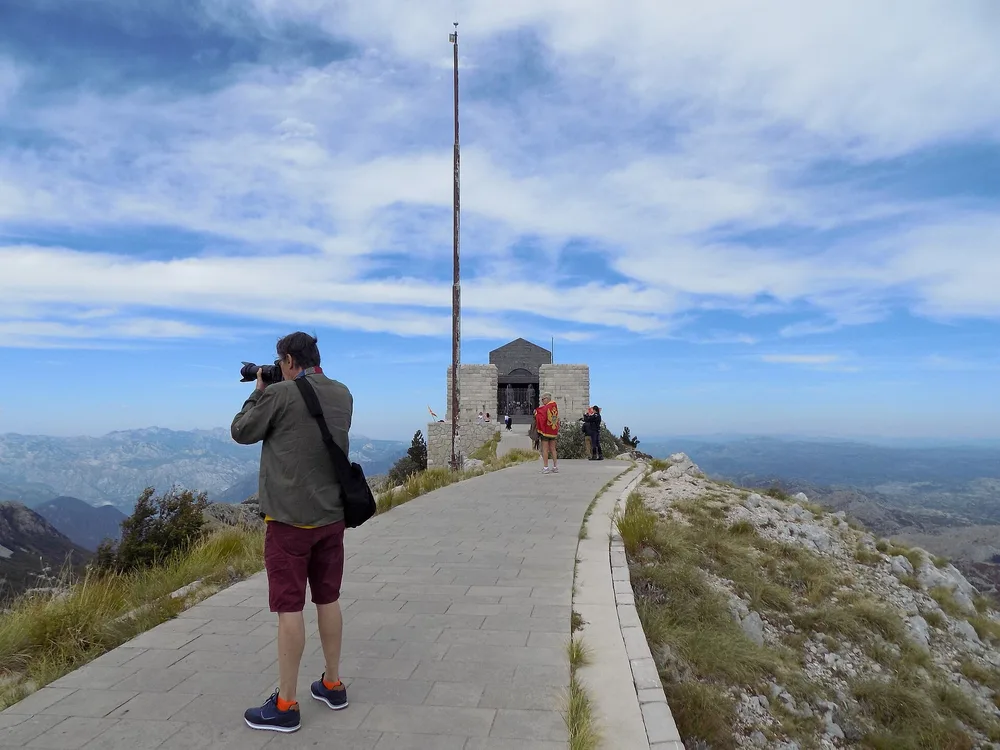
Majestic Montenegro: Lovćen, Njeguši and Cetinje
The classic mountain circuit: Lovćen National Park, the village of Njeguši and the Old Royal Capital. Check the listing for the starting town, the mausoleum visit and the group size.
Check availabilityBook via GetYourGuide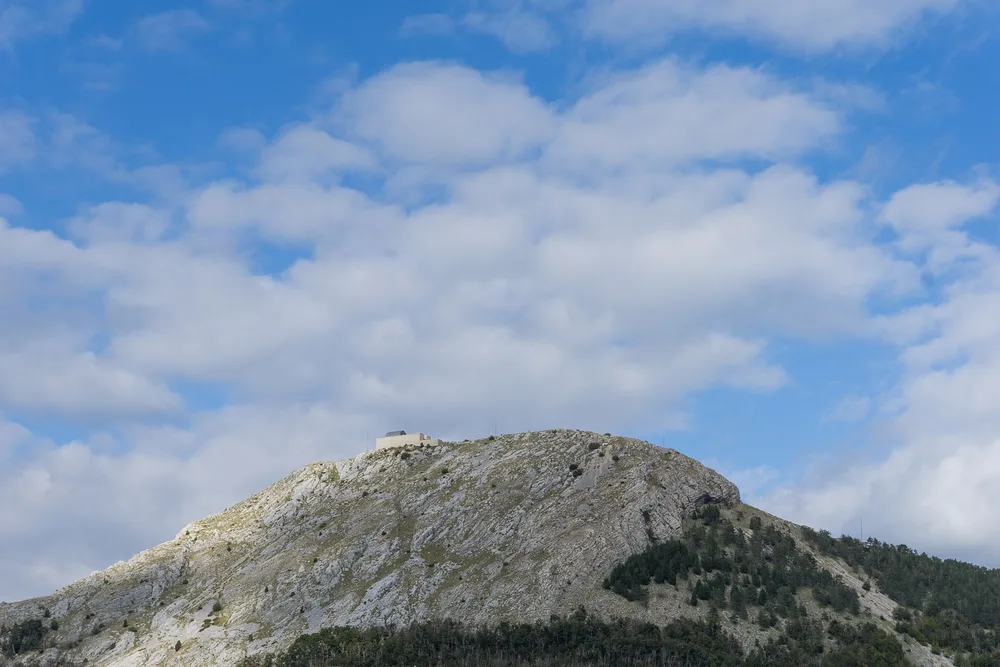
Lovćen, cable car, Njeguši and Cetinje day tour
A day from Kotor that rides the cable car up Lovćen and continues to Njeguši and Cetinje, as the title describes. Read the listing for the stops, whether the mausoleum ticket is included and what happens while the cable car is closed.
Check availabilityBook via GetYourGuideTour listings are on GetYourGuide. Prices, dates and cancellation terms are shown live on each listing and can change; Cetinje.com may earn a commission at no extra cost to you.
Frequently asked questions
How many days do you need in Cetinje?
One full day for the town and its museums, two if you add Lovćen and Njeguši, three with Lipa Cave, Rijeka Crnojevića and Lake Skadar.
Can I see Cetinje in two hours?
You can see the essentials from outside: Ćipur, the monastery, King Nikola’s Palace, Njegoševa Street and the Vlach Church. Add museums and you need half a day.
Can I see Cetinje and Lovćen in one day?
Yes, between mid-April and mid-November: museums in the morning, the Njegoš Mausoleum in the afternoon. In winter the mausoleum is closed.
What can I do in Cetinje when it rains?
The museums: King Nikola’s Museum, Biljarda with the Relief Map, the Art Museum and the Ethnographic Museum, plus Lipa Cave in season.
Sources and official information
Facts were checked against these official and scholarly sources in November 2026. Opening hours, ticket prices, park fees and timetables change, so confirm before you go.
Cetinje.com is an independent guide, not the official site of the Old Royal Capital Cetinje, the National Museum of Montenegro, any tour operator, hotel or the government of Montenegro. Some links are affiliate links: tours go to GetYourGuide and accommodation goes to Booking.com, and we may earn a commission at no extra cost to you.