In short
- Cetinje is a half-day town that rewards a whole one. The monuments of the historic core lie within about 600 m of each other; the mountain, the smokehouse village and the lake are each under half an hour away.
- If you only do three things: King Nikola’s Museum, the Cetinje Monastery with Ćipur, and a walk up Njegoševa Street to the French legation and the Vlach Church.
- If you have the afternoon as well: Biljarda with the Relief Map, then Mount Lovćen and the Njegoš Mausoleum (open mid-April to mid-November).
- Budget: the monastery, churches, legations and streets are free; the four ticketed museum stops cost 4 to 8 euro each or 20 euro together with the mausoleum (as checked 22 November 2026).
- Season: museums open daily in summer and on weekdays only in winter; the mountain sites close for the winter.
Why come, and for how long
Cetinje is not pretty in the way Kotor is pretty. It has no walls, no harbour and no medieval lanes. What it has is rarer: a complete royal capital of the years around 1900, built for a mountain kingdom that disappeared in 1918, preserved almost by accident in a small town, and still the ceremonial seat of the Montenegrin state. You come here to understand Montenegro, and most people leave liking the place more than they expected to.
Almost every visitor arrives on a day trip from the coast and stays two or three hours. That is enough for the palace, the monastery and a walk, and this page will help you choose. But the town is at its best early and late, when the excursions have gone, the limes on Njegoševa Street are full of evening light and the cafés on the palace square belong to the people who live here. If your plans allow one night, take it; you will also get Lovćen at sunrise or sunset, when the mountain is worth twice as much.
Everything below is ranked by how much it adds to a first visit. Each entry links to a page with the history, the practical details and the sources.
- Time needed
- 2–3 hours minimum; one full day to do it justice; two days with Lovćen and the lake
- Free sights
- Monastery, Ćipur, Vlach Church, the legations, Orlov krš, parks, Blue Palace exterior
- Ticketed
- King Nikola’s Museum, Biljarda with the Relief Map, Government House museums, Ethnographic Museum
- Museum season
- Daily mid-April to mid-November; weekdays only in winter
- Nearest excursions
- Njeguši about 20 km; Njegoš Mausoleum on Lovćen about 20 km (road distances, rounded)
In town: the ten best things to do
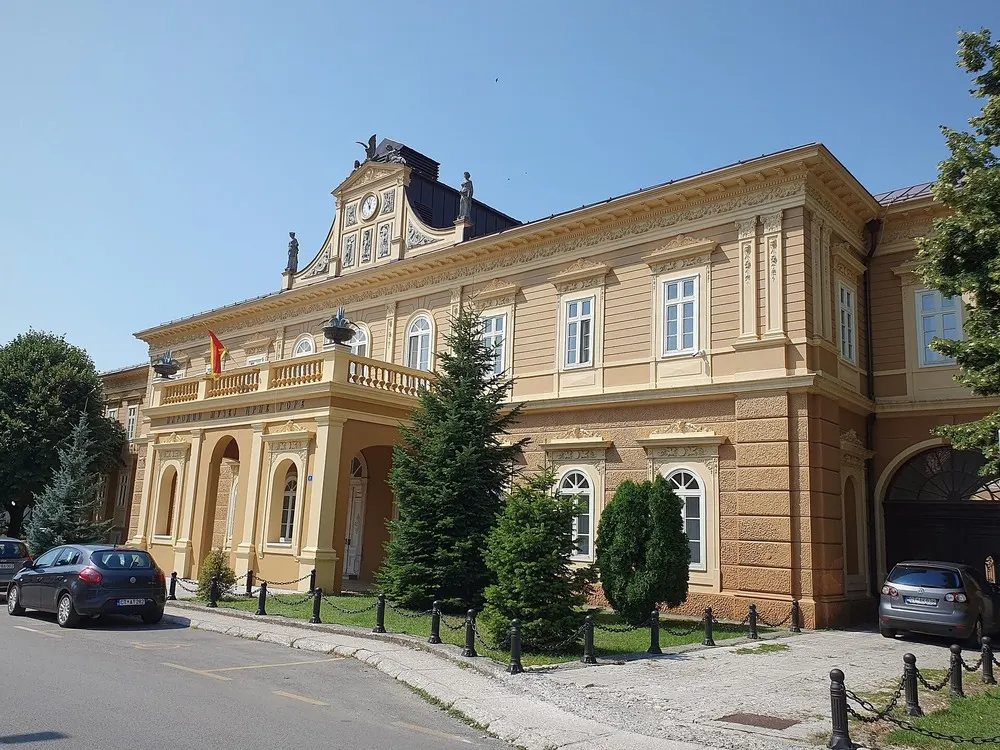
1. King Nikola’s Museum. The red palace on the court square, home of Montenegro’s last ruler from 1867 to 1916 and a museum since 1926. Nineteen furnished rooms, a library with a book printed by the Crnojević press in 1493–94, portraits of the daughters who married into the royal houses of Italy, Russia and Serbia. An hour. If you see one interior, see this. King Nikola’s Palace.
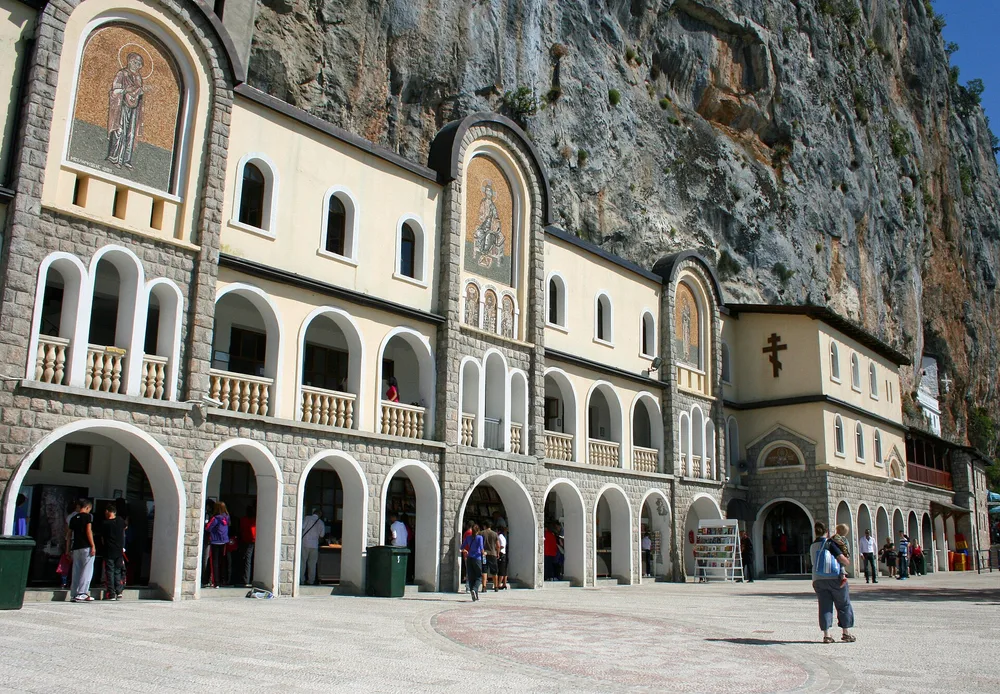
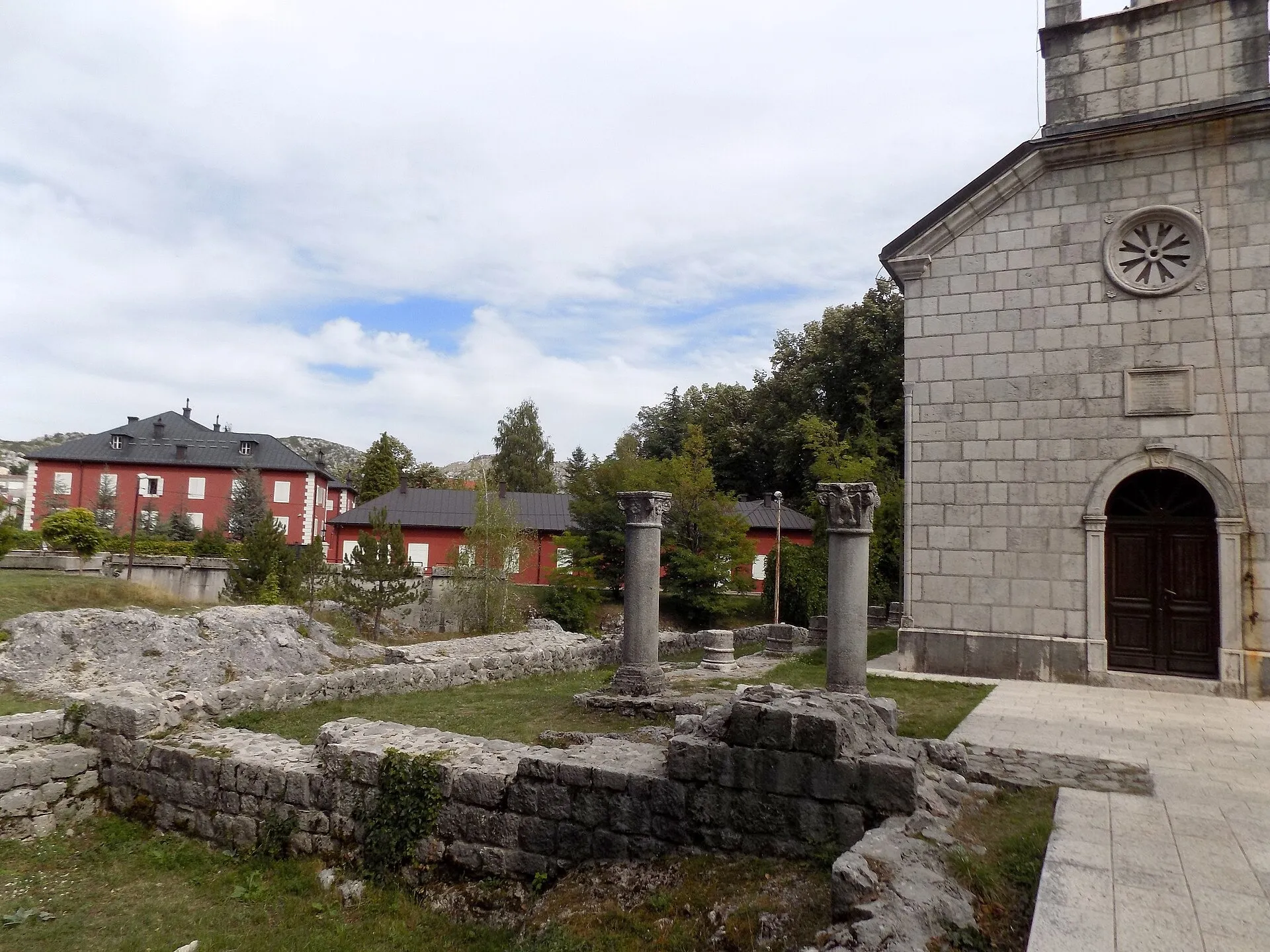
2. The Cetinje Monastery and Ćipur. The spiritual and, for centuries, political centre of the country, rebuilt in 1701–1704, with the relics of St Peter of Cetinje and a hand venerated as John the Baptist’s. On the lawn in front, the foundations of the 1484 monastery and the little Court Church where King Nikola is buried. Free; dress modestly. Cetinje Monastery.
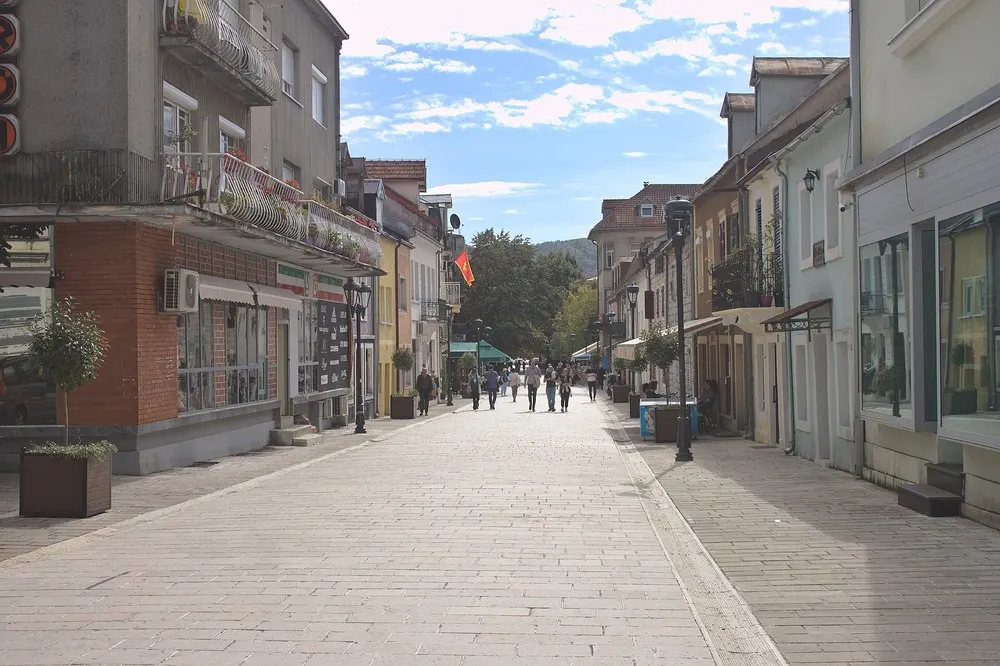
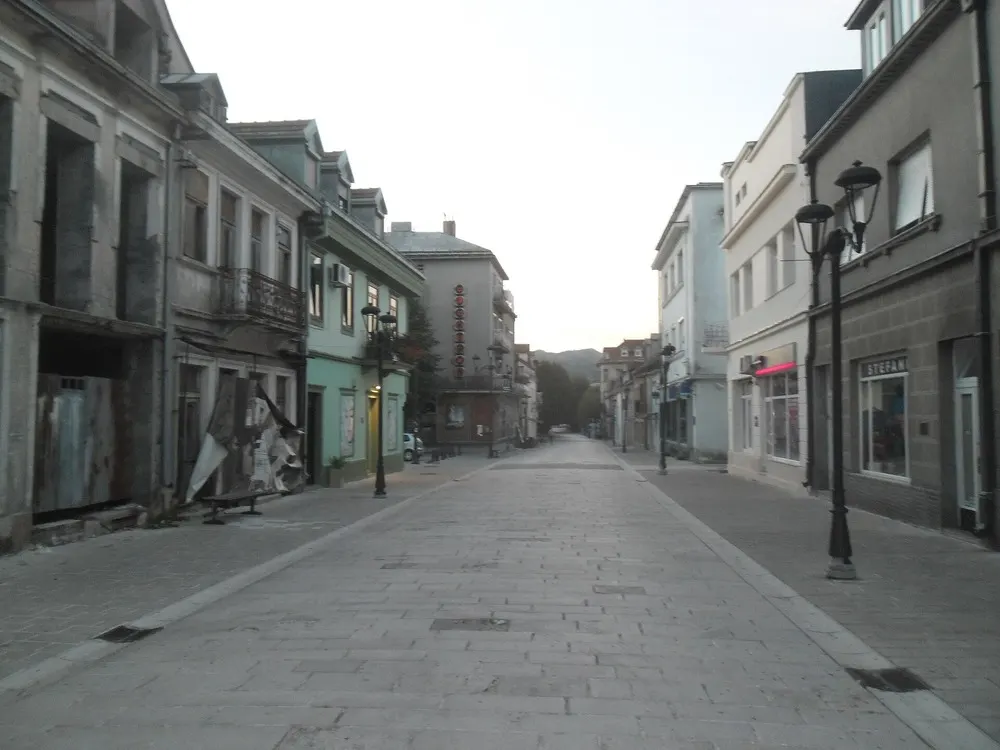
3. Walk Njegoševa Street and the old embassies. The main street under the lime trees, the tiled Art Nouveau French legation, the neo-baroque Russian one, the English villa that is now the Music Academy: a diplomatic quarter in a town you can cross in fifteen minutes. Free. Follow our walking tour and read up on the old embassies.
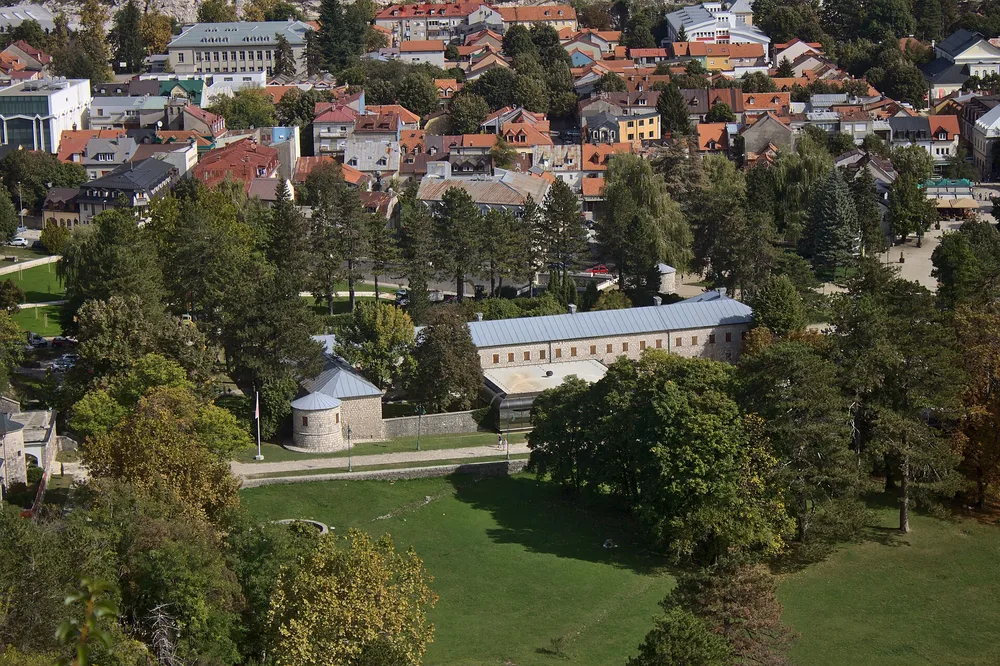
4. Biljarda and the Relief Map of Montenegro. The fortified house that the poet-prince Njegoš built in 1838 and named after his billiard table, with his study and the manuscript of The Mountain Wreath; and in its courtyard a 282-square-metre concrete model of the whole country made by the Austro-Hungarian army in 1916–17. An hour. Biljarda and the Relief Map.
5. The Government House and the icon of Our Lady of Philermos. The kingdom’s largest building, finished in 1910, now the Art Museum, with a Byzantine icon that the Knights of Malta carried from Rhodes. An hour, or ten minutes for the façade. Government House.
6. The Vlach Church. A church older than the town, with a churchyard railing made in 1897 from more than 1,500 captured Ottoman rifle barrels. Ten minutes. Vlach Church.
7. Climb Orlov krš. Ten to fifteen minutes above the monastery, the open stone canopy over the tomb of Bishop Danilo, founder of the dynasty, and the best view of the red roofs and the ring of grey hills. Free; go late in the day.
8. An evening at Zetski dom. Montenegro’s oldest theatre, begun in 1884 and once its parliament. The only way to see the inside is to go to a performance, which is also the best excuse to stay the night. Zetski dom.
9. The Ethnographic Museum. Costume, weapons and the tools of highland life in the former Serbian legation on the square. Half an hour, and the right companion to a page on culture and traditions. See museums.
10. The parks, the Blue Palace and a coffee on Dvorski trg. Do not skip the sitting down. The Palace Park and City Park were laid out in the 1890s; the Blue Palace between them is the President’s residence; and the café terrace in the former Bulgarian legation, facing the palace, is where the town watches itself. Blue Palace.
Around Cetinje: the six best excursions
The town sits between a mountain and a lake, and half the reason to come is what lies just outside it.
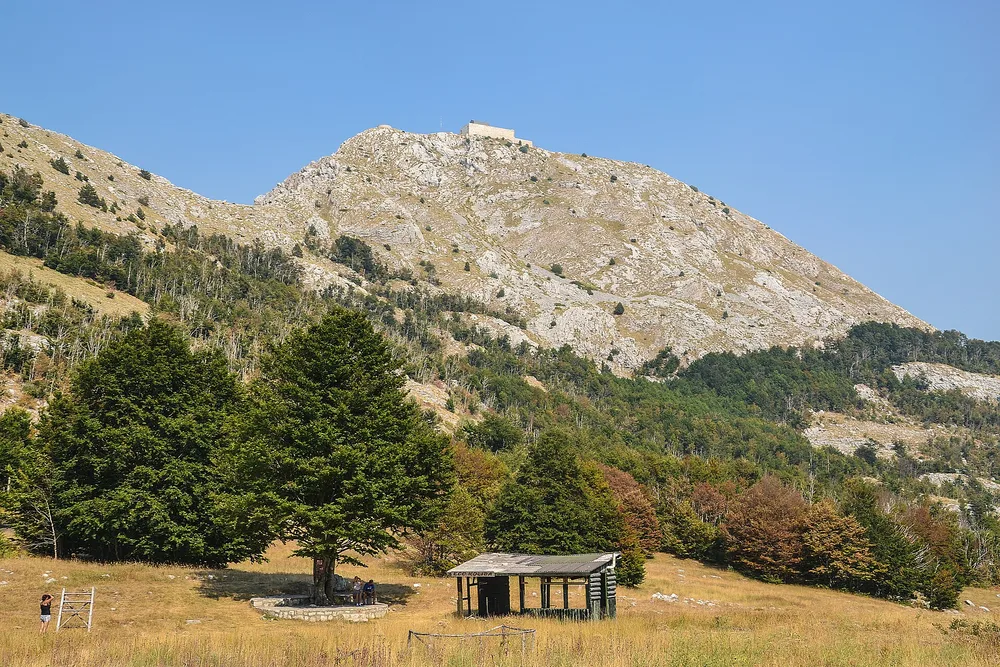
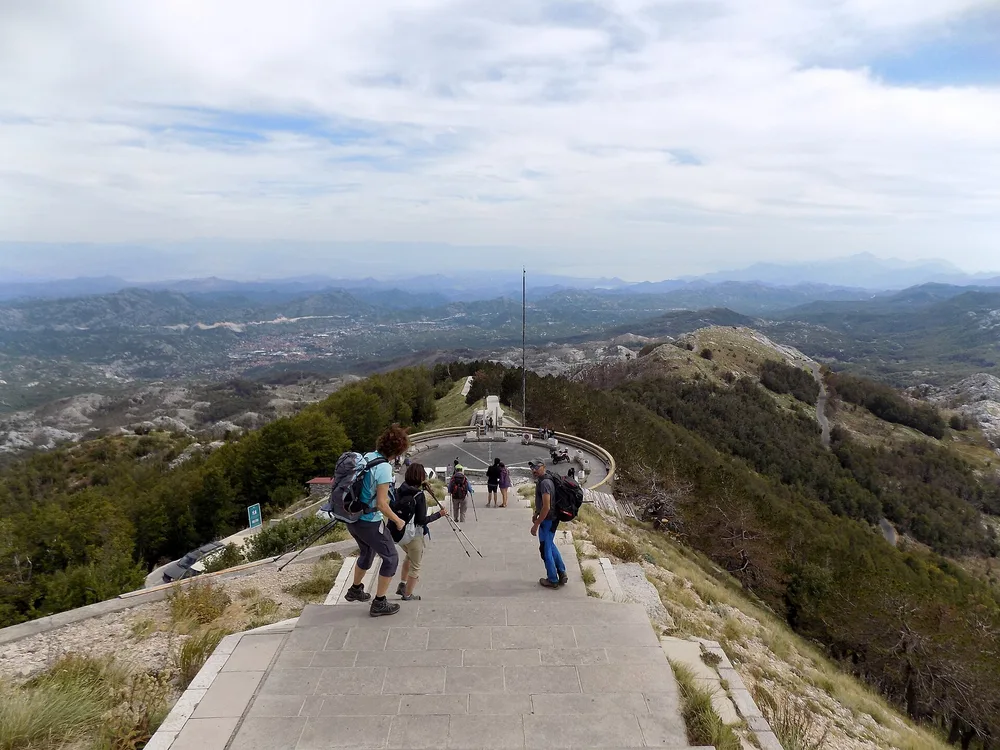
1. Mount Lovćen and the Njegoš Mausoleum. The mountain with which the country’s name is traditionally linked, and on its second summit the mausoleum of Njegoš by Ivan Meštrović, reached by a long flight of steps through a tunnel. On a clear day the view takes in much of Montenegro. About 20 km by road and a little over half an hour by car; the mausoleum is run by the National Museum and open from mid-April to mid-November. Lovćen National Park and the Njegoš Mausoleum. Tours: the Lovćen, cable car, Njeguši and Cetinje day tour and the Majestic Montenegro trip to Lovćen, Njeguši and Cetinje.
2. Njeguši. The village on the old road to Kotor where the Petrović dynasty came from, where Njegoš’s birth house is a small museum, and where the smoked ham and cheese that carry the village’s name are made. About 20 km. Njeguši; for a tasting at source there is the Njeguši village tour with prosciutto tasting in a household.
3. The old road to Kotor. Twenty-five numbered hairpins down the face of the mountain to the bay, engineered in the 1880s, and since 2023 a cable car over the same slope. The Kotor serpentine and cable car.
4. Lipa Cave. One of the largest show caves in Montenegro, a short drive from the town, visited on guided tours in the warmer months. Lipa Cave; the listing From Kotor: Lovćen, Cetinje and Lipa Cave day trip combines it with the town.
5. Rijeka Crnojevića. Ivan Crnojević’s earlier capital, a river port with an old stone bridge and the much-photographed bend of the river seen from Pavlova strana. Rijeka Crnojevića.
6. Skadar Lake. The largest lake in the Balkans: boats from Virpazar, birds, island monasteries and the vineyards of Crmnica. Skadar Lake on this site, and for the national park as a whole the Lake Skadar guide on ExploreMontenegro.
Walkers should look at the trails on Lovćen and, for the confident, the Lovćen via ferrata at Štirovnik with a guide. Longer outings to Kotor, Budva, Podgorica, Ostrog and Durmitor are on the day trips page.
Pick by interest
Not everyone wants the same Cetinje. This table sorts the sights by what you care about.
| If you like | Do this first | Then | Read |
|---|---|---|---|
| Royal and political history | King Nikola’s Museum | Biljarda; Court Church at Ćipur | History, the dynasty, King Nikola |
| Architecture | The embassy walk | Government House; Zetski dom; Njegoševa Street houses | Architecture, embassies |
| Religion and relics | Cetinje Monastery | Our Lady of Philermos in the Art Museum; Vlach Church | Monastery |
| Literature | Biljarda (Njegoš’s study) | The Njegoš Mausoleum on Lovćen | Njegoš, the Crnojević printing house |
| Art | Art Museum, Government House | Dado gallery on Balšića pazar | Famous people |
| Travelling with children | The Relief Map | Palace (uniforms and weapons); Lipa Cave; Lovćen steps | Itineraries |
| Food | Njeguši for pršut and cheese | A long lunch in town | Food and drink |
| A rainy day | Palace, Biljarda, Art Museum, Ethnographic Museum | Coffee on the square | Museums |
| Views and walking | Orlov krš | Lovćen; Pavlova strana above Rijeka Crnojevića | Lovćen |
How much time: four plans
- Two hours. Palace square, King Nikola’s Museum (one hour), monastery and Ćipur (40 minutes), coffee. This is what most excursions allow.
- Half a day. Add Biljarda with the Relief Map and the walk up Njegoševa Street to the French legation and the Vlach Church.
- One day. The full walking tour in the morning with two museums, lunch, then Lovćen and the mausoleum in the afternoon, returning by Njeguši.
- Two days. Day one as above. Day two: Rijeka Crnojevića and Skadar Lake, or Lipa Cave and the old road down to Kotor, with the evening at Zetski dom if there is a performance.
Worked-out versions, including a plan for bad weather, are on the itineraries page, and the annual calendar is under events. If you are deciding when to come, read best time to visit: the mountain sites and the Relief Map keep a summer season, and in winter the museums open only on weekdays.
Tours worth considering
Cetinje is easy to see on your own, but there are three situations in which a tour earns its fee: you have no car and want Lovćen as well; you are based on the coast and want the town, the mountain and Njeguši in a single day; or you want the history told properly. We link only to tours whose GetYourGuide listings we have verified, describe them only by their titles, and never quote prices or ratings. The panel below shows the main choices; the full list by type is on our tours page.
For something less usual, the listing From Podgorica: Rijeka Crnojevića and Cetinje, history and nature pairs the old capital with the older one, the hands-on household village experience near Cetinje trades monuments for a farm kitchen, and the Monastery tour: Cetinje, Dajbabe and Ostrog links three shrines.
From Podgorica: Rijeka Crnojevića and Cetinje, history and nature
A day out from the capital that pairs the two seats of the Crnojević lords: the river port of Rijeka Crnojevića and the Old Royal Capital. The listing title promises history and nature; check it for the stops, the museum entries and the group size.
Check availabilityBook via GetYourGuide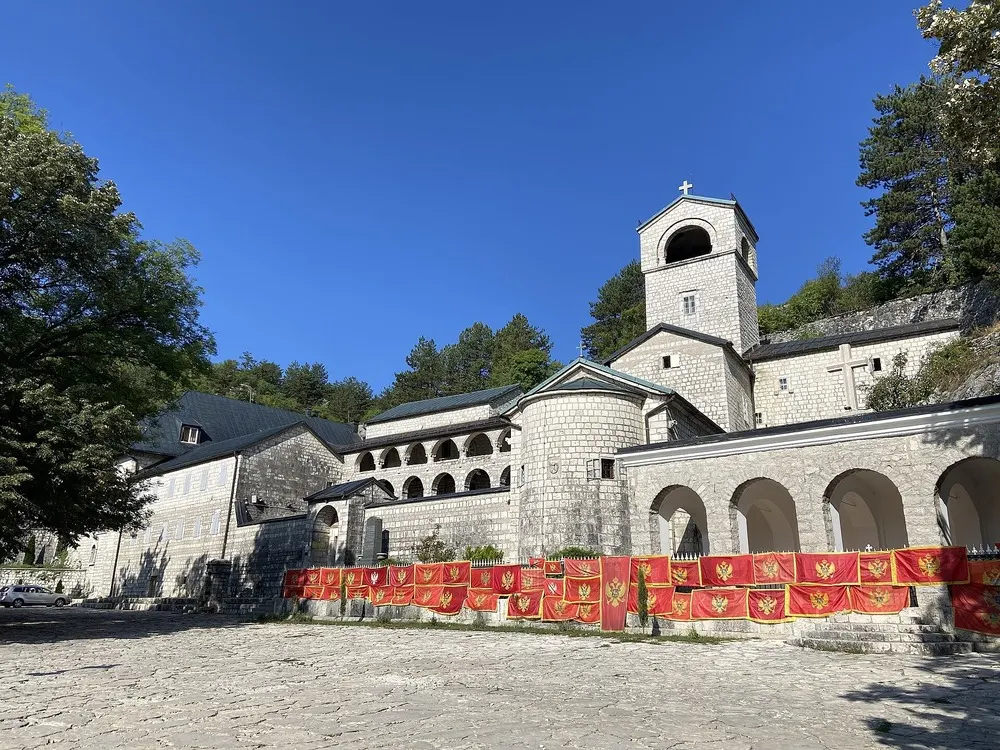
Montenegro tour: history, tradition, culture
A culture-led tour listed under Njeguši, the home village of the Petrović dynasty on the old road between Kotor and Cetinje. The title names history, tradition and culture; read the listing for the route and what is included.
Check availabilityBook via GetYourGuide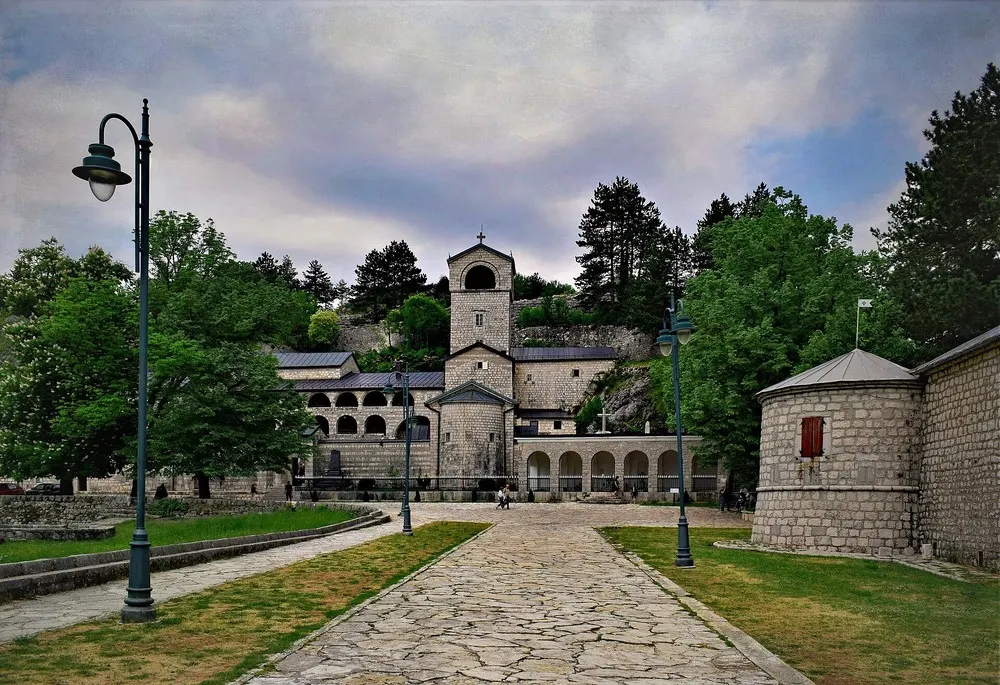
Monastery tour: Cetinje Monastery, Dajbabe and Ostrog
Three Orthodox monasteries in one day: Cetinje, the cave church of Dajbabe near Podgorica and Ostrog in its cliff. Dress for church visits; check the listing for the starting point and timings.
Check availabilityBook via GetYourGuideTour listings are on GetYourGuide. Prices, dates and cancellation terms are shown live on each listing and can change; Cetinje.com may earn a commission at no extra cost to you.
Staying the night
Cetinje has few hotels and a good many apartments and guest houses, nearly all within ten minutes’ walk of the palace square. Staying puts you in the museums at opening time and on Lovćen for the evening light, and the town after dark is quiet in a way the coast in summer is not. Three verified options in the centre are below; guest scores are Booking.com’s, as checked in November 2026, and we do not quote room prices. The fuller guide, with advice on when to base yourself here rather than in Kotor, Budva or Podgorica, is where to stay.
Hotel Gradska Cetinje
CetinjeHotel in the former Bulgarian legation on Dvorski trg, facing King Nikola’s Palace, with a restaurant, bar and family rooms.
9.0Booking.com guest score · as checked in November 2026
See on Booking.comHotel Dapčević
CetinjeHotel on Bulevar crnogorskih junaka about 350 m from the centre, with free parking, family rooms and breakfast.
9.1Booking.com guest score · as checked in November 2026
See on Booking.comGuest House Pansion 10
CetinjeGuest house on Pavla Rovinskog Street, under 1 km from the centre, with free parking and family rooms.
9.6Booking.com guest score · as checked in November 2026
See on Booking.comSee all stays in Cetinje on Booking.com
Accommodation links go to Booking.com, where you see live prices and availability. We do not list prices because they change daily; Cetinje.com may earn a commission.
Practical notes
- Getting here: about 35 km from Podgorica and 31 km from Budva; buses stop five minutes’ walk from the centre. See getting there and, for the wider network, getting around Montenegro on ExploreMontenegro.
- Parking: the car park by the tourist information point, about 100 m from the palace.
- Money: Montenegro uses the euro. Carry some cash for museum tickets and cafés.
- Closures: in summer the museums open every day; in winter Monday to Friday. The History Museum was listed as closed to visitors in November 2026. Always check the National Museum’s notices before a special journey.
- Churches: covered shoulders and knees; no photography during services.
- Altitude and weather: the town lies at about 670 m and is cooler and wetter than the coast. Bring a layer. More in practical information.
Frequently asked questions
Is Cetinje worth visiting?
Yes, if you are interested in history, architecture or simply in understanding Montenegro. It is the country’s former royal capital, with a palace, a great monastery, a dozen former legations and the national museums in a compact, walkable centre, and it is the gateway to Mount Lovćen.
How much time do you need in Cetinje?
Two to three hours for the essentials, half a day to add Biljarda and the walk, and a full day if you also go up Lovćen. Two days allow Skadar Lake or the old road to Kotor as well.
What is Cetinje best known for?
For having been the capital of Montenegro until 1918: King Nikola’s Palace, the Cetinje Monastery with its relics, the old embassies, the poet-ruler Njegoš, and the mausoleum on Mount Lovćen above the town.
What is there to do in Cetinje for free?
The monastery, Ćipur and the Court Church, the Vlach Church with its rifle-barrel fence, the walk along Njegoševa Street past the former legations, the parks, the view from Orlov krš and the exterior of the Blue Palace cost nothing.
What can you do in Cetinje when it rains?
Spend the day indoors: King Nikola’s Museum, Biljarda, the Art Museum in the Government House and the Ethnographic Museum are all within five minutes of one another, and the combined ticket covers them.
Can you visit Cetinje and Lovćen in one day?
Yes. Spend the morning in the town and the afternoon on the mountain; the Njegoš Mausoleum is about 20 km from Cetinje. Many organised day tours from Kotor and Budva combine the two with Njeguši.
Is Cetinje a good base?
For a night or two, yes, especially for Lovćen, Njeguši and Skadar Lake and for anyone who prefers a quiet town to a resort. For beaches and nightlife, stay on the coast and come up for the day.
Sources and official information
Facts were checked against these official and scholarly sources in November 2026. Opening hours, ticket prices, park fees and timetables change, so confirm before you go.
- narodnimuzej.me
- narodnimuzej.me
- narodnimuzej.me
- cetinje.travel
- cetinje.travel
- cetinje.travel
- cetinje.travel
- whc.unesco.org
- tib.oeaw.ac.at
- zetskidom.me
Cetinje.com is an independent guide, not the official site of the Old Royal Capital Cetinje, the National Museum of Montenegro, any tour operator, hotel or the government of Montenegro. Some links are affiliate links: tours go to GetYourGuide and accommodation goes to Booking.com, and we may earn a commission at no extra cost to you.