In short
- One institution, many doors. The National Museum of Montenegro runs King Nikola’s Museum, the Njegoš Museum in Biljarda with the Relief Map, the History and Art museums in the Government House, the Ethnographic Museum, an archaeological lapidarium and a contemporary gallery, all within about 400 m of one another.
- Tickets (as checked 22 November 2026): King Nikola’s Museum 8 euro; Biljarda with the Relief Map 5 euro; Government House 5 euro; Ethnographic Museum 4 euro; a combined ticket for everything, including the Njegoš Mausoleum on Lovćen, 20 euro. Students half price; under-12s free.
- Season matters. From mid-April to mid-November the museums open daily; in winter they open on weekdays only and close at 3:00 PM, and the Relief Map and the Lovćen sites shut altogether.
- The History Museum is listed as closed to visitors. The Art Museum in the same building, with the icon of Our Lady of Philermos, is open.
- If you have time for one, make it King Nikola’s Museum; for two, add Biljarda. A full day covers all of them.
How the museums fit together
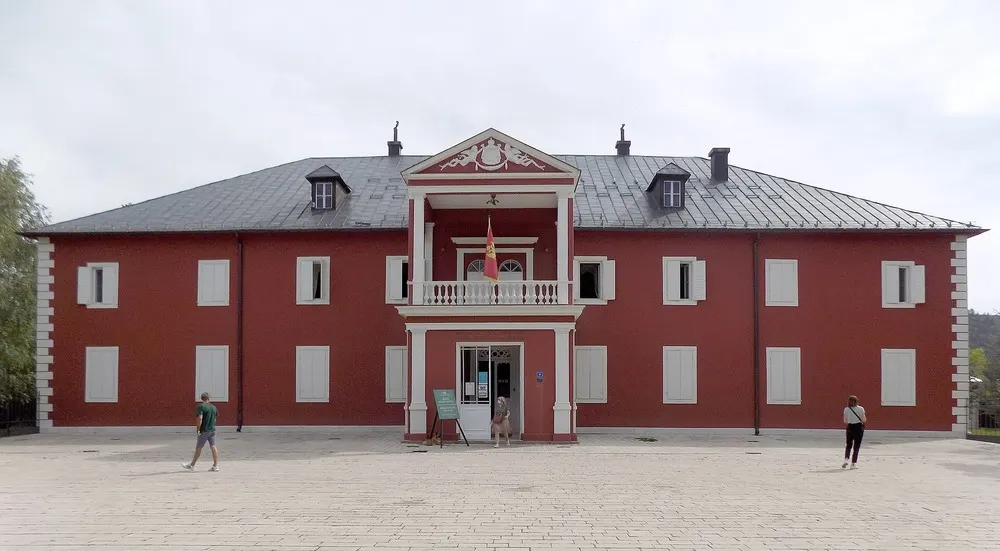
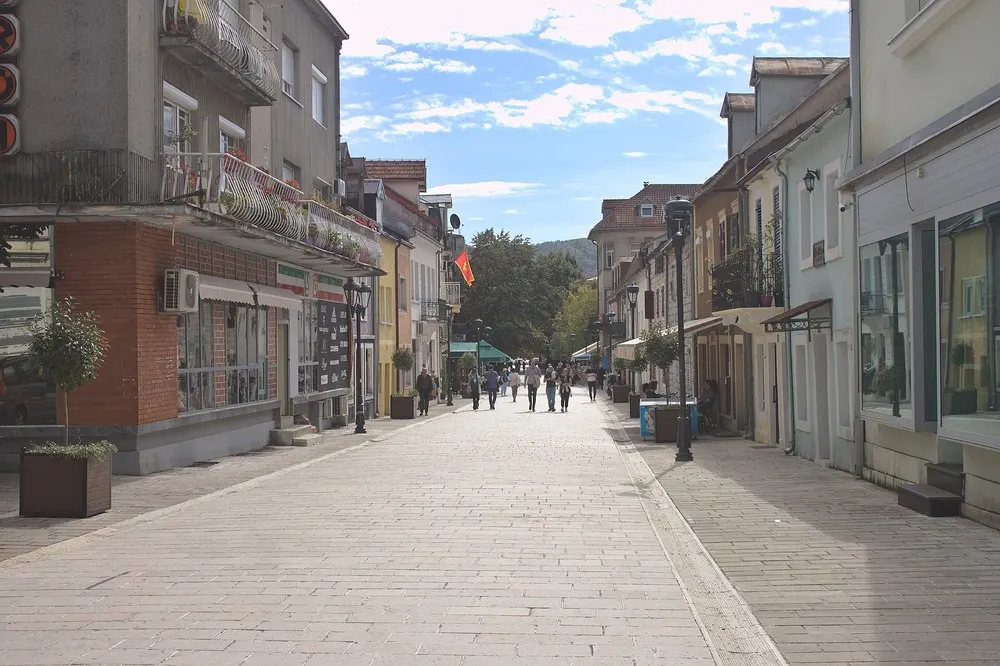
Cetinje calls itself a town of museums, and the phrase is accurate in an unusual way: nearly all of them are departments of a single body, the National Museum of Montenegro (Narodni muzej Crne Gore), and nearly all of them occupy the buildings whose history they tell. The king’s museum is in the king’s palace, the Njegoš Museum in the house Njegoš built, the history and art collections in the old seat of government, the ethnographic collection in a former legation. You do not so much visit museums here as walk through the furniture of a vanished state.
The institution traces itself to 1838, when a room was set aside in Biljarda for trophy weapons, captured flags and church objects. In 1890 that collection moved to the building known as the Laboratory, and a law of 1896 created the Princely Montenegrin Library and Museum in Zetski dom. After the fall of the kingdom a State Museum was founded in 1926 in the palace of the last king. The National Gallery followed in 1950 and the Ethnographic and Njegoš museums in 1951; a permanent history display was formed in 1989; and the whole was renamed the National Museum of Montenegro in 1992. In May 2026 it marked 130 years since its foundation and a century since its revival with two anniversary exhibitions.
Its administrative seat is the Government House. Besides the units in town it runs Njegoš’s birth house at Njeguši and the Njegoš Mausoleum on Mount Lovćen, which is why the combined ticket reaches all the way up the mountain (see the Lovćen guide on ExploreMontenegro and our own Njegoš Mausoleum page).
- Institution
- National Museum of Montenegro (Narodni muzej Crne Gore)
- Founded
- Museum law 1896; State Museum 1926; present name 1992
- Units in town
- King Nikola’s Museum; Njegoš Museum Biljarda with Lapidarium and Relief Map; History Museum; Art Museum; Ethnographic Museum; Montenegrin Art Gallery ‘Miodrag Dado Đurić’
- Units out of town
- Njegoš’s birth house, Njeguši; Njegoš Mausoleum, Lovćen
- Parking
- Car and coach park with tourist information point about 100 m from the palace; 2 euro a day for cars according to the museum
- From the bus station
- About 500 m, five minutes on foot
Tickets and the combined ticket
Prices below are from the National Museum’s published price list as we read it on 22 November 2026. Admission is free for children under 12, residents of Cetinje, members of ICOM and organised visits by Montenegrin schools. The museum also announces free days: in 2026 entry to all units was free for individual visitors on 13–15 November, around Njegoš Day, the national day of culture.
| Ticket | Adults | Pupils and students |
|---|---|---|
| King Nikola’s Museum | 8 euro | 4 euro |
| Njegoš Museum Biljarda, with the Relief Map | 5 euro | 2.50 euro |
| History Museum and Art Museum (Government House) | 5 euro | 2.50 euro |
| Ethnographic Museum | 4 euro | 2 euro |
| Relief Map of Montenegro only | 3 euro | 1.50 euro |
| Njegoš’s birth house, Njeguši | 3 euro | 1.50 euro |
| Njegoš Mausoleum, Lovćen (with the birth house) | 8 euro | 4 euro |
| Combined ticket: all museum units and the Njegoš Mausoleum | 20 euro | 10 euro |
| Archaeological lapidarium, Biljarda courtyard | Free | Free |
Opening hours, and a warning about them
The museum publishes a summer and a winter timetable, and in November 2026 its own pages did not agree with one another. The Montenegrin-language timetable gives summer hours of 9:00 AM to 5:00 PM from 15 April to 15 November; the English-language version of the same page gives 9:00 AM to 4:00 PM from 11 April; the page for King Nikola’s Museum gives 6:00 PM as its summer closing time; and a notice dated 26 October 2026 said all units would open daily from 9:00 AM to 4:00 PM between 27 October and 16 November. The table gives the Montenegrin-language timetable. Treat the closing time as approximate and aim to be inside by 2:00 PM in winter and 3:30 PM in summer; the last visitors are admitted 30 minutes before closing.
| Unit | 15 April – 15 November | 16 November – 14 April |
|---|---|---|
| King Nikola’s Museum | Daily from 9:00 AM; closing time given as 4:00, 5:00 or 6:00 PM on different museum pages, so plan on 4:00 PM (see King Nikola’s Palace) | Monday to Friday 9:00 AM – 3:00 PM |
| Biljarda and Lapidarium | Daily from 9:00 AM; closing time 5:00 PM on the museum’s Montenegrin pages and 4:00 PM on its English pages, so plan on 4:00 PM (see Biljarda) | Monday to Friday 9:00 AM – 3:00 PM |
| Relief Map of Montenegro | Daily from 9:00 AM; closing time 5:00 PM on the museum’s Montenegrin pages and 4:00 PM on its English pages, so plan on 4:00 PM (see Relief Map) | Closed according to its own page (the general timetable groups it with Biljarda) |
| Art Museum (Government House) | Daily from 9:00 AM; closing time 5:00 PM on the museum’s Montenegrin pages and 4:00 PM on its English pages, so plan on 4:00 PM (see Government House) | Monday to Friday 9:00 AM – 3:00 PM |
| History Museum (Government House) | Closed to visitors | Closed to visitors |
| Ethnographic Museum | Daily from 9:00 AM; closing time 5:00 PM on the museum’s Montenegrin pages and 4:00 PM on its English pages, so plan on 4:00 PM | Monday to Friday 9:00 AM – 3:00 PM |
| Montenegrin Art Gallery ‘Miodrag Dado Đurić’ | Tuesday to Saturday 9:00 AM – 5:00 PM | Tuesday to Saturday 10:00 AM – 4:00 PM until 31 December; closed 1 January – 14 April |
| Njegoš Mausoleum and birth house | Daily from 9:00 AM; closing time given as 4:00, 5:00 or 6:00 PM on different museum pages, so plan on 4:00 PM (see the mausoleum page) | Closed |
King Nikola’s Museum
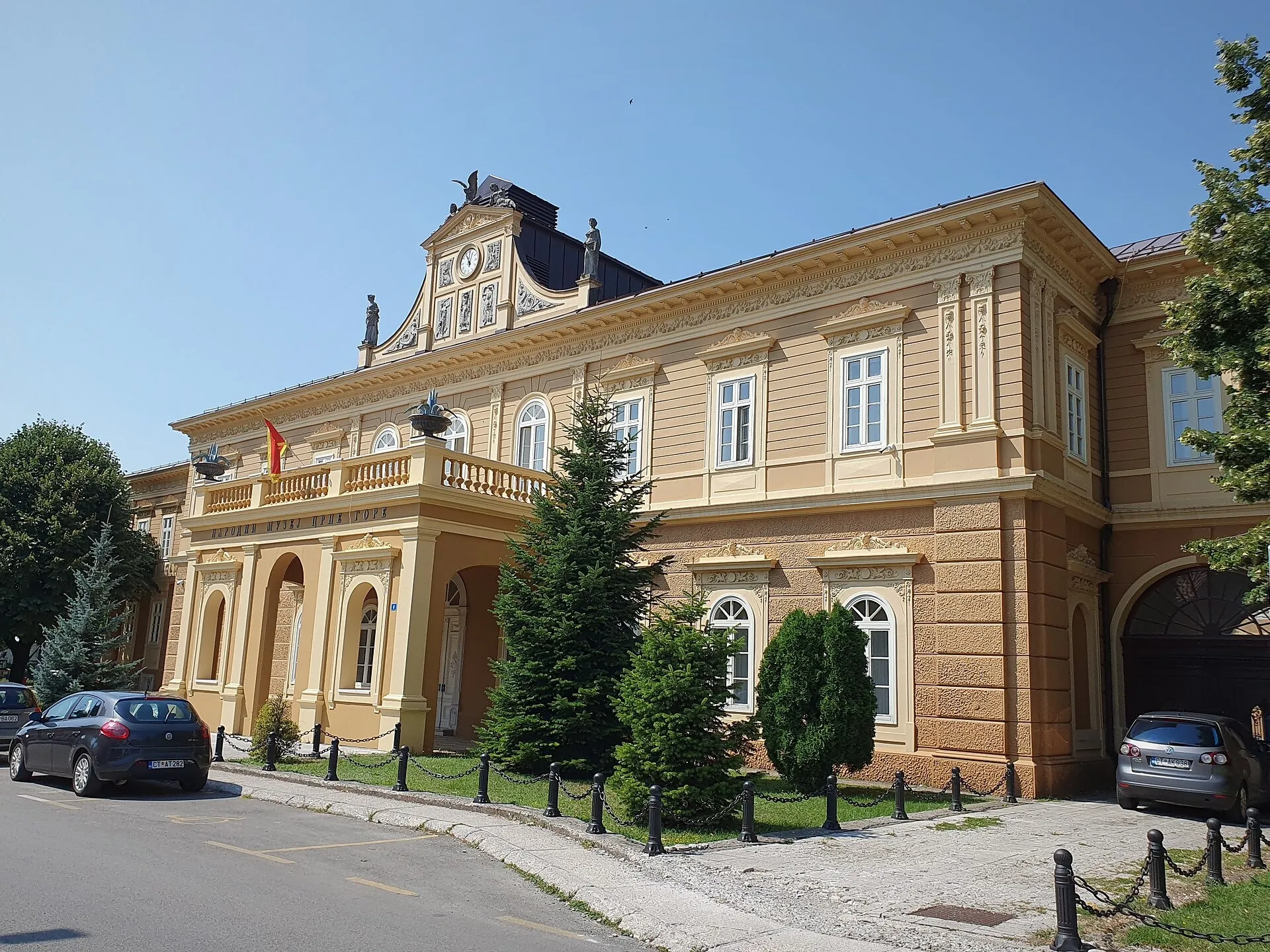
The most visited museum in the country is the red palace on Dvorski trg where Nikola I lived from 1867 until he left Montenegro in January 1916. A museum was founded in it in 1926, and it combined the furnishings saved from the royal residences with the collections of two nineteenth-century institutions, the Military Museum and the State Museum. The display is a reconstruction of the court interior: nineteen numbered rooms, from the king’s study to the princesses’ bedrooms, with a dining table and its thirty-six chairs.
What makes it more than a furnished house is the density of evidence about a small state’s place in Europe: portraits of three Russian emperors and of Franz Joseph in the diplomatic salon, a carpet woven with the date 1898 from Sultan Abdul Hamid II, signed photographs of Queen Victoria, captured Ottoman flags, the first Montenegrin stamps and gold perper coins. The library of some 10,000 volumes holds a copy of the Oktoih printed by the Crnojević press in 1493–94.
Allow 60 to 75 minutes. Full details, room by room, are on the King Nikola’s Palace page.
The Njegoš Museum in Biljarda, the Lapidarium and the Relief Map
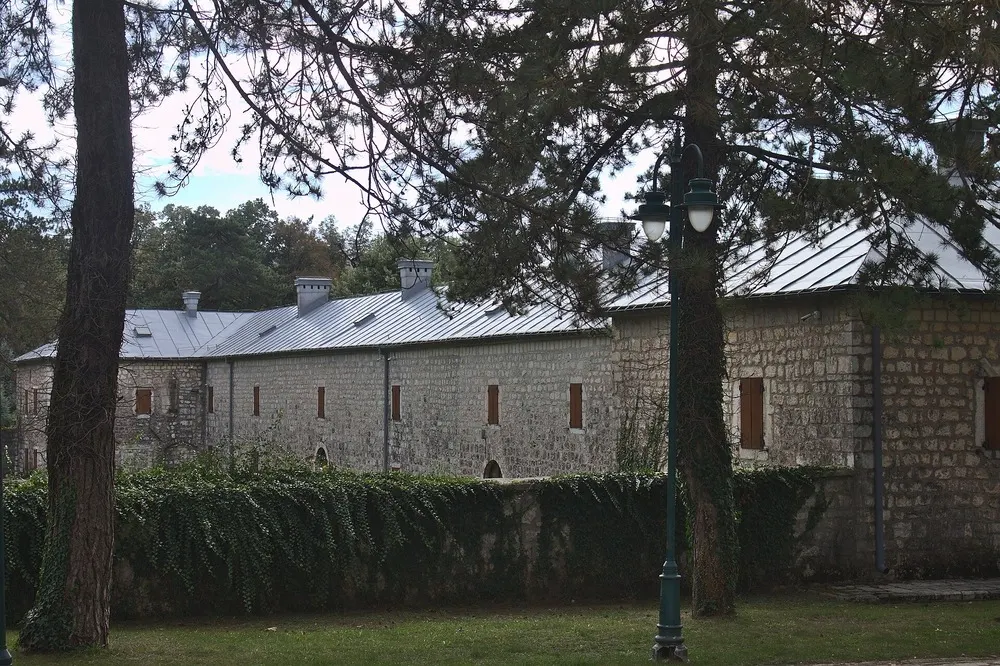
A minute’s walk away, behind a wall with round corner towers, is the long stone house that Petar II Petrović-Njegoš built in 1838. It has been the Njegoš Museum since 1951, opened for the centenary of his death. The rooms follow his life as ruler and poet: the armoury with the cannons taken at Žabljak in 1835, the billiard room with the table that gave the house its name, the study with the original manuscript of The Mountain Wreath, the bedroom with the armchair in which he was carried up from Kotor and in which he died.
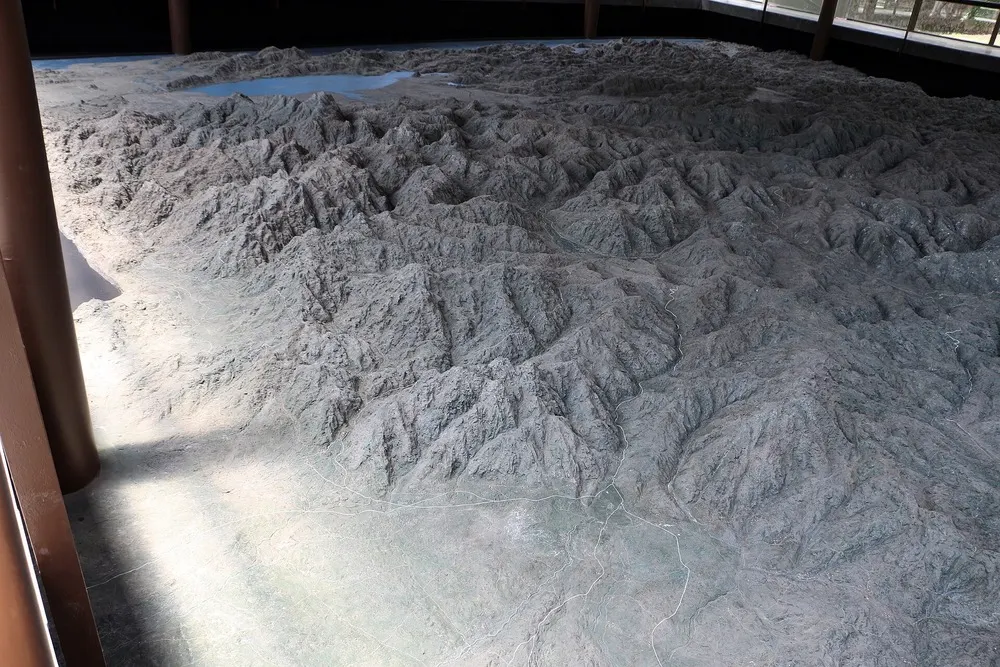
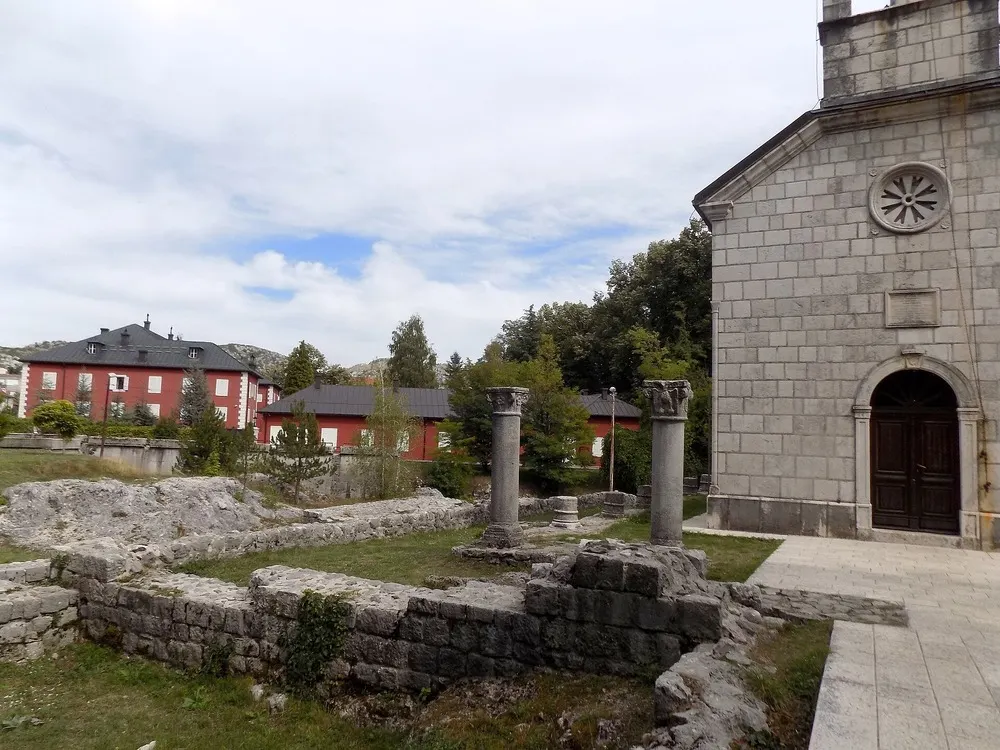
The same ticket admits you to the pavilion in the southern courtyard that shelters the Relief Map of Montenegro, a concrete model of the country at a horizontal scale of 1:10,000 made by the Austro-Hungarian military administration in 1916–17. It is one of the most unusual objects in the Balkans and has its own page. In the other courtyard, free of charge, is the Lapidarium of the Archaeological Museum, the museum’s youngest unit, founded in 2012: eleven medieval tombstones (stećci) brought from sites around Nikšić and Pljevlja.
Allow 45 minutes for the museum and 15 to 20 for the map. See Biljarda.
The Government House: History Museum and Art Museum
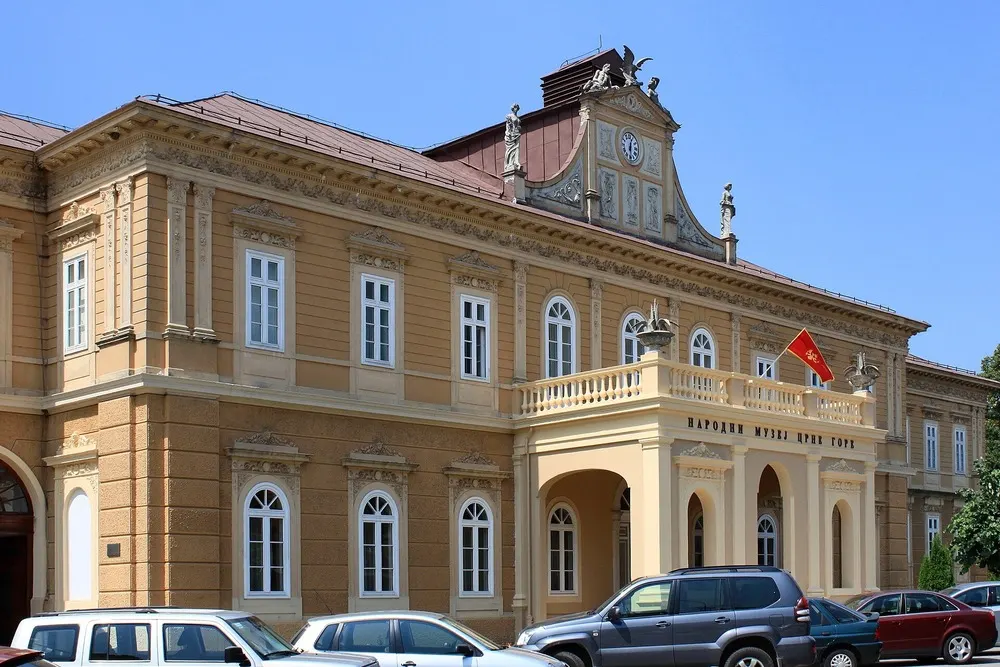
Corradini’s Government House of 1910 holds the two largest collections. The History Museum’s permanent display, formed in 1989, runs from prehistory through Duklja and Zeta, the Ottoman centuries and the Petrović state to the twentieth century, and includes the original columns and capitals from Ivan Crnojević’s monastery. In November 2026 the museum’s timetable listed it as closed to visitors, without a reopening date. Ask at the ticket desk; closures of this kind are sometimes partial.
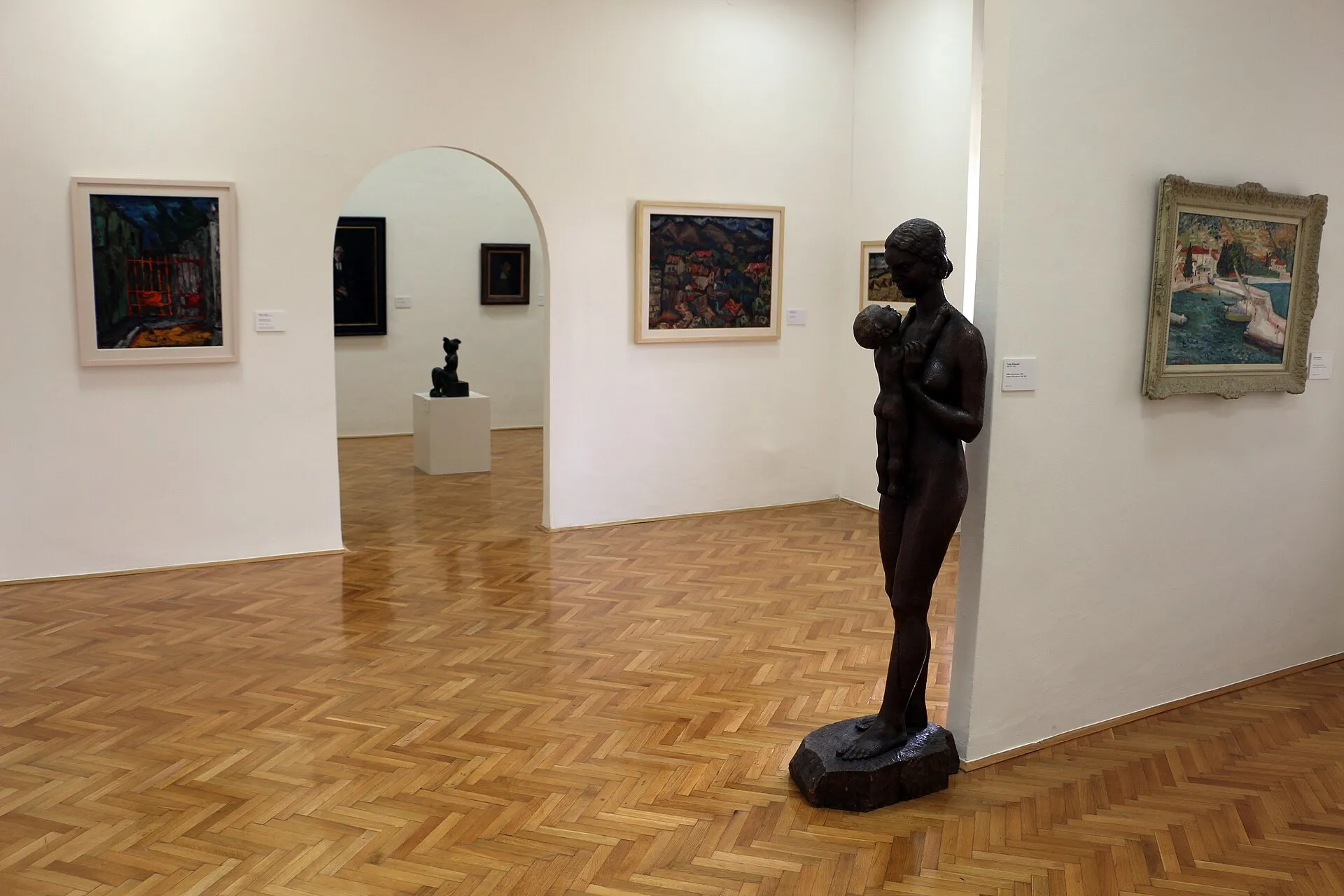
The Art Museum, founded as the National Gallery in 1950 with 240 works, now holds more than four thousand, arranged in collections of Montenegrin art, Yugoslav art, foreign artists, icons, copies of frescoes and several bequests. The permanent display traces Yugoslav and Montenegrin modernism from the late nineteenth century to the present, with memorial rooms for four painters who matter most to Montenegro: Milo Milunović, Petar Lubarda, Branko Filipović Filo and Miodrag Dado Đurić. Pero Poček, Mihailo Vukotić, Miloš Vušković, Jovan Zonjić and Vojo Stanić are represented by smaller groups, and the contemporary section is rehung periodically.
Set apart in the Blue Chapel is the museum’s most venerated object, the icon of Our Lady of Philermos, the Byzantine image of the Virgin that the Knights of St John carried from Rhodes to Malta and that reached Montenegro in 1941 with the hand of St John the Baptist now in the monastery. It is shown on its own, apart from the rest of the icon collection. Allow 60 minutes for the Art Museum; more on the building and the icon on the Government House page.
The Ethnographic Museum
The Ethnographic Museum was founded in 1951 and shared Biljarda with the Njegoš Museum until the 1979 earthquake, after which its collection spent years in store. The municipality gave it the former Serbian legation on Dvorski trg in 1986; the building was adapted in 2002, and in 2018 the museum opened its first permanent display.
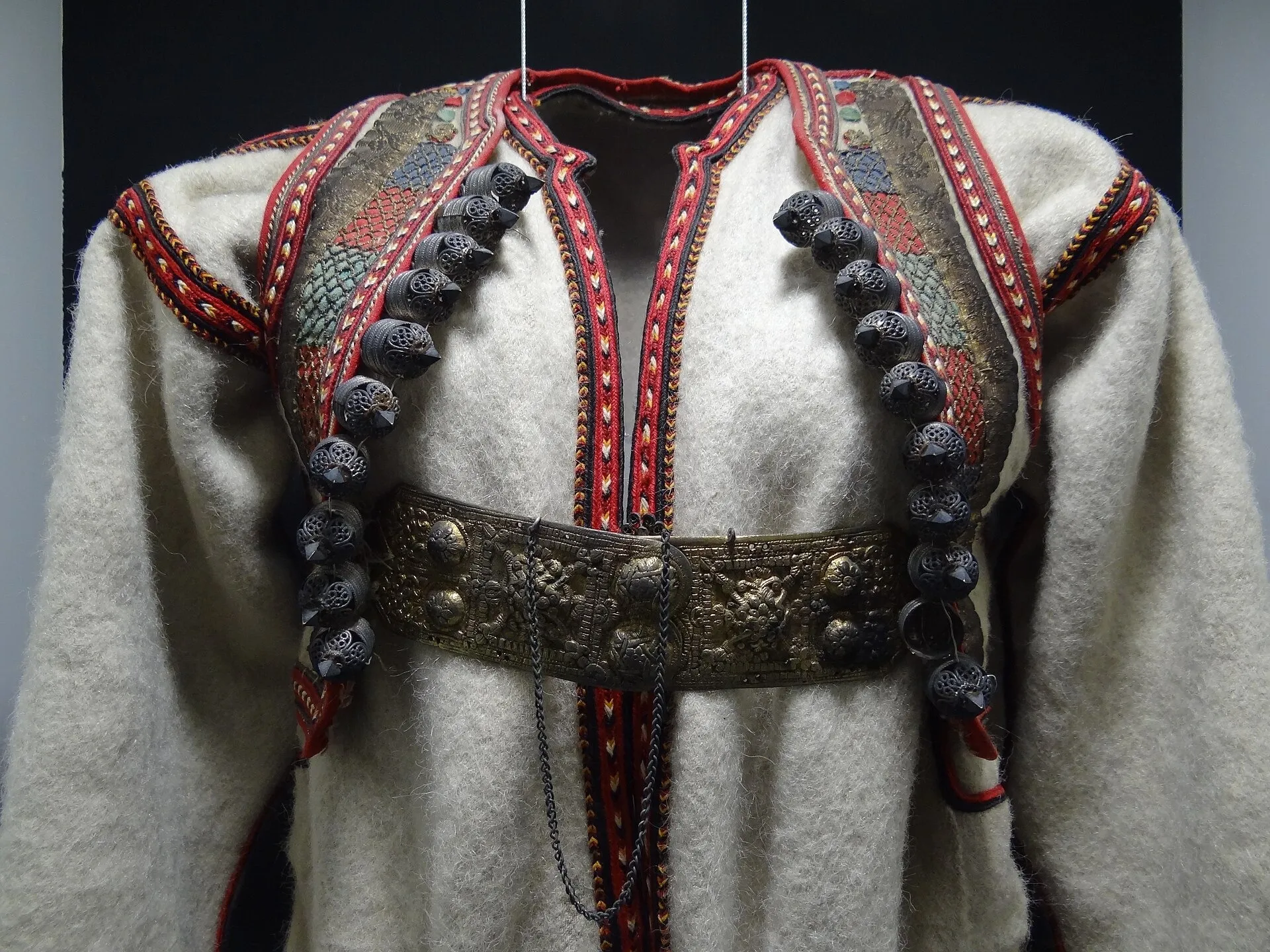
From a collection of more than four thousand objects, mostly from the nineteenth century and the first decade of the twentieth, some four hundred are shown. The ground floor is about work: hunting, beekeeping, fishing on Lake Skadar, herding and the wooden vessels of the dairy, farming tools, and corners of a village and a town interior. The upper floor is given to costume, the part of the collection that visitors remember: the gold-embroidered waistcoats, sashes, weapons and jewellery of the different regions and faiths of Montenegro. If the culture and traditions of the country interest you, this is where they become visible. Allow 30 to 40 minutes.
Contemporary art: the Dado gallery and Atelje Dado
On Balšića pazar, the old market square two minutes from Njegoševa Street, the Montenegrin Art Gallery ‘Miodrag Dado Đurić’ opened in 2012 in a converted commercial building. It is the National Museum’s space for retrospectives of Montenegrin artists, younger contemporary work and visiting exhibitions; there is no permanent display, so check what is on. It opens Tuesday to Saturday and closes for the first three and a half months of the year.
The small gallery Atelje Dado, opened in 2002 near the palace, shows contemporary programmes. Both are named for the Cetinje-born painter Dado Đurić (1933–2010), who spent his working life in France (see famous people of Cetinje).
Museums outside the National Museum
The Money Museum. The Central Bank of Montenegro runs a museum of money in the former Montenegrin Bank on Njegoševa Street, a protected monument whose counters and vault have been turned into exhibition rooms. The exhibition ‘Money in Montenegro’ runs from a stater of Alexander the Great through Byzantine, Venetian, Ottoman and Austrian coins and the money of the medieval Balšić lords to the first national currency, the para and the perper, struck from 1906, and on to Yugoslav issues. We could not confirm its current opening hours; the Central Bank’s website gives the latest.
The monastery treasury. The Cetinje Monastery has its own collection of manuscripts, early printed books, icons and vestments. It is not part of the National Museum, has no published timetable, and is shown at the monastery’s discretion.
The National Library. The former French and Italian legations hold the library’s old and rare books and its exhibitions; see the old embassies.
Electric lighting. Montenegro’s first power station was built in Cetinje in 1910 to light the capital for the royal jubilee. We could not verify that any exhibition on the electrification of the country is currently open to visitors; ask at the tourist information point by the car park.
Which museums, in how much time
Most day visitors have two to four hours in Cetinje. The comparison is our editorial judgement of how to spend them.
| First choiceKing Nikola’s Museum | Biljarda and Relief Map | Art Museum | Ethnographic Museum | |
|---|---|---|---|---|
| Time needed | 60–75 min | 60 min with the map | 60 min | 30–40 min |
| Adult ticket | 8 euro | 5 euro | 5 euro | 4 euro |
| For the story of the dynasty | ●●●●● | ●●●●○ | ●●○○○ | ●●○○○ |
| For art | ●●●○○ | ●●○○○ | ●●●●● | ●●●○○ |
| With children | ●●●○○Uniforms, weapons, a laid table | ●●●●●The relief map holds every age | ●●○○○Quiet galleries | ●●●●○Costumes and tools |
| Open in winter | Weekdays | Weekdays; map may be closed | Weekdays | Weekdays |
| Best for | Everyone, especially first-time visitors | Readers of Njegoš and anyone who likes maps | Painting, and the Philermos icon | Costume and everyday life |
| Read the guide | Read the guide | Read the guide |
-
King Nikola’s Museum
First choice- Time needed
- 60–75 min
- Adult ticket
- 8 euro
- For the story of the dynasty
- ●●●●●
- For art
- ●●●○○
- With children
- ●●●○○Uniforms, weapons, a laid table
- Open in winter
- Weekdays
- Best for
- Everyone, especially first-time visitors
-
Biljarda and Relief Map
- Time needed
- 60 min with the map
- Adult ticket
- 5 euro
- For the story of the dynasty
- ●●●●○
- For art
- ●●○○○
- With children
- ●●●●●The relief map holds every age
- Open in winter
- Weekdays; map may be closed
- Best for
- Readers of Njegoš and anyone who likes maps
-
Art Museum
- Time needed
- 60 min
- Adult ticket
- 5 euro
- For the story of the dynasty
- ●●○○○
- For art
- ●●●●●
- With children
- ●●○○○Quiet galleries
- Open in winter
- Weekdays
- Best for
- Painting, and the Philermos icon
-
Ethnographic Museum
- Time needed
- 30–40 min
- Adult ticket
- 4 euro
- For the story of the dynasty
- ●●○○○
- For art
- ●●●○○
- With children
- ●●●●○Costumes and tools
- Open in winter
- Weekdays
- Best for
- Costume and everyday life
Times are for an unhurried visit; ratings are editorial, as of November 2026.
Practical notes
- Monday is not a closing day here, unlike in much of Europe: in summer the main units open every day, and in winter they open Monday to Friday and close at weekends. The Dado gallery is the exception, opening Tuesday to Saturday.
- Buy tickets at the door of each unit; the combined ticket is sold at any of them. The museum’s website also has an online ticket page.
- Printed guides to the permanent displays in English and several other languages can be downloaded from the museum’s website, and most rooms have labels in Montenegrin and English.
- Guided tours are sometimes offered by curators on special days; otherwise the attendants will often explain a room if asked.
- Photography rules vary by unit and exhibition. Ask before using a camera, and do not use flash.
- Accessibility: these are nineteenth-century houses, so expect steps and upper floors reached by stairs. Ask the staff at each door what can be seen without them.
The Cetinje guided walking tour with museum entry includes a museum in its title; check the listing to see which one. If you would rather go at your own pace, the self-guided walking tour passes every door mentioned on this page.
Frequently asked questions
How much is the combined museum ticket in Cetinje?
20 euro for adults and 10 euro for pupils and students, covering all units of the National Museum of Montenegro and the Njegoš Mausoleum on Lovćen, according to the museum’s price list as checked on 22 November 2026.
Are Cetinje’s museums open on Mondays?
Yes. In summer (mid-April to mid-November) the main museums open every day; in winter they open Monday to Friday and close at weekends. The Dado gallery opens Tuesday to Saturday.
Are the museums open in winter?
The palace, Biljarda, the Art Museum and the Ethnographic Museum open on weekdays from 9:00 AM to 3:00 PM. The Njegoš Mausoleum and birth house are closed from 16 November to 14 April, and the Relief Map’s own page lists it as closed in the same period.
Which museum has the Our Lady of Philermos icon?
The Art Museum of the National Museum of Montenegro, in the Blue Chapel of the Government House (Vladin dom).
Is the History Museum in Cetinje open?
In November 2026 the National Museum’s timetable listed the History Museum as closed to visitors, with no reopening date. The Art Museum in the same building was open.
How long do you need for the museums?
About an hour each for King Nikola’s Museum, Biljarda with the Relief Map and the Art Museum, and half an hour for the Ethnographic Museum. All four fit into one day with a break for lunch.
Where do I park for the museums?
The museum directs visitors to the car and coach park with the tourist information point, about 100 m from King Nikola’s Museum and Biljarda and 250 m from the Government House. It quotes 2 euro a day for cars.
Sources and official information
Facts were checked against these official and scholarly sources in November 2026. Opening hours, ticket prices, park fees and timetables change, so confirm before you go.
- narodnimuzej.me
- narodnimuzej.me
- en.narodnimuzej.me
- narodnimuzej.me
- narodnimuzej.me
- narodnimuzej.me
- narodnimuzej.me
- narodnimuzej.me
- narodnimuzej.me
- narodnimuzej.me
- narodnimuzej.me
- narodnimuzej.me
- narodnimuzej.me
- narodnimuzej.me
- narodnimuzej.me
- cbcg.me
Cetinje.com is an independent guide, not the official site of the Old Royal Capital Cetinje, the National Museum of Montenegro, any tour operator, hotel or the government of Montenegro. Some links are affiliate links: tours go to GetYourGuide and accommodation goes to Booking.com, and we may earn a commission at no extra cost to you.