In short
- Article 5 of Montenegro's constitution names two cities: Podgorica is the capital (glavni grad) and Cetinje the Old Royal Capital (prijestonica).
- Cetinje was the seat of Montenegro's rulers from 1482 and capital of the independent state from 1878 to 1918; the government moved to Podgorica (then Titograd) in 1946.
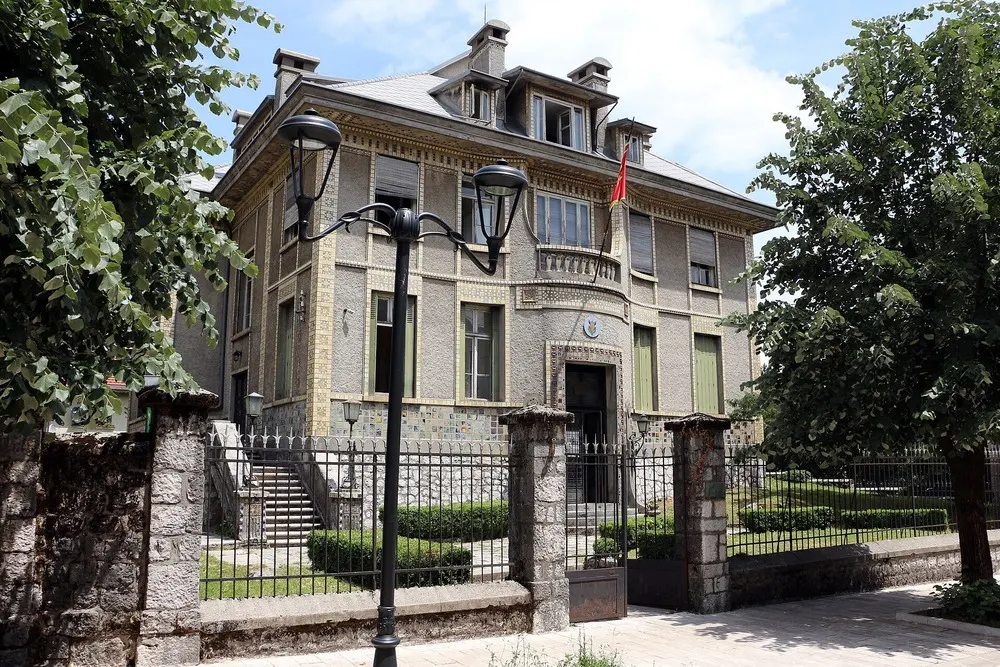
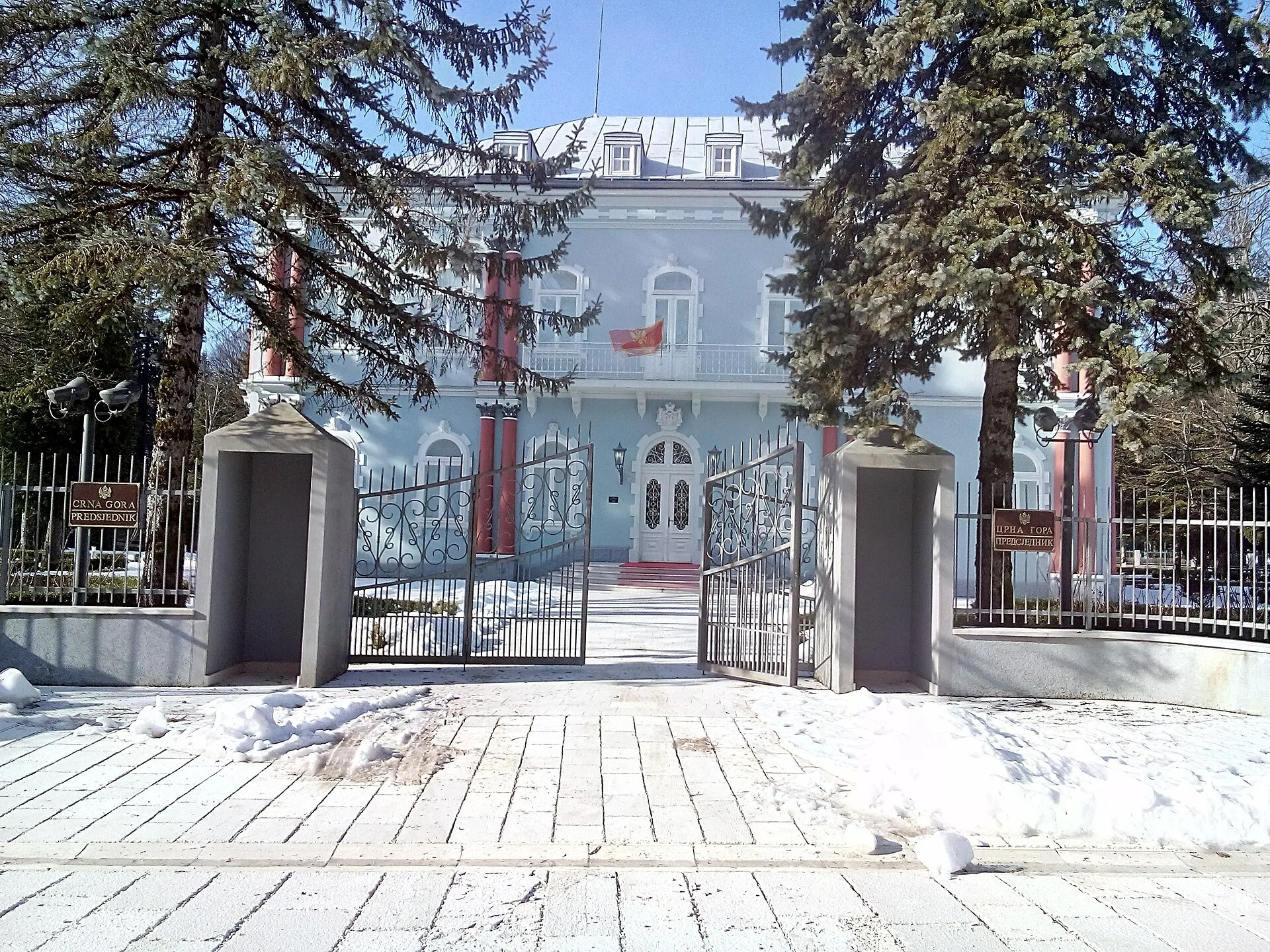
- A special Law on the Old Royal Capital gives Cetinje state functions: the President's official residence is the Blue Palace, and the Ministry of Culture has its seat here.
- The national museum, library, archives and theatre, and the university's arts faculties, are all in Cetinje, which is why it is called the cultural capital.
- The Historic Core of Cetinje has been on the UNESCO Tentative List since 2010, and the town joined the UNESCO Creative Cities Network in 2023.
One word that needs translating
On road signs at the edge of town, on the municipal coat of arms and on every official letterhead you will see the same phrase: Prijestonica Cetinje. The word comes from prijesto, a throne, and means the place where the throne stands, a ruler's residence city. English has no exact equivalent. The constitution's official translation settles for Old Royal Capital, and that is the form used on this site; you will also see Royal Capital, Historic Capital and, loosely, the former capital.
It is not a nickname. Cetinje is one of two cities named in the constitution of Montenegro, and the title carries legal consequences. The arrangement resembles, on a small scale, the way the Netherlands divides capital and seat of government between Amsterdam and The Hague, with the difference that here the working capital is the newer city and the honour belongs to the older one.
What the constitution says
The constitution adopted on 19 October 2007, the first of independent Montenegro, deals with the matter in a single short article.
The same formula had appeared in the constitution of 1992, when Montenegro was still a republic in federation with Serbia. That was the first time since 1946 that Cetinje had any formal status above that of an ordinary municipality, and it reflected the mood of the years after the reburial of King Nikola in 1989, when the town's past as a capital had again become a public cause.
How Cetinje came to hold the title
The claim rests on length of service. Ivan Crnojević built his court here in 1482, and from then until the twentieth century whoever ruled what was left of free Montenegro, lord, bishop, prince or king, ruled from this field. When the great powers recognised Montenegro's independence at the Congress of Berlin in 1878, Cetinje became the capital of a European state, with ministries, a court and a quarter of foreign legations, and in 1910 the capital of a kingdom. The full story is in the history of Cetinje.
It lost the role in two stages. In November 1918 the Kingdom of Montenegro was merged into Serbia and then Yugoslavia, and Cetinje was reduced to a provincial centre. When Montenegro was reconstituted as a Yugoslav republic after the Second World War, the new authorities looked for a seat that could grow, on flat land, at the junction of the country's roads. On 13 July 1946 they chose Podgorica, which had been badly bombed during the war and was being rebuilt from the ground up, and renamed it Titograd.
Cetinje kept the buildings and the memory. Because so little was added to it afterwards, the capital of 1878–1914 survived almost complete, which is the basis of its claim to be Montenegro's historic and cultural capital today.
The Law on the Old Royal Capital
The constitutional sentence was given practical content by a special statute, the Law on the Old Royal Capital (Zakon o Prijestonici), first passed in 2008. Its purpose is to make the title mean something: it names state bodies that have their seat in Cetinje, regulates the use of the historic state buildings and former legations, and commits the state to financing the town's development beyond what an ordinary municipality of its size would receive.
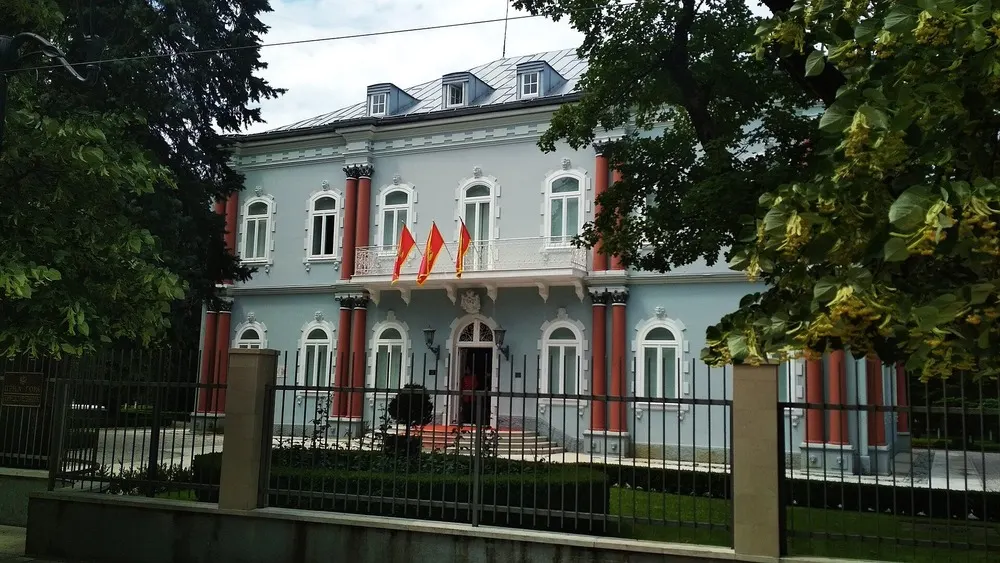
Under the law the official residence of the President of Montenegro is in Cetinje, and the Ministry of Culture has its seat here. The President's office first used a modern building that had belonged to the Obod company; since 2010 the residence has been the Blue Palace, the villa built in the 1890s for Crown Prince Danilo, and the ministry took over the earlier premises. Foreign ambassadors accredited to Montenegro usually present their credentials to the President here, and state visitors are received in Cetinje with military honours.
The law also set up a Senate of the Old Royal Capital, a body bringing together representatives of the state and the town to steer its development. A revision brought forward by the government in 2017 proposed to strengthen it, with the President of Montenegro in the chair and funding tied to a fixed share of the state budget, and to move further institutions to Cetinje: the Ministry of Foreign Affairs, for which the former Russian legation was restored, the Constitutional Court, the Historical Institute and the Faculty for Montenegrin Language and Literature. Not all of this has happened. The faculty works in Cetinje; the foreign ministry's main offices and the Constitutional Court remained in Podgorica when we last checked, in November 2026, and a further amendment to the law was before the government in late 2025. If the detail matters to you, check the current text of the law.
What is in Cetinje, and what is in Podgorica
In practice the division is between politics and culture. Podgorica, about 35 kilometres away by a fast road and with roughly 180,000 people, has the Parliament, the Government, almost all the ministries, the highest courts, the central bank and the embassies. Cetinje, with about 12,500 people in the town, has the head of state's residence, the culture ministry and nearly every national cultural institution.
| Institution | Where in Cetinje | Can you visit? |
|---|---|---|
| Official residence of the President of Montenegro | Blue Palace (Plavi dvorac) | Exterior only; guards at the gate |
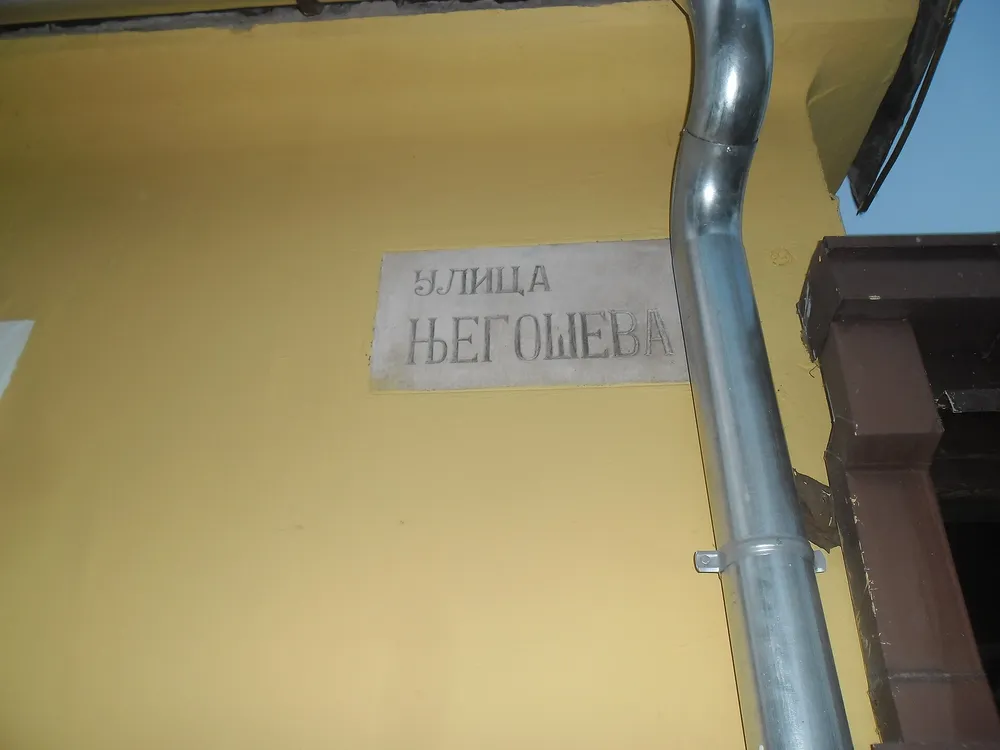
| Ministry of Culture and Media | Njegoševa Street | No |
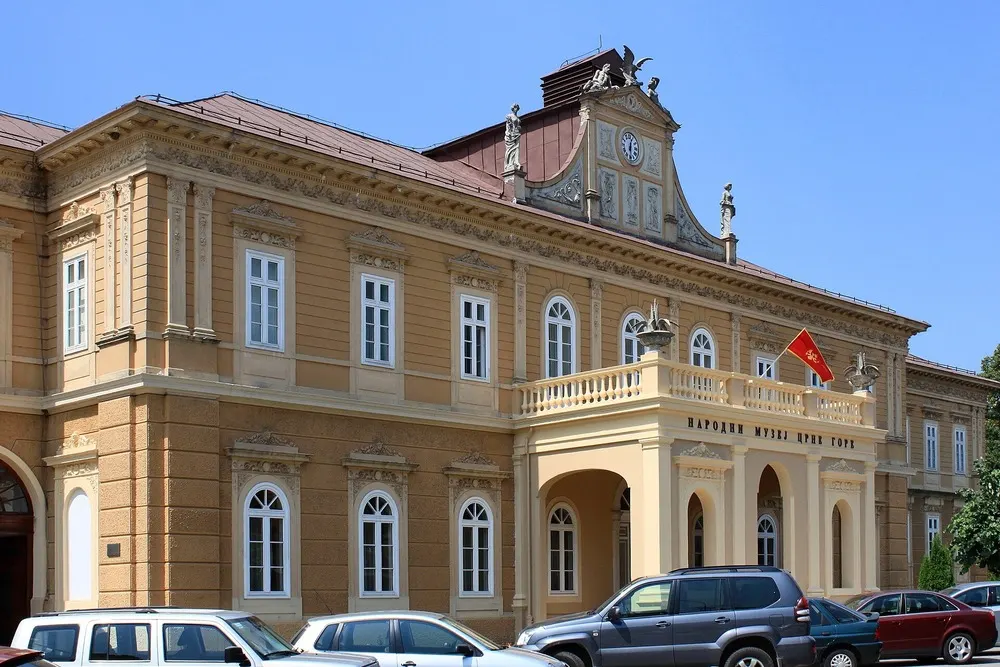
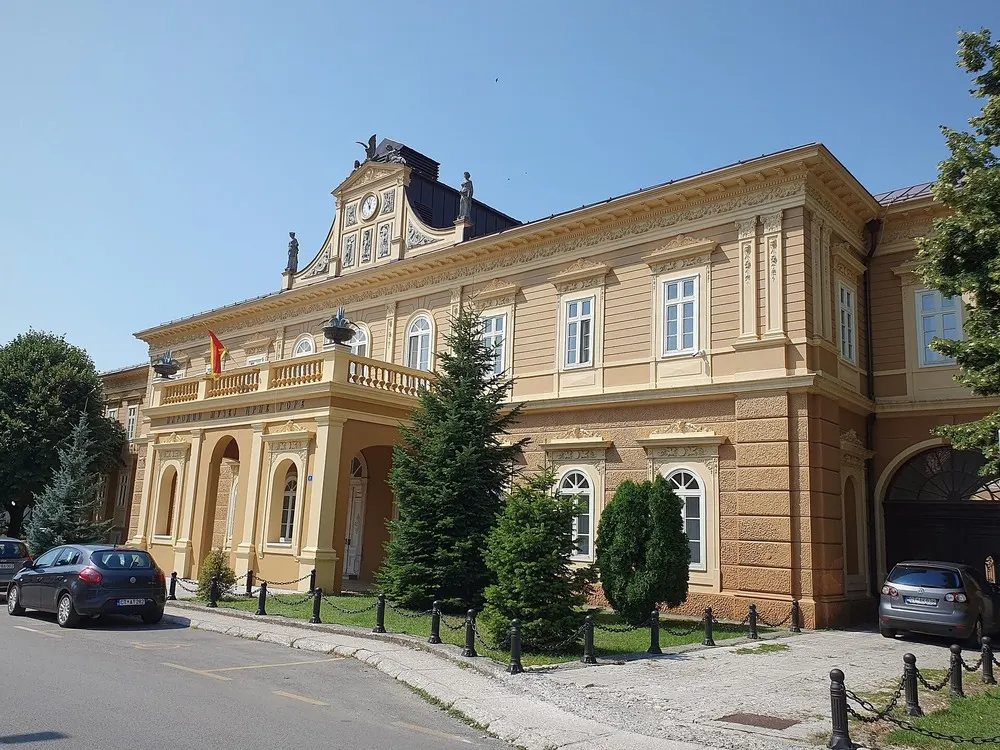
| National Museum of Montenegro | King Nikola's Palace, Biljarda, Government House and other units | Yes; see the museums guide |
| National Library of Montenegro ‘Đurđe Crnojević’ | Former Italian and French legations | Reading rooms and exhibitions |
| State Archives of Montenegro | Central seat in Cetinje | By arrangement, for research |
| Royal Theatre Zetski dom | Zetski dom | Yes, for performances; see Zetski dom |
| University of Montenegro: Faculty of Fine Arts, Music Academy, Faculty of Dramatic Arts | University buildings and former legations | Public exhibitions and concerts |
| Faculty for Montenegrin Language and Literature | Cetinje | No |
| Metropolitanate of Montenegro and the Littoral (Serbian Orthodox Church) | Cetinje Monastery | Yes; see Cetinje Monastery |
| Montenegrin Orthodox Church | Seat in Cetinje | Services are public |
| Government of the Old Royal Capital (mayor and assembly) | Former Banovina building | Exterior |
A municipality unlike the others
The title also changes the town's own government. Cetinje is not an opština (municipality) like its neighbours but Prijestonica Cetinje, with a mayor (gradonačelnik), an assembly of 33 councillors and the Senate described above. Its territory is far larger than the town: about 910 square kilometres, from the summit of Lovćen to the shore of Lake Skadar, taking in Njeguši, Rijeka Crnojevića and some ninety villages, many of them nearly empty. Parts of two national parks, Lovćen and Skadar Lake, lie inside it. The 2023 census counted about 14,500 inhabitants in the whole of this area, fewer than lived here in 1948.
That last figure is the other side of the story. A title does not create jobs, and since the factories of the Yugoslav period closed, Cetinje has lost people steadily to Podgorica and the coast. Much of the argument about the Law on the Old Royal Capital is really about this: whether moving ministries up the hill, or spending a guaranteed slice of the state budget here, can give a town of museums a working economy. The restoration of the historic core and the cable car from Kotor to Lovćen, opened in 2023, are both parts of the answer that has been attempted so far.
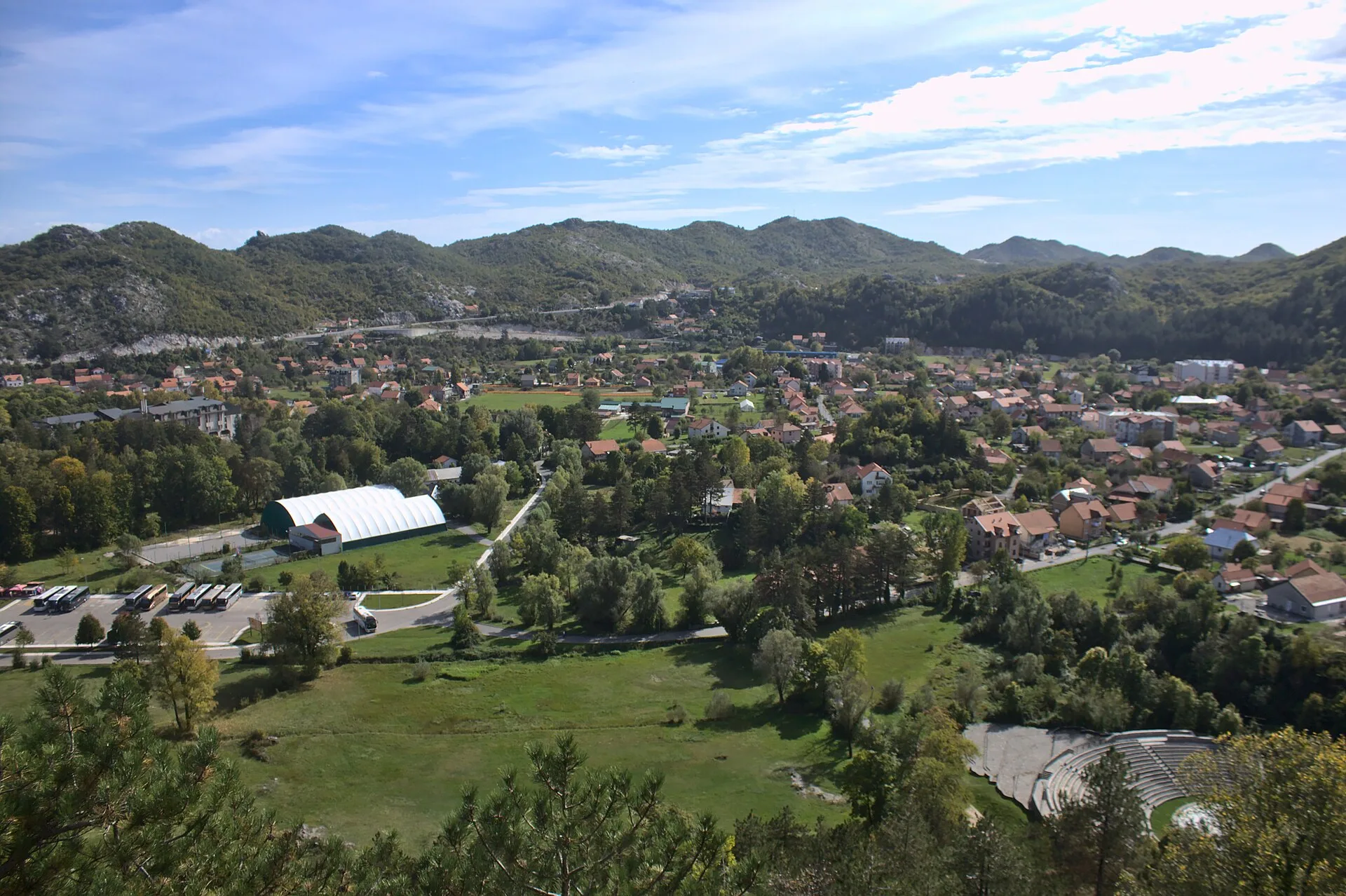
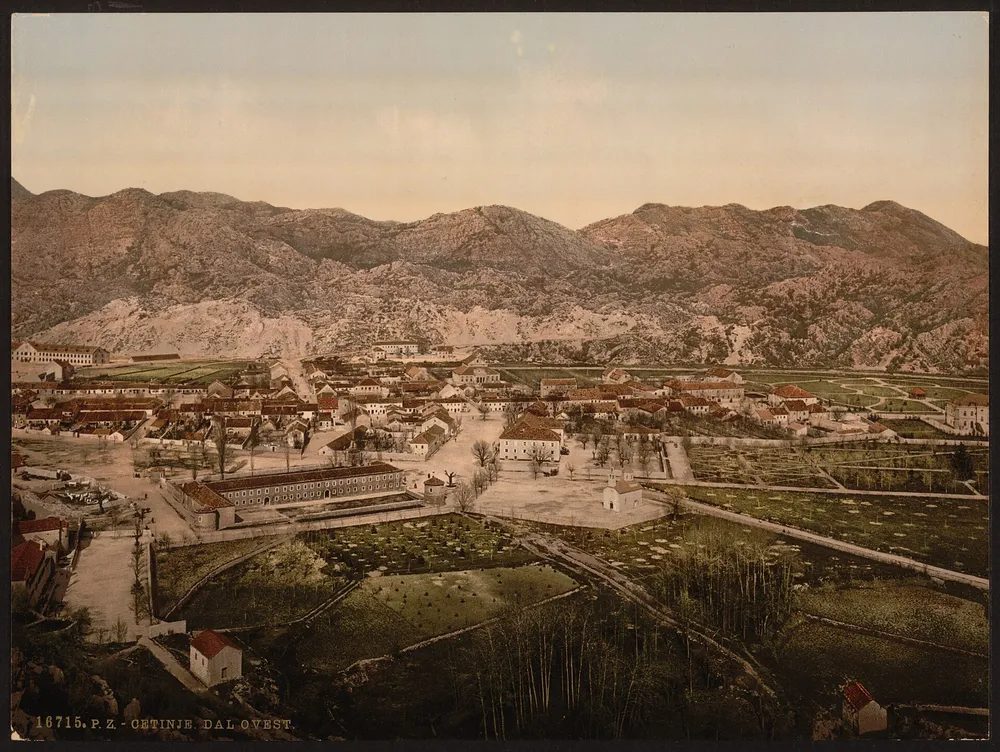
Cetinje from Orlov krš: a small town in a closed karst field. The whole of the royal capital fits into the middle distance of this photograph.
Cetinje and UNESCO
On 6 July 2010 Montenegro entered the ‘Cetinje Historic Core’ on its Tentative List for World Heritage, the inventory of sites a country intends to nominate. The entry proposes inscription under cultural criteria (ii), (iii) and (vi) and describes the old town as an ensemble whose value lies in the unity of quite different elements: the monastery, the Biljarda, King Nikola's Palace and the other individually protected monuments, the parks, and the regular street plan, set in the Cetinje field with Lovćen and the mausoleum on its summit behind. It makes the point that the town owes its character to the mountains that defended it.
A Tentative List entry is a statement of intent, not a designation. The government decided in the mid-2010s to prepare a full nomination, but Cetinje has not so far been examined by the World Heritage Committee, and it is not a World Heritage Site. Montenegro's inscribed properties include the Natural and Culturo-Historical Region of Kotor and Durmitor National Park, together with its shares of two transnational listings, the medieval tombstones known as stećci and the Venetian Works of Defence, which include the fortifications of Kotor.
Separately, on 31 October 2023 UNESCO named Cetinje a member of its Creative Cities Network in the field of design. That is a different programme with different aims, but it is the first UNESCO title the town holds in its own right.
What the status means for a visitor
- You can see a head of state's residence at close range. The Blue Palace stands in an open park five minutes from the main square, with two sentry boxes and a ceremonial guard. You cannot go in, but you can walk past the gate, which is not something every capital allows.
- The national collections are here, not in Podgorica. If you want to see the crown jewels of Montenegrin history, the banners, the royal rooms, Njegoš's manuscripts, the national art gallery, you must come to Cetinje. A combined ticket covers all the units of the National Museum.
- State occasions can close streets. On days when ambassadors present credentials or a foreign president is received, the area around the Blue Palace and Dvorski trg may be closed for an hour or two. It is worth a look rather than an inconvenience.
- Weekends matter in winter. The museums keep shorter hours from mid-November to mid-April and close at weekends in that season; the summer timetable is daily. Current hours are in the museums guide.
- The town is quiet. This is a capital by title with the population of a small market town. Evenings are calm, restaurants close early outside summer, and that is a large part of its appeal.
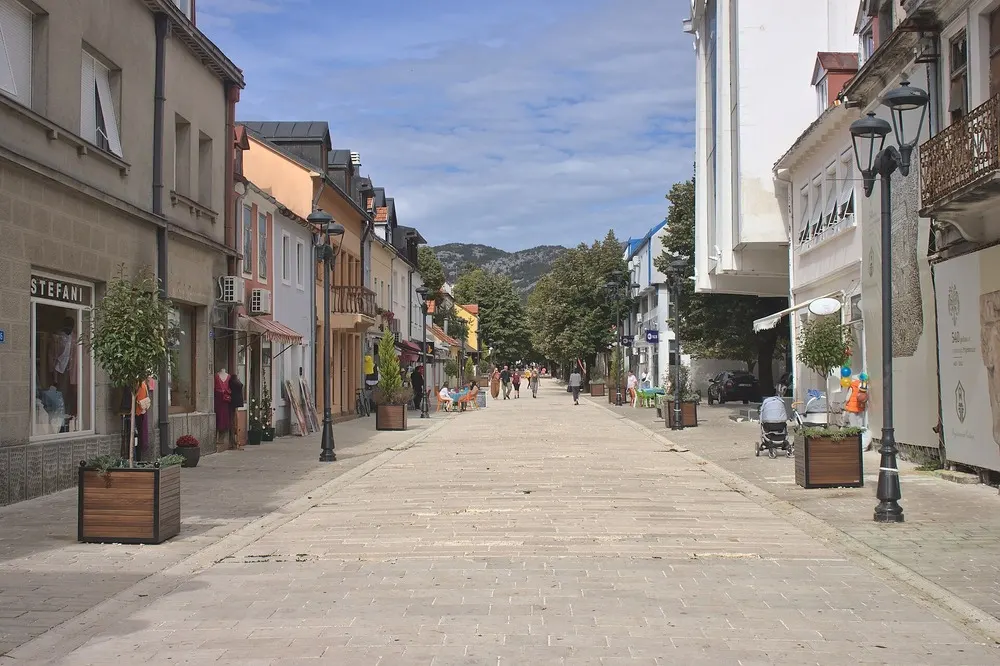
Most visitors come up for the day from the coast or from Podgorica, which is easy: see getting there. The capital you will not see on a day trip is the one that appears after the coaches leave, when Njegoševa Street belongs to the town again. For the working capital down on the plain, with its airport and its own museums, the Podgorica guide on ExploreMontenegro is the place to start.
Staying in the Old Royal Capital
Cetinje has only a handful of hotels and a larger number of apartments and guesthouses, almost all within a ten-minute walk of the monastery. Staying overnight puts you at the museum doors when they open and lets you drive up Lovćen before the day-trip traffic. The three places below are in the historic centre; the full picture, including when it makes more sense to base yourself in Kotor, Budva or Podgorica, is in where to stay.
Hotel Gradska Cetinje
CetinjeHotel in the former Bulgarian legation on Dvorski trg, facing King Nikola’s Palace, with a restaurant, bar and family rooms.
9.0Booking.com guest score · as checked in November 2026
See on Booking.comHotel Dapčević
CetinjeHotel on Bulevar crnogorskih junaka about 350 m from the centre, with free parking, family rooms and breakfast.
9.1Booking.com guest score · as checked in November 2026
See on Booking.comApartmani Vuk
CetinjeOne- and two-bedroom apartments on Hercegovačka Street, about 500 m from the centre, with free parking.
9.4Booking.com guest score · as checked in November 2026
See on Booking.comSee all stays in Cetinje on Booking.com
Accommodation links go to Booking.com, where you see live prices and availability. We do not list prices because they change daily; Cetinje.com may earn a commission.
Seeing the capital with a guide
The state buildings make most sense in sequence: monastery, Biljarda, palace, Blue Palace, the legations, Government House. The self-guided walking tour gives the route. If you would rather have someone explain who sat where, the guided walking tour with museum entry and the private city tour are the two options sold for the town itself.
Frequently asked questions
Is Cetinje the capital of Montenegro?
The capital, where parliament and government sit, is Podgorica. Cetinje is the Old Royal Capital (prijestonica), a status written into Article 5 of the constitution, and it houses the President's official residence, the Ministry of Culture and the main national cultural institutions.
What does prijestonica mean?
Literally the seat of the throne: the city where a ruler resides. It is translated officially as Old Royal Capital.
When was Cetinje the capital?
It was the seat of Montenegro's rulers from 1482, the capital of the internationally recognised principality from 1878, and of the kingdom from 1910 until Montenegro was absorbed into the Yugoslav state in 1918. It was briefly the capital of the Yugoslav republic of Montenegro until 13 July 1946.
Does the President of Montenegro live in Cetinje?
The President's official residence is the Blue Palace in Cetinje, where state ceremonies such as the presentation of ambassadors' credentials take place. Much of the day-to-day work of the President's office is carried on in Podgorica.
Why was the capital moved to Podgorica?
The post-war authorities wanted a capital with room to expand and good communications. Cetinje lies in a small enclosed mountain basin with no water, limited space and difficult winter access; Podgorica stands on a plain at the meeting point of the country's main routes. The decision took effect on 13 July 1946.
Is Cetinje a UNESCO World Heritage Site?
No. Its historic core has been on Montenegro's Tentative List since 2010, which is a preliminary step. Since 2023 Cetinje has been a UNESCO Creative City of Design.
How far is Cetinje from Podgorica?
About 35 km by road, usually 35 to 45 minutes by car or bus.
Sources and official information
Facts were checked against these official and scholarly sources in November 2026. Opening hours, ticket prices, park fees and timetables change, so confirm before you go.
- constituteproject.org
- whc.unesco.org
- whc.unesco.org
- paragraf.me
- paragraf.me
- gov.me
- cetinje.me
- en.wikipedia.org
- nb-cg.me
- narodnimuzej.me
- monstat.org
- bosniaherzegovina.un.org
Cetinje.com is an independent guide, not the official site of the Old Royal Capital Cetinje, the National Museum of Montenegro, any tour operator, hotel or the government of Montenegro. Some links are affiliate links: tours go to GetYourGuide and accommodation goes to Booking.com, and we may earn a commission at no extra cost to you.