In short
- The serpentine is the old carriage road from Kotor up the face of Lovćen to the pass of Krstac and the Njeguši basin, completed in 1884, with 25 hairpin bends in its best-known section. It is still the most spectacular road into Cetinje.
- From Kotor to Cetinje this way is about 41 km and well over an hour; it joins the road from Cetinje at Njeguši and continues past the mausoleum turn.
- The cable car runs from Dub near Kotor to Kuk (1,348 m) on Lovćen: about 3.9 km, 1,316 m of ascent, 11 minutes, opened in August 2023. Kuk lies in Cetinje municipality, about 21 km by road from the town.
- Season: the cable car is closed until spring 2027 according to its operator (as checked November 2026); there is no scheduled transport from Kuk to Cetinje or the mausoleum.
- Which to choose: drive the serpentine if you have a car and steady nerves; take the cable car for the view, then join a tour or taxi for the rest.
The wall behind Kotor
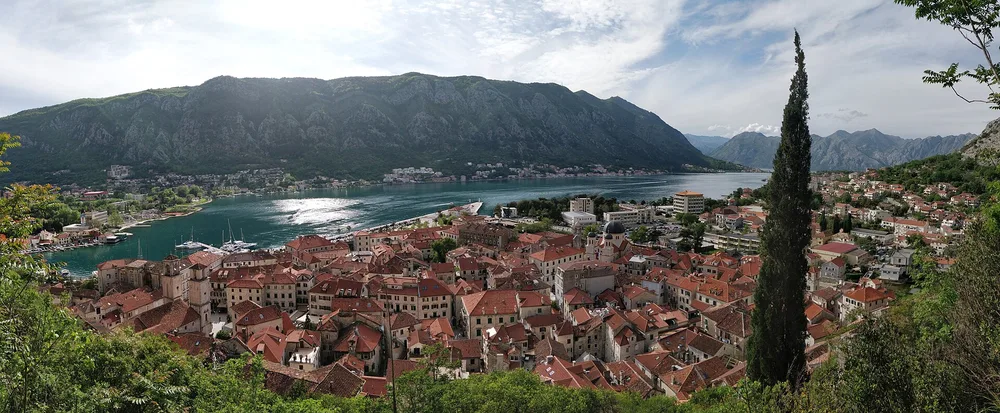
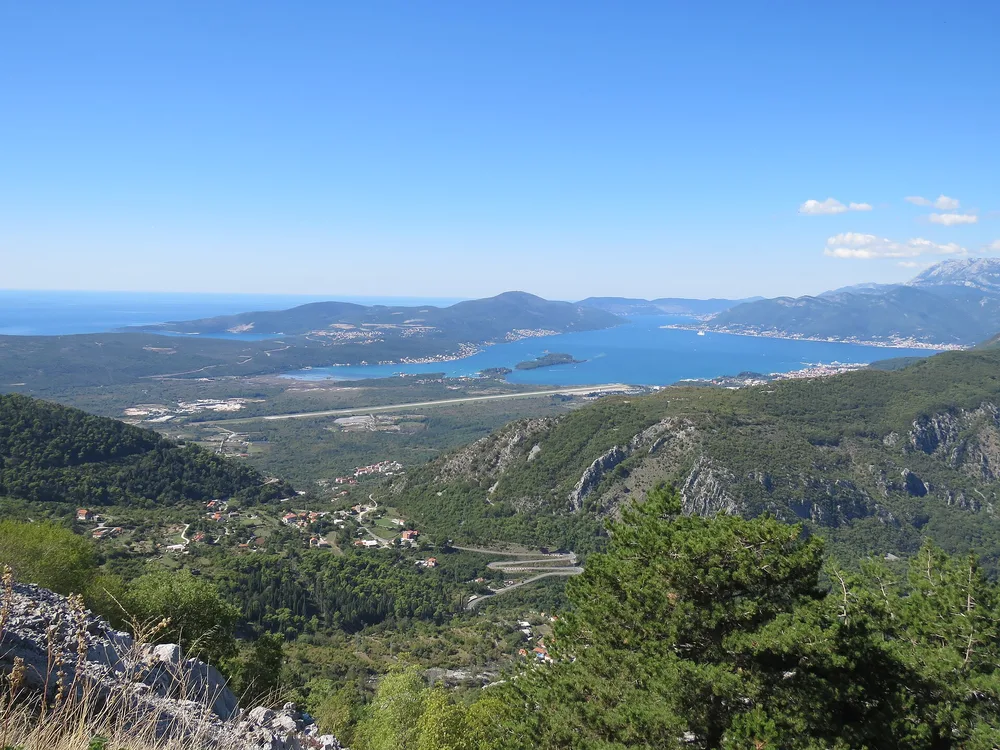
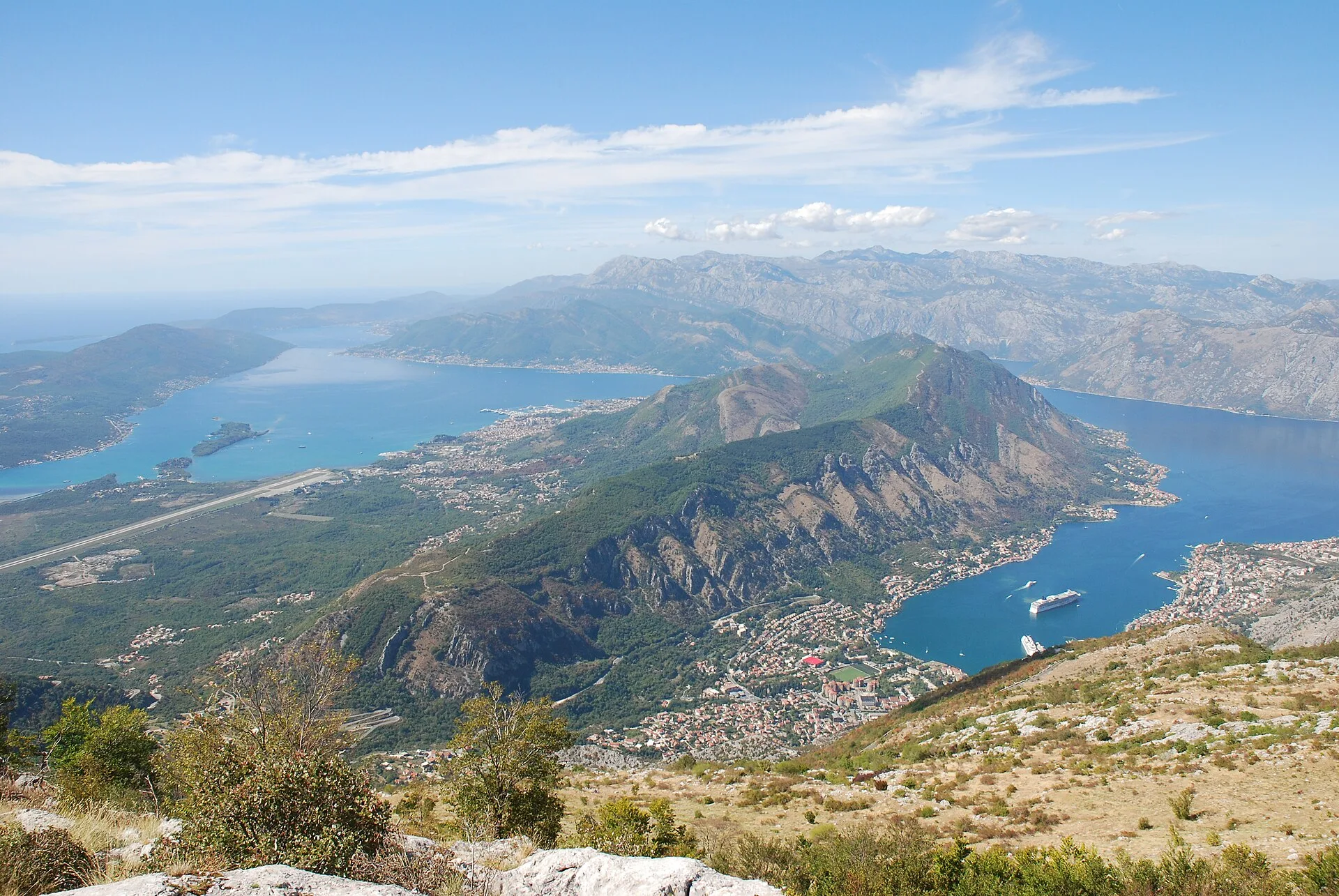
Stand on the quay at Kotor and look up: the mountain behind the old town is not a slope but a wall, rising more than a thousand metres in a couple of kilometres, its grey face scored by a thin white zigzag. That zigzag is the road to Cetinje. For a traveller arriving by sea in the nineteenth century, the Montenegrin capital lay at the top of that wall and a day’s march beyond it, and the climb was the first thing every visitor described.
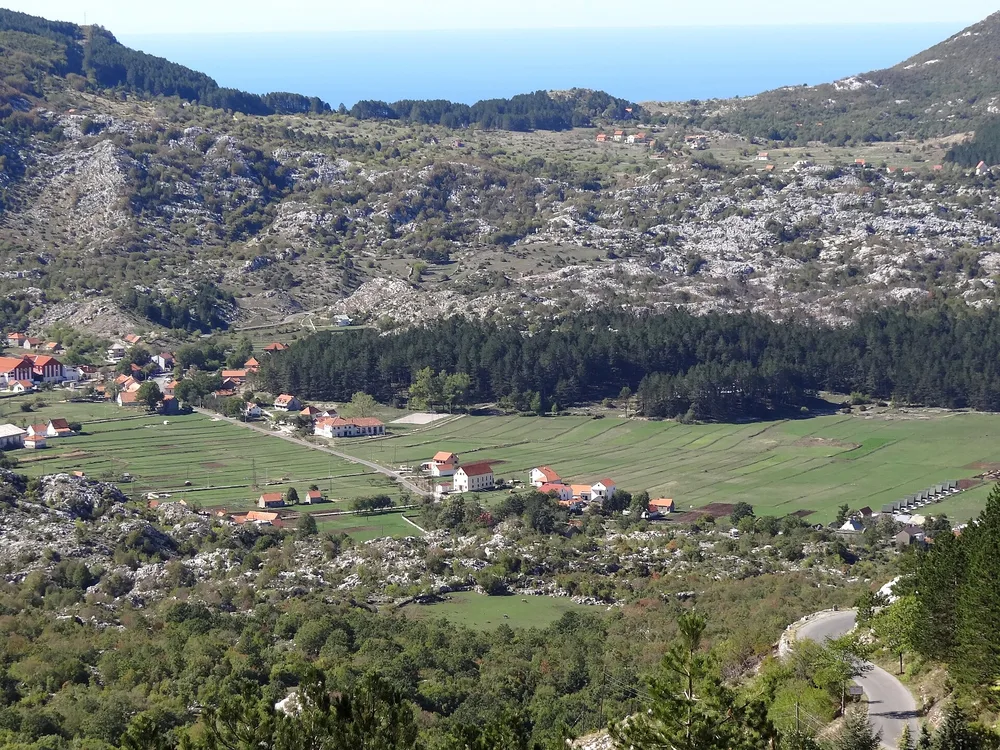
Two routes go up the face today. One is the serpentine road, the carriage road of the 1880s, still the main road from Kotor to Njeguši and one of the celebrated drives of the Adriatic. The other, since 2023, is a cable car that climbs from the outskirts of Kotor to the plateau of Lovćen in eleven minutes. This page covers both, and how to get from the top of either to Cetinje.
From mule track to carriage road
Before the road there was the Ladder of Kotor (Kotorske skale), a stepped mule path that climbed from the town gate in dozens of tight turns to the frontier at Krstac on the rim of the Njeguši basin. Kotor belonged to Venice until 1797 and, after a brief interlude, to Austria from 1814 until 1918; the top of the ladder was therefore an international border, and for most of the nineteenth century everything that reached Cetinje from Europe, from printing types to a billiard table for Njegoš, came up it on mules and men’s backs.
Montenegro’s international recognition at the Congress of Berlin in 1878 made a proper road a matter of state. The section from Cetinje to Krstac, through Njeguši, was built from 1879 and is described as the oldest carriage road in the country. The descent from Krstac to Kotor, the famous serpentine, was finished in 1884, linking the Montenegrin capital with the Austrian port and its steamers. Accounts credit the engineer Josip Slade of Trogir, who worked for Prince Nikola, with the design of the Montenegrin road; since the lower section lay in Austrian territory, sources differ on exactly who built which part, and whether work began in 1878 or 1879.
The road served the capital for half a century of royal visits, diplomatic carriages and, later, the first motor cars. It was fought over in January 1916, when the Austro-Hungarian army took Lovćen. The 1932 photograph below shows it already much as it is today, a thread of hairpins above the bay.
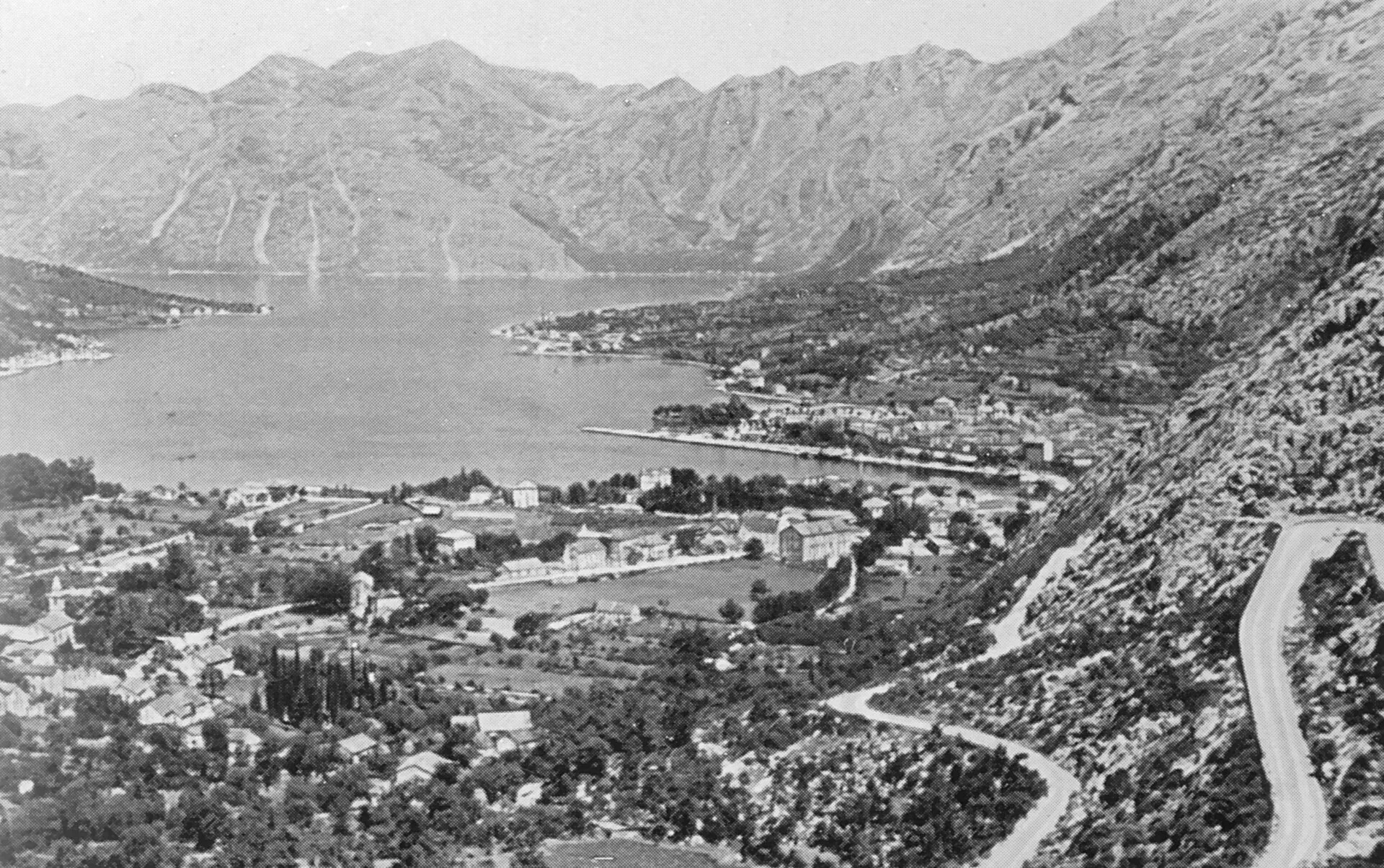
The hairpins of the Lovćen road above Kotor and its bay in 1932 (public domain).
The 25 hairpins: driving the serpentine
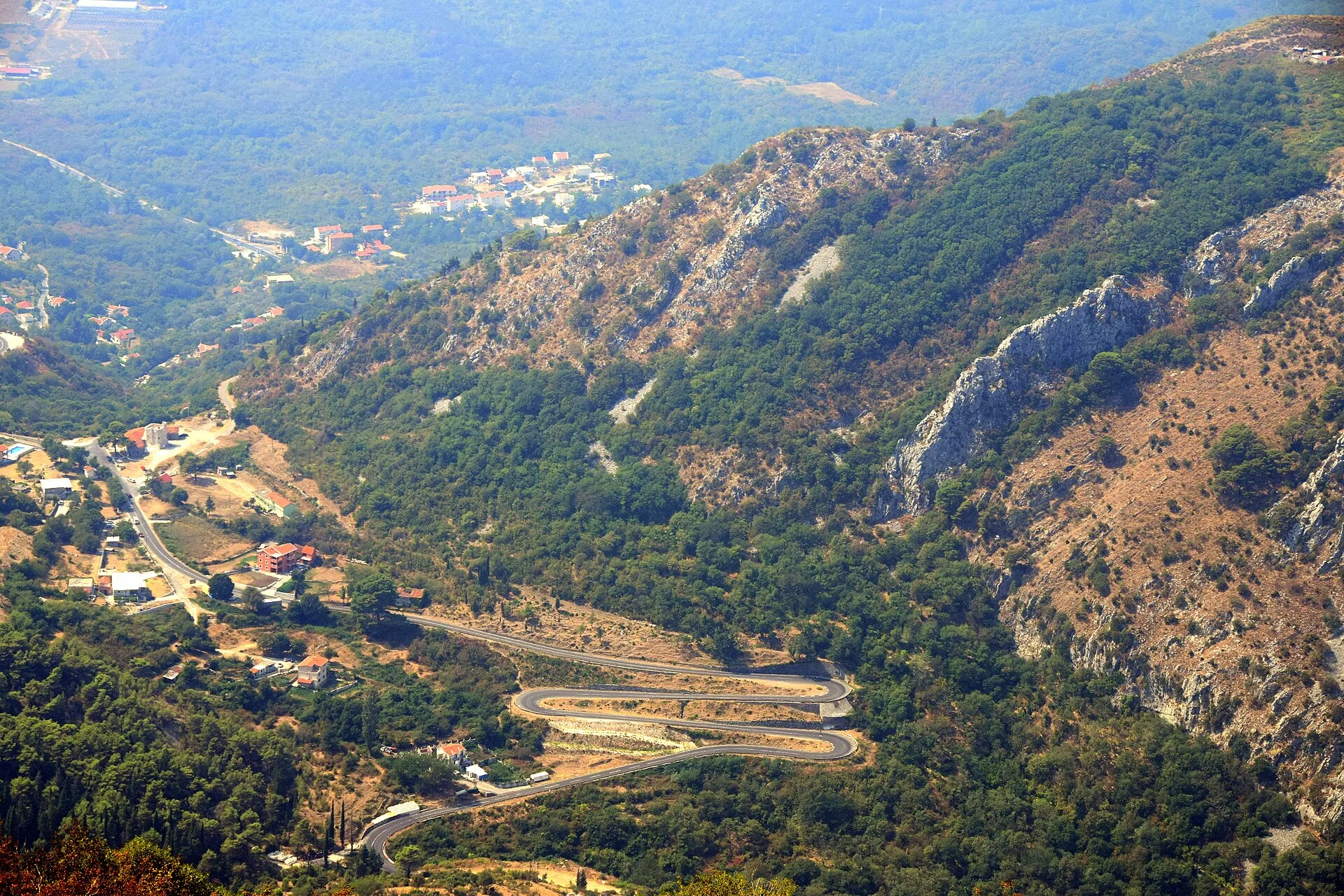
The serpentine is part of the regional road R-1. Leave Kotor on the road towards Trojica and Tivat, turn uphill at the signs for Cetinje and Njeguši, and the climb begins almost at once. The best-known section, from the outskirts of Kotor to Krstac, has 25 numbered hairpin bends; you will also see counts of 26 and more, depending on where the counter starts and stops. The road climbs to nearly 1,000 m at Krstac before dropping slightly into the Njeguši basin.
It is a single carriageway, asphalted, with low stone parapets on the outside of the bends and in many places room for only one large vehicle at a time. That is the whole challenge. In summer, coaches and tour minibuses use the road, and on the tightest bends a coach cannot pass an oncoming car: one of you must reverse to a wider point. Drive in a low gear, keep right, sound your horn before blind bends as local drivers do, and use the lay-bys to let faster traffic pass and to look at the view, which improves at every turn: the old town and its walls, then the whole inner Bay of Kotor, then, from the top, the Tivat plain, the Luštica peninsula and the open sea.
Allow at least 30 minutes for the climb from Kotor to Njeguši with stops. From Njeguši it is about 20 km more to Cetinje by the improved road through Čekanje, where a 490-metre tunnel opened in 2018 bypasses some of the old bends, or about 13 km up to the mausoleum car park on Jezerski vrh.
| Route | Road distance | Realistic driving time |
|---|---|---|
| Kotor old town to Njeguši (serpentine) | About 21 km | 40–50 min with photo stops |
| Njeguši to Cetinje | About 20 km | 25–30 min |
| Kotor to Cetinje via the serpentine and Njeguši | About 41 km | About 1 h 15 min |
| Kotor to Cetinje via Budva (faster main road) | About 50 km | About 1 h |
| Njeguši to the Njegoš Mausoleum car park | About 13 km | 15–20 min |
Walking or cycling up
Fit walkers can still climb the old Ladder of Kotor mule path, which starts behind the old town near the north gate and zigzags up the mountain, crossing the serpentine road near the top. It is steep, rocky and exposed to the sun, with almost no water: start at first light in summer and carry plenty. You can then descend by taxi or arrange a pick-up. Cyclists ride the serpentine itself; it is a serious climb of about 1,000 m, and you will share it with motor traffic. For the trails of the mountain itself see the Lovćen National Park guide.
The Kotor–Lovćen cable car
In December 2021 the Government of Montenegro signed a thirty-year concession with a consortium of the Montenegrin company Novi Volvox and the South Tyrolean ropeway maker Leitner to build a gondola from the coast to Lovćen. The line opened to the public in August 2023 (most reports give 14 August). It is a modern detachable gondola with ten-seat cabins.
The lower station is at Dub, south of Kotor, about 200 m from the main Kotor–Tivat–Budva road rather than in the old town, so allow for a transfer: the operator runs shuttle buses from Kotor, Tivat and Budva. The upper station is at Kuk, at 1,348 m on the western edge of the Lovćen plateau, administratively in the Old Royal Capital Cetinje. At the top the operator has built an alpine coaster, a playground, an open-air amphitheatre, restaurants and a bazaar, with further attractions announced.
From Kuk it is about 6 km by road to the mausoleum car park, about 7 km to Njeguši and about 21 km to Cetinje, but there is no scheduled public transport onward, so the cable car is not by itself a way to reach Cetinje. Several tours use it for the climb and continue by minibus to the mausoleum, Njeguši and Cetinje, for example the Lovćen cable car, Njeguši and Cetinje day tour and the cable car, Njeguši and Lovćen trip.
- Opened
- August 2023
- Length
- About 3.9 km
- Vertical rise
- 1,316 m
- Ride
- About 11 minutes
- Cabins
- 48 gondolas for 10 passengers
- Capacity
- Up to 1,200 passengers an hour
- Stations
- Dub (Kotor) and Kuk, 1,348 m (Lovćen)
- Status
- Closed until spring 2027 (operator, as checked November 2026)
Cable car tickets, hours and parking
The operator’s own pages give the following for the 2026 season. Hours and prices change from season to season, and the line stops in high wind, so check the operator’s website before you travel.
| Ticket or service | Operator’s published price or rule |
|---|---|
| Adult return | 20 euro |
| Adult one way | 12 euro |
| Child (2–12) return / one way | 5 euro / 3 euro |
| Person with disability return / one way | 9 euro / 5 euro |
| Hours in season | 9:00–18:00 local time (from 10:30 on Tuesdays); last ride down 19:00 |
| Parking at Kotor (Dub) | Paid, 1.30 euro an hour for cars |
| Parking at Lovćen (Kuk) | Free, about 60 spaces |
| Where to buy | Box office or the operator’s online shop |
Road or gondola?
| Most flexibleSerpentine by car | Cable car and tour | Day tour by minibus | |
|---|---|---|---|
| Time from Kotor to the plateau | 30–50 min | 11 min ride plus transfer to Dub | Set by the tour |
| Reaches Cetinje | Yes, about 20 km on from Njeguši | Only with onward transport | Yes, check the itinerary |
| Views of the bay | ●●●●● | ●●●●● | ●●●●○ |
| Stress for the driverlower is better | ●●●●○ | ○○○○○ | ○○○○○ |
| Works in winter | Usually, not in snow | Closed until spring 2027 | Fewer departures |
| Best for | Independent travellers with a car | The view, without the hairpins | No car and one day |
| See the tour | See the tour |
-
Serpentine by car
Most flexible- Time from Kotor to the plateau
- 30–50 min
- Reaches Cetinje
- Yes, about 20 km on from Njeguši
- Views of the bay
- ●●●●●
- Stress for the driver
- ●●●●○
- Works in winter
- Usually, not in snow
- Best for
- Independent travellers with a car
-
Cable car and tour
- Time from Kotor to the plateau
- 11 min ride plus transfer to Dub
- Reaches Cetinje
- Only with onward transport
- Views of the bay
- ●●●●●
- Stress for the driver
- ○○○○○
- Works in winter
- Closed until spring 2027
- Best for
- The view, without the hairpins
-
Day tour by minibus
- Time from Kotor to the plateau
- Set by the tour
- Reaches Cetinje
- Yes, check the itinerary
- Views of the bay
- ●●●●○
- Stress for the driver
- ○○○○○
- Works in winter
- Fewer departures
- Best for
- No car and one day
Our editorial comparison, as of November 2026.
Kotor at the bottom of the road
Kotor, with its walled medieval town, its Venetian palaces and its fortifications climbing the same mountain, has been a UNESCO World Heritage Site since 1979 and deserves a day of its own. If you are basing yourself there and visiting Cetinje for the day, read Cetinje from Kotor; for the town and the bay themselves, see ExploreMontenegro’s Kotor guide and its guide to the Bay of Kotor.
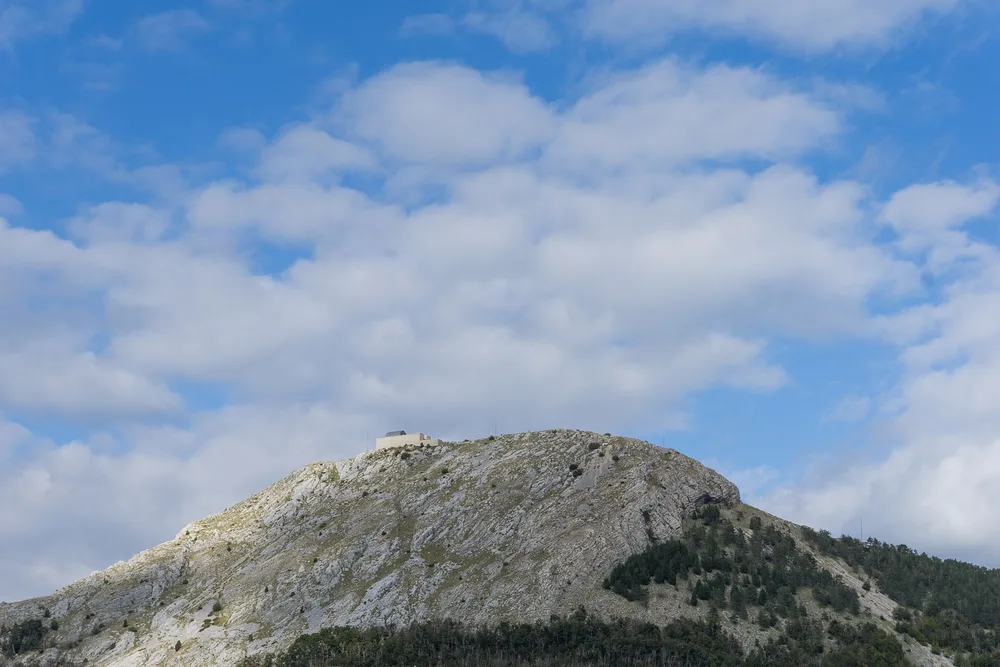
Lovćen, cable car, Njeguši and Cetinje day tour
A day from Kotor that rides the cable car up Lovćen and continues to Njeguši and Cetinje, as the title describes. Read the listing for the stops, whether the mausoleum ticket is included and what happens while the cable car is closed.
Check availabilityBook via GetYourGuide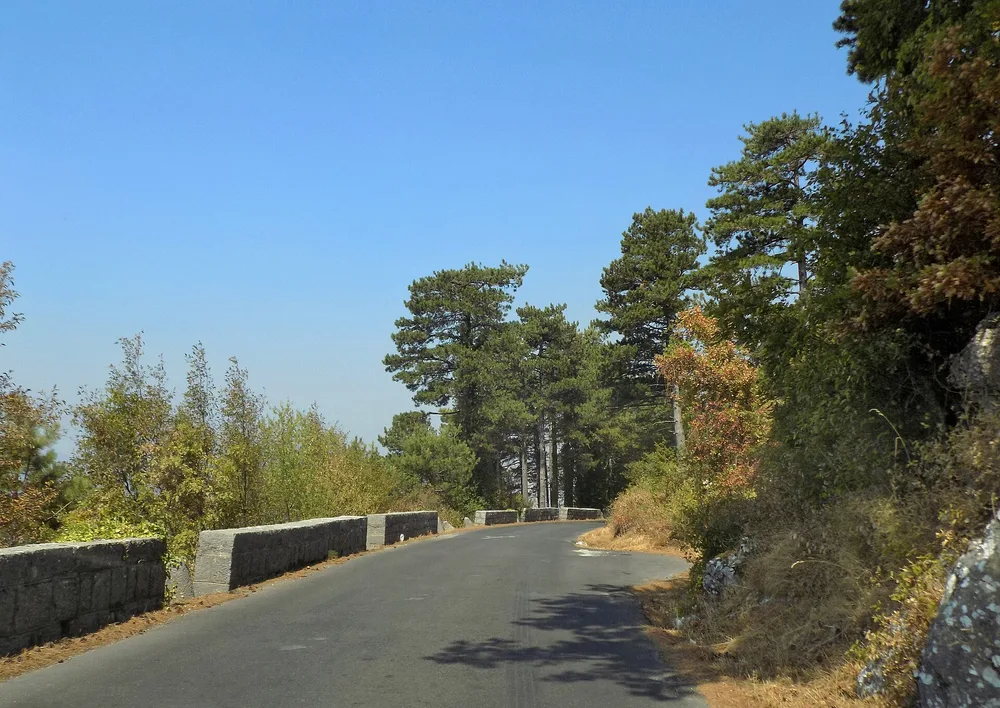
Kotor cable car, Njeguši and Lovćen
A trip that combines the Kotor–Lovćen cable car with Njeguši and the mountain, according to its title. The cable car is closed until spring 2027, so check how the tour runs in the meantime.
Check availabilityBook via GetYourGuide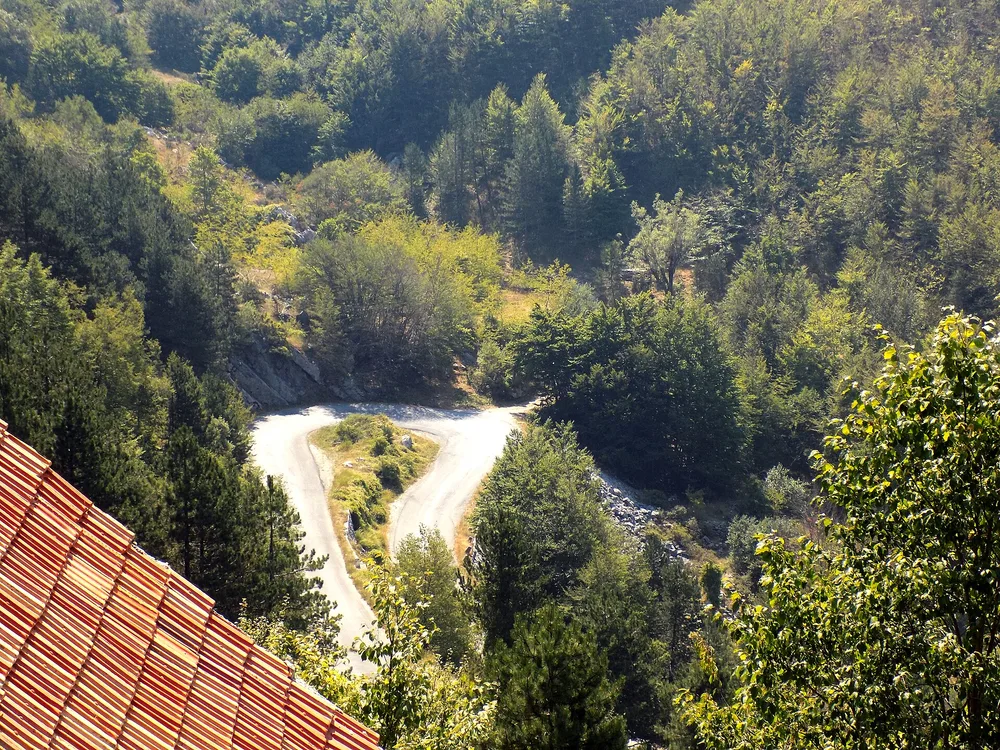
Kotor: Lovćen panoramic views and Cetinje shore excursion
A shore excursion for cruise passengers in Kotor that climbs Lovćen for the views and visits Cetinje. Check the return time against your ship’s all-aboard.
Check availabilityBook via GetYourGuideTour listings are on GetYourGuide. Prices, dates and cancellation terms are shown live on each listing and can change; Cetinje.com may earn a commission at no extra cost to you.
Frequently asked questions
How many hairpin bends does the Kotor serpentine have?
The best-known section from Kotor to Krstac is usually given as 25 hairpin bends; some counts give 26 or more depending on where they start.
When was the Kotor–Cetinje road built?
The Cetinje–Krstac section was built from 1879 and the serpentine descent to Kotor was completed in 1884.
Is the Kotor serpentine dangerous?
It is narrow rather than dangerous: drive slowly, use your horn on blind bends, and be ready to reverse for coaches. Avoid it in fog, ice or snow.
Does the Kotor cable car go to Cetinje?
No. It runs from Dub near Kotor to Kuk on Lovćen, about 21 km by road from Cetinje, with no scheduled onward transport. Tours combine it with a minibus to the mausoleum, Njeguši and Cetinje.
Is the Kotor cable car open in winter?
Its operator states that it is closed until spring 2027 (as checked November 2026).
How long is the cable car ride?
About 11 minutes over 3.9 km, rising 1,316 m to Kuk at 1,348 m.
Sources and official information
Facts were checked against these official and scholarly sources in November 2026. Opening hours, ticket prices, park fees and timetables change, so confirm before you go.
- kotorcablecar.me
- kotorcablecar.me
- kotorcablecar.me
- montenegro.travel
- leitner.com
- mia.gov.me
- en.wikipedia.org
- parksdinarides.org
- whc.unesco.org
- openstreetmap.org
Cetinje.com is an independent guide, not the official site of the Old Royal Capital Cetinje, the National Museum of Montenegro, any tour operator, hotel or the government of Montenegro. Some links are affiliate links: tours go to GetYourGuide and accommodation goes to Booking.com, and we may earn a commission at no extra cost to you.