In short
- For a town that has never had as many as 20,000 inhabitants, Cetinje has produced a remarkable number of well-known people, because for four centuries it was where Montenegro's rulers lived.
- Two crowned heads were born here: Elena, Queen of Italy (1873), and Alexander I, King of Yugoslavia (1888), both grandchildren or children of King Nikola.
- Modern Montenegrin painting begins with Milo Milunović (born in Cetinje, 1897) and Petar Lubarda (born at nearby Ljubotinj, 1907); Dado Đurić (Cetinje, 1933) made his name in Paris.
- The actor Žarko Laušević, the French documentary director Frédéric Rossif and the handball player Veselin Vujović were all born in the town.
- Others came from elsewhere and did their best work here, among them the jurist Valtazar Bogišić, the poet Laza Kostić and the Russian scholar Pavel Rovinsky.
A small town with a long guest list
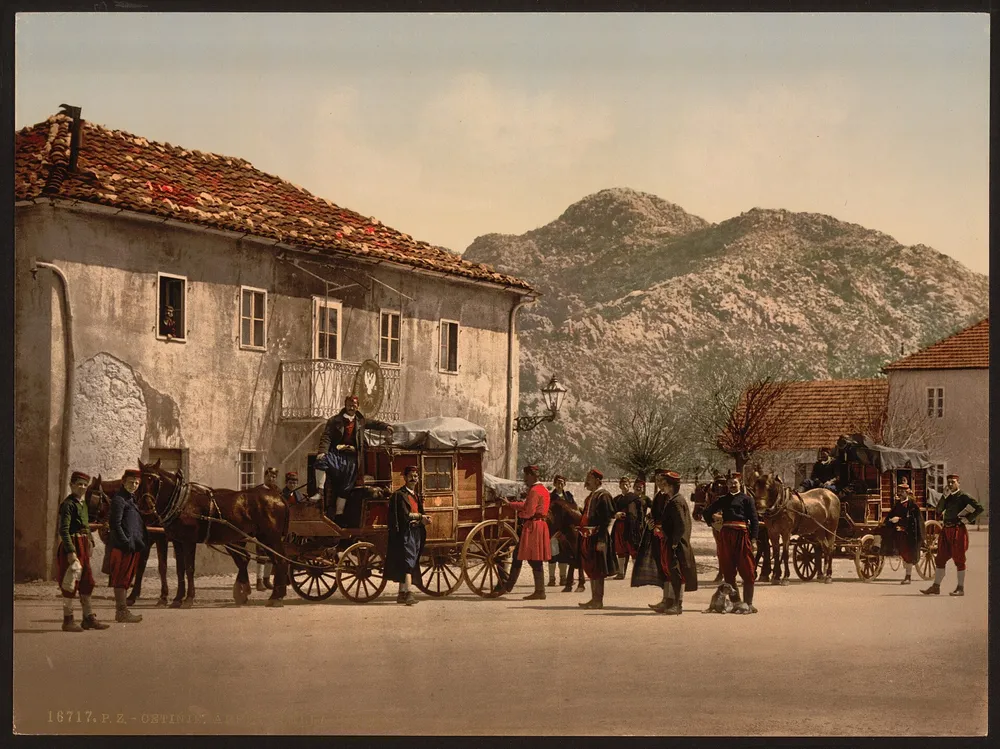
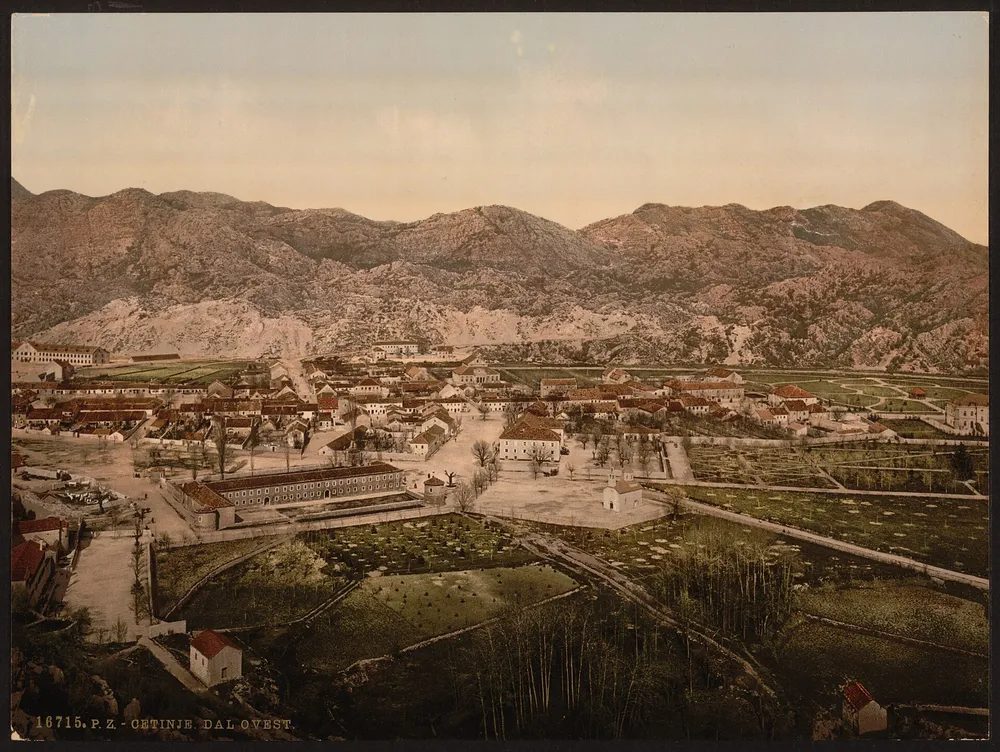
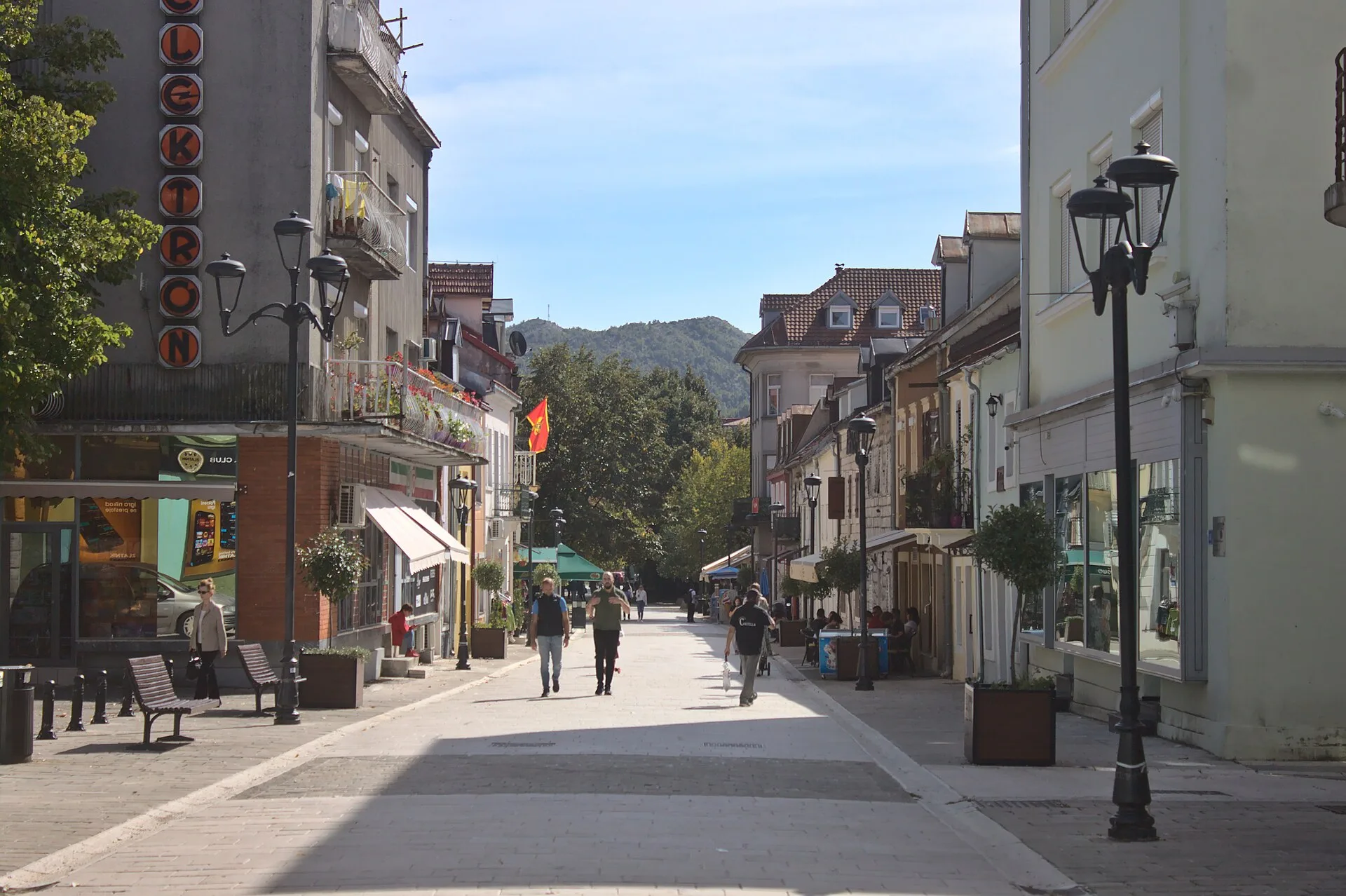
Walk the six hundred metres of Njegoševa Street, shown in the photograph above, and you pass the houses, schools and cafés of people who appear in the history books of four or five countries. That is the effect of having been a capital. Everyone who mattered in Montenegro between 1482 and 1918 lived in Cetinje at some point, a ruling family filled the place with princes and princesses, and after 1918 a town with good schools and no industry exported talent in every direction.
This page gathers the most notable of them, with dates and a sentence or two on each. It separates those born in the town or its immediate district from those who were formed here or left their mark on it, and it says where in Cetinje you can find a trace of them. The rulers have their own guides, so they appear here only briefly: see the Petrović-Njegoš dynasty, Njegoš and King Nikola.
Rulers and the men around them
Ivan Crnojević (died 1490). Lord of Zeta and founder of the town: he built his court here in 1482 and the monastery in 1484. His bronze statue, put up in 1983 for the town's five-hundredth anniversary, stands on the square beside King Nikola's Palace, and his remains were reburied in the Court Church on Ćipur in 2010.
Đurađ Crnojević (died 1514). Ivan's son, who founded the first Cyrillic printing press of the South Slavs in 1493 and died in exile. The National Library bears his name. See the Crnojević printing house.
Petar I Petrović-Njegoš, Saint Peter of Cetinje (1748–1830). Born in Njeguši; bishop and ruler for forty-six years, victor over Mahmud Pasha Bushati in 1796 and author of the country's first code of law. He died in Cetinje Monastery, where his relics are kept.
Petar II Petrović-Njegoš (1813–1851). Born in Njeguši; bishop, ruler and poet, author of The Mountain Wreath. He lived in the monastery and then in the Biljarda, where he died.
Mirko Petrović-Njegoš (1820–1867). Grand Voivode, elder brother of Prince Danilo and father of King Nikola; the victor of Grahovac in 1858 and himself a poet in the epic manner.
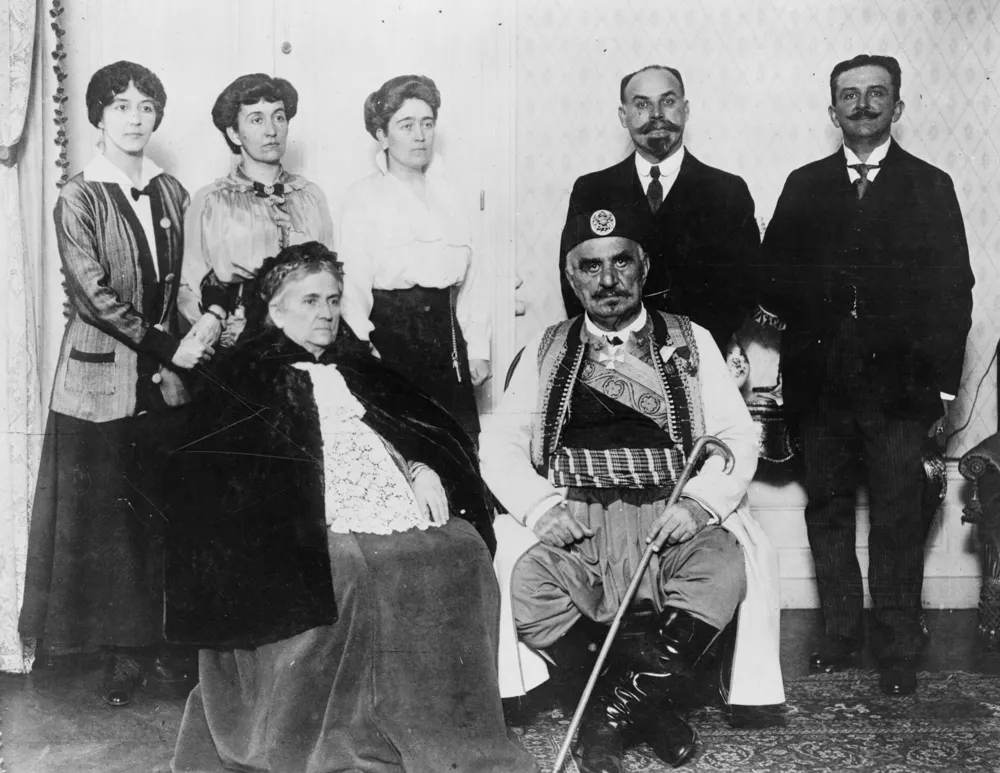
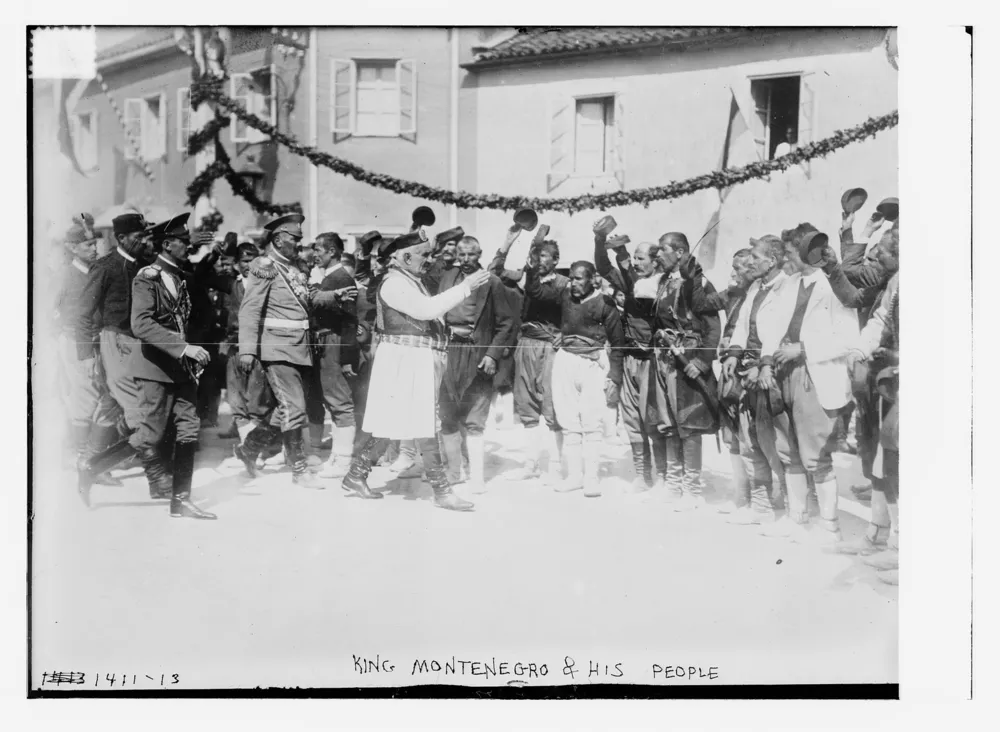
Nikola I (1841–1921). Born in Njeguši; Prince from 1860 and King from 1910, the man who built the town you see. Buried on Ćipur since 1989.
Božo Petrović-Njegoš (1846–1929). The king's cousin, commander of the southern army in the war of 1876–78, Montenegro's delegate at the Congress of Berlin and head of its government from 1879 to 1905.
Janko Vukotić (1866–1927). Born at Čevo, in the hills north of the town. A serdar and general, prime minister in 1913–15 and commander of the Montenegrin forces at Mojkovac in January 1916.
Krsto Popović (1881–1947). Born in the Cuce district of the Cetinje region; an officer in the Balkan Wars and the First World War and the military leader of the Greens in the Christmas Uprising of 1919. A deeply contested figure: he later led a pro-Italian militia during the Second World War and was killed in 1947.
The royal children born in Cetinje
All twelve children of King Nikola and Queen Milena were born in the town, and so were several of their grandchildren. The family home from 1867 was the house now visited as King Nikola's Palace.
Zorka (1864–1890). The eldest daughter, wife of the exiled Petar Karađorđević. She lived in Cetinje after her marriage in 1883 and died here in childbirth aged twenty-five.
Milica (1866–1951) and Anastasija (1868–1935). The two daughters who married Russian grand dukes and became powers at the court of Nicholas II.
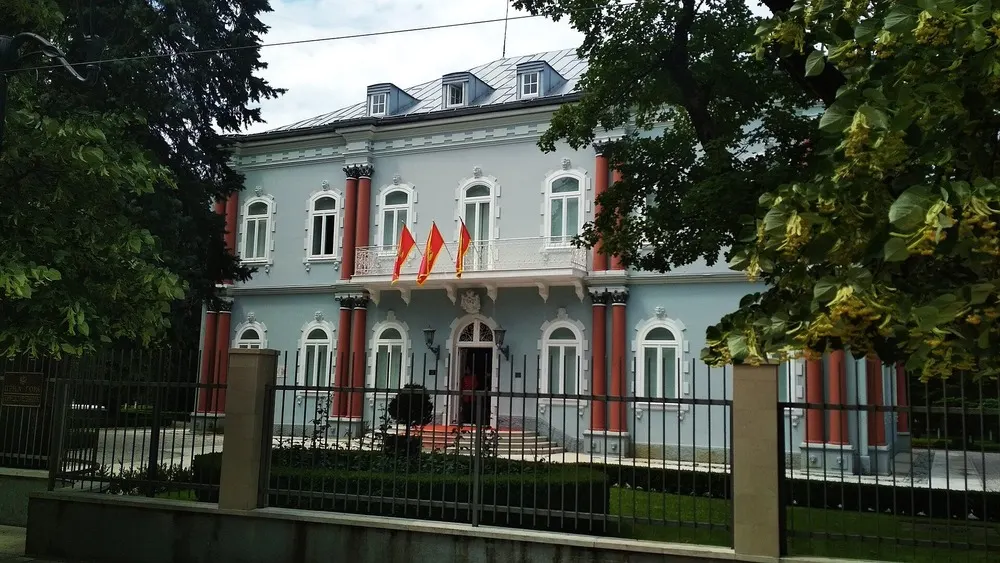
Danilo (1871–1939). Crown prince, for whom the Blue Palace was built. He is said to have been a model for Count Danilo in Franz Lehár's operetta The Merry Widow (1905), whose comic Balkan principality of Pontevedro was close enough to Montenegro to cause offence there.
Jelena, Queen Elena of Italy (1873–1952). Born in Cetinje on 8 January 1873, educated in St Petersburg, married to the heir to the Italian throne in 1896 and queen from 1900 to 1946. She organised relief after the Messina earthquake of 1908 and turned the Quirinal Palace into a hospital during the First World War. She died in exile at Montpellier. The Catholic Church opened the cause for her beatification in 2001.
Ksenija (1881–1960). Her father's companion in exile, never married. She was a keen photographer, and her pictures of the court and the country have been the subject of exhibitions in recent years.
George Karađorđević (1887–1972) and Alexander Karađorđević (1888–1934). Zorka's sons, both born in Cetinje in the years when their father lived at his father-in-law's court. George was Crown Prince of Serbia until he renounced the succession in 1909. Alexander, born on 16 December 1888, became Prince Regent of Serbia, then King of the Serbs, Croats and Slovenes in 1921 and of Yugoslavia in 1929, and was assassinated in Marseille on 9 October 1934. He was thus the grandson of the king whose state was merged into his own in 1918, and it was he who came back to Cetinje in 1925 to rebury Njegoš on Lovćen.
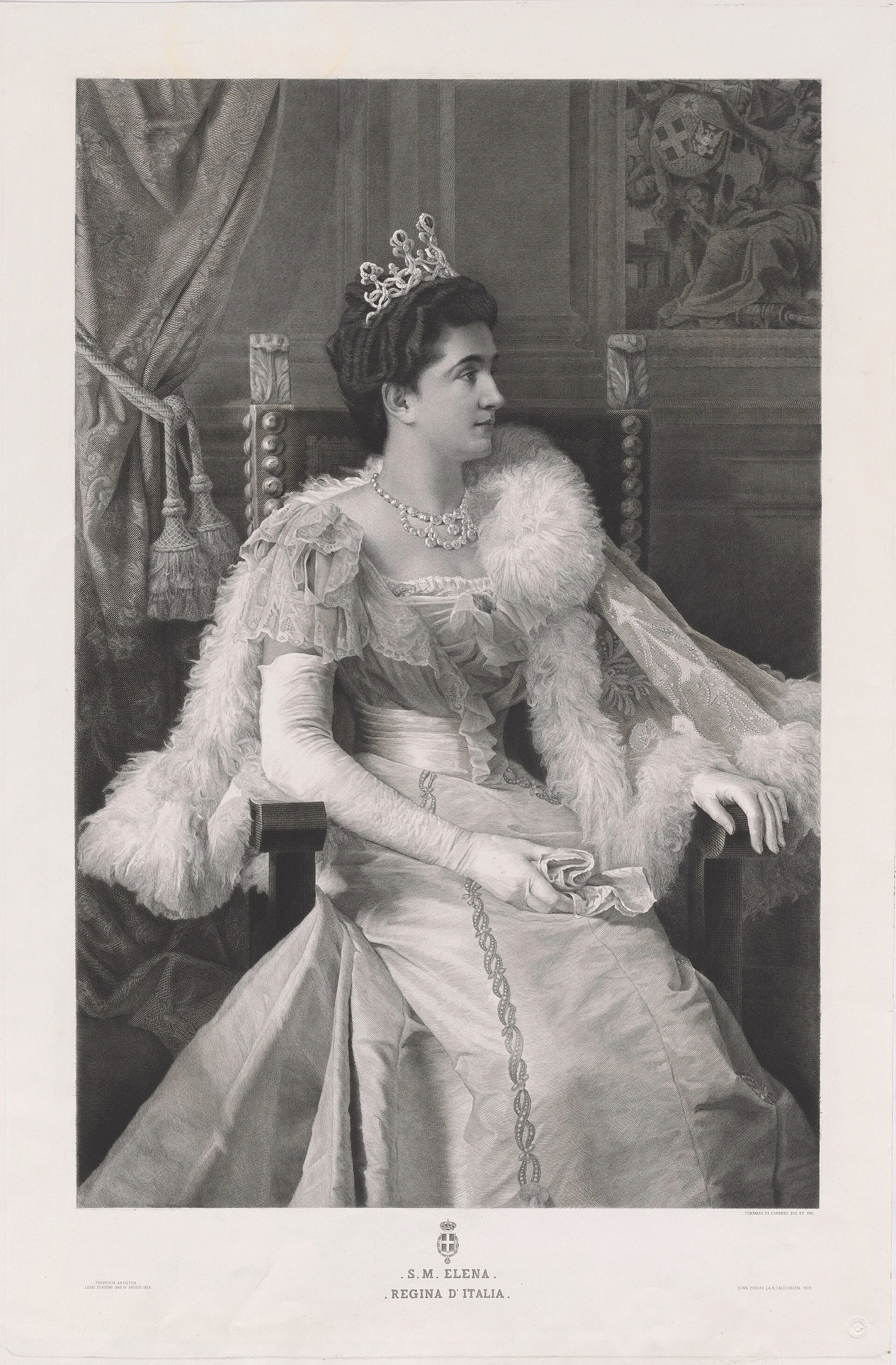
Queen Elena of Italy, born Princess Jelena Petrović-Njegoš in Cetinje in 1873, in an engraving of 1903 after a photograph by Carlo Brogi.
Painters
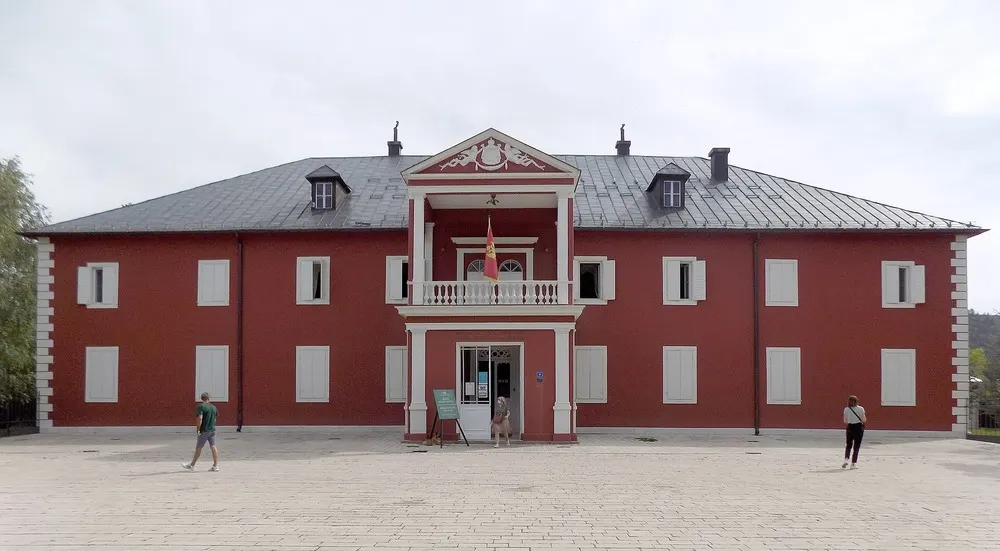
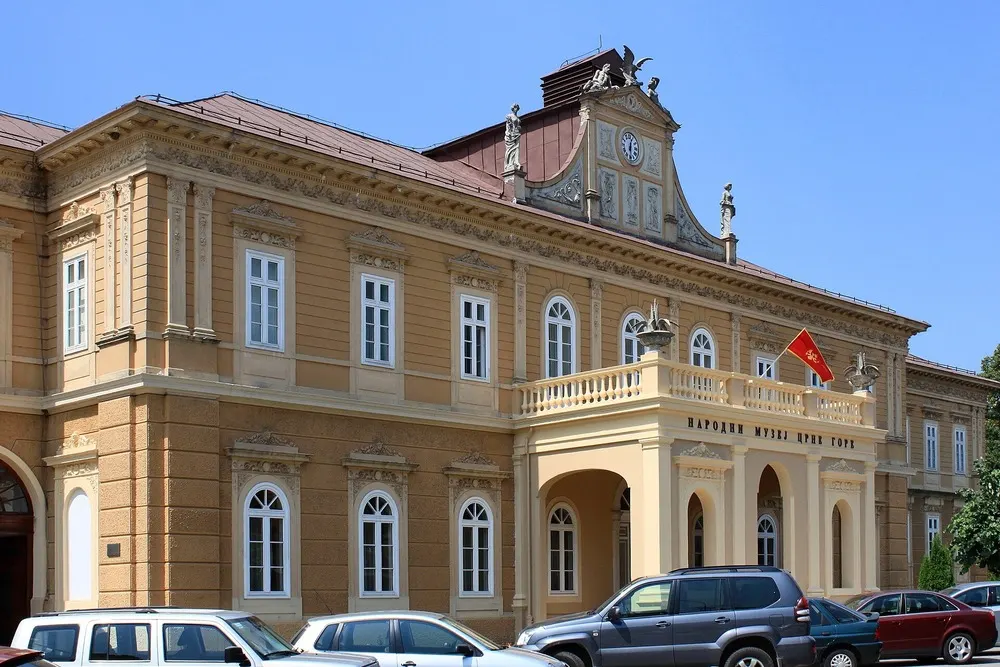
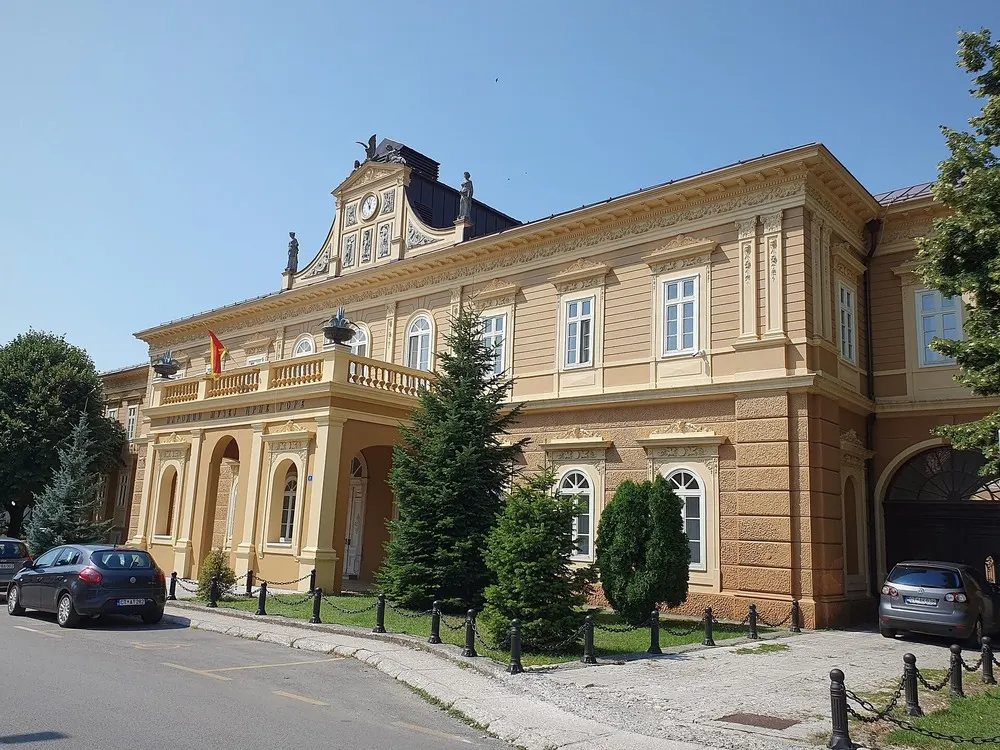
Cetinje's largest contribution to the twentieth century was in painting. The three names below are the ones you will meet in the National Museum's art collection in Government House.
Milo Milunović (1897–1967). Born in Cetinje on 6 August 1897 and trained in Florence and Paris, where he absorbed Cézanne. He painted frescoes in the church at Prčanj on the Bay of Kotor in 1923, was one of the founders of the Academy of Fine Arts in Belgrade in 1937, and after the war helped set up the first art school in Montenegro. His Mediterranean still lifes and landscapes are the classical pole of Montenegrin art.
Petar Lubarda (1907–1974). Born at Ljubotinj, a village in the Cetinje municipality on the road to Rijeka Crnojevića. Largely self-taught in Paris, a prisoner of war in Germany, and after 1945 the most powerful painter in Yugoslavia: his large canvases of the early 1950s, built from the bare rock and harsh light of the Montenegrin karst, broke with socialist realism and won an international prize at the São Paulo Biennial in 1953. His Battle of Kosovo (1953) is among the best-known Yugoslav paintings.
Dado, Miodrag Đurić (1933–2010). Born in Cetinje on 4 October 1933. He left for Paris in 1956, was taken up by the painter Jean Dubuffet and the dealer Daniel Cordier, and spent the rest of his life in France, in a converted mill in Normandy, painting and drawing a crowded, disquieting world of deformed figures that owes something to the wartime childhood he never stopped describing. He represented Montenegro at the Venice Biennale in 2009. In Cetinje the National Museum's contemporary gallery carries his name and his former studio is open as the Atelje Dado.
Dimitrije Popović (born 1951). Born in Cetinje and settled in Zagreb, a painter, sculptor and writer whose drawings and paintings take Leonardo and the Surrealists as their starting point.
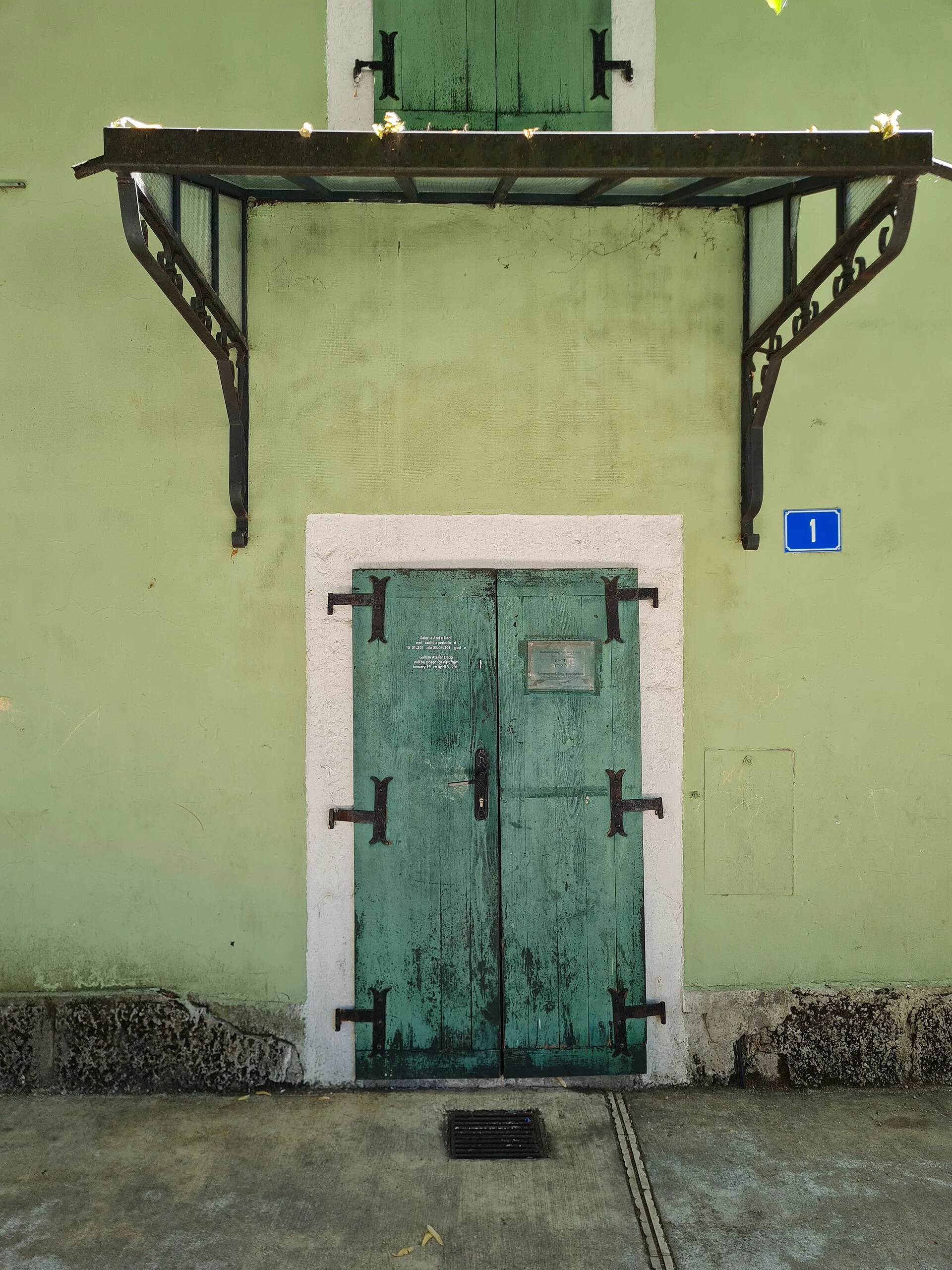
The door of the Atelje Dado, the studio-gallery of the National Museum named after the painter Dado Đurić.
Stage, screen and letters
Frédéric Rossif (1922–1990). Born in Cetinje on 16 February 1922, he made his career in France as one of the leading documentary film-makers of his generation. Mourir à Madrid (1963), on the Spanish Civil War, won the Prix Jean Vigo; he also made films on Picasso and on wildlife, and the television history De Nuremberg à Nuremberg.
Zdravko Velimirović (1930–2005). Born in Cetinje on 11 October 1930; film director and professor, whose features include the screen version of Meša Selimović's novel Death and the Dervish (1974).
Žarko Laušević (1960–2023). Born in Cetinje on 19 January 1960, by his early thirties one of the best-loved stage and film actors in Yugoslavia. His career was interrupted in 1993 by a shooting in Podgorica, for which he served a prison sentence; he later lived in the United States, wrote widely read memoirs and returned to the screen before his death in Belgrade.
Jelena Ćetković (1916–1943). Born in Cetinje; a seamstress, Communist organiser and campaigner for women's rights, executed by the German occupation authorities in Belgrade and proclaimed a People's Hero of Yugoslavia.
Peko Dapčević (1913–1999). Born at Ljubotinj; a volunteer in the Spanish Civil War, a leader of the 1941 uprising in Montenegro and the Partisan general whose troops, with the Red Army, took Belgrade in October 1944.
Sport
Handball is Cetinje's game. The local club, Lovćen, has been one of the strongest in the region for decades, and its hall has produced a long line of internationals.
Veselin Vujović (born 1961). Born in Cetinje on 18 January 1961. With Metaloplastika of Šabac he won the European Champions' Cup twice, and with Yugoslavia the Olympic gold medal in Los Angeles in 1984; in 1988 he was the first winner of the International Handball Federation's World Player of the Year award. He later played for Barcelona and became a well-known coach.
Nikola Jovanović (born 1952). Born in Cetinje; a defender who moved from Red Star Belgrade to Manchester United in January 1980, the first Yugoslav to play for the club.
Ljubomir Radanović (born 1960). Born in Cetinje; a defender whose goal in stoppage time against Bulgaria on 21 December 1983 took Yugoslavia to the 1984 European Championship, and a bronze medallist at the Olympics the same year.
Božidar Ivanović (born 1946). Born in Cetinje; chess grandmaster, twice champion of Yugoslavia, later a government minister.
Danka Kovinić (born 1994). Born in Cetinje; the most successful tennis player Montenegro has produced, ranked as high as 46th in the world in singles in 2016.
Not born here, but made here
Between 1878 and 1914 the new capital needed lawyers, teachers, doctors, engineers and editors faster than it could train them, and it drew educated South Slavs and sympathetic foreigners. A few of them did the work for which they are remembered while living in Cetinje.
Valtazar Bogišić (1834–1908). A jurist from Cavtat near Dubrovnik, professor at Odessa, who came at the tsar's request to give Montenegro a civil code. His General Property Code of 1888, written in the language of proverbs so that any clansman could understand it, is one of the most original law codes of the nineteenth century.
Pavel Rovinsky (1831–1916). A Russian ethnographer and historian who arrived in 1879 and stayed for the better part of three decades. His multi-volume Montenegro in Its Past and Present remains a basic source on the country's geography, history and customs.
Laza Kostić (1841–1910). One of the great Serbian Romantic poets, who lived in Cetinje in the 1880s as editor of the official newspaper Glas Crnogorca, moving in the same circle as Bogišić, Rovinsky and the writer Simo Matavulj (1852–1908), who taught in the town in the same years and left sharp, affectionate memoirs of it.
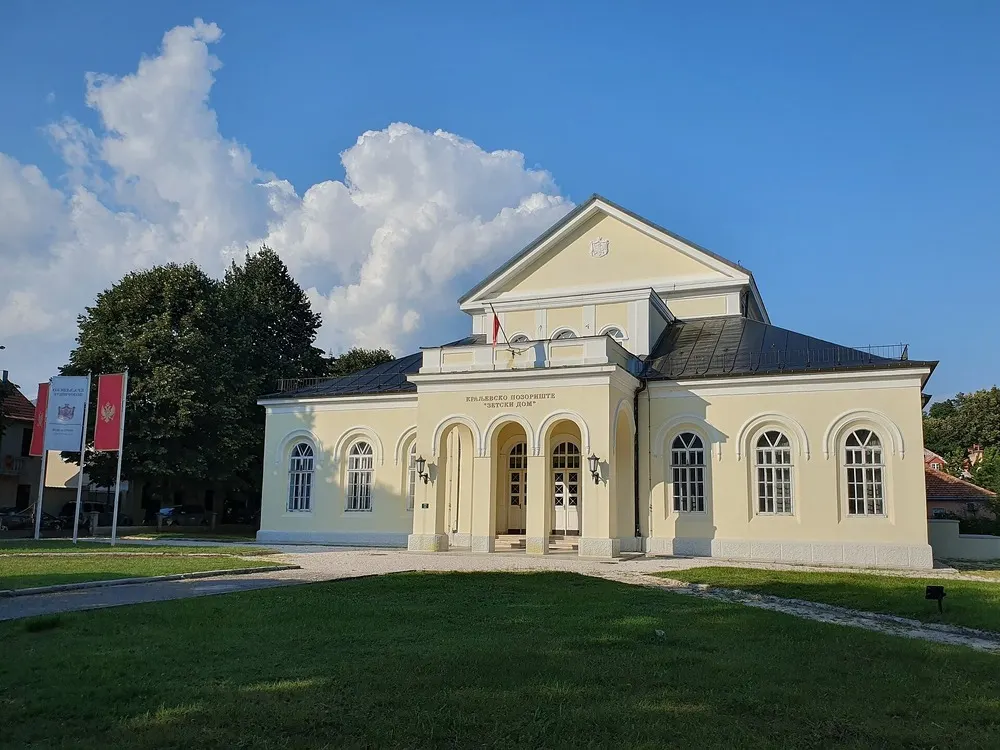
Josip Slade (1828–1911). An engineer and architect from Trogir who designed the Zetski dom theatre and laid out the carriage road from Kotor; his work is described in the architecture guide.
Edith Durham (1863–1944). The English traveller and writer first came to Cetinje in 1900 on her doctor's advice and made it her base for years of journeys through Montenegro and Albania; her book Through the Lands of the Serb (1904) contains one of the liveliest portraits of the little capital in English.
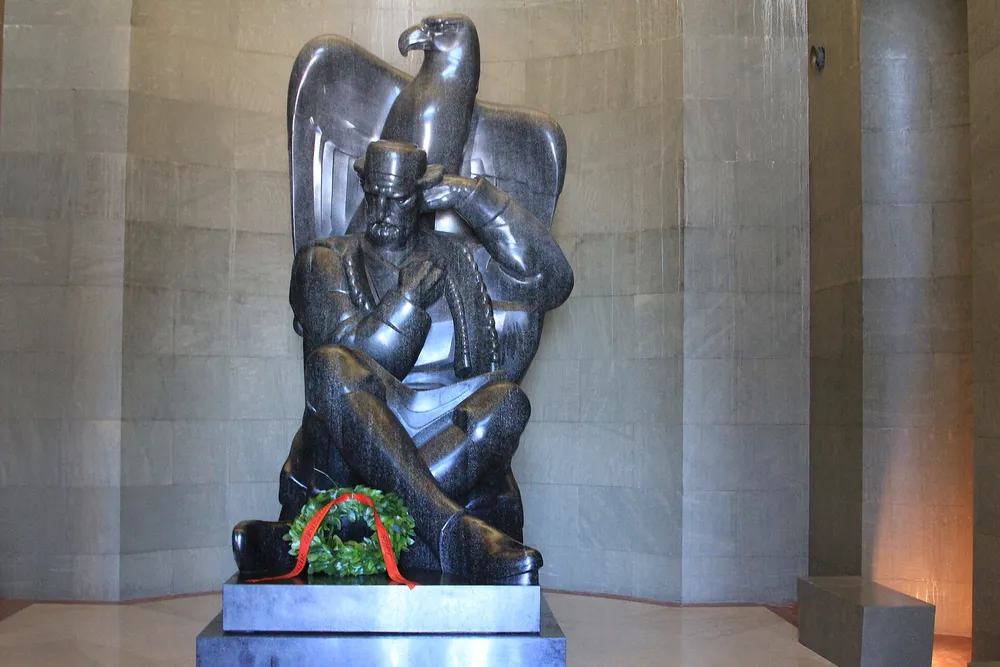
Ivan Meštrović (1883–1962). The Croatian sculptor never lived in Cetinje, but the mausoleum of Njegoš on Lovćen, built to his design and opened in 1974, has made him part of its skyline. See Njegoš.
Born in Cetinje: at a glance
| Name | Born | Known as | Trace in Cetinje |
|---|---|---|---|
| Queen Elena of Italy | 1873 | Queen consort of Italy, 1900–1946 | King Nikola's Palace (family rooms and portraits) |
| Alexander I Karađorđević | 1888 | King of Yugoslavia, 1921–1934 | King Nikola's Palace; the Lovćen ceremony of 1925 |
| Crown Prince Danilo | 1871 | Heir to the Montenegrin throne | Blue Palace |
| Milo Milunović | 1897 | Painter, co-founder of the Belgrade academy | Art Museum, Government House |
| Frédéric Rossif | 1922 | French documentary film director | — |
| Zdravko Velimirović | 1930 | Film director | — |
| Dado (Miodrag Đurić) | 1933 | Painter, worked in France | Atelje Dado and the gallery that bears his name |
| Dimitrije Popović | 1951 | Painter and sculptor | Art Museum |
| Žarko Laušević | 1960 | Actor | Zetski dom, the town's theatre |
| Veselin Vujović | 1961 | Handball player, first IHF World Player of the Year | Lovćen handball club |
| Danka Kovinić | 1994 | Tennis player | — |
Finding them in the town
- King Nikola's Palace for the royal family: bedrooms, studies, portraits and personal belongings of the king, the queen and their children.
- The Biljarda for Njegoš and his circle.
- Government House for the painters, in the National Museum's art collection, and for the generals and politicians, in the History Museum in the same building (listed as closed to visitors in November 2026).
- Atelje Dado and the contemporary gallery named after him, for Dado and for living artists.
- The Court Church on Ćipur for the tombs of King Nikola and Queen Milena and the grave of Ivan Crnojević.
- Orlov krš for the mausoleum of Vladika Danilo, and the statue of Ivan Crnojević on the square below.
All of these lie on the self-guided walking tour; the museum units share a combined ticket, described in the museums guide. A guided walking tour with museum entry is a good way to put faces to the names, since guides tend to be at their best on the royal family.
Frequently asked questions
Which famous people were born in Cetinje?
Among others: Queen Elena of Italy (1873), King Alexander I of Yugoslavia (1888), the painters Milo Milunović (1897) and Dado Đurić (1933), the film director Frédéric Rossif (1922), the actor Žarko Laušević (1960) and the handball player Veselin Vujović (1961).
Was Njegoš born in Cetinje?
No. He was born in the village of Njeguši, about 20 km away in the Cetinje municipality, in 1813. He lived in Cetinje from his teens and died there in 1851.
Was Queen Elena of Italy really Montenegrin?
Yes. She was born Princess Jelena Petrović-Njegoš in Cetinje on 8 January 1873, the sixth child of the future King Nikola, and married the future Victor Emmanuel III in 1896.
Which king of Yugoslavia was born in Cetinje?
Alexander I Karađorđević, born on 16 December 1888. His mother Zorka was a daughter of King Nikola, and his father, the future King Peter I of Serbia, was then living in exile at the Montenegrin court.
Who are the most important Montenegrin painters?
Milo Milunović (1897–1967), Petar Lubarda (1907–1974) and Dado Đurić (1933–2010) are usually named first. All three came from Cetinje or its surroundings, and their work can be seen in the National Museum's art collection in Government House.
Is there a museum for Dado in Cetinje?
The National Museum of Montenegro runs the Atelje Dado and a gallery of contemporary art named after him. Check the museum's website for current exhibitions and hours.
Sources and official information
Facts were checked against these official and scholarly sources in November 2026. Opening hours, ticket prices, park fees and timetables change, so confirm before you go.
- narodnimuzej.me
- narodnimuzej.me
- en.wikipedia.org
- en.wikipedia.org
- en.wikipedia.org
- en.wikipedia.org
- en.wikipedia.org
- en.wikipedia.org
- en.wikipedia.org
- en.wikipedia.org
- en.wikipedia.org
- en.wikipedia.org
- en.wikipedia.org
- en.wikipedia.org
- en.wikipedia.org
- en.wikipedia.org
- en.wikipedia.org
- en.wikipedia.org
- en.wikipedia.org
Cetinje.com is an independent guide, not the official site of the Old Royal Capital Cetinje, the National Museum of Montenegro, any tour operator, hotel or the government of Montenegro. Some links are affiliate links: tours go to GetYourGuide and accommodation goes to Booking.com, and we may earn a commission at no extra cost to you.