In short
- They were legations, not embassies. Before 1914 only great powers exchanged ambassadors; a small court such as Montenegro’s received ministers, and their buildings were legations. Everyone in Cetinje calls them embassies anyway.
- Six stand out as architecture: the Austro-Hungarian (1897–1899), Russian (1900–1903), Italian (1905–1910), French (1909–1910) and British (1912–1914) legations, built or rebuilt for the purpose, and the Ottoman legation in a house bought in 1885.
- The rest worked from town houses around the palace square: Serbia, Bulgaria, Germany, Greece and a Belgian vice-consulate. The United States accredited its minister in Athens and never had a building here.
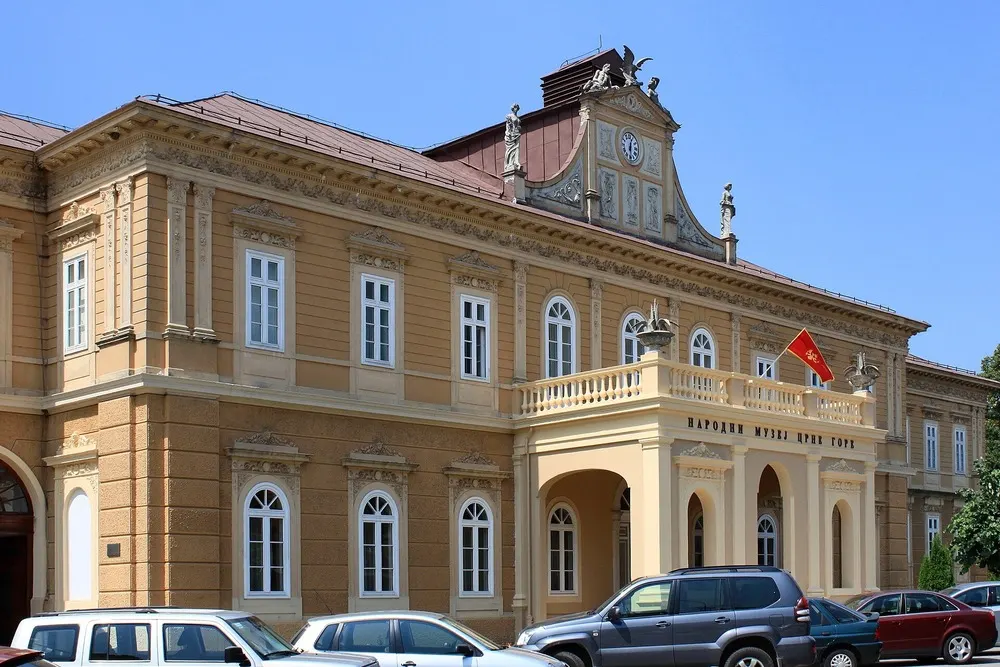
- None is an embassy today. They house the National Library, university faculties, a museum and a hotel, and most can only be seen from outside.
- All can be walked in two hours; the Italian and Austro-Hungarian buildings are the outliers.
Why so small a town had a diplomatic quarter
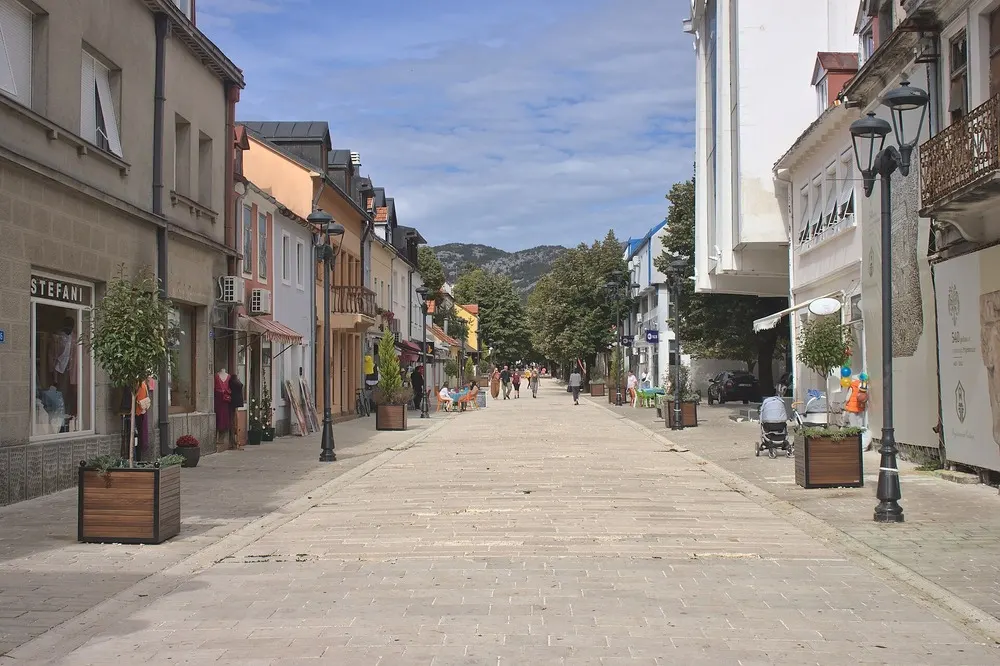
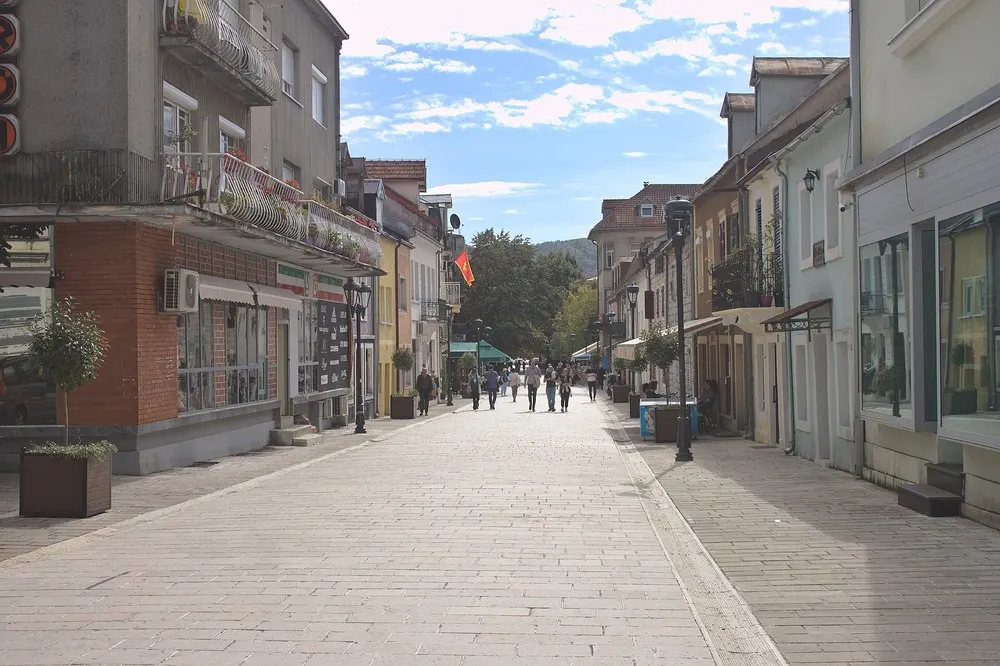
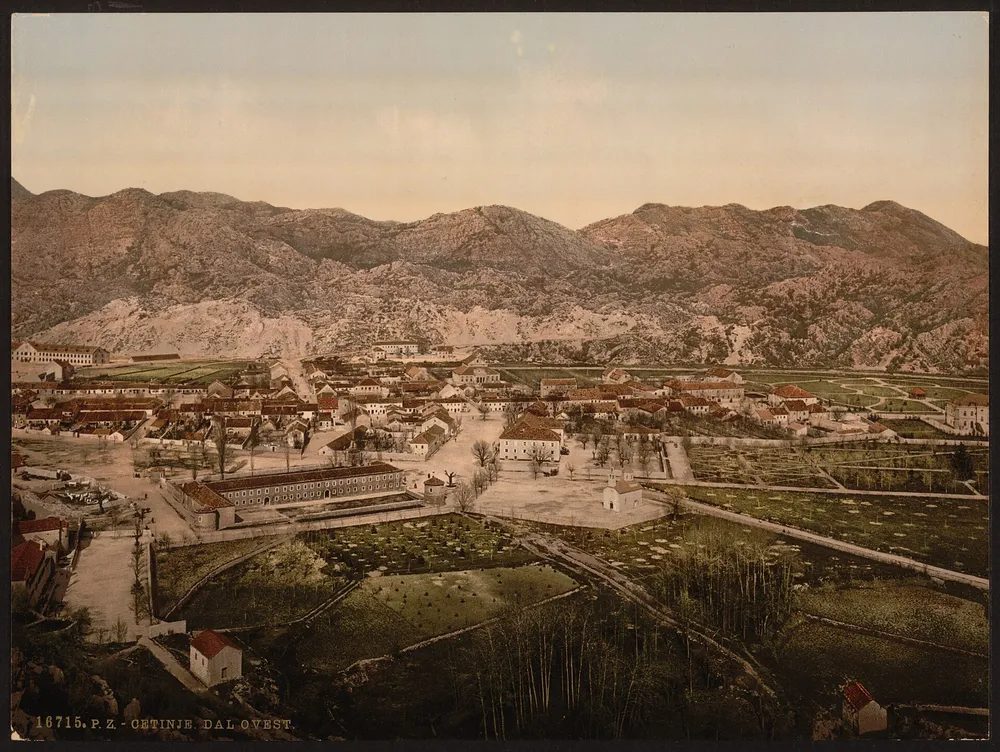
At the Congress of Berlin in 1878 the great powers recognised Montenegro as an independent state, and independent states exchanged diplomats. Within a few years the princely court at Cetinje, which had until then dealt with the world largely through the Russian consulate in Dubrovnik, was receiving resident ministers from St Petersburg, Vienna, Constantinople, Paris, Rome and London. They found a capital with one inn and a few dozen stone houses.
For two decades most of them rented. The Ottoman Empire, which opened its mission in 1879, was the first to own its residence, buying the house of Vojvoda Mašo Vrbica on Bajova Street in 1885. Then, as Montenegro’s marriages tied its dynasty to Russia, Italy, Serbia and Germany and Cetinje became a listening post for the Balkan question, the powers began to build: Austria-Hungary from 1897, Russia from 1900, Italy from 1905, France from 1909, Britain from 1912. Each used its own architect, and the legations became a quiet competition in national style on the edge of a mountain village.
It lasted barely a generation. The Ottoman minister left when the First Balkan War began in October 1912, the Bulgarian after the Second in 1913, the Austro-Hungarian in August 1914. The last foreign representatives departed on 29 December 1915, days before the Austro-Hungarian army took Mount Lovćen. When the war ended Montenegro had been absorbed into the new Yugoslav kingdom, and there was no court to be accredited to. The buildings were sold or handed to schools, the army and the banks.
They survive because nobody had the money to replace them, and because from the 1950s the republic gave them to its cultural institutions. For the place of these buildings in the town’s development see the architecture of Cetinje; for the diplomacy, the history.
At a glance
Dates are those of construction unless stated. ‘Today’ is as of November 2026; institutions move, so trust the plaque by the door over any list, including this one.
| Legation | Building | Designer | Where | Today |
|---|---|---|---|---|
| Ottoman Empire | House bought 1885; mission 1879–1912 | Built as a private house | Bajova Street, beside Zetski dom | Faculty of Dramatic Arts |
| Austria-Hungary | 1897–1899 | Josip Slade | Baja Pivljanina (Bajova) Street, north-western edge of the old town | Public institution; in recent years heritage administration and university use |
| Russia | 1900–1903 | A. C. Corradini | Vojvode Batrića Street, by the City Park | Restored after the 2012 fire; formerly Faculty of Fine Arts |
| Italy | 1905–1910 | Corradini; or the Bagatti Valsecchi brothers, built by Corradini | Bulevar crnogorskih junaka, on the Lovćen road | National Library ‘Đurđe Crnojević’ (main building) |
| France | 1909–1910 | Paul Guadet, with Perret Frères | Njegoševa Street, upper end | National Library (old and rare books) |
| Great Britain | 1912–1914 | Julius Bradley, Office of Works | Njegoševa Street, beside the Blue Palace | Music Academy |
| Bulgaria | c. 1910; mission here 1910–1913 | Built by Vojvoda Ivo Radović | Dvorski trg, beside the palace | Hotel |
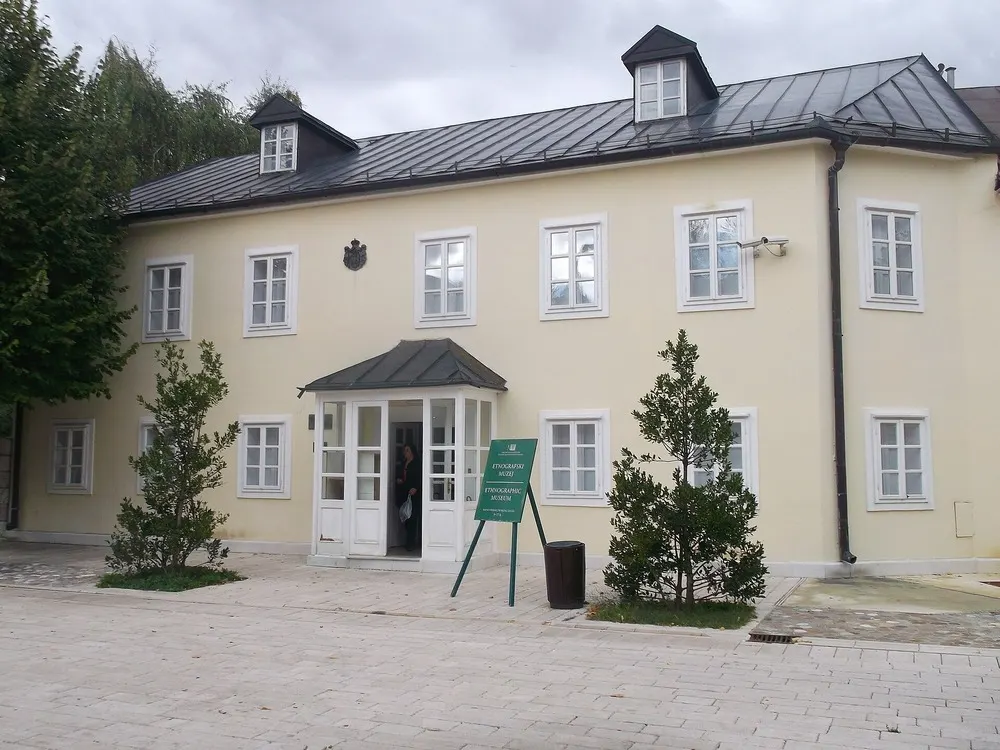
| Serbia | On the square from the 1900s to 1915 | Town house | Dvorski trg | Ethnographic Museum |
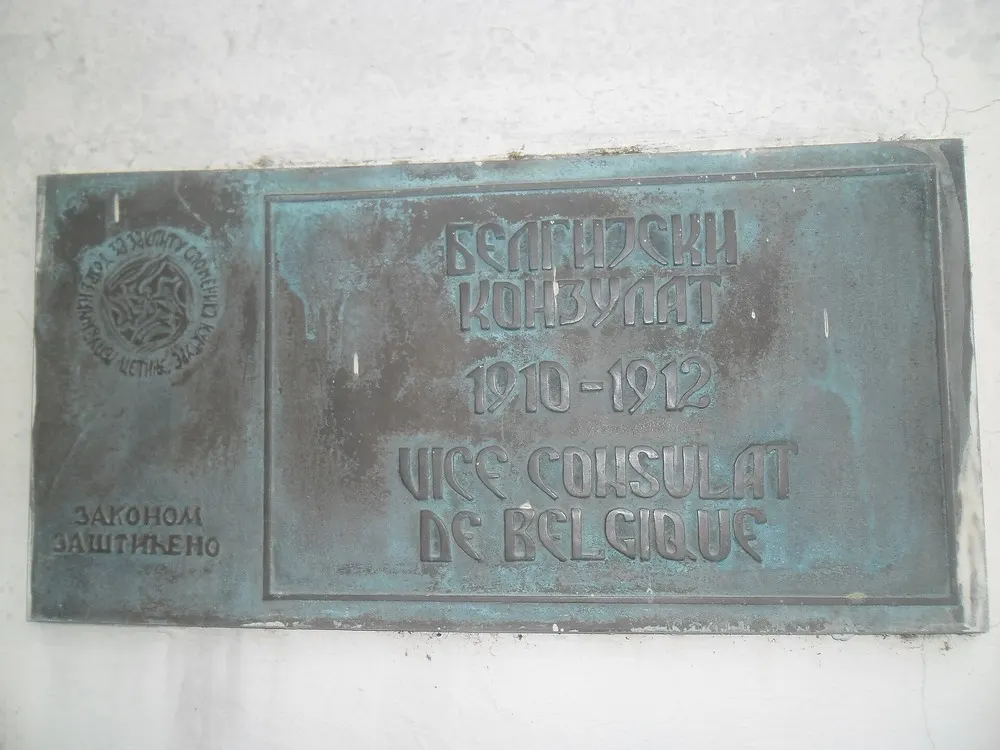
| Belgium (vice-consulate) | 1910–1912 per the plaque | Town house of a Cetinje merchant | Near Dvorski trg | Private building with plaque |
| Germany | Rented house | Town house | Njegoševa Street, lower end | Private building |
| Greece | Rented premises | Not recorded | Not established | See text |
| United States | No building | None | Minister resident in Athens from 1905 | None |
The Ottoman legation: the first to buy
Montenegro had fought the Ottoman Empire for the whole of its modern history, so it is a small irony that the sultan’s was the first power to settle its representative properly. Halid Bey presented his credentials in 1879, initially outranking his colleagues as an envoy extraordinary when the others were ministers resident or chargés d’affaires.
The building was a house that Vojvoda Mašo Vrbica, a former minister, was putting up in the new part of town laid out by Josip Slade. According to the fullest study of the mission, Vrbica had built against the regulation plan and the town authorities stopped his works, which may be why he was willing to sell. The negotiation was a comedy: the minister Cevad Pasha agreed a price of 13,000 florins with the voivode’s son, who claimed the house had twelve fireplaces; an Ottoman official reported that it did not have a single chimney; and the father then announced that a bargain struck without him did not bind him. The sale went through in 1885.
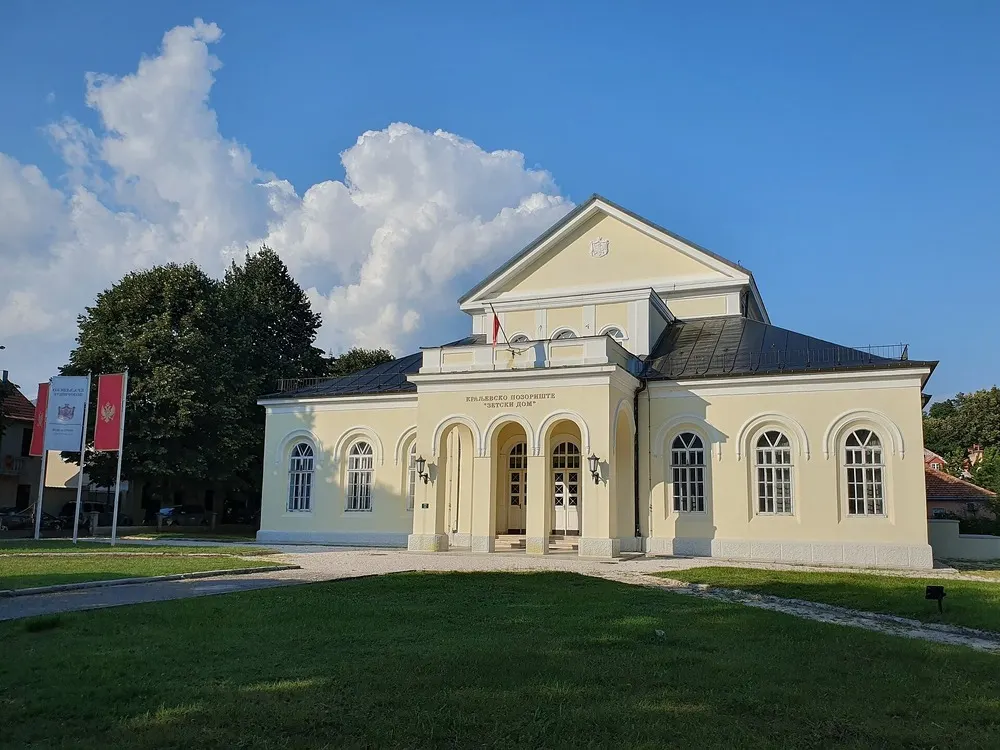
It is a broad two-storey town house, today painted pale green, with an iron canopy over the door. A crescent-and-star medallion on the façade and a plaque recall its first use. The garden, which lay across the street, was built over in 1932 by the Banovina palace. Since the 1990s the house has been the University of Montenegro’s Faculty of Dramatic Arts; you can see it from the street, a few steps from Zetski dom.
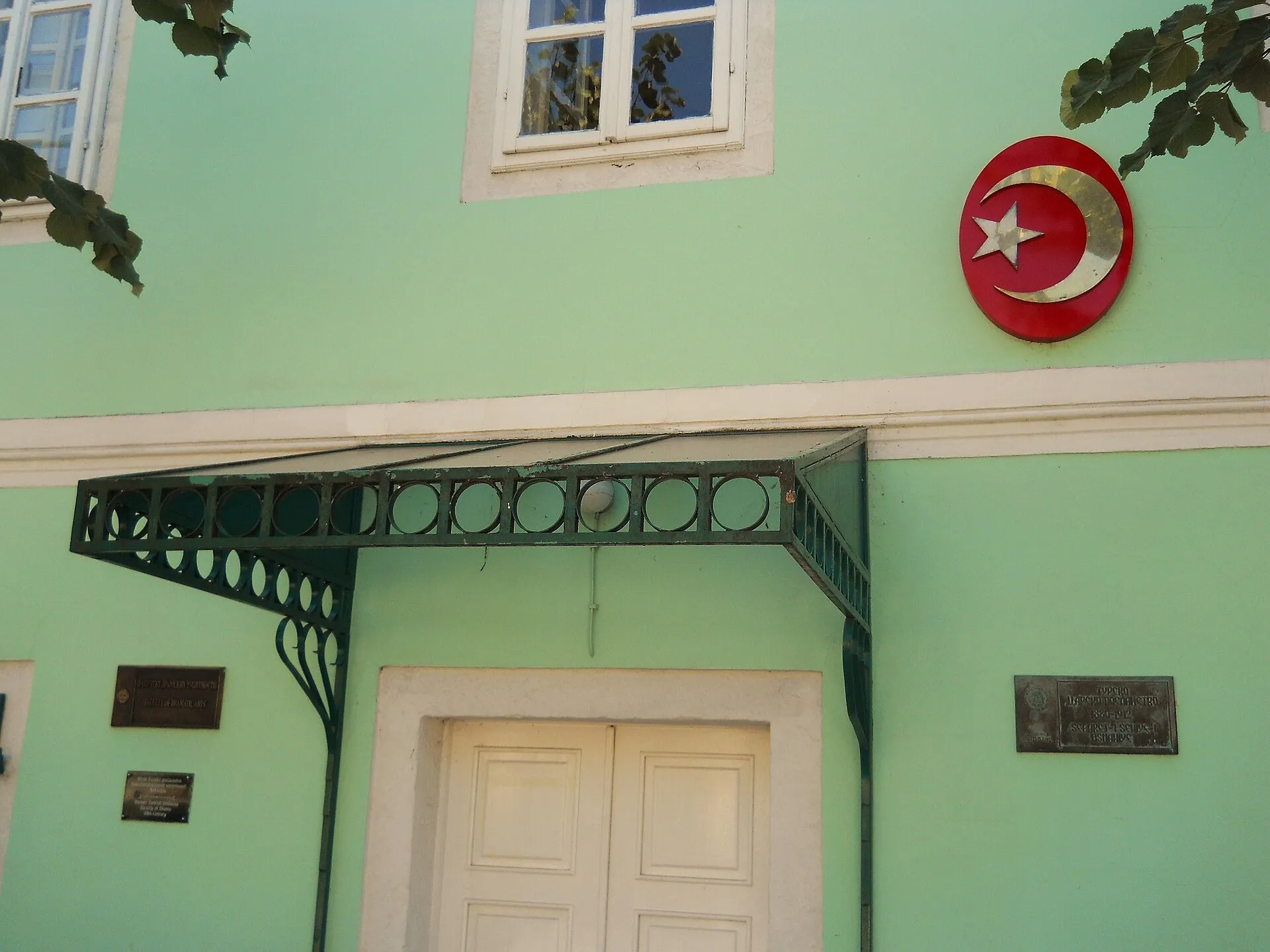
The former Ottoman legation, bought in 1885, now the Faculty of Dramatic Arts.
The Austro-Hungarian legation: Slade’s stone house and its chapel
Austria-Hungary was Montenegro’s neighbour on two sides and its most watchful observer. In 1896, with Prince Nikola’s consent, the legation bought a plot at what was then the far end of Bajova Street, and between 1897 and 1899 it built to a design by Josip Slade, the Dalmatian engineer who had regulated the town’s streets and designed its theatre.
It is the most sober of the legations: local stone, carefully dressed, a ground floor, upper floor and attic of about 800 square metres, a steep roof with a strong cornice, and inside a clear division of rooms by thick longitudinal and cross walls. That construction served it well, because the building came through the 1979 earthquake almost undamaged. Attached to it is a small Catholic chapel in a Romanesque idiom with some Gothic detail, with figures of the Virgin and angels over the door; until a Catholic church was built it served every Catholic in the town. The walled garden had outbuildings, a well and a playing court.
The legation closed in August 1914. Between the wars it was the headquarters of the army’s Zeta Division and was known simply as ‘Divizija’; after 1945 it was used by schools and, from 1983, by the republic’s institute for the protection of cultural monuments. Fine-arts students were moved here after the fire at the Russian legation in 2012, and Serbian-language Wikipedia now lists the Faculty of Montenegrin Language and Literature as its occupant. Look for the imperial double eagle that survives over the entrance.
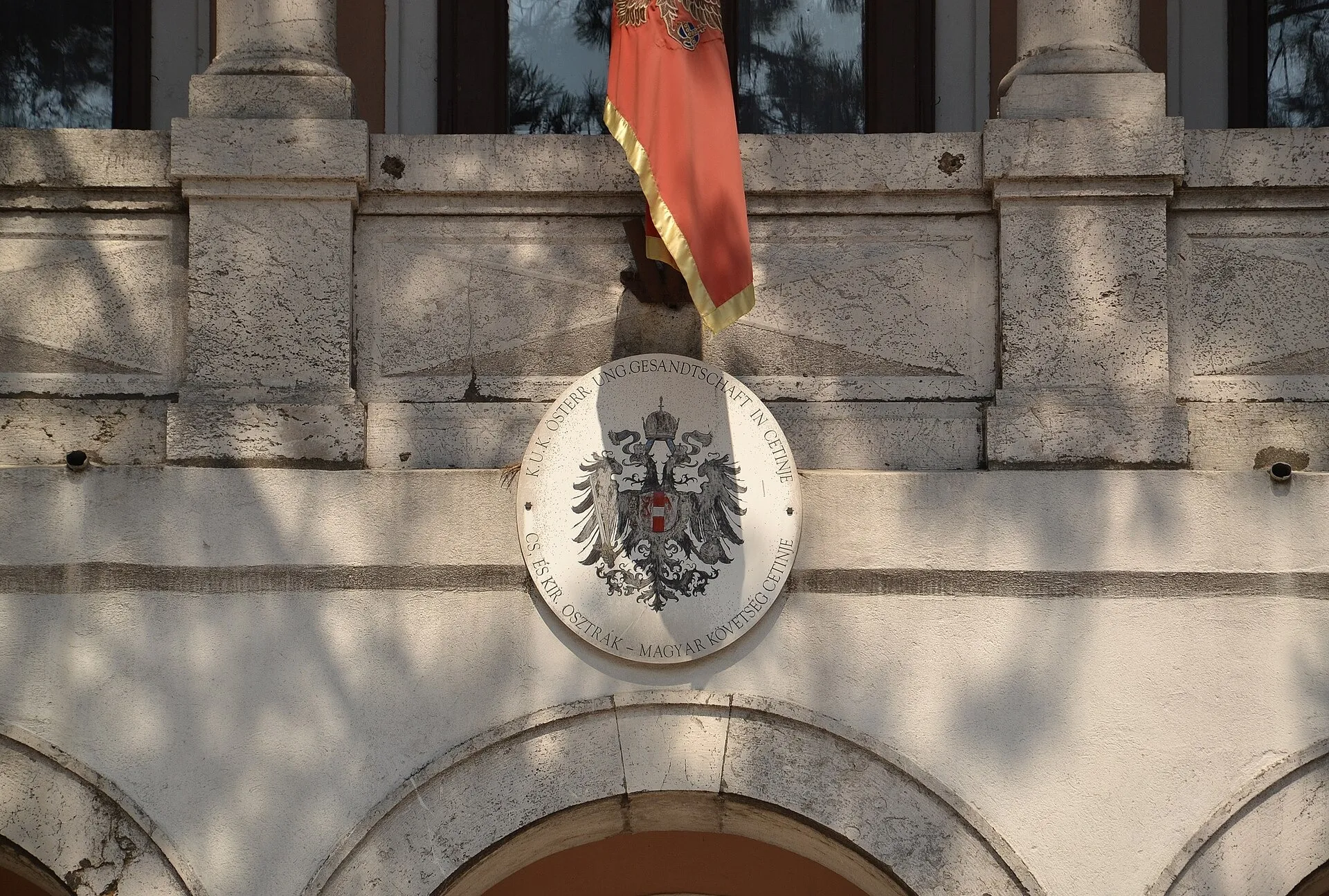
The Habsburg arms still mark the entrance of the former Austro-Hungarian legation (1897–1899), designed by Josip Slade.
The Russian legation: Corradini’s neo-baroque
Russia was the dynasty’s patron, paymaster and, through two of Nikola’s daughters, family. Its legation was meant to say so. The site, between the City Park and Vojvode Batrića Street, was chosen by the minister Gubastov; the foundation was blessed on 21 May 1900, the building was roofed in 1901, and it was finished and occupied in 1903. It is the earliest documented Cetinje work of the Roman architect Corradini, who both designed and built it. Why Russia used an Italian is not recorded; one explanation offered in the literature is that St Petersburg left the choice to its minister and to the Montenegrin government, which turned to Rome.
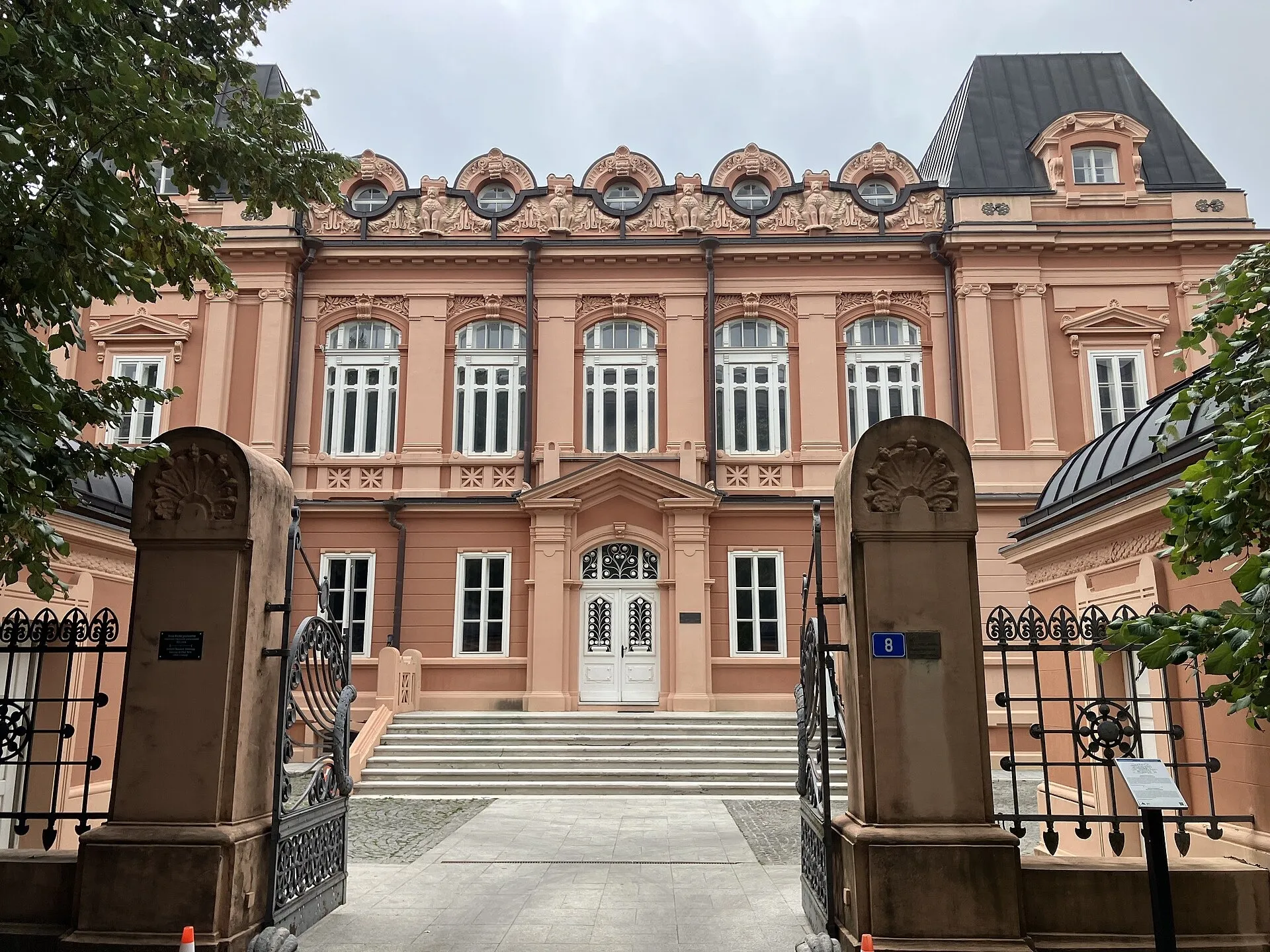
The house measures 27.5 by 18 m and is of stone and timber, in a late-baroque manner with Renaissance elements: a rich entrance front with profiled cornices and window frames, a row of round windows under the eaves, tall mansard roofs at the corners, a wrought-iron fence and two sentry boxes at the gate. Contemporaries were delighted. ‘A more elegant building could not be wished for,’ the Glas Crnogorca wrote in October 1901, ‘and it truly does honour to the aesthetic taste of the architect Mr Corradini.’ A Russian inspector who examined it in December 1903 was less pleased with the roof structure, which gave trouble from the start and was still being repaired in 1909. A church designed for the grounds by the St Petersburg professor Pomerantsev was never built.
After 1915 the building was a girls’ gymnasium and a teacher-training school, then from 1953 the children’s ward of the hospital, and after the 1979 earthquake a university building, latterly the Faculty of Fine Arts. On 14 June 2012 a fire destroyed the attic. The roof was repaired and the building restored, and plans were announced to move the foreign ministry into it. Whatever its current use, it is seen to best effect from the gate, with the park behind you.
The Italian legation: a villa in a park, and a question of authorship
In 1896 Princess Jelena of Montenegro married the Prince of Naples, who four years later became King Victor Emmanuel III. Italy’s legation was therefore a family matter. Building began in 1905 on a large plot at the south-western approach to the town, where the main street meets the road up to Lovćen; money ran short and work stopped; it resumed in 1909 and was completed in 1910, on the eve of the proclamation of the kingdom.
The composition is a main house and a smaller service block joined by a covered passage, set deep in a landscaped garden of about 2.2 hectares. The National Library, which has occupied it since the 1960s, describes the style as classicism with a touch of romanticism, at its best in the ground-floor hall and reception rooms with their rich plaster ornament.
Who designed it depends on whom you read. The library and most older literature say Corradini. A monograph on the building published in Cetinje in 2015 by Slavko Burzanović and Aleksandar Dajković credits the design to the Milanese architect brothers Fausto and Giuseppe Bagatti Valsecchi, with Corradini engaged from 1905 to carry it out; a 2021 paper by Dajković repeats this and asks how far Corradini altered the scheme while building it. We give both because the question is open.
The legation was used until 1915. Today it is the main building of the National Library of Montenegro ‘Đurđe Crnojević’, with a seven-storey book depot added on the south-west side holding some 45 km of shelving. It is the furthest legation from the centre, about twenty minutes on foot from the palace square.
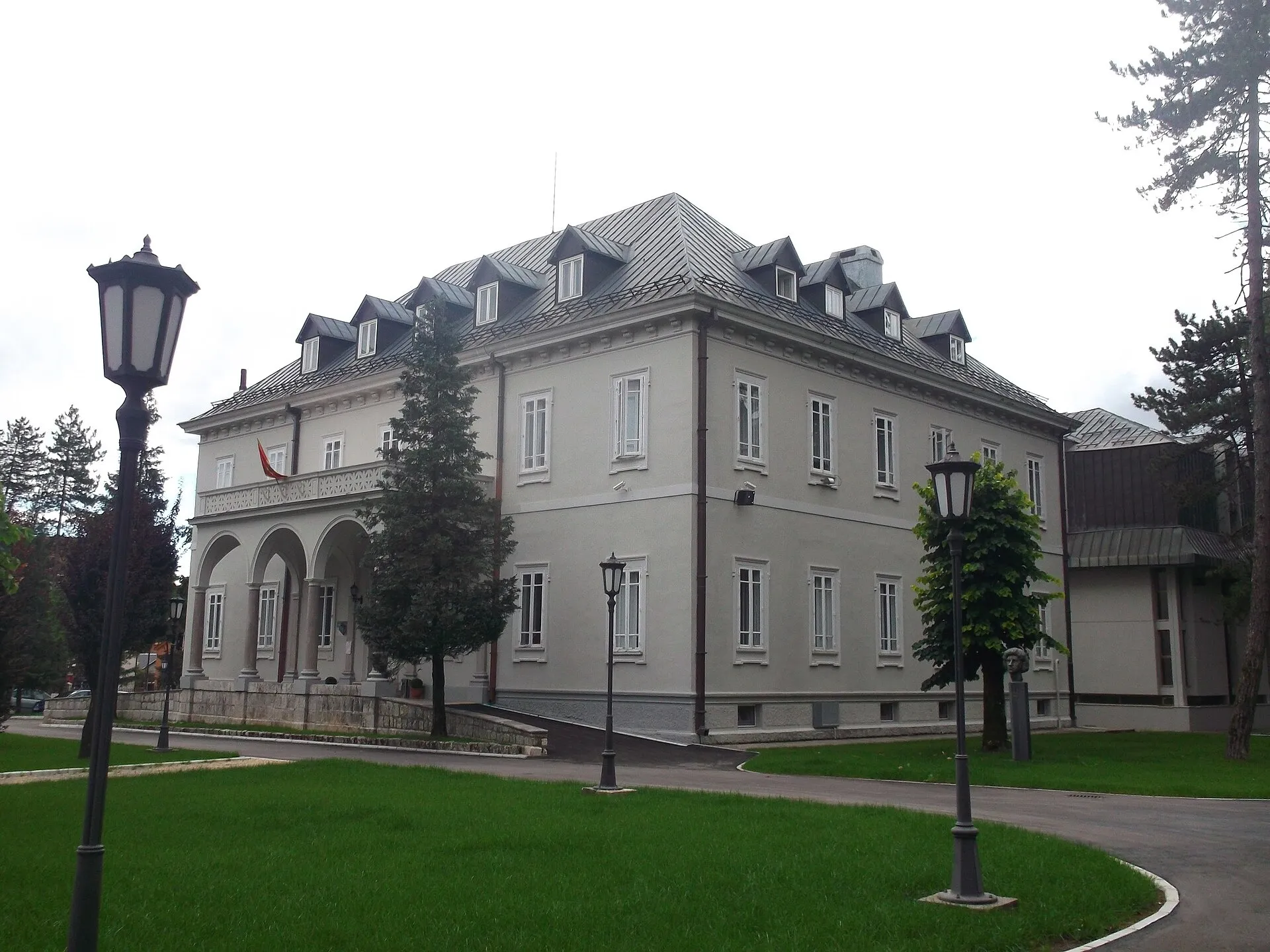
The former Italian legation (1905–1910), today the main building of the National Library of Montenegro.
The French legation: Paris on Njegoševa Street
This is the building people photograph, and the one about which the best story is told: that the plans were meant for the French embassy in Cairo and reached Cetinje through a clerk’s mistake. There is no evidence for it, and the documents point the other way. The local press followed the project from 1908 and quoted the French minister, Count Sercey, on the design; the building was put up in 1909–1910.
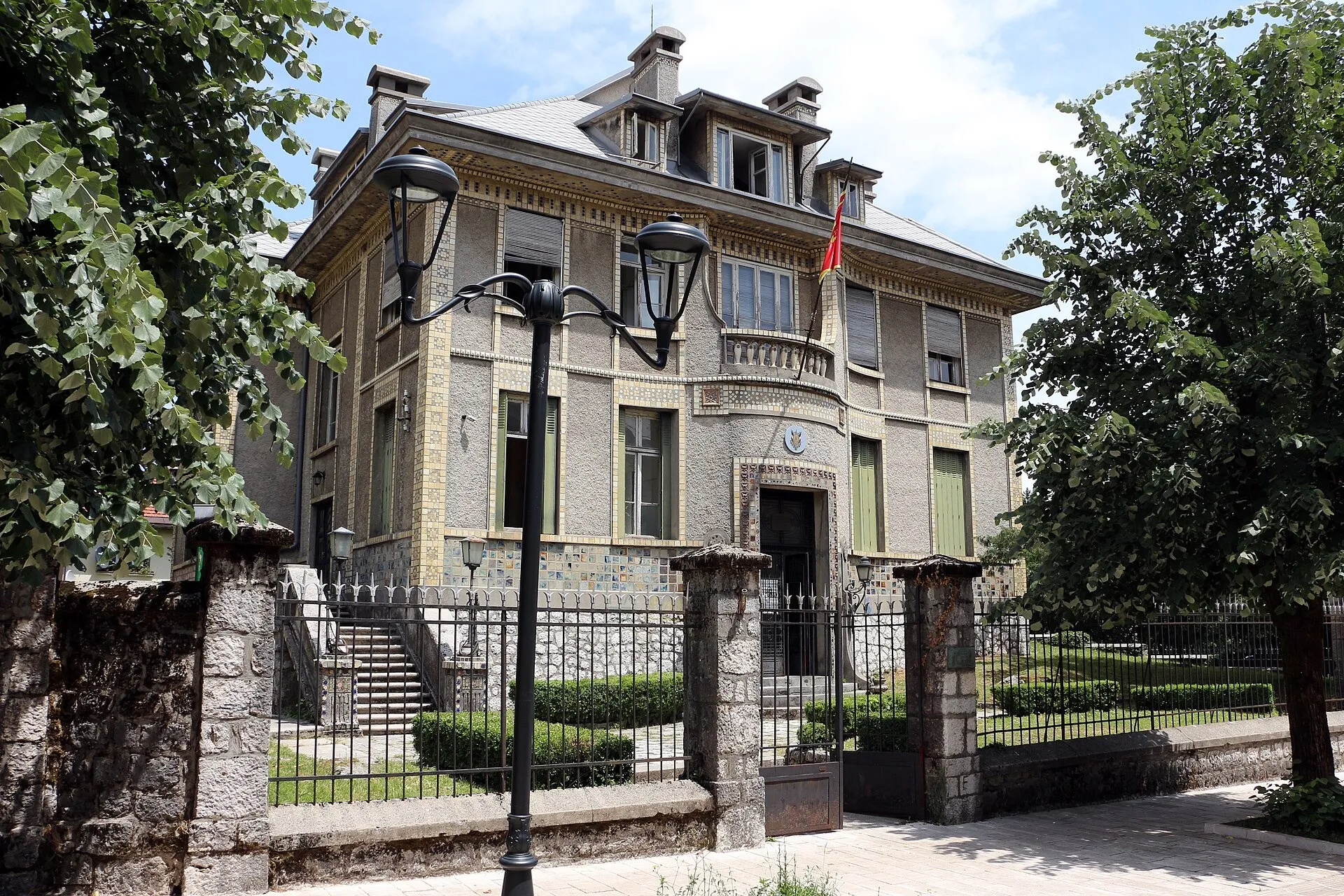
The architect was Paul Guadet, working with the contracting firm Perret Frères, whose head, Auguste Perret, was the pioneer of reinforced-concrete architecture in France. The structure is stone and reinforced concrete; the façade is faced with glazed ceramic tiles in several colours and shapes, with a projecting entrance bay, balconies, a deep cornice and tall chimneys. It is Art Nouveau, or Secession as the style is called locally, and it is the only building in Cetinje that belongs wholly to the avant-garde of its own decade. The National Library calls it the first use of reinforced concrete in the Balkans; that is the library’s claim, and at least two other Cetinje buildings of 1910 have been called ‘first’ in the same material.
France used it until 1915. It was later a post office and a bank; during the Second World War it housed the police; since 1949 it has belonged to the National Library, which keeps its museum department, old and rare books and bequests here. An architectural study of the building was carried out with international funding as the basis for a restoration and for a planned museum of the book. The interior is not routinely open; the outside, especially the tiled entrance bay, repays ten minutes.
It stands at the upper end of Njegoševa Street, a minute from the Vlach Church.
The British legation: an English villa by the park
Britain kept a chargé d’affaires in Cetinje for decades and raised the post to a legation only in 1911. The following year the Office of Works bought, for £6,000, a row of four small houses on the main street near the palace from a Herr Gisbert von Pilgrim Baltazzi, and spent a further £5,000 remodelling them into a single legation house to designs by one of its architects, Julius Bradley.
The works were overtaken by events. They stopped when the First Balkan War broke out in October 1912, were resumed with direct labour that included Ottoman prisoners of war, and were finished in 1914 under the clerk of works, W. C. D’Harty, who was arrested when war came and only narrowly avoided internment. Richard Allison, the Office of Works’ principal architect, was making the final inspection when the First World War began. A presentation drawing of the scheme was shown at the Royal Academy in 1916.
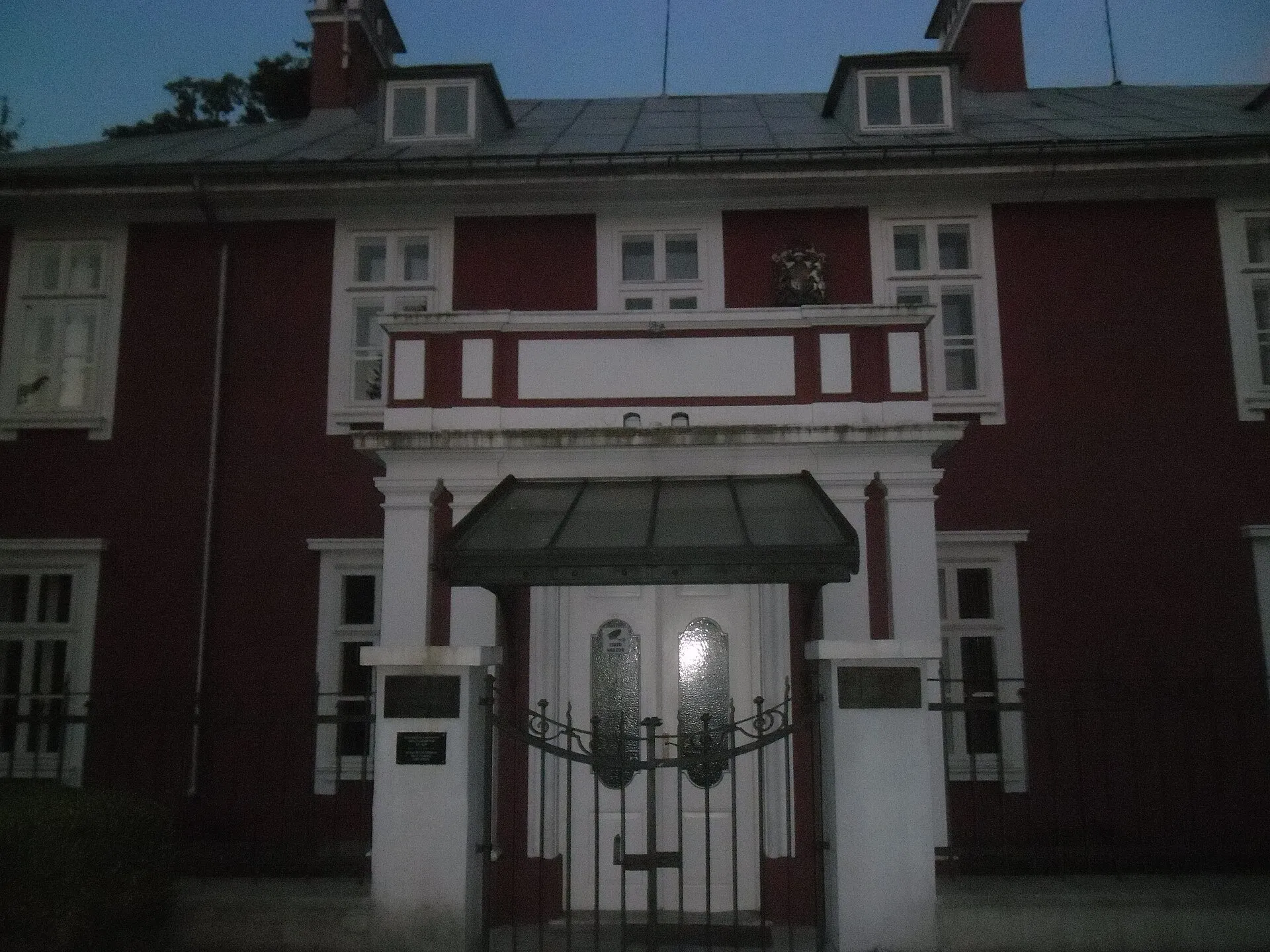
Local literature credits the building to ‘the English architect Harty’ and describes it, fairly, as an English summer house in the garden-city manner: calm wall surfaces, rows of small-paned windows, a porch with a terrace over it, a broad roof with wide eaves and dormers. The same hand is credited with two cottage-style houses built in 1912 for the Cetinje doctors Matanović and Perazić on Vuka Mićunovića Street. The British records make D’Harty the man on site rather than the designer.
The house was never occupied as a legation, apart from a vice-consul in 1924–1926. The Treasury put it up for sale for not less than £4,350 and in 1928 accepted £2,000 from a Mr Martinović; the only fittings sold with it were two curtain rods, six venetian blinds and twenty-four stair rods. Local sources add that between the wars the governor of the Zeta Banovina lived in it. It is now the University of Montenegro’s Music Academy, and the royal arms are still above the porch. You will find it on Njegoševa Street beside the Blue Palace.
The houses on the square: Bulgaria, Serbia, Belgium, Germany, Greece
The smaller missions did not build. They took town houses within sight of the palace, and what remains of them is mostly a plaque.
- Bulgaria. The house beside King Nikola’s Palace was built by Vojvoda Ivo Radović as a family home and financed against the rent the Bulgarian legation would pay. It went up at the same time as the Government House, and there was a dispute over the suspicion that materials from that site had found their way into it. The legation was here from 1910 to 1913. From 1978 the building was the town’s café, Gradska kafana; after a reconstruction it reopened in June 2019 as a hotel, with the café terrace facing the palace.
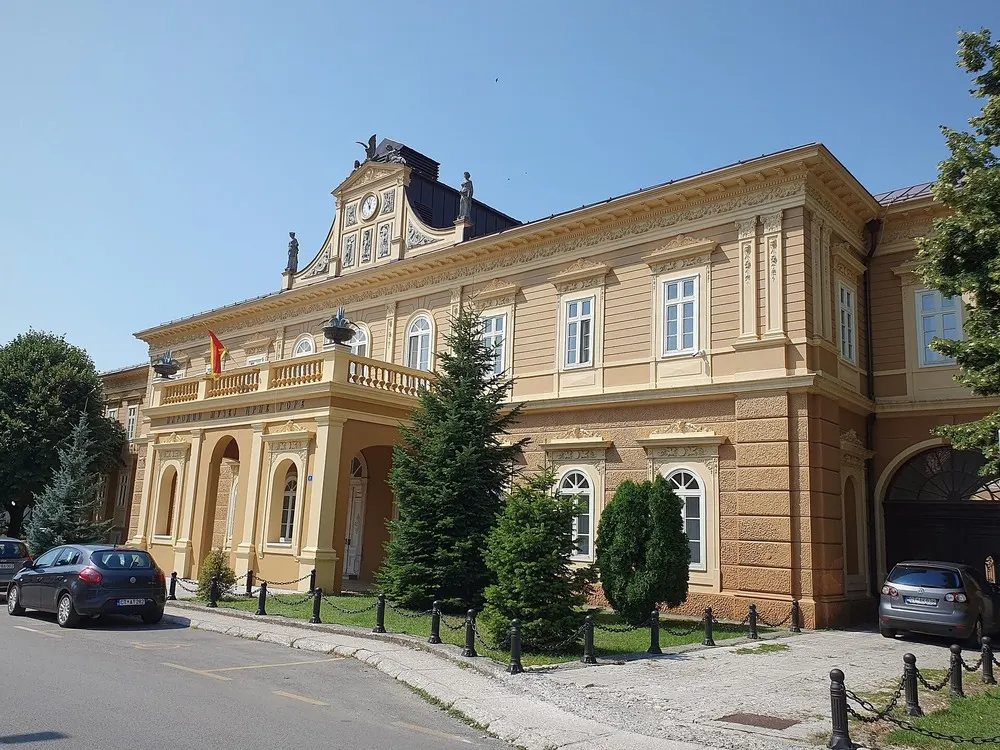
- Serbia. The mission worked from a private house on Njegoševa Street before moving to a plain two-storey house on Dvorski trg, where it remained until 1915; sources give the date of the move as 1903 or 1909. The municipality gave the building to the National Museum in 1986, and since 2002 it has housed the Ethnographic Museum.
- Belgium. A bronze plaque near the square, in Cyrillic and French, reads ‘Belgian consulate 1910–1912, Vice-consulat de Belgique’. According to local accounts Belgium was represented by a Cetinje merchant acting as vice-consul from his own house.
- Germany. The German mission used a house at the lower end of Njegoševa Street, marked on current maps as the former German legation. We have not found a reliable published account of the building or of its dates.
- Greece. Greece is named among the legations in the standard lists of Cetinje’s monuments, but we could not establish from the sources available to us which house it occupied, and we would rather say so than guess.
The United States recognised Montenegro in 1905. John B. Jackson presented his credentials to Prince Nikola on 30 October that year, but he and his successors resided in Athens and made annual visits to Cetinje; there was never an American legation building. Relations ended in 1920–21.
A walking order
The legations fall into three groups, and this order sees them all with the least backtracking. Allow two hours at an easy pace, about 4 km in all; without the last two it is an hour and under 2 km.
- Dvorski trg. Start in front of King Nikola’s Palace. The hotel beside it is the Bulgarian legation; the cream house across the square with the museum sign is the Serbian; the Belgian plaque is close by.
- Ottoman legation (about 200 m). Walk east towards the theatre. The pale green house with the crescent medallion, now the Faculty of Dramatic Arts, is just before Zetski dom.
- Russian legation (about 150 m further). Continue past the theatre and the bulk of the Banovina palace to the pink neo-baroque house behind its iron fence at the edge of the City Park.
- German and British legations (about 250 m). Cut back through the park to the lower end of Njegoševa Street. The German mission’s house is on the street; the dark red villa with white trim and the royal arms, now the Music Academy, is the British legation, next to the Blue Palace.
- French legation (about 600 m). Walk the length of Njegoševa Street, across the palace square and on under the lime trees. The tiled Art Nouveau building is near the top of the street, a minute from the Vlach Church.
- Austro-Hungarian legation (about 500 m further). Continue north-west to Baja Pivljanina (Bajova) Street and Slade’s stone house with its chapel.
- Italian legation (about 450 m further). Head west to the National Library on the Lovćen road, then return to the centre along the boulevard, about 1 km.
With a guide
The façades are only half of it. A local guide can put names and stories to the houses and, on some days, get you through a door that is otherwise closed. Two GetYourGuide listings are based in the town: the Cetinje guided walking tour with museum entry and the Cetinje city private tour. Neither listing title promises the legations specifically, so ask the guide to include them. The full self-guided circuit of the old town is on our walking tour page.
Frequently asked questions
How many embassies were there in Cetinje?
Lists vary because some missions were consulates or were run from rented rooms. Eleven states are usually counted as having had a mission in the town before 1916: Russia, Austria-Hungary, the Ottoman Empire, France, Italy, Great Britain, Serbia, Bulgaria, Germany, Greece and Belgium (a vice-consulate). The United States was represented from Athens.
Which former embassy in Cetinje is the most beautiful?
Most visitors choose the French legation (1909–1910) for its tiled Art Nouveau façade, or the Russian legation (1900–1903) for its neo-baroque front and gates.
Can you go inside the old embassies?
Only some. The Serbian legation is the Ethnographic Museum, the Bulgarian legation is a hotel with a café, and the Italian legation houses the National Library. The French, British, Ottoman, Russian and Austro-Hungarian buildings are institutions without regular public access.
Is it true the French embassy was built in Cetinje by mistake?
It is a popular story that the plans were intended for Cairo. No source supports it. The local press reported on the project from 1908, the architect Paul Guadet and the firm Perret Frères are documented, and the building was put up in 1909–1910 for the French government.
Who designed the British legation?
According to the records of British diplomatic buildings, Julius Bradley of the Office of Works; W. C. D’Harty was clerk of works on site, and local literature credits the design to him as ‘Harty’. It was built in 1912–1914 and is now the Music Academy.
When did the embassies close?
The Ottoman mission left in 1912, the Bulgarian in 1913 and the Austro-Hungarian in August 1914. The remaining foreign representatives left Cetinje on 29 December 1915, shortly before the Austro-Hungarian occupation.
Sources and official information
Facts were checked against these official and scholarly sources in November 2026. Opening hours, ticket prices, park fees and timetables change, so confirm before you go.
- stari.maticacrnogorska.me
- aseestant.ceon.rs
- nb-cg.me
- roomfordiplomacy.com
- maticacrnogorska.me
- history.state.gov
- cetinje.travel
- narodnimuzej.me
- danas.rs
- sr.wikipedia.org
- sr.wikipedia.org
- sr.wikipedia.org
- en.wikipedia.org
- whc.unesco.org
Cetinje.com is an independent guide, not the official site of the Old Royal Capital Cetinje, the National Museum of Montenegro, any tour operator, hotel or the government of Montenegro. Some links are affiliate links: tours go to GetYourGuide and accommodation goes to Booking.com, and we may earn a commission at no extra cost to you.