In short
- Fixed dates: Orthodox Christmas Eve (6 January), Independence Day (21 May), Statehood Day (13 July), St Peter of Cetinje (31 October) and Njegoš Day (13 November) are the ceremonial heart of the year.
- Winter programme: in 2025–26 the town ran a ‘New Year’s Story’ from 19 December to 7 January, with concerts, a market and an ice rink on Dvorski trg.
- Festivals change dates: we list only events confirmed for a given year, such as the CIOFF folklore festival ‘Cetinje’ (29 July – 1 August 2027).
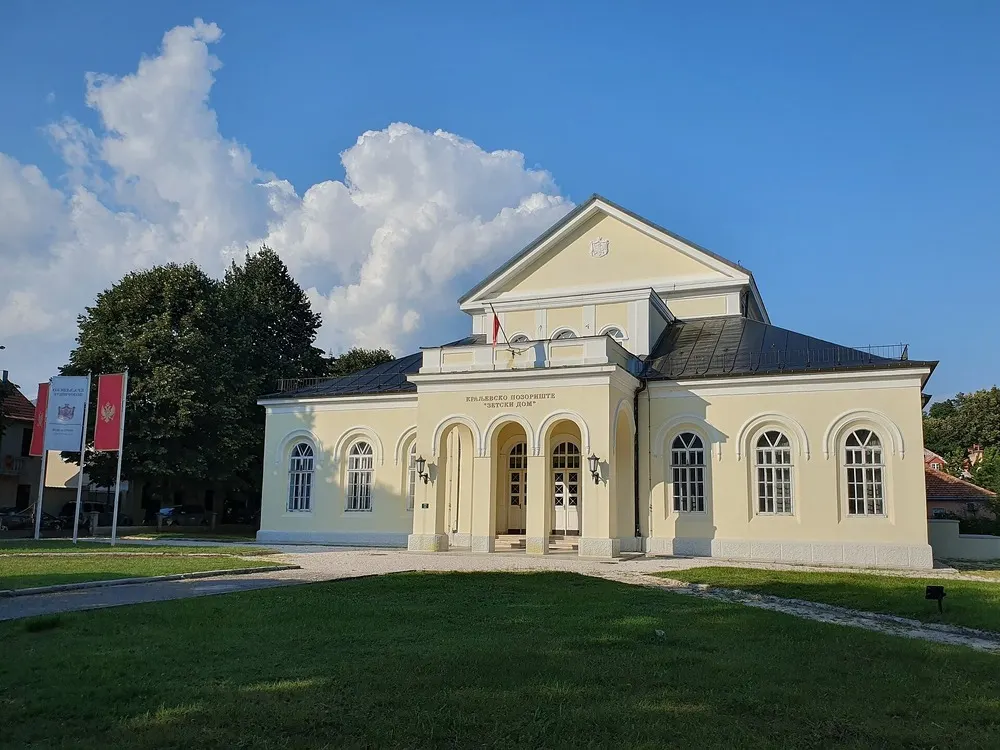
- Theatre all year: the Zetski dom, Montenegro’s royal theatre, has its own repertoire.
- How to check: the Cetinje Tourist Organisation, the Centre for Culture and the National Museum publish their programmes; details below.
A ceremonial town
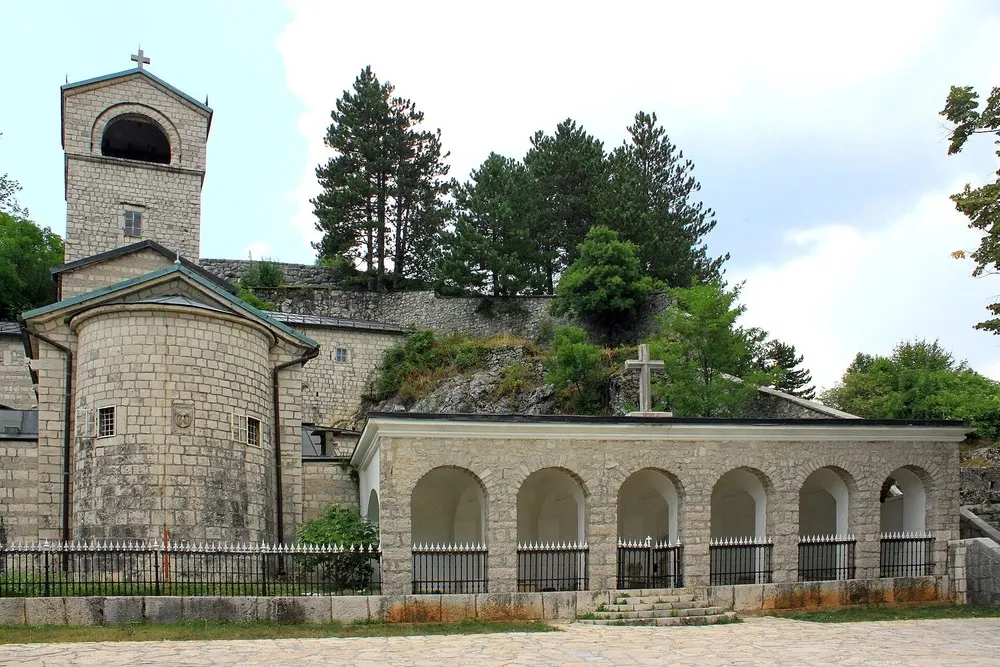
For four centuries the big moments of Montenegrin history happened in Cetinje, and the town still marks them. National anniversaries bring official delegations to the monastery and the palace; Orthodox feasts fill the monastery square; and Njegoš’s birthday in November is the town’s own day. Between the fixed dates, Cetinje has a modest, changing programme of concerts, exhibitions, folklore and sport, much of it organised by the municipality’s cultural institutions, the National Museum and the arts faculties of the University of Montenegro, whose students give the town much of its life in term time.
Festival dates change from year to year, and some events are not repeated. On this page we give fixed dates and only those events whose dates we could confirm from an official or organiser’s source, with the year. For anything else, check with the organisations listed at the end before you plan around it.
The calendar at a glance
| Date | Occasion | What happens in Cetinje |
|---|---|---|
| 1–2 January | New Year (state holiday) | End of the winter programme on Dvorski trg in recent years |
| 6–7 January | Orthodox Christmas Eve and Christmas | Public badnjak bonfires on the evening of 6 January |
| Spring, date varies | Orthodox Easter | Services at the monastery and the town’s churches |
| 21–22 May | Independence Day (state holiday) | Anniversary of the 2006 referendum; official ceremonies |
| 12 July | St Peter’s Day (Petrovdan) | An old feast and the eve of Statehood Day |
| 13–14 July | Statehood Day (state holiday) | Recognition at the Congress of Berlin (1878) and the uprising of 1941 |
| July, date varies | Njeguši hill-climb car race | 11–12 July in 2026; Njegoš’s birth house closed on those days |
| 31 October | St Peter of Cetinje | Feast of the town’s saint; pilgrims at the monastery |
| 13 November | Njegoš Day; the Day of the Old Royal Capital is also marked in mid-November | Cultural events; free entry to National Museum units in recent years |
| Late December to early January | New Year’s programme | Concerts, winter market and ice rink (19 December 2025 – 7 January 2026) |
Christmas Eve: the badnjak fires
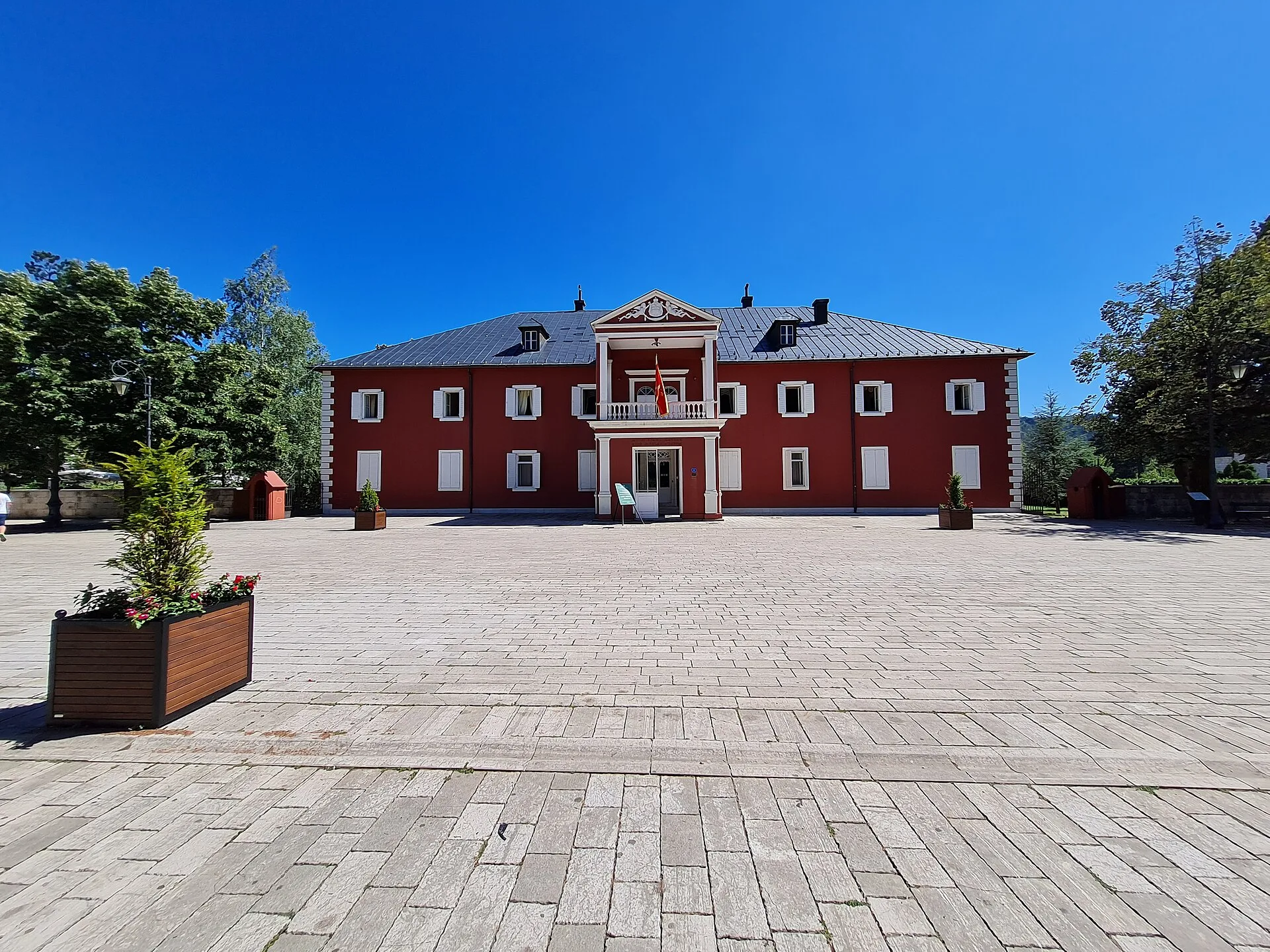
The Orthodox Church in Montenegro follows the Julian calendar, so Christmas falls on 7 January and Christmas Eve (Badnji dan) on 6 January. On Christmas Eve families bring an oak branch, the badnjak, into the house and lay it on the fire. In Cetinje the custom is also public: in the evening large badnjak bonfires are lit, one in front of the monastery and another on the square by King Nikola’s Palace, organised separately by the Metropolitanate of the Serbian Orthodox Church and by the Montenegrin Orthodox Church. The two gatherings reflect the church dispute explained, without taking sides, on our language and identity page; for visitors they are atmospheric, crowded and peaceful, but keep a respectful distance from the fires and the clergy.
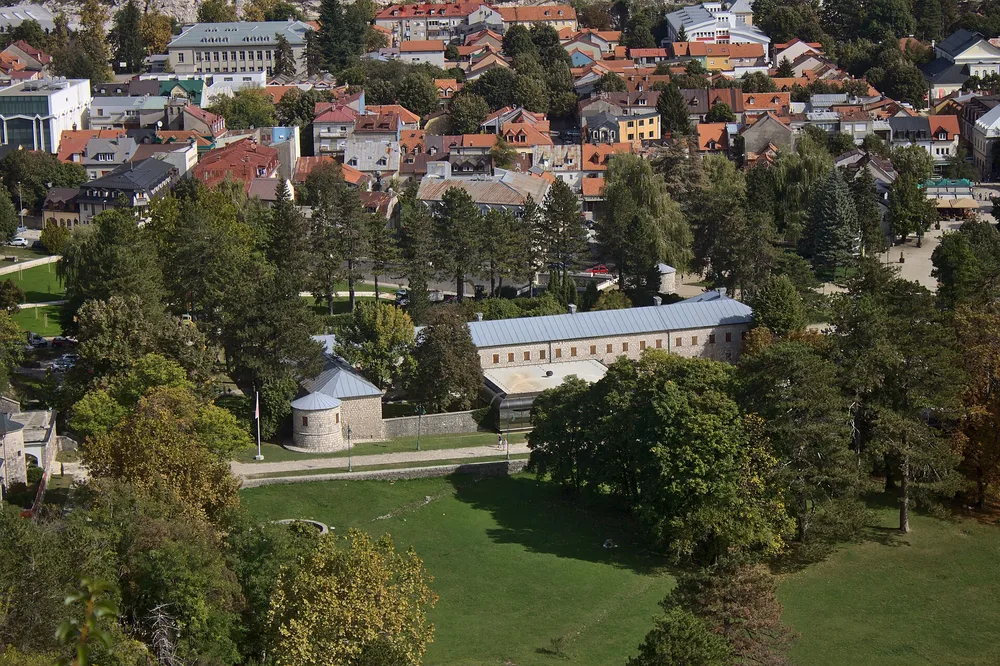
Around the same weeks, the Old Royal Capital has in recent years run a winter programme. In 2025–26 it was called the ‘New Year’s Story in the Royal Capital’, from 19 December 2025 to 7 January 2026, with evening concerts on Dvorski trg, a winter market of wooden stalls with seasonal food and mulled wine, a free ice rink on the square and a children’s programme at Balšića pazar, according to the national tourism organisation’s listing.
National days: 21 May and 13 July
Independence Day, 21 May, commemorates the referendum of 21 May 2006, in which Montenegro voted to leave the State Union with Serbia. Cetinje voted overwhelmingly for independence, and the anniversary is celebrated with particular feeling here.
Statehood Day, 13 July, joins two anniversaries: the recognition of Montenegro’s independence at the Congress of Berlin on 13 July 1878, which made Cetinje a European capital, and the uprising of 13 July 1941 against the Italian occupation. Both days are public holidays, with the day after also a non-working day. Expect official ceremonies, flags and concerts; museums usually open in season, but check.
The day before Statehood Day is Petrovdan, St Peter’s Day (12 July), an old date for gatherings in the Montenegrin highlands. The full story of these events is in the history of Cetinje.
Autumn: St Peter of Cetinje and Njegoš Day
31 October is the feast of St Peter of Cetinje, Vladika Petar I Petrović-Njegoš (ruled 1784–1830), whose relics lie in Cetinje Monastery. Pilgrims come from all over the country, and services at the monastery are crowded. If you visit the monastery that day, dress modestly and expect queues.
13 November, Njegoš’s birthday by the modern calendar, is Njegoš Day, marked across Montenegro with cultural events. The Day of the Old Royal Capital is also celebrated in mid-November: a government notice of 13 November 2017, for example, announced that part of that year’s celebrations had to be postponed because of a storm. In recent years the National Museum of Montenegro has opened its Cetinje units free of charge on Njegoš Day. Two days later, on 15 November, the museums’ summer season ends; from 16 November the mausoleum on Lovćen and Njegoš’s birth house close until April.
Festivals and recurring events
- CIOFF International Folklore Festival ‘Cetinje’. Organised by the Cultural and Artistic Society ‘Njegoš’, founded in 1907 and based on Njegoševa Street, under the umbrella of CIOFF, the international council of folklore festivals. The next edition is listed for 29 July – 1 August 2027. Expect folk ensembles from Montenegro and abroad in national costume, with the oro and other dances.
- The Njeguši hill climb. A motor-racing hill climb on the road at Njeguši, held in July; in 2026 it took place on 11–12 July, when the National Museum closed Njegoš’s birth house for the weekend.
- Summer concerts. Cetinje’s open-air summer stage has hosted concerts of touring festivals, for example the Made in New York Jazz Festival, which played a free concert there on 28 June 2025. Programmes are announced each spring.
- The Zetski dom. Montenegro’s royal theatre, begun in 1884, has its own repertoire through the season; plays are in Montenegrin. See Zetski dom.
- Exhibitions. The National Museum, the Montenegrin Art Gallery ‘Miodrag Dado Đurić’ and the Faculty of Fine Arts hold changing exhibitions; degree shows and concerts of the Music Academy are open to the public.
- The Cetinje Biennial. An international exhibition of contemporary art held in the empty legations and the streets in the 1990s and early 2000s; it has not been held for many years. Its story is told in culture and traditions.
How to find out what is on
- Cetinje Tourist Organisation (Turistička organizacija Prijestonice Cetinje): website cetinje.travel; the tourist information point is in the central car park near King Nikola’s Palace, and its listings give the phone number +382 41 230 250.
- Centre for Culture of the Old Royal Capital (Centar za kulturu Prijestonice Cetinje): concerts, festivals and the summer programme.
- Zetski dom (zetskidom.me): the theatre’s repertoire.
- National Museum of Montenegro (narodnimuzej.me): exhibitions, free-entry days and notices of closures.
- National Tourism Organisation of Montenegro (montenegro.travel): a national calendar that includes Cetinje’s larger events.
Plan your visit around the seasons with the best time to visit, and for national events elsewhere in the country see ExploreMontenegro’s travel guide.
Frequently asked questions
When is Christmas celebrated in Cetinje?
Orthodox Christmas is on 7 January; on the evening of Christmas Eve, 6 January, public badnjak bonfires are lit in front of the monastery and on the square by King Nikola’s Palace.
What is Njegoš Day?
13 November, the birthday of Petar II Petrović-Njegoš, marked with cultural events; the Old Royal Capital also celebrates its own day in mid-November, and the National Museum has opened its units free on the day in recent years.
Are museums open on public holidays?
In season they usually open, but check the National Museum’s notices for the day of your visit.
Is there a summer festival in Cetinje?
There are summer concerts and events every year, but dates and names change. The CIOFF folklore festival ‘Cetinje’ is listed for 29 July – 1 August 2027. Check the Tourist Organisation and Centre for Culture.
Sources and official information
Facts were checked against these official and scholarly sources in November 2026. Opening hours, ticket prices, park fees and timetables change, so confirm before you go.
- montenegro.travel
- cioff.org
- en.narodnimuzej.me
- en.narodnimuzej.me
- en.wikipedia.org
- gov.me
- mp.rts.rs
- cetinje.travel
Cetinje.com is an independent guide, not the official site of the Old Royal Capital Cetinje, the National Museum of Montenegro, any tour operator, hotel or the government of Montenegro. Some links are affiliate links: tours go to GetYourGuide and accommodation goes to Booking.com, and we may earn a commission at no extra cost to you.