In short
- Cetinje eats like the mountains around it: cured and smoked meat, cheese and cream, cornmeal and potatoes, lamb, and greens from the garden, with fish from Lake Skadar below.
- Must-try: Njeguški pršut and Njeguši cheese, a plate of which is the classic start to any meal; Njeguški pršut was Montenegro’s first food product with a protected designation (2016).
- Mountain comfort food: kačamak and cicvara, cornmeal dishes rich with kajmak and cheese; raštan, a dark cabbage stewed with smoked meat; lamb boiled, roasted or cooked in milk.
- From the lake: carp baked with prunes, apples and quinces, smoked carp, eel and dried bleak.
- To drink: vranac, the great red grape of Montenegro, grape rakija (lozovača), Turkish-style coffee and pomegranate syrup.
A highland table
Old Montenegro was poor, stony and short of flat land, and its cooking reflects it. The people of the Cetinje plateau and the villages of Lovćen lived from their flocks and a few fields wrested from the karst: milk turned into cheese and kajmak to last the winter, meat salted and smoked in the chimney, cornmeal and potatoes, cabbage and greens from walled gardens. What they could not produce came up the mule track from Kotor or across the lake: salt, olive oil, wine, rice, coffee. The result is a cuisine of a few excellent ingredients rather than elaborate recipes, and the best of it is still made at home.
Cetinje’s restaurants cover the national repertoire, from grilled meat and pizza to traditional dishes, and in summer the cafés of Njegoševa Street are where the town lives. The real food journey, though, is just outside town: the smokehouses of Njeguši, the fish restaurants of Rijeka Crnojevića and the wine villages around Lake Skadar. We do not list restaurants by name, because they change and we could not verify current menus and opening times; ask your host, and look for places full of local families at Sunday lunch.
Njeguški pršut and Njeguši cheese
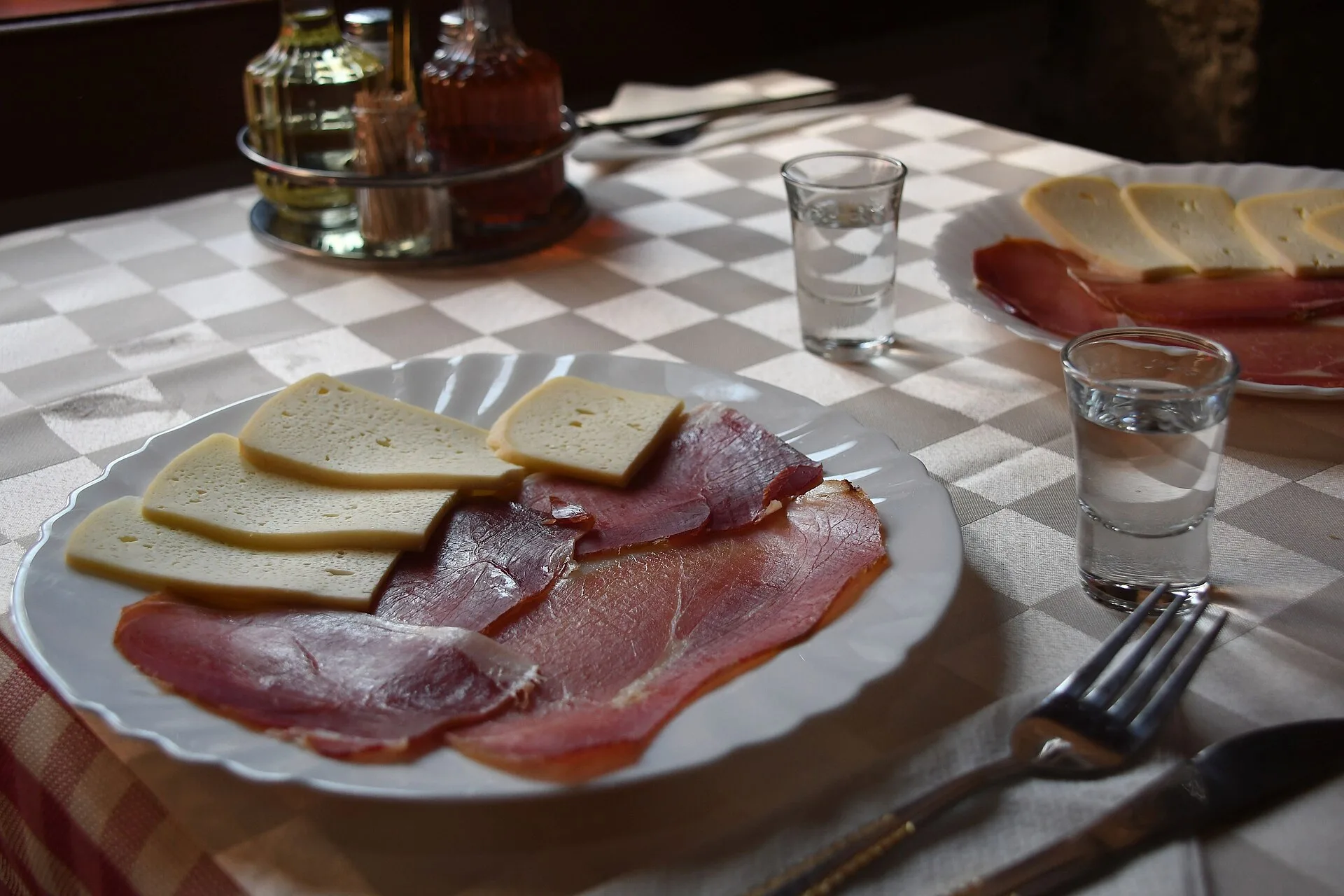
The single product everyone associates with the Cetinje region is Njeguški pršut, the dry-cured ham of the village of Njeguši, twenty kilometres away on the slopes of Lovćen. Whole legs of pork are salted with sea salt for about three weeks, pressed for about three more to drive out the moisture, lightly smoked over beech wood and dried in the mountain air, then left to mature; the whole cycle takes about a year. Producers credit its flavour to the meeting of sea air and mountain air over the village. It is darker, firmer and smokier than Italian prosciutto, and is served in thin slices with bread, olives and cheese. In 2016 it became the first Montenegrin food product protected by a designation of origin.
Its partner is Njeguški sir, Njeguši cheese, a firm, slightly piquant cheese traditionally preserved in oil, and in the region more generally the mountain cheeses that the Cetinje Tourist Organisation, with some local pride, calls among the best in the world. A plate of pršut, cheese and olives with a glass of rakija is the classic welcome in a Cetinje home and the classic first course in a restaurant. To see it made, visit Njeguši or book the village tour with a prosciutto tasting in a local household.
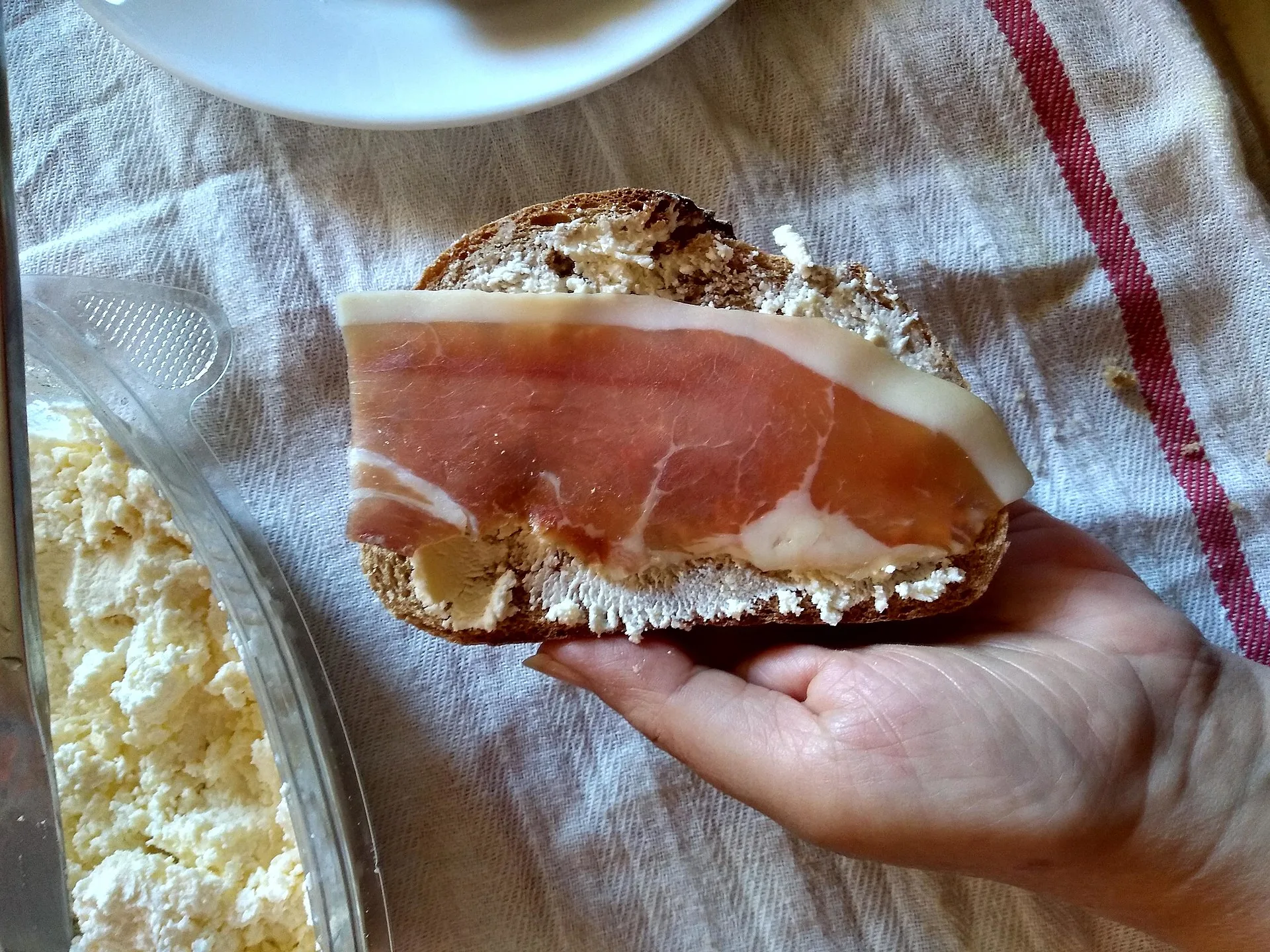
Pršut on bread with kajmak, the salted cream of the Montenegrin mountains.
Mountain dishes to look for
- Kačamak. Montenegro’s great comfort food: cornmeal (sometimes with potato) cooked slowly and beaten with plenty of kajmak and young cheese until thick and rich, eaten with a glass of cold milk, buttermilk or yoghurt. Heavy, warming and perfect after a winter walk.
- Cicvara. A close cousin, often eaten at breakfast: cornmeal stewed in kajmak or fresh cream and cheese until the fat separates.
- Kajmak and young cheese. The salted, compressed cream skimmed from boiled milk, spread on bread or melted into everything.
- Raštan. A dark, slightly bitter leaf of the cabbage family, similar to Italian cavolo nero, stewed with smoked pork ribs or ham hocks; a winter staple of the highlands.
- Lamb. Boiled lamb (kuvani brav), lamb roasted on the spit, lamb cooked in milk, or meat and potatoes baked ispod sača, under an iron bell heaped with embers, the traditional way to cook for a feast. Order ispod sača in advance: it takes hours.
- Soups and stews. Lamb broth, nettle soup and bean stew with smoked meat (čorbast pasulj).
- Pita. Savoury pies of thin pastry with cheese or greens (zeljanica).
- Priganice. Small fried dough balls or fritters, served with honey, cheese or jam: the standard treat for guests.
On restaurant menus you will also meet Balšića tava, veal baked with vegetables and a creamy egg and dairy topping.
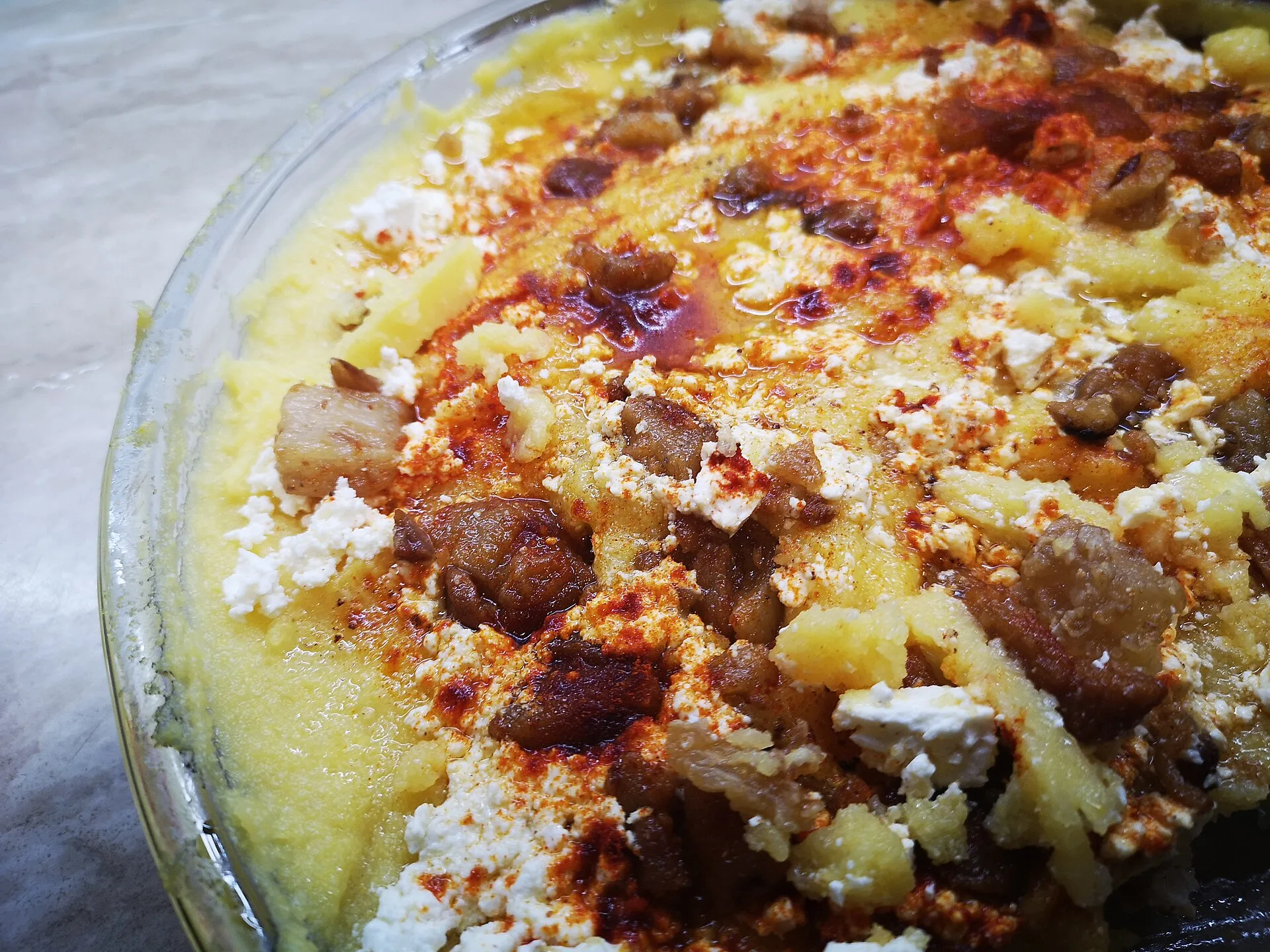
Kačamak: cornmeal cooked with kajmak and cheese, the comfort food of the Montenegrin highlands.
From Lake Skadar
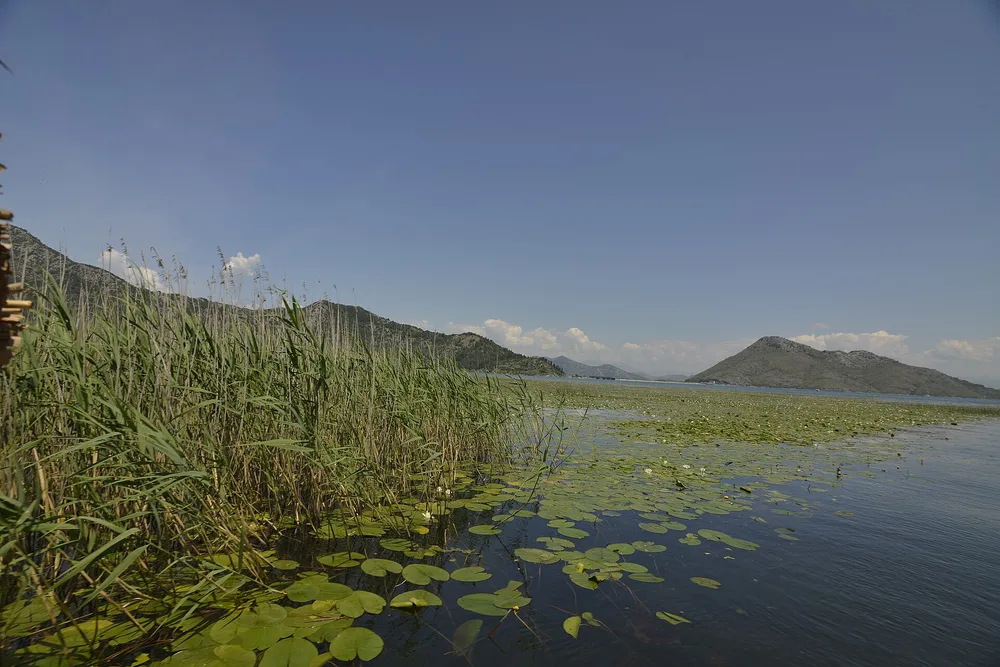
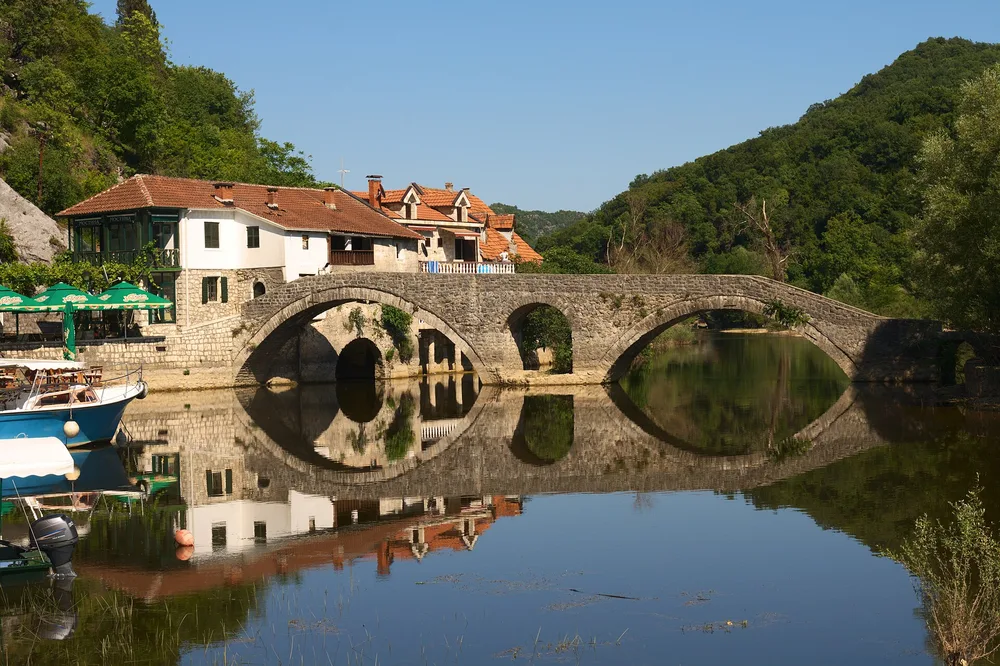
The other half of the Cetinje municipality lies down by the lake, and its fish have always come up to the capital. Carp (krap) is the commonest catch; the Cetinje Tourist Organisation describes it cooked in a pan with prunes, apples and quinces, baked on onions, or smoked, the last especially prized. Eel is grilled or served with rice, and the little bleak (ukljeva) is fried fresh or smoked and dried. The best place to eat them is on the water at Rijeka Crnojevića or around Lake Skadar.
Wine
Montenegro is a wine country, and the vineyards are close to Cetinje: the basin of Lake Skadar, the Crmnica valley behind Virpazar and the plain south of Podgorica. The signature grape is vranac, Montenegro’s most planted variety, which makes deep purple, firm, fruity reds; it has been protected as a Montenegrin geographical indication since 1977. Its probable relative kratošija and the white krstač are the other native grapes to try. The largest producer, Plantaže of Podgorica, farms more than 2,000 hectares of vineyard on the Ćemovsko polje, often described as one of the largest single vineyards in Europe; family wineries in Crmnica and on the road past Rijeka Crnojevića make smaller, more individual wines and offer tastings.
Around Cetinje itself, there are wine estates with rooms in the villages below town, and GetYourGuide lists an Old Montenegro winery tour with Pavlova Strana and a tasting. For the national picture see ExploreMontenegro’s food and wine guide.
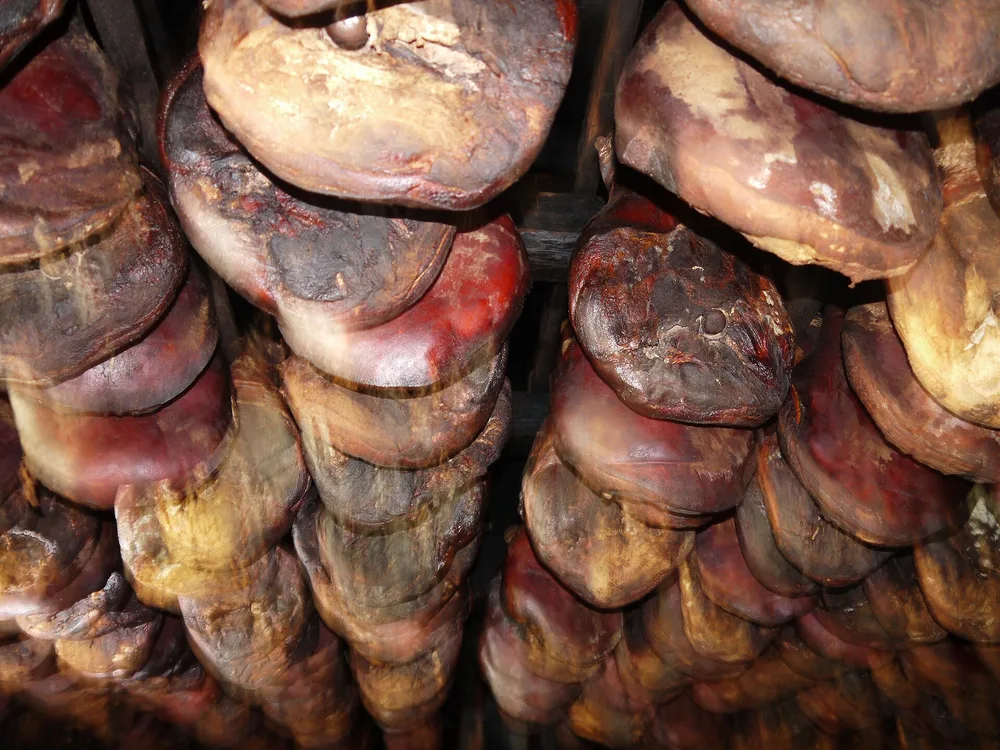
Njeguši: village tour with prosciutto tasting in a local household
A visit to a Njeguši family that smokes its own hams, with a tasting of pršut, according to the title. The simplest way to see how the village’s famous ham is made.
Check availabilityBook via GetYourGuide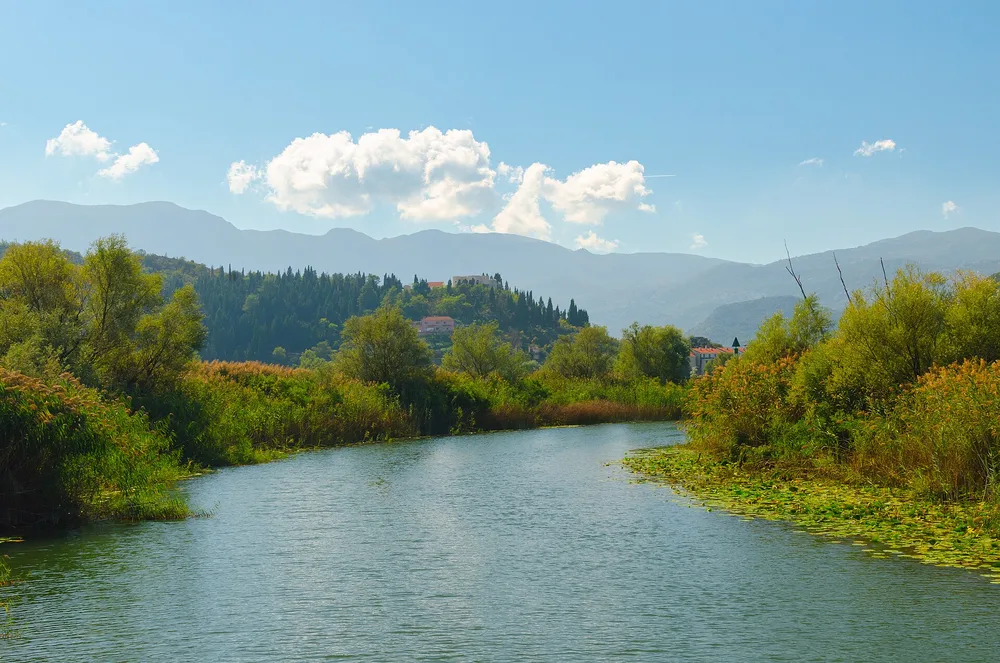
Old Montenegro winery tour with Pavlova Strana and wine tasting
A winery tour in Old Montenegro that includes the Pavlova Strana viewpoint over the Rijeka Crnojevića meanders and a tasting, listed from Budva.
Check availabilityBook via GetYourGuide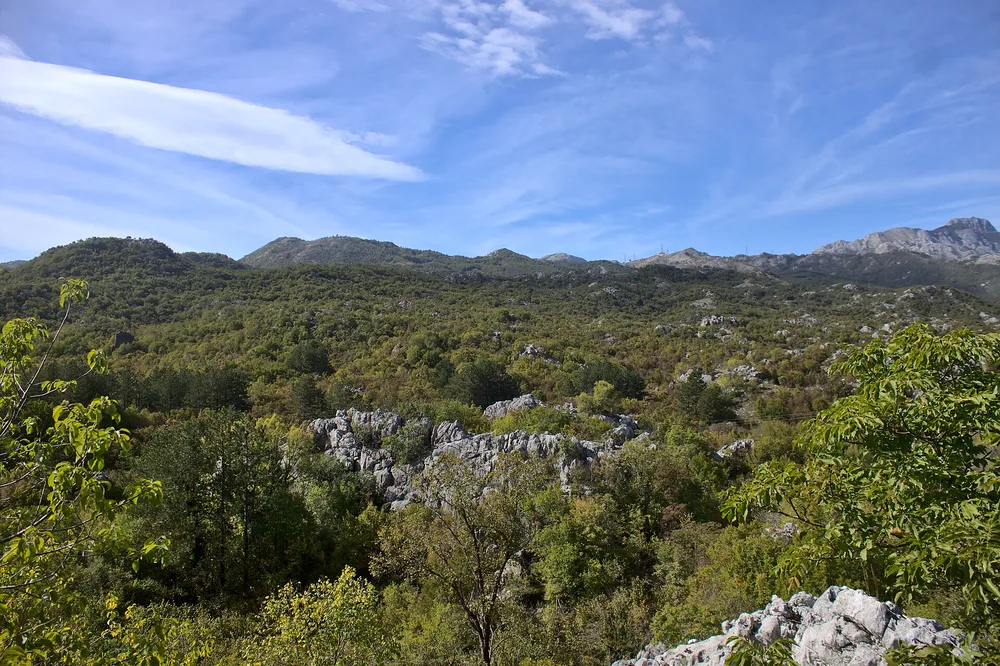
Hands-on household village experience near Cetinje
A visit to a village household near Cetinje with hands-on activities, according to the listing title. Read the listing for what you make or taste and where it takes place.
Check availabilityBook via GetYourGuideTour listings are on GetYourGuide. Prices, dates and cancellation terms are shown live on each listing and can change; Cetinje.com may earn a commission at no extra cost to you.
Rakija, coffee and other drinks
- Rakija. Fruit brandy is the drink of hospitality. In Cetinje it is usually lozovača, grape rakija, often home-distilled; travarica is flavoured with herbs. It is offered to guests on arrival and drunk in small glasses before a meal.
- Coffee. Turkish-style coffee, boiled in a small pot, is part of any visit to a home; in cafés, espresso and its relatives rule.
- Pomegranate syrup (sok od šipka), made from the wild pomegranates of the south, is the classic home-made soft drink, along with cornelian-cherry (drenjina) juice.
- Beer. Nikšićko, brewed in Nikšić, is the national beer.
- Water. Ask your host about the tap water; bottled water is sold everywhere.
Taking it home
Njeguši ham and cheese, rakija, wine and honey make good souvenirs, and pršut can usually be bought vacuum-packed for travelling. Before you buy a whole ham, check the rules of the country you are flying to: the European Union and the United Kingdom, among others, restrict or prohibit travellers from bringing meat and dairy products in from outside the EU, and Montenegro is not a member. Wine and spirits are subject to the usual duty-free allowances.
Eating out: practical tips
- Times: lunch is the main meal, often eaten late, between 13:00 and 16:00 local time; dinner from about 19:00.
- Portions are large, and a shared plate of pršut and cheese can be a meal in itself.
- Paying: cards are widely accepted in Cetinje’s restaurants, less so in village smokehouses and small family places; carry some cash in euros.
- Tipping: not obligatory; rounding up or leaving about ten per cent for good service is usual.
- Vegetarians do best with kačamak, cheese, pita, salads, beans and the many vegetable side dishes; vegans will find it harder outside the bigger restaurants.
- Winter: some village restaurants close or open only at weekends from November to March.
More on money, opening days and customs in practical information, and on the region’s food culture in culture and traditions.
Frequently asked questions
What food is Cetinje known for?
Njeguški pršut and Njeguši cheese from the nearby village, the mountain dishes kačamak and cicvara, raštan with smoked meat, lamb, and carp from Lake Skadar.
What is Njeguški pršut?
A dry-cured, beech-smoked ham from Njeguši, salted, pressed, smoked and air-dried over about a year. It gained a protected designation of origin in 2016.
What is kačamak?
Cornmeal, sometimes with potato, cooked and beaten with kajmak and young cheese, served with milk or yoghurt.
What wine should I try?
Vranac, Montenegro’s native red grape; also kratošija and the white krstač.
Can I pay by card in Cetinje restaurants?
Usually yes in town; carry cash for village smokehouses and small family places.
Sources and official information
Facts were checked against these official and scholarly sources in November 2026. Opening hours, ticket prices, park fees and timetables change, so confirm before you go.
Cetinje.com is an independent guide, not the official site of the Old Royal Capital Cetinje, the National Museum of Montenegro, any tour operator, hotel or the government of Montenegro. Some links are affiliate links: tours go to GetYourGuide and accommodation goes to Booking.com, and we may earn a commission at no extra cost to you.